GR655 (Paris Camino Route)
GR655 Paris Camino Route: Complete Guide to Hiking the Pilgrims’ Trail in France
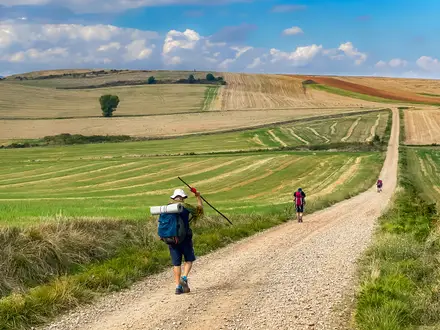
Embark on a timeless journey along the GR655 (Paris Camino Route), a legendary long-distance hiking trail that traces a centuries-old pilgrimage from the heart of Paris through the serene French countryside. As you set out, the vibrant energy of Paris fades into charming villages, lush forests, and rolling farmlands. The trail meanders across a patchwork of landscapes, offering walkers a rich tapestry of scenic beauty — from tranquil riverbanks to historic market towns and woodland paths.
Travelers along the GR655 will experience a unique blend of urban landmarks and rural tranquility, passing Gothic cathedrals, tranquil meadows, and ancient pathways trodden by generations of pilgrims. Whether you’re drawn by its cultural heritage or the sheer diversity of its terrain, this route promises an unforgettable adventure for hikers seeking both spiritual resonance and the simple joy of discovery.
Route Overview
The GR655 (Paris Camino Route) is a classic point-to-point long-distance trail that begins at the Tour Saint-Jacques in central Paris and continues south-southwest through the French countryside, eventually reaching the border with Spain. Its traditional endpoint is at Saint-Jean-Pied-de-Port, a renowned starting point for the Camino Francés, the main route across northern Spain to Santiago de Compostela.
Hikers will pass through a variety of significant locations, including Versailles, Étampes, Chartres, Châteaudun, Vendôme, Tours, Poitiers, and La Charité-sur-Loire. Rural segments lead through quieter towns and villages, with extensive sections in the regions of Île-de-France, Centre-Val de Loire, and Nouvelle-Aquitaine. The estimated total distance is approximately 870 kilometers, and most walkers complete the route in about 33 days, averaging between 20 and 30 kilometers per day depending on fitness level and chosen itinerary.
Trail conditions encompass a stable mix of paved roads, gravel tracks, and dirt paths, occasionally intersecting farmland, forests, and small urban areas. Most sections are well-marked, but navigation aids are advised for city outskirts and remote stretches. While the route does not require permits, prior planning for accommodations and supplies is essential, especially in less populated areas and during peak pilgrimage seasons.
Historical Significance of the GR655 Paris Camino Route
Paris and the Church of Saint-Jacques-de-la-Boucherie: The official starting point of the GR655, located in the heart of Paris, features the beautifully ornate tower that once formed part of a medieval pilgrimage church.
Chartres Cathedral: A UNESCO World Heritage Site, this awe-inspiring Gothic cathedral is famed for its stunning stained-glass windows and has been a significant stop for pilgrims for centuries.
The Loire Valley: Known for its picturesque villages, vineyards, and châteaux, this section of the route provides a scenic and tranquil backdrop for hikers.
Vendôme: A historic riverside town with ancient walls, a romantic abbey, and charming streets that showcase the region’s medieval heritage.
La Charité-sur-Loire: Home to the imposing Church of Notre-Dame, another World Heritage Site recognized for its Romanesque architecture and significance to the pilgrimage route.
Countryside Forests and Farmlands: The trail passes through lush forests and rolling agricultural land, offering peaceful stretches ideal for reflection and encounters with local wildlife.
Traditional Pilgrim Hostels and Waymarkers: Along the route, discover historic hostels and refuges that once sheltered weary travelers; many are adorned with iconic scallop shell motifs and pilgrimage symbols.
Tranquil Villages and Rural Markets: Experience the authentic charm of small French villages, some of which have preserved local markets and festivals dating back to medieval times.
Notable highlights
Tour Saint-Jacques (Paris): The trail begins at this iconic Gothic tower, a relic of a 16th-century church and an emblematic departure point for pilgrims.
Chartres Cathedral: This majestic UNESCO-listed cathedral is famed for its towering spires and world-renowned blue stained glass, serving as a spiritual highlight for travelers.
Château de Châteaudun: Overlooking the Loir river, this medieval fortress is a dramatic sight, blending Renaissance and Gothic architecture with panoramic views.
Vendôme: A picturesque town offering cobbled streets, ancient abbey ruins, and the scenic Loir river, marking an atmospheric section of the route.
La Charité-sur-Loire: This town’s grand Romanesque Church of Notre-Dame, itself a World Heritage Site, is a historical and architectural gem directly on the Camino.
Sologne Forests: Experience peaceful journeying through sprawling woodlands and wildlife-rich marshy landscapes in central France.
Traditional Pilgrim Refuges: Along the trail, several historic hostels and refuges recall centuries of pilgrim hospitality, many marked by the scallop shell symbol.
Rural Villages and Local Markets: Enjoy authentic French culture in the many small towns and villages, where local food markets and regional festivals keep ancient traditions alive.
Challenges to expect
The GR655 (Paris Camino Route) stretches for hundreds of kilometers, making it a demanding undertaking in terms of both physical endurance and daily logistics. The cumulative elevation gain, while not mountainous, involves rolling hills and occasional steep ascents that can be tiring over consecutive days. Blisters, fatigue, and minor injuries are common, especially for less experienced long-distance hikers.
Weather conditions along the route are highly variable. Spring and autumn may bring persistent rain, muddy sections, and slippery surfaces, making waterproof gear essential. In summer, sections without shade can become hot and dehydrating, requiring careful water management and sun protection.
Navigation can also pose a challenge, especially through urban centers or in forested areas where trail markers may be faded or obscured. At times, the path overlaps with roads or crosses agricultural land, which may be poorly signposted. Carrying updated maps or a reliable GPS device is recommended to stay on course.
Accommodations and services can become sparse in more rural stretches, meaning advance planning for overnight stops and provisions is critical. Some sections offer limited options for resupply, particularly on weekends or holidays when shops may be closed.
- Forest
- Urban
- Paved
- Gravel
- Dirt
- Hotels
- Hostels
- Campsites
- Wild camping spots
- Family Friendly
- Pet Friendly
- Restrooms
- Water Sources
- Campsites
- Shelters
- Picnic Areas
Departing the heart of Paris from Tour Saint-Jacques, you'll move southwest through the city, passing historic landmarks and parks. Urban scenes gradually give way to quieter suburbs, finishing in the greenery of Châtenay-Malabry.
Leaving Châtenay-Malabry, you'll skirt the edge of Meudon Forest and continue through leafy neighborhoods, steadily making your way to the culturally rich city of Versailles, home of the famous palace.
This stage transitions you away from urban centers into stretches of forest and rural landscapes, with tranquil woodlands leading you toward the historic town of Rambouillet.
Embrace a peaceful day on country roads and shaded trails through small villages and open fields, ending in the charming town of Epernon.
Today leads you through rural landscapes punctuated by small hamlets, with the route culminating in Chartres and its spectacular cathedral, a highlight of the pilgrimage.
Leaving Chartres, you'll traverse a mix of fertile fields and rural tracks, passing isolated farmsteads as you head toward Illiers-Combray, a town steeped in literary history.
The route today is characterized by agricultural scenery and occasional streams, taking you through gently rolling countryside to the market town of Bonneval.
Enjoy easy walking alongside waterways and over open plains, with your day ending in Châteaudun, home to an impressive château.
Following the Loir river, you'll experience quiet riverside paths and pastoral scenery, finishing in the charming town of Cloyes-sur-le-Loir.
Today's terrain features meadows, small woodlands, and traditional farmland as you approach the riverside town of Vendôme with its medieval sites.
This stage guides you along peaceful trails through the Loir Valley, passing vineyards and quiet villages before arriving in Montoire-sur-le-Loir.
Walk through a tapestry of gentle hills and orchards, with segments of wooded trails offering shade en route to Château-Renault.
Your journey brings you through rural villages, forests, and ultimately to the vibrant city of Tours, a hub of art, history, and cuisine.
Cross the beautiful Loire River and walk through lengthy stretches of farmland and woodlands as you make your way to Sainte-Maure-de-Touraine, known for its goat cheese.
Traveling along quiet lanes and among fields, you'll approach Richelieu, a town famed for its 17th-century grid layout and historic park.
Enjoy a day dominated by rural tranquility, moving past vineyards and gently rolling hills en route to the walled town of Loudun.
Today’s route continues through quiet countryside and scattered farmsteads, ending in the historic town of Mirebeau.
Fields and forests accompany you as you head toward the university city of Poitiers, rich in Romanesque churches and medieval streets.
After exploring Poitiers, head south through suburban and rural landscapes, finishing the day in the peaceful riverside town of Vivonne.
You'll follow country roads and gently sloping landscapes dotted with small hamlets, arriving in Couhé for the night.
Today’s walk passes through varied rural terrain, with stretches of poplar groves and fields, bringing you to the market town of Ruffec.
Following the Charente valley, you’ll enjoy lush landscapes and riverside paths before reaching the beautiful village of Verteuil-sur-Charente.
Quiet river trails and farm roads lead you south, with the imposing walls and lively streets of Angoulême waiting at day's end.
Today’s journey heads into gently undulating countryside, with characteristic sunflower fields and vineyards en route to Barbezieux-Saint-Hilaire.
Move through a landscape defined by wide-open fields, stone villages, and gentle hills, as you approach the spa town of Jonzac.
Progress across quiet lanes and vineyard-dotted country until you reach the ancient town of Pons, with its historic pilgrim hospital.
A route rich in history, today takes you toward the Roman city of Saintes, featuring imposing architecture and ancient monuments.
Traverse a patchwork of fields and forests on the way to Saint-Jean-d'Angély, once home to a key abbey for pilgrims.
A day defined by quiet agricultural landscapes and charming villages, ending in the small historic town of Aulnay-de-Saintonge.
Today’s gentle section navigates lush fields and woods before bringing you into the area of Saintes d'Aulnay, surrounded by quiet farmland.
Approaching the Pyrenees, today covers a longer distance with rolling terrain, passing rivers and woodland as you reach the medieval town of Sauveterre-de-Béarn.
The landscape grows increasingly hilly as you walk through Basque country, arriving at the historic crossroads town of Saint-Palais.
Your final stage takes you through rolling hills and small Basque villages, where the GR655 meets the Camino Francés at Saint-Jean-Pied-de-Port—one of the most celebrated pilgrimage towns in France.