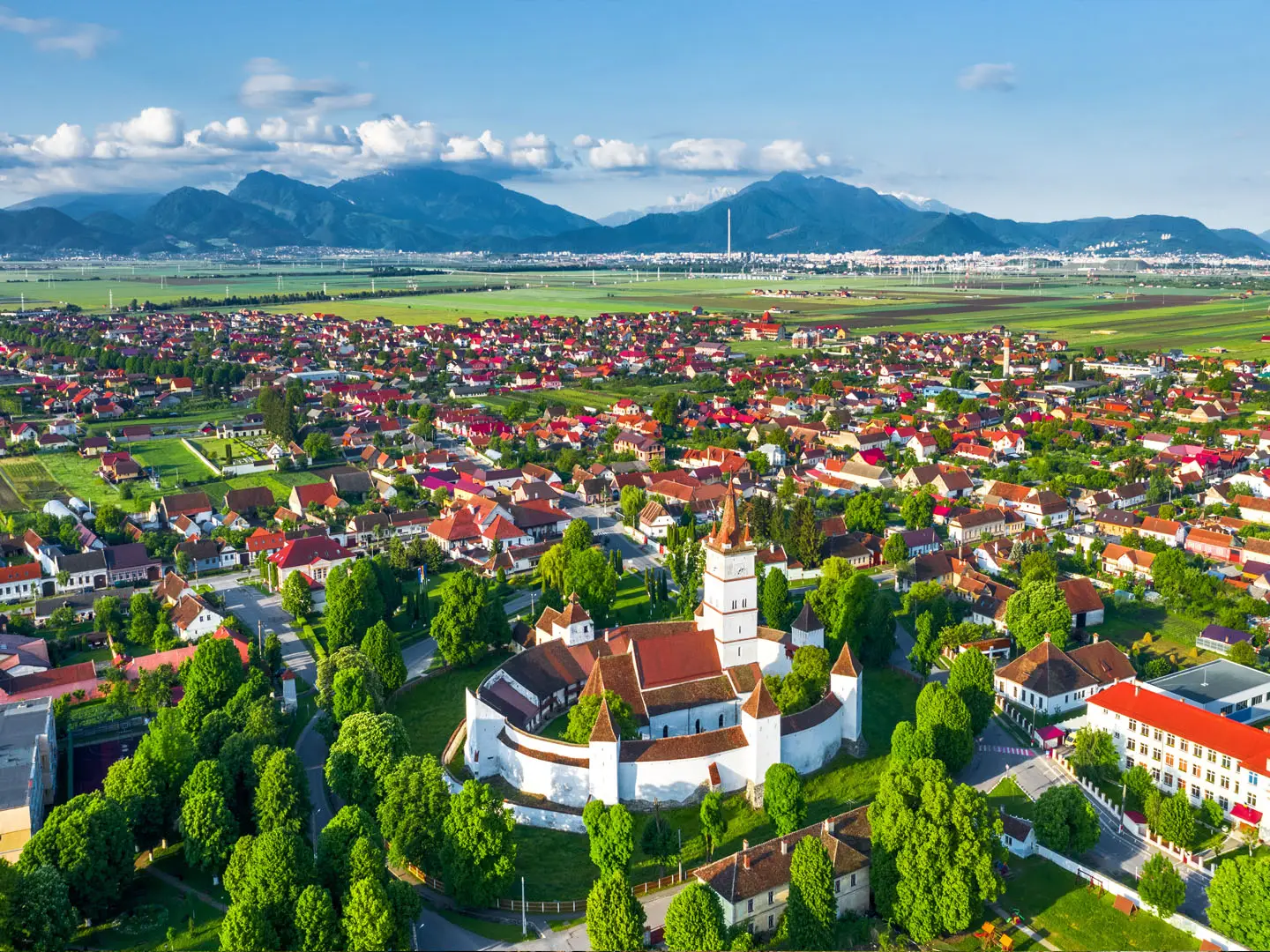
Transylvanian Saxon Villages
How would you rate Transylvanian Saxon Villages?
Tap a star to share your experience and help other hikers.
Transylvanian Saxon Villages: Viscri to Biertan on Foot
HikeList Score
Transylvanian Saxon Villages scored 80/100 on HikeList's trail-quality metrics.
See score breakdownHide breakdown
- Ideal length 81
- Balanced challenge 90
- Scenery & wildness 71
- Varied terrain 83
- Accommodation 74
- Food & support 81
- Path quality 80
- Season flexibility 89
Computed from length, challenge, scenery & wildness, terrain variety, accommodation, food & support, path quality and season flexibility.
The Transylvanian Saxon Villages walk is a 75 km, 4–5 day point-to-point hike through Saxon Land in southern Transylvania, Romania. The best-defined route is the Church Fortress Trail between Viscri and Biertan, linking medieval villages with UNESCO-listed fortified churches. It is moderate rather than mountainous: rolling farmland, oak and beech forest, dirt and gravel tracks, cobbled village lanes and modest daily climbs. It suits hikers who want culture, guesthouses and quiet rural walking more than high peaks.
Route Overview
Walk Viscri to Biertan, or reverse it. The full Church Fortress Trail is an approximately 75 km Viscri–Biertan route in 10 short stages, passing or linking Saxon villages including Bunesti, Crit, Mesendorf, Saschiz, Cloasterf, Apold, Richis and Copsa Mare. Saschiz sits on the popular shorter Viscri–Saschiz–Biertan corridor of about 24 km. The route is linear, with overnight stays usually in village guesthouses or small pensions. It overlaps the Terra Saxonum section of the Via Transilvanica, which continues more widely from Sighisoara towards Sibiu. For higher Carpathian terrain, compare the Carpathian Ridge Trail, Bucegi Plateau Circuit or Curmătura Hut Loop.
Saxon Villages and Fortified Churches
From the 12th and 13th centuries, Hungarian kings invited German-speaking Transylvanian Saxons to settle and defend this frontier. Villages were built around churches that, from the 14th to 16th centuries, were fortified with walls and towers against Tatar and Ottoman raids. More than 150 fortified churches survive from an original 300. Seven villages, including Viscri, Saschiz and Biertan, form part of the UNESCO World Heritage listing. Most Saxons emigrated in the 20th century, especially after 1989.
Notable highlights
Viscri fortified church: A whitewashed Romanesque hall-church, later fortified and now UNESCO-listed. The village is also known for its restored Saxon houses and craft revival linked to King Charles III.
Biertan fortified church: A hilltop Saxon stronghold with concentric defensive walls and towers. It was the seat of the Lutheran bishops of Transylvania for nearly 300 years.
Biertan’s Marriage Prison: A tiny tower cell where couples seeking divorce were traditionally confined together to encourage reconciliation. It is one of the most memorable stories attached to the fortified church.
Saschiz fortified church and clock tower: Saschiz is a UNESCO village on the Viscri–Biertan corridor. Its fortified church and clock tower mark a useful cultural stop between the two endpoints.
Malancrav frescoes and Apafi Mansion: On the wider Saxon route, Malancrav has a church known for medieval Gothic wall paintings and the restored Apafi Mansion, now used as a guesthouse.
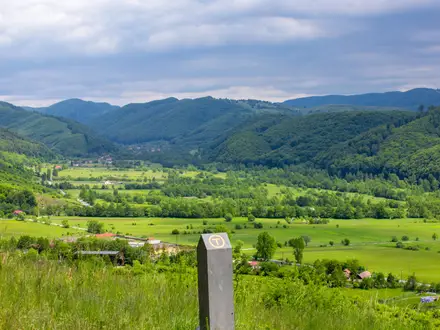
Living Saxon landscape: Between villages the trail crosses hay meadows, orchards, pasture and oak forest still worked in traditional ways. Expect a rural, lived-in landscape rather than wilderness.
Challenges to expect
The walking is non-technical, but navigation can be uneven. The Church Fortress Trail is mainly supported by GPX and guide material, while the Via Transilvanica sections have orange-and-white waymarks and stone milestones. Open fields, forest tracks and village links can be faint, so carry offline mapping. Mud is likely after rain, high summer can be hot, and daily services are limited to villages and pre-booked guesthouses.
HikeList Score
Transylvanian Saxon Villages scored 80/100 on HikeList's trail-quality metrics.
See score breakdownHide breakdown
- Ideal length 81
- Balanced challenge 90
- Scenery & wildness 71
- Varied terrain 83
- Accommodation 74
- Food & support 81
- Path quality 80
- Season flexibility 89
Computed from length, challenge, scenery & wildness, terrain variety, accommodation, food & support, path quality and season flexibility.
 Romania
Show more data Show less
- Hilly
- Forest
- Rural
- Dirt
- Gravel
- Paved
- Guesthouses
- Hotels
- Family Friendly
- Pet Friendly
- Restrooms
- Water Sources
- Campsites
Photos from hikers
Taken on the trail by people who've reviewed Transylvanian Saxon Villages.
Reviews
How would you rate Transylvanian Saxon Villages?
Tap a star to start your review — you could be the first.