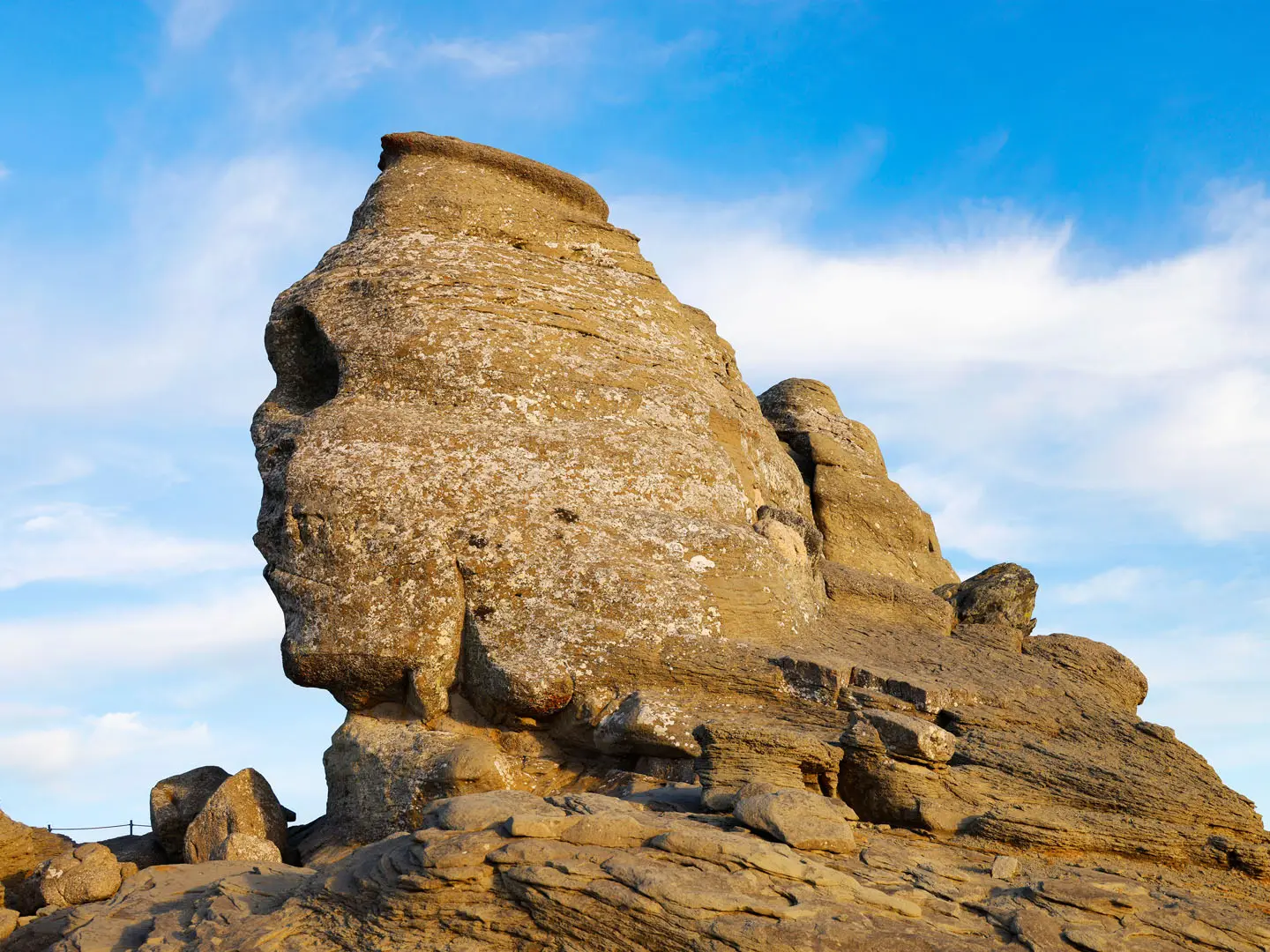
Babele to Sphinx Rock Trail
How would you rate Babele to Sphinx Rock Trail?
Tap a star to share your experience and help other hikers.
Babele to Sphinx Rock Trail: Bucegi Plateau Short Walk
HikeList Score
Babele to Sphinx Rock Trail scored 69/100 on HikeList's trail-quality metrics.
See score breakdownHide breakdown
- Ideal length 55
- Balanced challenge 64
- Scenery & wildness 78
- Varied terrain 64
- Accommodation 66
- Food & support 68
- Path quality 98
- Season flexibility 89
Computed from length, challenge, scenery & wildness, terrain variety, accommodation, food & support, path quality and season flexibility.
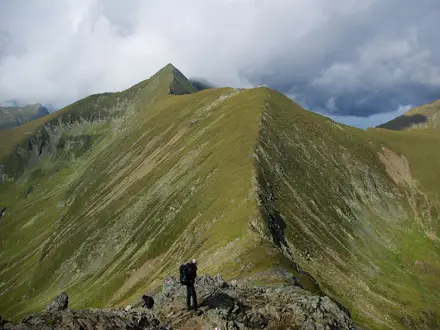
The Babele to Sphinx Rock Trail is an easy high-plateau walk in Bucegi Natural Park, Southern Carpathians, Romania. It links the Babele cabana and mushroom-shaped rocks with the nearby Sphinx (Sfinxul), at 2,216 m. Treat the listed 2.5 km as a relaxed out-and-back wander around the formations; the direct walk is only a few hundred metres each way and takes about 15–20 minutes from Babele. It suits casual hikers, families and cable-car day-trippers, but the plateau is exposed and weather-prone.
Route Overview
Start at Babele, beside the cabana and upper Busteni cable-car area on the Bucegi Plateau. From there, follow the rough stony plateau path south-west to the Sphinx, then return the same way. Most hikers arrive by the Busteni telecabina, which gains roughly 1,200 m in about 13–15 minutes; alternatives are the long Jepilor Valley approach from Busteni, walking in from Piatra Arsa, or using access from Sinaia. This is not a formal long-distance route, just a short out-and-back between two landmark rock formations. It is often combined with the Caraiman Cross Trail or folded into a broader Bucegi Plateau Circuit.
Sphinx Folklore and Plateau Geology
The name “Sphinx” was coined in 1935, after the rock’s human-head profile; it had been photographed around 1900. Both the Sphinx and Babele are erosional remnants of sandstone-and-conglomerate caprock, shaped by freeze-thaw action, wind and water over very long periods. The plateau also has strong Dacian folklore: legends link the Sphinx with Zalmoxis, the pre-Roman Dacian deity, and popular tradition notes a striking late-November sunset alignment with the rock’s profile.
Notable highlights
- The Sphinx (Sfinxul, 2,216 m): An 8 m-high, 12 m-wide natural megalith whose profile resembles a human face from the right angle. It is Romania’s best-known rock formation and the main landmark of this short walk.
- Babele: A cluster of mushroom- and anvil-shaped rocks beside Babele cabana, nicknamed “the Old Women”. They were shaped by the same wind, water and freeze-thaw erosion as the Sphinx.
- Bucegi Plateau panoramas: The route crosses an open, treeless alpine plateau above 2,200 m, with views towards the Prahova Valley and surrounding Southern Carpathian ridges when weather is clear.
- Busteni cable car (telecabina): The usual access route, lifting hikers roughly 1,200 m from Busteni to the plateau in about 13–15 minutes.
- Caraiman Cross (Heroes’ Cross): A monumental WWI memorial cross on nearby Caraiman Peak, at 2,291 m, commonly added to a Babele–Sphinx visit.
Challenges to expect
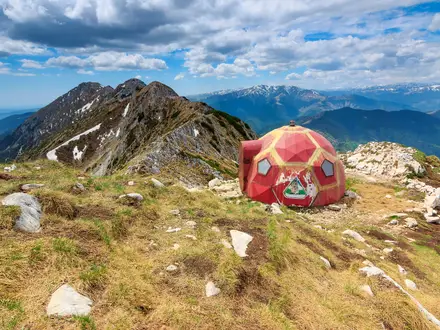
The walking is easy, but the setting is alpine. Expect rough, stony ground rather than a paved path, and little shelter on the open plateau. Weather can change quickly at around 2,200 m, with wind, cloud and poor visibility. Winter conditions are not suitable for casual hiking because of snow, avalanche risk and severe exposure. For a much bigger mountain objective, compare the Carpathian Ridge Trail.
HikeList Score
Babele to Sphinx Rock Trail scored 69/100 on HikeList's trail-quality metrics.
See score breakdownHide breakdown
- Ideal length 55
- Balanced challenge 64
- Scenery & wildness 78
- Varied terrain 64
- Accommodation 66
- Food & support 68
- Path quality 98
- Season flexibility 89
Computed from length, challenge, scenery & wildness, terrain variety, accommodation, food & support, path quality and season flexibility.
 Romania
Show more data Show less
- Alpine
- Mountain Plateau
- Rocky
- Stony
- Huts
- Hotels
- Family Friendly
- Pet Friendly
- Restrooms
- Shelters
Photos from hikers
Taken on the trail by people who've reviewed Babele to Sphinx Rock Trail.
Reviews
How would you rate Babele to Sphinx Rock Trail?
Tap a star to start your review — you could be the first.