Utvandrarleden (Emigrant Trail)
How would you rate Utvandrarleden (Emigrant Trail)?
Tap a star to share your experience and help other hikers.
Utvandrarleden (Emigrant Trail): Småland’s Literary Loop
HikeList Score
Utvandrarleden (Emigrant Trail) scored 78/100 on HikeList's trail-quality metrics.
See score breakdownHide breakdown
- Ideal length 85
- Balanced challenge 50
- Scenery & wildness 71
- Varied terrain 83
- Accommodation 92
- Food & support 88
- Path quality 80
- Season flexibility 89
Computed from length, challenge, scenery & wildness, terrain variety, accommodation, food & support, path quality and season flexibility.
Utvandrarleden is a waymarked 110 km circular hiking trail in Småland, southern Sweden, usually walked in 4–6 days. It loops through “Moberg country” around Ljuder parish, the landscape behind Vilhelm Moberg’s emigrant novels. The walking is easy (graded green/simple), on forest roads, dirt tracks, gravel lanes and short minor-road sections, with only about 590 m of total ascent. It suits hikers who want a quiet, low-level multi-day route with hostels, manor-house stays, campsites and strong literary history.
Route Overview
The route is a loop, most commonly started and finished at Korro craft village and nature reserve, though it can be joined at any point. A typical 6-stage version goes Korro, Abrahams Camp, Yxnanas, Langasjo, Moshult, Grimsnas Herrgard and back to Korro; stages are flexible rather than fixed. Key places include Ljuder parish, Korpamoen, Akerby and several accommodation points such as Langasjo Hostel, Moshult Hostel and Grimsnas Herrgard. Waymarking is by orange marks and orange “vandringsled” signs. For nearby southern Swedish walking, compare the Blekingeleden or the Glasriket Trail.
The emigrant novels and Moberg country
Utvandrarleden follows the real Småland landscape that inspired Vilhelm Moberg’s four emigrant novels: Utvandrarna (The Emigrants, 1949), Invandrarna, Nybyggarna and Sista brevet till Sverige. The books follow Karl Oskar Nilsson and Kristina as they leave Ljuder parish in the mid-1800s for America. Based on years of archival research, the novels dramatise 19th-century emigration from poor, stony Småland to the United States and later inspired Jan Troell’s films and the musical Kristina från Duvemåla.
Notable highlights
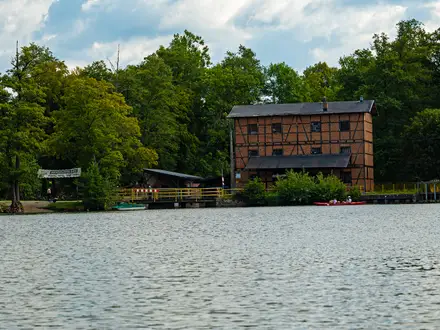
- Korro craft village and nature reserve: A preserved 18th-century craft hamlet on the Ronneby river, with old craft buildings and accommodation. It is the most common start and finish for the loop.
- Ljuder parish: The home parish of Moberg’s fictional emigrants and the cultural heart of the route. Walking here gives the literary context its real landscape.
- Korpamoen: The thin-soiled, stony smallholding farmed by Karl Oskar and Kristina in The Emigrants. It is one of the route’s key literary landmarks.
- Grimsnas Herrgard: A manor house on the trail offering accommodation and meals. It works well as a comfortable mid-loop base.
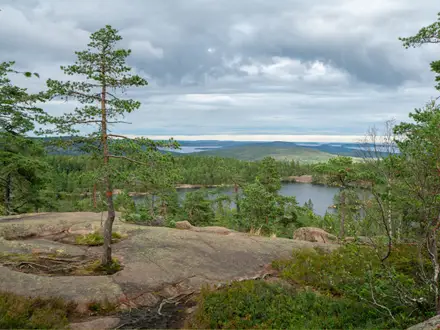
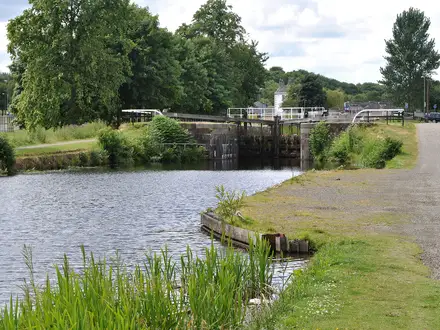
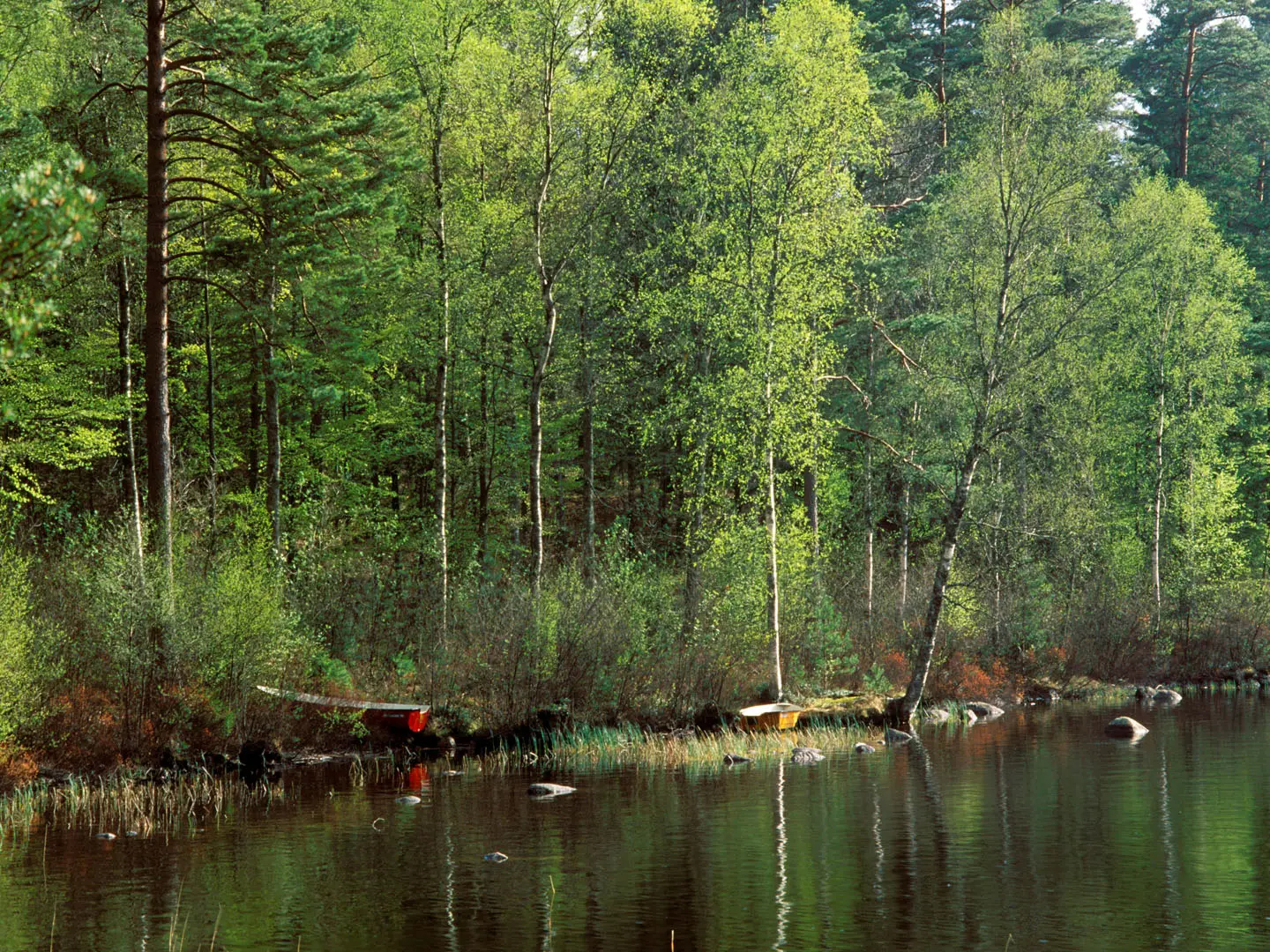
- Småland forest-and-lake landscape: The trail passes spruce and birch woods, meadows, lakeshores, stone walls and red cottages with white trim — the quiet countryside described in the novels.
Challenges to expect
This is not a mountain trek: the main challenge is linking long but gentle days, especially if using the longer illustrative stages. Navigation should be straightforward with orange waymarks, but forest tracks and minor roads still require attention. Resupply and accommodation need planning around villages and booked stays. Late spring to early autumn is best; summer is the most popular time. For longer Swedish lowland routes, see the Hallandsleden and Bergslagsleden.
HikeList Score
Utvandrarleden (Emigrant Trail) scored 78/100 on HikeList's trail-quality metrics.
See score breakdownHide breakdown
- Ideal length 85
- Balanced challenge 50
- Scenery & wildness 71
- Varied terrain 83
- Accommodation 92
- Food & support 88
- Path quality 80
- Season flexibility 89
Computed from length, challenge, scenery & wildness, terrain variety, accommodation, food & support, path quality and season flexibility.
 Sweden
Show more data Show less
- Forest
- Farmland
- Lakeshore
- Dirt
- Gravel
- Paved
- Hotels
- Hostels
- Campsites
- Wild Camping Spots
- Family Friendly
- Pet Friendly
- Water Sources
- Campsites
- Shelters
- Picnic Areas
In these collections
Photos from hikers
Taken on the trail by people who've reviewed Utvandrarleden (Emigrant Trail).
An illustrative first stage from the common start at Korro, beginning the loop through Småland’s forest-and-farmland landscape.
A shorter stage on the flexible loop, useful for balancing the longer first day.
Continue through quiet countryside to Langasjo, a village on the route with hostel accommodation.
A forest-and-track stage towards Moshult and the Moshultamala area, where hostel accommodation is listed.
Walk on to Grimsnas Herrgard, a manor-house accommodation stop on the route.
Complete the circular trail by returning to Korro, the common start and finish point.
Reviews
How would you rate Utvandrarleden (Emigrant Trail)?
Tap a star to start your review — you could be the first.