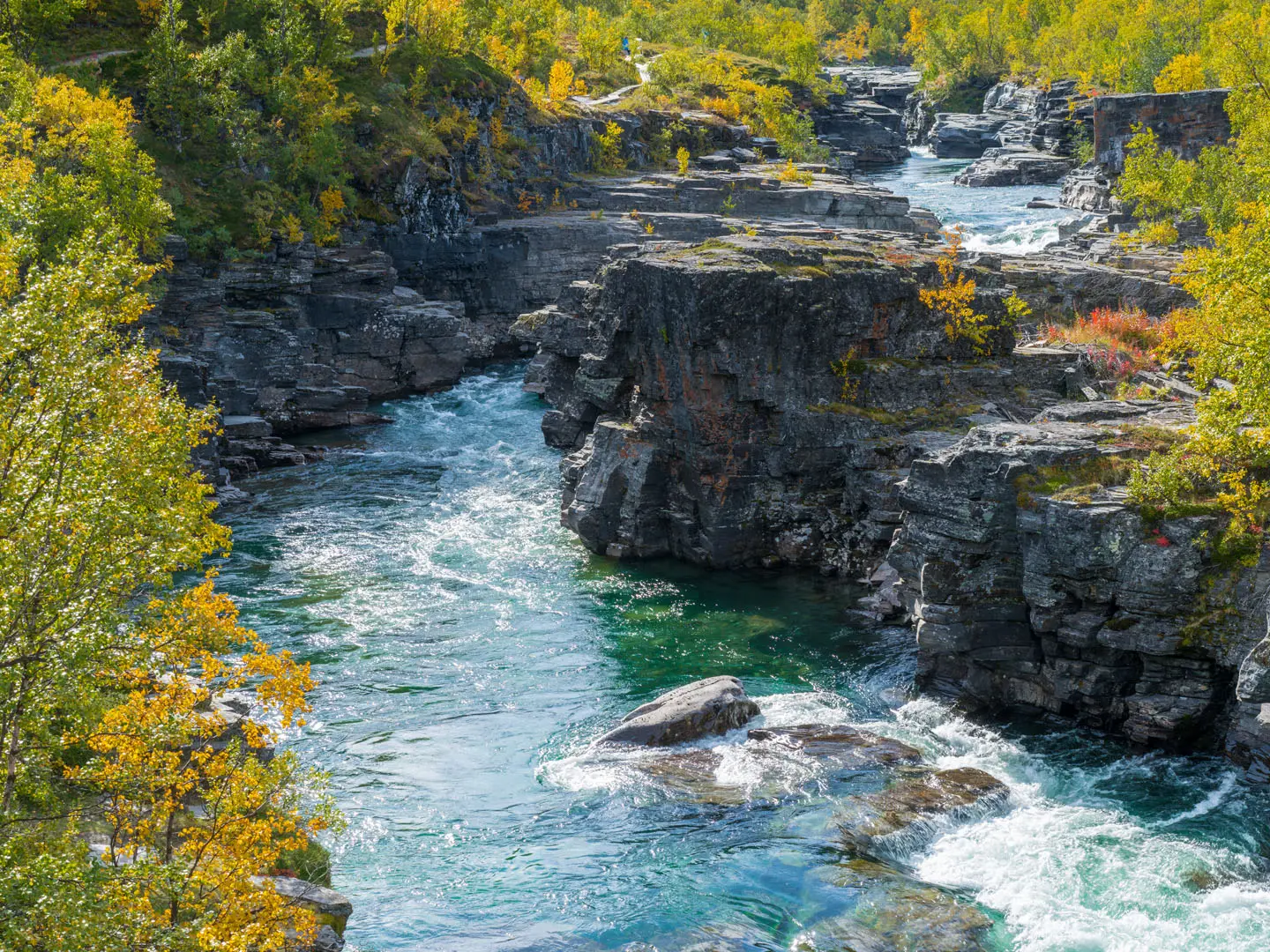
Abisko to Kebnekaise
How would you rate Abisko to Kebnekaise?
Tap a star to share your experience and help other hikers.
Abisko to Kebnekaise: Kungsleden Through Swedish Lapland
HikeList Score
Abisko to Kebnekaise scored 88/100 on HikeList's trail-quality metrics.
See score breakdownHide breakdown
- Ideal length 93
- Balanced challenge 100
- Scenery & wildness 90
- Varied terrain 100
- Accommodation 67
- Food & support 72
- Path quality 98
- Season flexibility 76
Computed from length, challenge, scenery & wildness, terrain variety, accommodation, food & support, path quality and season flexibility.
Abisko to Kebnekaise is the northern, most popular section of the Kungsleden in Swedish Lapland. The normally walked route continues from Kebnekaise mountain station to Nikkaluokta, making about 105 km over 6 days; Abisko to Kebnekaise station alone is about 86 km. It is a moderate point-to-point Arctic trek: not steep by alpine standards, but remote, rocky, boggy and exposed to fast-changing mountain weather. It suits hikers comfortable with hut-to-hut or self-sufficient multi-day walking.
Route Overview
Most hikers walk south from STF Abisko Turiststation, reached by train on the Iron Ore Line / Malmbanan from Kiruna or Narvik. The route passes Abiskojaure, Alesjaure, Tjaktja, Salka and Singi before leaving the main Kungsleden for STF Kebnekaise Fjällstation. From there, the practical finish is Nikkaluokta, about 18.5 km farther and the nearest road head, with a bus to Kiruna; a passenger boat across Ladtjojaure can shorten that final leg by about 6 km. Optional boats also operate around Alesjaure. For comparison with other Nordic treks, see the Arctic Circle Trail or Sweden’s Jämtland Triangle.
History of the Kungsleden
The Kungsleden, or “King’s Trail”, was created by Svenska Turistföreningen, the Swedish Tourist Association, to open the northern mountains to walkers. STF was founded in 1885, and the Abisko to Vakkotavare section was marked in 1926–1927. The name Kungsleden first appeared in 1928. The Abisko–Kebnekaise stretch later became the trail’s busiest northern section, helped by direct train access at Abisko and the draw of Kebnekaise.
Notable highlights
- Abisko National Park & Lapporten: The trek starts in Abisko National Park, with views towards Lapporten, the U-shaped glacial gap also known as the “Gate of Lapland”. It is one of Sweden’s most recognised mountain views.
- Tjaktja Pass (Tjaktjapasset, 1,150 m): This is the high point of the route, between Tjaktja and Salka. Expect rockier ground, an emergency wind shelter at the pass and possible lingering snow into early summer.
- Kebnekaise: Sweden’s highest mountain rises above the STF Kebnekaise Fjällstation. The Kungsleden passes below it; summit attempts are separate, often guided, objectives from the mountain station.
- Alesjaure & boat crossings: Alesjaure is a classic hut stop beside a high lake in Sami reindeer-herding country. Optional STF passenger boats here can cut some lakeside walking.
- Sápmi / Sami culture: The route crosses Sápmi, the homeland of the indigenous Sami, and active reindeer-grazing land. Nikkaluokta is a Sami village and the practical road-end finish.
- Midnight sun: The trail lies well inside the Arctic Circle, so around midsummer there is 24-hour daylight. That can make late starts or long walking windows more realistic.
Challenges to expect
The difficulty is moderate, but this is still a serious Arctic trek. Expect long, remote stages; rocky, uneven ground; boggy sections crossed on plank boardwalks; bridges over larger streams; and fast-changing weather. Snowfields can linger near Tjaktja Pass in early summer. Resupply is limited: some huts have small shops, but Tjaktja and Singi do not. For a lower-level Swedish alternative, compare the Höga Kustenleden (High Coast Trail).
HikeList Score
Abisko to Kebnekaise scored 88/100 on HikeList's trail-quality metrics.
See score breakdownHide breakdown
- Ideal length 93
- Balanced challenge 100
- Scenery & wildness 90
- Varied terrain 100
- Accommodation 67
- Food & support 72
- Path quality 98
- Season flexibility 76
Computed from length, challenge, scenery & wildness, terrain variety, accommodation, food & support, path quality and season flexibility.
 Sweden
Show more data Show less
- Mountainous
- Tundra
- Forest
- Valley
- Lakeside
- Dirt
- Rocky
- Boardwalk
- Natural Mountain Path
- Huts
- Campsites
- Wild Camping Spots
- Pet Friendly
- Restrooms
- Water Sources
- Campsites
- Shelters
Download Our Full Guide to Abisko to Kebnekaise FREE!
Get our comprehensive guide to this hike for free. Save it for later reading or print out at home.
Photos from hikers
Taken on the trail by people who've reviewed Abisko to Kebnekaise.
Abisko to Kebnekaise: The Complete Guide
 i
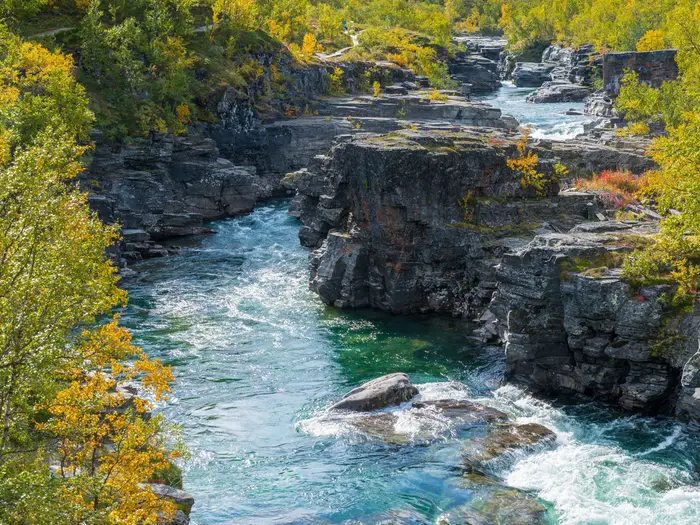
Image by Petr
i
Image by Petr Abisko to Kebnekaise is the classic northern stretch of Sweden’s Kungsleden: a point-to-point Arctic fell trek from Abisko National Park towards the high mountains around Kebnekaise. It suits hikers who want a serious multi-day route without technical climbing, with clear waymarking, STF huts and big, open country from the first day.
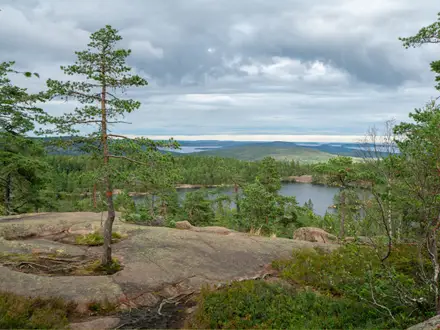
The trail starts beside STF Abisko Turiststation, reached directly by train on the Malmbanan, and heads south through birch forest, tundra, lakes and high valleys. Views towards Lapporten set the tone early, before the route moves deeper into Sápmi and active reindeer-grazing land.
Its high point is Tjäktja Pass, around 1,150 m, the highest point on the whole Kungsleden. Beyond Sälka and Singi, the usual line leaves the main trail for STF Kebnekaise Fjällstation, then continues to the road head at Nikkaluokta for the bus to Kiruna.
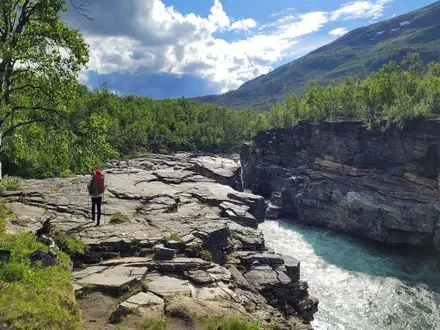
This is not a hard alpine route, but it is remote, exposed and far inside the Arctic Circle. Expect long stages, rocky and boggy ground, boardwalks over mire, river bridges, limited resupply and weather that can change quickly even in summer.
This guide covers stages, days, accommodation, food, transport, terrain and the common mistakes to avoid.
Stage-by-Stage Guide
Stage 1: Abisko Turiststation to Abiskojaure — approx. 14 km
The walk begins at STF Abisko Turiststation, where the Kungsleden trailhead is close to the railway stop on the Malmbanan / Iron Ore Line. This is the most straightforward access point on the route, so it is worth starting with food, fuel and any hut arrangements already sorted before leaving Abisko.
The first stage runs through Abisko National Park, with the route leaving the busier station area and entering lower Arctic terrain. Expect a mix of established path, birch forest sections near Abisko, boardwalk over wet ground and bridges over larger streams.
Views towards Lapporten / Tjuonavagge are one of the major early highlights, especially in clear weather. The route gradually feels more remote as it moves away from the railway and road corridor towards Abiskojaure by Ábeskojávri.
Abiskojaure has a manned STF hut, a small shop and a sauna, making it a useful first night for hut-to-hut walkers. Camping is also part of the normal pattern on this route, with wild camping possible under allemansrätten where done responsibly.
There is no onward road access at Abiskojaure. Once past Abisko, transport options effectively disappear until Nikkaluokta, so this stage is the point at which the walk becomes a remote mountain journey rather than a day walk from a station.
Navigation is generally clear on the marked Kungsleden, but low cloud, rain or late-season poor visibility can still make concentration necessary. Boardwalks over mire can be slippery when wet, and mosquitoes can be an issue in July.
Stage 2: Abiskojaure to Alesjaure — approx. 20 km
This is one of the longer standard days on the route and is often the stage where the scale of the Swedish Lapland fell country becomes obvious. The path leaves the lower birch-zone feel behind and continues through open valley and lake country.
Underfoot conditions vary between dirt path, rocky sections and boggier ground with plank boardwalks. Although the route is not steep by alpine standards, the distance and exposed terrain make it a proper full walking day, particularly with a heavy pack.
Alesjaure is a classic high-lake stopping point in Sami reindeer-herding country. Give reindeer plenty of space, stay on the established trail where possible, and avoid disturbing herds or working dogs if encountered.
There is a manned STF hut at Alesjaure, with a shop. This is one of the key resupply points on the northern section, but shop stock, opening dates and payment arrangements should be checked before travelling.
An optional STF passenger boat across the Alesjaure lakes can cut about 6 km of lakeside walking in summer. Boat services run to limited timetables and should not be relied on without checking current times before the trip.
There is no normal public transport access at Alesjaure. Navigation remains on the marked Kungsleden, but mist and broad open terrain can reduce visibility; carry proper mapping and do not rely only on following other walkers.
Stage 3: Alesjaure to Tjäktja — approx. 13 km
This shorter stage positions walkers below the highest crossing of the route. It is often used as a controlled day before the Tjäktja Pass rather than being combined too casually with the pass itself, especially in poor weather.
The terrain becomes higher, rockier and more exposed as the route approaches Tjäktja. The walking remains on the marked Kungsleden, with the same mix of mountain path, stony ground and wet sections that characterises the route.
There are broad fell views and a growing sense of remoteness. This is no longer the gentler start from Abisko; weather changes can be felt quickly and there is little shelter away from the hut system.
Tjäktja has a manned STF hut, but no shop. Food for this night and the next stage must be carried from earlier resupply points, most practically Abiskojaure or Alesjaure depending on the walker’s plan.
There is no road access or public transport at Tjäktja. If conditions deteriorate, the realistic options are to wait at the hut or adjust the hut-to-hut schedule rather than expect an easy exit.
Navigation towards Tjäktja is still waymarked with cairns and red markers, but the higher setting makes compass, map and GPS back-up more important. Early in the season, snowfields can linger in this part of the route, especially towards Tjäktjapasset.
Stage 4: Tjäktja to Sälka via Tjäktjapasset — approx. 12 km
This is the highest and most serious stage of the standard Abisko–Nikkaluokta itinerary. Tjäktjapasset, at around 1,150 m, is the high point of this section and the highest point on the whole Kungsleden.
The route over the pass is rockier and more exposed than the lower valley stages. It is not a technical alpine crossing in normal summer conditions, but poor visibility, wind, cold rain or lingering snow can make it feel considerably harder.
There is an emergency wind shelter at the top of the pass. It should be treated as a safety refuge rather than a normal lunch stop or planned accommodation.
Views from the pass can be wide and memorable in settled weather, with the route then continuing down towards Sälka in the high valleys. In low cloud, however, this stage can become mainly a navigation and weather-management day.
Sälka has a well-equipped manned STF hut, a shop and a sauna, making it a natural recovery point after the pass. As with all hut services, current opening dates, prices and shop provision should be checked before relying on them.
There is no road access at Sälka. The main warnings for this stage are exposure, lingering early-summer snow near the pass, slippery rock in wet weather and the need to avoid pressing on over the high point if the weather is deteriorating.
Stage 5: Sälka to Singi — approx. 12 km
This is a shorter valley stage after the effort of Tjäktjapasset. The walking is still remote and exposed, but the day is generally less committing than the pass crossing if the weather is reasonable.
The path continues through open Arctic fell terrain, with stony and boggy ground in places and boardwalk where the trail crosses wetter sections. The route remains waymarked, but the landscape is broad and can feel featureless in mist.
Singi is an important junction. This is where the spur towards Kebnekaise leaves the main Kungsleden, while the main trail continues south towards Kaitumjaure and, ultimately, Hemavan.
There is a manned STF hut at Singi, but no shop. Food must be carried from Sälka or an earlier resupply point, and walkers should not arrive expecting to buy meals or provisions.
There is no road or public transport access at Singi. It is a practical staging point rather than an exit point, so weather delays here can affect both the Kebnekaise stage and the final walk out to Nikkaluokta.
Navigation is especially important at the junction: make sure the correct route is taken for Kebnekaise rather than continuing along the main Kungsleden. In poor visibility, pause at the junction and verify the direction before committing.
Stage 6: Singi to Kebnekaise Fjällstation — approx. 14 km
This stage leaves the main Kungsleden on the spur towards Kebnekaise. It is the final walking day for itineraries ending at STF Kebnekaise Fjällstation, though most end-to-end walkers continue the following day to Nikkaluokta for road transport.
The terrain remains high, open and remote, with the familiar mixture of mountain path, rocky sections and wetter ground. The approach to Kebnekaise brings the route below Sweden’s highest mountain, but the Kungsleden does not summit Kebnekaise.
Kebnekaise Fjällstation is a large mountain station and the main base for separate Kebnekaise summit attempts. Any summit day is an additional objective, often guided, and should be planned separately from the Abisko–Nikkaluokta trek.
Accommodation and services are available at STF Kebnekaise Fjällstation, but current booking arrangements, opening dates and prices should be checked before travelling. This is a popular mountain base in peak season, so do not assume last-minute space.
There is no road at Kebnekaise Fjällstation; the practical road-head finish is still Nikkaluokta, about 19 km farther on. Treat Kebnekaise as a mountain station stop, not as a transport exit.
Navigation from Singi requires following the correct spur towards Kebnekaise rather than the continuing Kungsleden. The main warnings are exposure to fast-changing weather and the temptation to add a Kebnekaise summit attempt without allowing enough time, kit or conditions.
Stage 7: Kebnekaise Fjällstation to Nikkaluokta — approx. 19 km
This is the normal walk-out stage to the nearest road head. Although the major mountain crossings are behind you, the day is still long enough to matter, especially if timed around the bus from Nikkaluokta to Kiruna.
The route leaves STF Kebnekaise Fjällstation and heads towards Nikkaluokta, a Sami village and the practical finish for most walkers. The terrain gradually transitions from the mountain-station setting towards the road-access end of the trek.
An optional summer boat on Láddjujávri / Ladtjojaure can cut about 6 km from the walk to Nikkaluokta. It runs to limited timetables, so current boat times should be checked before building the day around it.
Nikkaluokta has the road connection out of the route, with a daily bus to Kiruna railway station and airport. Bus times should be checked before travelling, particularly if planning same-day onward trains or flights.
Food and accommodation availability at the end should not be assumed without checking current arrangements. Many walkers treat Nikkaluokta mainly as the transport finish and plan onward travel via Kiruna.
Navigation is generally more straightforward than the high-pass stage, but tiredness, weather and transport pressure can still lead to mistakes. Leave enough time for the full 19 km if the Láddjujávri / Ladtjojaure boat is not running or does not fit the day’s schedule.
Recommended Itinerary
The most practical plan is a hut-to-hut itinerary of seven walking days from Abisko Turiststation to the road end at Nikkaluokta. The first six days take you to STF Kebnekaise Fjällstation; the final day is the normal walk-out to transport at Nikkaluokta.
Distances are approximate and should be checked against official mapping before booking fixed onward travel. STF hut opening dates, bed arrangements, shop stock and any boat timetables should be checked before travelling.
Standard itinerary: 7 days to Nikkaluokta
| Day | From | To | Approx. distance | Why this stage makes sense | Services/accommodation notes |
|---|---|---|---|---|---|
| 1 | Abisko Turiststation | Abiskojaure | 14 km | A straightforward first stage from the rail-access trailhead into Abisko National Park, allowing a manageable start with full packs. | STF Abisko Turiststation at the start. Abiskojaure has a manned STF hut, small shop and sauna; camping is also possible where permitted and appropriate. |
| 2 | Abiskojaure | Alesjaure | 20 km | One of the longer standard days, but it links two key hut stops and moves the route into more open fell terrain and lakeside walking. | Alesjaure has a manned STF hut and shop. An optional STF passenger boat across the Alesjaure lakes can cut about 6 km, but it is summer-only and runs to a limited timetable. |
| 3 | Alesjaure | Tjäktja | 13 km | A shorter day that positions you below Tjäktja Pass rather than forcing the high crossing at the end of a long stage. | Tjäktja has a manned STF hut but no shop. Carry enough food from Alesjaure or earlier for this and the following stages. |
| 4 | Tjäktja | Sälka | 12 km | This is the high-pass day over Tjäktjapasset, the highest point on the Kungsleden. Keeping the distance modest is sensible because the ground is rockier and more exposed, with lingering snow possible early in the season. | Emergency wind shelter at Tjäktja Pass. Sälka has a manned STF hut, shop and sauna, making it a useful place to recover and restock. |
| 5 | Sälka | Singi | 12 km | A short, steady stage through high valley terrain to the main junction where the Kebnekaise spur leaves the Kungsleden. | Singi has a manned STF hut but no shop. Do not rely on buying food here. |
| 6 | Singi | Kebnekaise Fjällstation | 14 km | This leaves the main Kungsleden and follows the spur towards Kebnekaise, finishing at the large mountain station below Sweden’s highest mountain. | STF Kebnekaise Fjällstation is the major service point. Any Kebnekaise summit attempt is a separate mountain objective from here, often guided, and should not be treated as part of the through-walk. |
| 7 | Kebnekaise Fjällstation | Nikkaluokta | 19 km | The normal exit day to the nearest road head and onward bus connections, avoiding the common mistake of treating Kebnekaise Fjällstation as the practical end of the journey. | Nikkaluokta is the road-end finish with bus access to Kiruna. A summer boat on Láddjujávri/Ladtjojaure can cut about 6 km, but times and operation should be checked before relying on it. |
Slower variant: 8–9 days
A slower schedule suits hikers who want more margin for Arctic weather, photography, hut availability, or a possible extra night at Kebnekaise Fjällstation. It is also a good choice for first-time Arctic trekkers carrying camping kit or anyone who prefers not to commit to several consecutive hut-to-hut days.
The simplest slower plan is to follow the standard itinerary and add one or two spare nights at logical service points such as Alesjaure, Sälka or Kebnekaise Fjällstation. Sälka is particularly useful because it comes after Tjäktja Pass and has a shop and sauna; Kebnekaise Fjällstation is the obvious place for an extra night if planning a separate Kebnekaise summit attempt or waiting for the walk-out to Nikkaluokta.
Wild camping under allemansrätten can also be used to shorten days, especially on the longer Abiskojaure–Alesjaure and Kebnekaise–Nikkaluokta legs. Exact camp locations should be chosen on the ground with care for weather exposure, water, ground conditions and reindeer-herding activity.
Faster variant: 5–6 days
A faster itinerary is realistic for fit walkers with light packs, strong mountain judgement and tolerance for long days on rocky, boggy and boardwalked terrain. The midnight-sun period gives long walking windows, but it does not remove the risks of weather, cold, fatigue or slow going over wet ground.
A common 6-day approach is to combine one of the shorter hut stages, most sensibly Alesjaure to Sälka via Tjäktja, making that day about 25 km including the Tjäktja Pass crossing. This saves a night at Tjäktja but removes the advantage of starting the pass fresh, so it is best reserved for settled conditions.
Very strong walkers may complete the full Abisko–Nikkaluokta route in about 5 days by combining additional stages. This leaves little margin for poor weather, hut congestion or delays with boat timetables, and should only be planned with enough food-carrying capacity to pass huts without resupply if necessary.
Planning the Route
How many days to allow
Most walkers should plan this as a 6–7 day trek through to Nikkaluokta, rather than stopping the plan at STF Kebnekaise Fjällstation. Kebnekaise is the major mountain station and a natural goal, but Nikkaluokta is the practical road-end finish, with the onward bus connection to Kiruna.
A 6-day plan to Kebnekaise station works well for fit walkers using the STF hut chain. Adding the final walk to Nikkaluokta makes the full route a 7-day itinerary, or a 6-day itinerary for those comfortable combining longer stages or using one of the seasonal boat shortcuts.
Avoid planning this route too tightly. The walking is not technically difficult, but weather, boggy ground, rocky sections and the exposed crossing of Tjäktjapasset can slow progress. A spare day is useful if connecting to long-distance trains, flights or a fixed bus from Nikkaluokta.
Natural stages and pacing
The route is strongly shaped by the STF huts and mountain stations. The usual line runs from Abisko to Abiskojaure, Alesjaure, Tjäktja, Sälka, Singi, Kebnekaise and then Nikkaluokta, so daily stages tend to fall naturally between these points.
| Planning block | Practical notes |
|---|---|
| Abisko → Abiskojaure | A straightforward first day from the rail-access trailhead into Abisko National Park and the lower birch-forest zone. |
| Abiskojaure → Alesjaure | A longer day by the standards of this route; the optional Alesjaure boat can shorten the lakeside walking by about 6 km in summer. |
| Alesjaure → Tjäktja | A shorter stage, often used to position for Tjäktjapasset the following day. |
| Tjäktja → Sälka | Crosses Tjäktja Pass, the highest and most exposed point of the route; allow time for rockier ground, wind and lingering early-season snow. |
| Sälka → Singi | A moderate hut-to-hut day through high valley terrain. |
| Singi → Kebnekaise Fjällstation | Leaves the main Kungsleden on the spur towards Kebnekaise; the main trail continues south towards Kaitumjaure and Hemavan. |
| Kebnekaise Fjällstation → Nikkaluokta | The practical exit to the road. The Láddjujávri/Ladtjojaure boat can save about 6 km in summer. |
Walking slowly suits this route. The scenery is open and the daylight window around midsummer is extremely long, but the remoteness makes it sensible to finish stages with enough energy to deal with cold, wet weather or a full hut.
Fast walkers can complete the route in about 5 days, but that makes the trip more vulnerable to poor weather and leaves little room for delays. A 7-day plan is usually more resilient, especially for a first Arctic hut-to-hut trek.
Accommodation planning
Accommodation planning is one of the main constraints. The route is served by STF huts and the larger stations at Abisko and Kebnekaise, but places are limited and the route is busy in peak season.
Huts and stations should be checked and booked where possible through STF before committing to travel dates. Opening periods, prices, membership benefits and booking rules can change, and this should be checked before travelling.
Wild camping is a major alternative under Sweden’s allemansrätten. It gives more flexibility if huts are full, if the weather changes the plan, or if you want to break the standard stages differently. Campers still need to plan around food supply, exposed ground and the need to keep impact low on fragile tundra and in reindeer-grazing country.
Food and resupply
Food planning matters more than distance on this route. There are shops at Abiskojaure, Alesjaure and Sälka, but there are no shops at Tjäktja or Singi.
Do not assume that every hut can supply meals or a full resupply. Carry enough food to cover the non-shop huts, delays and any planned camping nights. Hut shops in remote Lapland are useful, but they are not a substitute for a complete food plan.
The most important resupply pattern is:
| Place | Food planning relevance |
|---|---|
| Abisko | Start with the core food load here. |
| Abiskojaure | Hut with shop. |
| Alesjaure | Hut with shop. |
| Tjäktja | No shop. |
| Sälka | Hut with shop. |
| Singi | No shop. |
| Kebnekaise Fjällstation | Major mountain station, but onward plans and availability should still be checked before relying on services. |
| Nikkaluokta | Road-end finish and transfer point towards Kiruna. |
Boats and shortening the walk
There are two useful summer boat options. The Alesjaure boat can shorten the lakeside section by about 6 km, and the Láddjujávri/Ladtjojaure boat near Nikkaluokta can also save about 6 km.
Treat both as optional shortcuts, not essential parts of the itinerary. They run in summer and to limited timetables, so current times, prices and operating dates should be checked before travelling. If a boat is not running, the route can still be walked.
Extending the route
The obvious extension is to stay on the main Kungsleden at Singi instead of turning towards Kebnekaise, continuing south towards Kaitumjaure and ultimately Hemavan. That turns this section into part of a much longer Kungsleden journey and requires a separate food, hut and transport plan.
Kebnekaise itself is a separate mountain objective from STF Kebnekaise Fjällstation. The Kungsleden passes below the mountain; it does not summit it. Any ascent of Kebnekaise should be planned as an additional mountain day, often with guiding, and only in suitable conditions.
Section hiking and escape options
This is not an easy route to section-hike in short pieces. Abisko has excellent rail access and Nikkaluokta has the road connection to Kiruna, but the huts between them are remote and not linked by normal road transport.
In practice, most independent walkers commit to the full Abisko–Nikkaluokta crossing once they leave Abisko. Shortening usually means using one of the summer boats, stopping at Kebnekaise and walking out to Nikkaluokta, or changing pace between huts rather than exiting midway.
What to prioritise before setting off
Accommodation, food and transport should be fixed before fine-tuning the daily mileage. Abisko is straightforward by train on the Malmbanan / Iron Ore Line, while Nikkaluokta is the bus-out point to Kiruna; both ends need to line up with hut bookings or camping plans.
Navigation should not be treated casually just because the trail is waymarked. The route uses cairns and red markers, but cloud, snow patches near Tjäktjapasset, open tundra and poor visibility can make independent map and GPS navigation important.
Weather planning is essential. The route lies well inside the Arctic Circle and crosses exposed fell terrain, so cold rain, wind and rapid changes can occur even in the main summer season. Early in the season, snow can linger around Tjäktja Pass.
The best planning window is roughly late June to mid-September, when huts and seasonal services are normally operating. July is the busiest period and can bring mosquitoes; late August and September usually mean fewer insects and autumn colour, but colder conditions and shorter days.
The route crosses Sápmi and active reindeer-herding land. Stay on the established trail where possible, give reindeer space, and avoid disturbing animals, herders or private hut areas. This is part of responsible route planning, not just trail etiquette.
Towns, Villages and Overnight Stops
This route has very few conventional settlements. Between Abisko and Nikkaluokta, overnight planning is built around STF mountain huts and mountain stations, plus camping. There are no road-access villages between the start and finish, and transport options away from the trail are limited.
Food planning matters. Hut shops are available at Abiskojaure, Alesjaure and Sälka; Tjäktja and Singi have no shop, so those legs need to be covered from carried supplies. STF hut opening dates, prices, booking rules and any boat timetables should be checked before travelling, especially outside the main late-June to mid-September season.
Abisko — STF Abisko Turiststation
Abisko is the practical start of the walk, with the Kungsleden trailhead beside STF Abisko Turiststation. The station sits at the northern end of the route in Abisko National Park, with the Malmbanan / Iron Ore Line train stopping opposite, making this one of the easiest Arctic trailheads in Scandinavia to reach without a car.
It is a strong place to stay the night before starting, particularly if arriving by long-distance train from Stockholm, Kiruna or Narvik. The main value for hikers is a controlled start: sorting fuel, food, maps, hut plans and weather decisions before committing to the more remote stages.
Exact facilities, food availability and current STF arrangements should be checked before travelling. Once you leave Abisko, there are no road links until Nikkaluokta, so do not start short of essential food or weather kit.
Abiskojaure
Abiskojaure is the first standard overnight stop southbound, reached after the opening stage from Abisko. It lies by lake Ábeskojávri near the edge of the birch forest, before the route becomes more consistently open and exposed.
The STF hut here is a good first-night stop for most walkers. It is manned in season, has a small shop and sauna, and also works well as the first check on pack weight, pace and hut/camping routine.
There is no road access or public transport here. If continuing hut-to-hut, this is also the first opportunity to adjust food supplies before the longer stage towards Alesjaure.
Alesjaure
Alesjaure is one of the key overnight stops on the northern Kungsleden, reached after the long lakeside stage from Abiskojaure. It sits in high-lake country and is a natural staging point before the trail climbs towards Tjäktja.
The STF hut is a practical overnight choice and has a shop, making it an important resupply point. It is also one of the places where hikers may choose to slow the schedule, particularly if weather is deteriorating before the higher ground ahead.
An optional STF passenger boat across the Alesjaure lakes can shorten the walking by about 6 km in summer. Boat operation is seasonal and timetable-dependent, so it should not be assumed without checking current times before travelling.
Tjäktja
Tjäktja is a smaller, more remote hut stop before the crossing of Tjäktjapasset. It is useful either as a normal overnight stage from Alesjaure or as a staging point for tackling the pass in better morning conditions.
There is no shop at Tjäktja, so arrive with enough food to continue to Sälka and a margin for poor weather. This is not a place to rely on for resupply or flexible transport options.
The next section crosses the highest point of the whole Kungsleden at Tjäktja Pass, around 1,150 m. Conditions can feel much more exposed here than the modest height suggests, with rocky ground and lingering snow possible early in the season.
Sälka
Sälka is one of the most useful hut stops on the route, reached after crossing Tjäktja Pass southbound. It sits below the pass in the high valleys and is a natural place to regroup after the most exposed section of the trail.
The STF hut is manned in season and has both a shop and sauna. For many walkers, Sälka is the last meaningful resupply point before the Singi and Kebnekaise stages, so food should be assessed carefully here.
There is no road access or public transport. It can be a sensible place to take a longer break or hold a weather day if conditions over the pass have been slow or tiring.
Singi
Singi is the junction where the spur to Kebnekaise leaves the main Kungsleden. Southbound walkers heading for Kebnekaise and Nikkaluokta turn off here; the main Kungsleden continues south towards Kaitumjaure and, eventually, Hemavan.
The STF hut makes Singi a practical overnight stop before the walk across to Kebnekaise Fjällstation. There is no shop at Singi, so supplies must be carried from Sälka or earlier.
This is an important navigation and itinerary point rather than a service centre. In poor visibility or bad weather, make sure the turn towards Kebnekaise is deliberate and that the next day’s food and timing are realistic.
Kebnekaise — STF Kebnekaise Fjällstation
STF Kebnekaise Fjällstation is the large mountain station below Kebnekaise, Sweden’s highest mountain. For many itineraries it is the headline finish of the mountain section, although the practical road-end finish is still around 19 km further on at Nikkaluokta.
It is a very useful overnight stop, especially for walkers considering a rest day or a separate Kebnekaise summit attempt. The Kungsleden does not summit Kebnekaise; any ascent is a separate mountain objective, often guided, and should be planned independently of the through-walk.
Current accommodation, meal options, guided activities and prices should be checked directly with STF before relying on them. From here, the onward walk to Nikkaluokta is still a full stage, so do not treat arrival at the mountain station as the end of all logistics unless transport or accommodation plans have been made.
Nikkaluokta
Nikkaluokta is the practical finish for most Abisko–Kebnekaise hikers because it is the nearest road head. It is a Sami village and the point where the walking route reconnects with public transport.
A daily bus links Nikkaluokta with Kiruna railway station and airport, making Kiruna the main hub for onward travel. Bus times and seasonality should be checked before booking onward trains or flights, as missing the connection can create a costly delay.
An optional summer boat on Láddjujávri / Ladtjojaure can shorten the final approach by about 6 km, but it runs to limited timetables. Treat it as a useful bonus rather than a guaranteed part of the itinerary unless the current schedule fits your walking day.
Getting to the Start
The practical start is STF Abisko Turiststation in Abisko, Norrbotten. The Kungsleden trailhead is by the tourist station, and the easiest access is by rail on the Malmbanan / Iron Ore Line, which stops opposite the station.
By train
Train is the simplest and most reliable way to start this route. Abisko Turiststation has a station stop on the Malmbanan / Iron Ore Line, with connections from Kiruna and Narvik; night trains also run from Stockholm towards this part of northern Sweden.
Arriving by train is especially useful because the walk is point-to-point. You can step off at Abisko Turiststation, start walking from the same area, then leave the route at Nikkaluokta by bus to Kiruna at the end.
Timetables, night-train availability and seasonal changes should be checked before travelling, particularly if connecting the same day from flights or from the finish bus at Nikkaluokta.
By bus
Bus is more important at the end of the walk than at the start: from Nikkaluokta, a daily bus runs to Kiruna railway station and airport. For starting at Abisko, the core public-transport option is the train to Abisko Turiststation.
If planning a bus-based approach via Kiruna or Narvik rather than taking the train to Abisko Turiststation, current connections should be checked before travelling. Do not assume that a bus will place you as conveniently at the trailhead as the train.
By car
Driving is less convenient for this hike because the route does not loop back to Abisko. The normal end-to-end walk finishes at Nikkaluokta, with onward public transport to Kiruna, not back to the start.
Anyone leaving a vehicle near Abisko should plan the return logistics before committing. Long-stay parking arrangements at or near STF Abisko Turiststation, and any practical public-transport link back from Kiruna or Nikkaluokta, should be checked before travelling.
A car can make pre- and post-walk logistics more complicated rather than easier unless there is a separate driver or a clear retrieval plan.
From the nearest airport
Kiruna is the regional transport hub, with both a railway station and an airport. From Kiruna, continue towards Abisko by train on the Malmbanan / Iron Ore Line and get off at Abisko Turiststation.
When booking flights, allow enough time for the onward rail connection. Delays can matter here because the first stage heads into a remote hut-and-camping section with limited services, so a late arrival may be better handled by staying in Abisko and starting the next morning.
Connections between Kiruna airport, Kiruna railway station and onward trains to Abisko should be checked before travelling.
Where to stay before starting
The most convenient pre-walk base is STF Abisko Turiststation, directly beside the trailhead and opposite the train stop. Staying here removes almost all morning transfer risk and gives time to sort food, fuel, hut plans and weather checks before leaving Abisko.
Abisko is also the last fully serviced start point before the hut chain begins. Once on the trail, resupply is limited to selected STF huts, so final packing should be completed before walking out towards Abiskojaure.
Accommodation at Abisko can be busy in the main summer season, especially when hut services and transport are running. Availability, booking rules and current prices should be checked before travelling.
Getting Home from the Finish
For transport purposes, the practical finish is Nikkaluokta, not STF Kebnekaise Fjällstation. From Kebnekaise Fjällstation there is still an approximately 19 km walk to Nikkaluokta, the nearest road head and the place to aim for when booking onward travel.
The key planning point is timing. Public transport from Nikkaluokta is limited, so do not assume there will be a later connection if the walk out from Kebnekaise takes longer than expected. Bus times, boat times and onward rail or flight connections should be checked before travelling.
By train
There is no railway station at Nikkaluokta. The nearest practical rail hub is Kiruna, reached from Nikkaluokta by bus.
From Kiruna, onward trains use the Malmbanan / Iron Ore Line, with connections towards Abisko, Narvik and longer-distance services including night trains towards Stockholm. If returning to the start at Abisko Turiststation, travel first from Nikkaluokta to Kiruna, then take the train back along the Iron Ore Line.
Build in a buffer between the Nikkaluokta bus and any train from Kiruna. A late finish, poor weather on the final 19 km, or a missed bus can easily turn a same-day connection into an overnight stop.
By bus
A daily bus runs from Nikkaluokta to Kiruna railway station and Kiruna airport during the walking season. This is the standard way out for most walkers finishing the Abisko–Kebnekaise route.
Services are timetable-dependent and should not be treated as a turn-up-and-go city bus. Check the current schedule before booking onward trains or flights, and aim to reach Nikkaluokta with enough time to spare.
The optional summer boat on Láddjujávri / Ladtjojaure can shorten the walk towards Nikkaluokta by about 6 km, but it runs only to limited timetables. Do not rely on it for a tight bus connection unless the current boat and bus times work together.
By car/taxi
Nikkaluokta is the road-end finish, but this route is a point-to-point traverse rather than a convenient car loop. Leaving a vehicle at Abisko and finishing in Nikkaluokta still means arranging travel back via Kiruna, so public transport is usually the cleaner option.
If using a taxi or private transfer from Nikkaluokta, arrange it in advance rather than expecting one to be available on arrival. Availability, cost and pickup arrangements should be checked before travelling.
From the nearest airport
The nearest practical airport for the finish is Kiruna airport, served by the bus from Nikkaluokta. Kiruna is also the regional hub for onward trains, so it is the natural place to connect between the trail, rail and flights.
Do not book a flight that depends on a perfect same-day exit unless the timings are generous. The final stage from Kebnekaise Fjällstation to Nikkaluokta is a real walking day, and mountain weather can slow progress.
Where to stay at the finish
If finishing at STF Kebnekaise Fjällstation, staying there is the simplest way to avoid rushing the final 19 km to Nikkaluokta. It also gives a better chance of catching the Nikkaluokta bus the following day in good time.
If walking all the way out to Nikkaluokta, plan the day around the bus timetable. For late finishes, missed connections or onward travel the next morning, Kiruna is the most practical overnight base because it has the railway station and airport connections.
Accommodation and current opening arrangements at Kebnekaise, Nikkaluokta and Kiruna should be checked before travelling, especially outside the main summer season.
Which Direction Should You Walk?
Standard direction: Abisko to Kebnekaise / Nikkaluokta
The standard and most common way to walk this section is southbound from STF Abisko Turiststation to STF Kebnekaise Fjällstation, then on to Nikkaluokta for the bus to Kiruna. This is also the direction used by most stage plans: Abisko, Abiskojaure, Alesjaure, Tjäktja, Sälka, Singi, Kebnekaise and Nikkaluokta.
Logistically, southbound is the cleanest option. The Malmbanan / Iron Ore Line train stops opposite Abisko Turiststation, so you can step off the train almost at the trailhead. At the far end, Nikkaluokta is the practical road-head finish, with a daily bus to Kiruna railway station and airport.
The scenery also builds well in this direction. You start in Abisko National Park, pass through lower birch forest and lakeside terrain, then move into broader, more open Arctic fell country before crossing Tjäktja Pass and finishing beneath Kebnekaise, Sweden’s highest mountain. Psychologically, walking towards Kebnekaise gives the route a strong sense of destination, even though the Kungsleden itself passes below the mountain rather than summiting it.
Southbound also gives most walkers a sensible warm-up. The first day to Abiskojaure is shorter than the long middle stages, and Tjäktja Pass comes after several days on trail rather than immediately. The pass is still the route’s high point and can be exposed in either direction, but there is no major advantage in trying to reverse the climb.
Reverse direction: Nikkaluokta to Abisko
Walking northbound from Nikkaluokta to Abisko is entirely possible and uses the same hut chain in reverse. It may suit walkers whose transport timings work better into Kiruna first, or anyone linking this section with a longer south-to-north Kungsleden itinerary.
The main practical difference is the start. You need to reach Nikkaluokta by bus from Kiruna before beginning the walk, then continue on foot towards Kebnekaise Fjällstation and Singi. Bus times should be checked before travelling, especially if connecting from a train or flight into Kiruna.
Northbound has a satisfying finish at Abisko Turiststation, where rail connections are immediately beside the route. It also ends with the descent through Abisko National Park and views towards Lapporten, which is a strong final landscape. However, it lacks the classic feeling of walking towards Kebnekaise, and the opening leg from Nikkaluokta is more of an approach to the mountain station than a traditional Kungsleden start.
Accommodation works in both directions, but food planning still matters. Shops are only at Abiskojaure, Alesjaure and Sälka among the huts on this section; Tjäktja and Singi have no shop. Whichever way you walk, do not assume every hut can provide resupply.
Weather and terrain considerations
There is no reliable direction that makes the route sheltered or easy in bad weather. The exposed ground around Tjäktja Pass, the open valleys and the sections above the treeline need the same respect whether walked northbound or southbound.
Underfoot conditions are also similar both ways: rocky trail, boggy ground, boardwalks over mire and bridges over larger streams. Direction does not materially change the difficulty of the route. Fitness, weather, pack weight and hut or camping plans matter more than whether you walk north or south.
Recommendation
For most independent hikers, walk southbound from Abisko Turiststation to Kebnekaise and continue to Nikkaluokta. It is the classic direction, has the simplest trailhead logistics, gives a natural progression from Abisko National Park into the high fells, and finishes with the strong objective of Kebnekaise before the practical exit to Kiruna.
Choose the reverse only if transport connections, hut availability or a longer Kungsleden itinerary make it clearly more convenient.
Accommodation Along the Route
Accommodation on Abisko to Kebnekaise is built around the STF hut chain, with larger mountain stations at the start and near the finish. It is a practical hut-to-hut trek, not a conventional inn-to-inn walk: once beyond Abisko, choices are limited to the next STF hut, camping beside or near the huts, or wild camping under allemansrätten.
The standard overnight sequence is Abiskojaure, Alesjaure, Tjäktja, Sälka, Singi and STF Kebnekaise Fjällstation, with many walkers then continuing to Nikkaluokta for the bus to Kiruna. Stage lengths are set by hut spacing, so accommodation planning is closely tied to walking pace and food carrying.
Most STF mountain huts on this section open roughly from late June to mid-September. Opening dates, prices, booking rules, boat times and facilities should be checked with STF before travelling, especially for early summer and late-season trips.
| Place | Accommodation level | Best for | Notes |
|---|---|---|---|
| Abisko / STF Abisko Turiststation | Good | Start-night accommodation, final packing, rail arrival | The trailhead is by STF Abisko Turiststation, opposite the Malmbanan / Iron Ore Line stop. This is the best place to arrive the day before if travelling by train from Kiruna, Narvik or farther south. |
| Abiskojaure | Limited | First hut night, short first stage, campsite option | Manned STF hut by Ábeskojávri, with a small shop and sauna. A useful first resupply point, but do not assume unlimited capacity in peak season. |
| Alesjaure | Limited | Second hut night, high-lake stop, optional boat planning | Manned STF hut with a shop. The optional STF passenger boat across the Alesjaure lakes can shorten the walking by about 6 km in summer, but runs to limited timetables. |
| Tjäktja | Limited | Shorter day before or after Tjäktja Pass | Manned STF hut, but no shop. Carry food for this section. Its position makes it useful for splitting the high-pass crossing sensibly in poor weather. |
| Sälka | Limited | Rest point after Tjäktja Pass, resupply | Manned STF hut with shop and sauna. One of the more useful mid-route service points, especially because Tjäktja and Singi have no shop. |
| Singi | Limited | Junction night before the Kebnekaise spur | Manned STF hut at the junction where the route to Kebnekaise leaves the main Kungsleden. No shop, so carry enough food from Sälka or earlier. |
| STF Kebnekaise Fjällstation | Good | End of the main fell section, rest night, Kebnekaise summit base | Large mountain station below Kebnekaise. Any summit attempt is a separate objective from here, often guided, and should not be treated as part of the through-walk. |
| Nikkaluokta | Limited | Road-end logistics, bus to Kiruna | Practical finish for the full Abisko–Nikkaluokta walk. Accommodation and current services should be checked before travelling; many walkers use it primarily for the onward bus to Kiruna. |
Booking and pressure points
Abisko and STF Kebnekaise Fjällstation are the most obvious places to book ahead because they are transport-linked or major mountain bases. They are also the points where hikers overlap with other visitors, including those starting or finishing separately from the Kungsleden.
The smaller huts between Abiskojaure and Singi are more constrained. They are manned, but they are not towns or hotels, and capacity is limited. July is the busiest period, with long daylight, wildflowers and mosquitoes; late August and September are generally quieter but still require careful checking of hut opening dates.
STF membership may be worth considering if using several STF huts or stations. Current member benefits, hut rules and prices should be checked before booking.
Camping and wild camping
Camping is an important part of the accommodation picture on this route. Many walkers carry a tent either to camp throughout or as a safety margin if huts are busy, the weather changes, or a stage needs to be shortened.
Sweden’s right of public access, allemansrätten, allows extensive wild camping when done responsibly. On this route that means camping lightly, leaving no trace, respecting Sami reindeer-herding land, keeping distance from huts and other tents where appropriate, and giving reindeer space.
Camping near STF huts can be useful where hut facilities are available, but the exact arrangements and fees should be checked with STF. Do not rely on being able to buy food everywhere: shops are at Abiskojaure, Alesjaure and Sälka only; Tjäktja and Singi have no shop.
Does luggage transfer or inn-to-inn walking work?
This is not a route suited to luggage-transfer walking. Between Abisko and Nikkaluokta the trail crosses remote Arctic fell terrain, and the overnight stops are mountain huts rather than road-accessible villages. Taxi transfers do not solve awkward gaps between huts.
For lighter packs, the realistic options are to use the STF hut chain, buy limited resupply at the hut shops where available, and avoid carrying full camping equipment only if hut space and opening dates are secure. Even then, a hut-to-hut walker still needs clothing, food between shops, navigation, weather protection and safety equipment for remote mountain conditions.
Walkers wanting private rooms, daily baggage transfer and a wide choice of inns should choose a different style of trail. Abisko to Kebnekaise works best for hikers comfortable with simple hut logistics, limited services and self-reliance between staffed stops.
Camping and Wild Camping
Camping is a realistic and popular way to walk Abisko to Kebnekaise, either as a fully self-sufficient trip or as a mixed hut-and-tent itinerary. The route is well suited to tent users because the STF hut chain gives regular fallback points, while Sweden’s right of public access — allemansrätten — allows responsible wild camping across much of the fell landscape.
The main limitation is not legality but conditions. This is exposed Arctic terrain with rocky ground, boggy mire, plank boardwalks, fast-changing weather and long stretches above the treeline, so a strong tent, secure pitching skills and warm sleeping kit are essential.
Camping at STF huts and stations
The practical camping framework is the STF network: Abisko Turiststation, Abiskojaure, Alesjaure, Tjäktja, Sälka, Singi and Kebnekaise Fjällstation. These huts and stations are the natural places to plan around if you want access to facilities, company in poor weather, or a safer backup than committing entirely to wild pitches.
Expect hut-area camping to be busiest in the main summer season, especially in July and around the larger stations. Opening dates, current camping fees, use of facilities and any booking requirements should be checked with STF before travelling.
| Place | Camping relevance |
|---|---|
| STF Abisko Turiststation | Logical start point with services before entering the fells. Check local rules before camping independently in or near Abisko National Park. |
| Abiskojaure | First major hut stop, with a shop and sauna. Useful if testing kit early in the route. |
| Alesjaure | Hut stop in a high-lake area, with a shop. A good planning point before the more exposed central section. |
| Tjäktja | Hut stop before/after Tjäktja Pass, but no shop. Do not rely on resupply here. |
| Sälka | Well-equipped hut stop with shop and sauna. A natural place to regroup after the pass. |
| Singi | Hut stop at the junction for the Kebnekaise spur, but no shop. Carry food for this section. |
| STF Kebnekaise Fjällstation | Large mountain station below Kebnekaise and the main base before the final walk to Nikkaluokta. |
Wild camping on the route
Wild camping is one of the strengths of this route. Under allemansrätten, responsible tent camping is generally permitted, provided you do not disturb people, wildlife or reindeer, and do not damage the land. Keep camps small, stay only briefly in one place, pitch discreetly and leave no trace.
The route crosses Sápmi, active Sami reindeer-herding country. Give reindeer plenty of space, avoid camping close to animals, and do not block tracks, lakeshore access or obvious movement lines.
Abisko National Park is the main area where protected-area rules may be stricter than the general right of public access. If planning to camp away from STF facilities near the start, check the current local rules at Abisko before pitching.
Where camping works best
The easiest wild pitches are usually found in the broader valleys and lakeside sections where there is water nearby and enough level ground to choose a durable site. Avoid boggy hollows, fragile wet ground and places where pitching would force other walkers off the path or boardwalk.
Tjäktja Pass is the least attractive place to plan a night under canvas. It is the highest and most exposed point of the route, rockier underfoot, and can hold lingering snow into early summer. The emergency wind shelter at the pass is for safety, not an accommodation plan.
Lower sections near Abisko include birch forest and more shelter, but this is also where protected-area rules and local restrictions matter most. In the open fell sections, shelter is limited, so choose pitches with wind direction and drainage in mind rather than stopping at the first flat-looking patch.
Water and camp hygiene
Water is generally frequent along this route, with lakes, streams and river crossings throughout the valleys. Even so, camp above wet ground, keep well back from watercourses where possible, and never wash directly in lakes or streams.
Use a stove rather than an open fire. Fuel and fire rules can change with dry weather, and local fire bans may apply; this should be checked before travelling. Fires are also a poor fit for fragile tundra, birch scrub and heavily used camping areas.
Treat or boil water if unsure, especially near huts, popular camping areas or places used by livestock or reindeer. Pack out all rubbish, including food scraps, tea bags and hygiene products.
Seasonal considerations for campers
The normal camping window follows the summer hiking season, roughly late June to mid-September. Early in the season, expect wetter ground and possible snowfields around Tjäktja Pass; in July, mosquitoes can make sheltered or windless pitches uncomfortable; late August and September usually bring cooler nights and a higher need for cold-weather sleeping kit.
The route lies inside the Arctic Circle, so around midsummer there is 24-hour daylight. This makes it easier to walk late and spread out from busy hut areas, but it also means sleep masks and disciplined camp routines are useful.
Leave No Trace priorities
Camp on durable ground, avoid trampling fragile vegetation, and move on if an area is already crowded or visibly worn. Keep well away from huts unless using the official hut camping arrangements, and never pitch on the trail, boardwalks or helicopter/work areas around huts.
Human waste needs particular care in open, slow-growing Arctic terrain. Use hut toilets where available; away from huts, go well away from water, paths and camping spots, and pack out toilet paper and sanitary waste.
A tent-based itinerary is very achievable on Abisko to Kebnekaise, but it should be planned as a remote mountain camping trip rather than a simple campsite-to-campsite walk. The best approach is to use STF hut areas as reliable anchors, carry enough food for the sections without shops, and stay flexible enough to choose sheltered pitches when the weather turns.
Food, Water and Resupply
This is a remote hut-and-fell route, not a village-to-village walk. Once you leave Abisko, food resupply is limited to STF hut shops at Abiskojaure, Alesjaure and Sälka. There are no shops at Tjäktja or Singi, so those nights and the following walking days must be covered from food already carried.
Do not plan around pubs, cafés, supermarkets or petrol stations on the trail. Any main food shop should be done before starting, or in Abisko if using local services there. Current opening dates, hut shop stock, prices and payment arrangements should be checked with STF before travelling, especially outside the main late-June to mid-September walking season.
How much food to carry
Most walkers should start with enough food to reach at least Alesjaure, then use the small hut shops as top-ups rather than assuming a full resupply. A conservative plan is to carry meals and snacks for the next two to three days at all times, with an extra emergency meal in case weather, tiredness or hut availability changes the schedule.
The key planning points are:
- Abiskojaure, Alesjaure and Sälka have shops. Use them for top-ups where available.
- Tjäktja and Singi have no shop. Arrive with dinner, breakfast and onward walking food already packed.
- Sälka is the last confirmed hut shop before Kebnekaise and Nikkaluokta. Leave Sälka with enough food for Sälka–Singi, Singi–Kebnekaise and, if needed, the final walk to Nikkaluokta.
- Kebnekaise Fjällstation is a large mountain station, but current food and catering arrangements should be checked before relying on them.
Water on the route
Water is generally easier than food. The route follows lakes, rivers and mountain valleys, with streams and STF huts providing regular opportunities to refill in normal summer conditions. On most stages, walkers carry a modest day supply and top up as they go rather than carrying all the water needed for the full day.
Natural water should still be treated sensibly. Avoid taking water immediately downstream of huts, camps, bridges, heavy-use areas or reindeer, and carry a filter, purifier or treatment tablets if unsure. This is active reindeer-grazing land, so clear-looking water is not automatically risk-free.
Carry more water than usual for the rockier, exposed crossing of Tjäktja Pass, particularly in warm weather or if snow and runoff conditions are uncertain. The pass has an emergency wind shelter, but it should not be treated as a resupply point.
| Section | Food availability | Water availability | Notes |
|---|---|---|---|
| Abisko Turiststation → Abiskojaure | Start with food already packed. Abiskojaure has a small STF shop. | Hut and natural water sources on or near the route. | A short first stage, but do not leave Abisko assuming frequent food stops. |
| Abiskojaure → Alesjaure | Shops at Abiskojaure and Alesjaure. | Lakes, streams and hut water in normal summer conditions. | A longer day; carry lunch and snacks even if planning to buy at Alesjaure. |
| Alesjaure → Tjäktja | Alesjaure has a shop; Tjäktja has no shop. | Natural water sources, with hut water at each end when open. | Leave Alesjaure with dinner, breakfast and onward food for the no-shop Tjäktja stop. |
| Tjäktja → Sälka | No shop at Tjäktja; Sälka has a shop. | Water availability is more exposed around Tjäktja Pass; refill before committing to the pass if needed. | The highest and most weather-exposed part of this section. Carry enough food and drink for a slow crossing. |
| Sälka → Singi | Sälka has a shop; Singi has no shop. | Natural water sources and hut water when open. | Sälka is the last confirmed hut shop before the Kebnekaise side of the route. Stock up here. |
| Singi → Kebnekaise Fjällstation | No shop at Singi. Kebnekaise is a large STF mountain station; current food facilities should be checked before travelling. | Natural water sources and station water at Kebnekaise when open. | Carry enough food from Sälka to reach Kebnekaise without relying on buying anything at Singi. |
| Kebnekaise Fjällstation → Nikkaluokta | Do not assume food stops on the walking stage. Nikkaluokta is the road-head for the bus to Kiruna. | Natural water sources along the valley, with station water before leaving Kebnekaise. | The optional Láddjujávri/Ladtjojaure boat can shorten the walk by about 6 km in summer, but times are limited and should be checked before travelling. |
Terrain, Conditions and Difficulty in Practice
The Abisko to Kebnekaise/Nikkaluokta route is rated moderate because the line is well marked and the gradients are generally modest, not because it is tame. In practice, the challenge comes from repeated days on remote Arctic fell terrain, carrying enough food between limited resupply points, and being exposed above the treeline to fast-changing mountain weather.
There is no significant road-walking character to this trek. It is primarily a waymarked mountain path, with cairns and red markers on the Kungsleden, then the Singi spur towards Kebnekaise and the onward path to Nikkaluokta.
Underfoot: what the walking is actually like
Expect a mix of dirt trail, rocky mountain path, plank boardwalks across mire, and bridges over larger streams. The easiest walking is on established path through lower birch forest and open valley trail; the slowest sections are where the route becomes rocky, wet underfoot or broken by boggy ground.
Boardwalks make many wet areas manageable, but they still require attention, especially when wet. They can also slow progress if carrying a heavy pack, as foot placement is more deliberate than on a normal path.
The route does not involve technical scrambling, via ferrata-style exposure or glacier travel. The separate ascent of Kebnekaise is not part of the Kungsleden route and should be treated as a different mountain objective, often undertaken with guidance from the mountain station.
Climbs, descents and the high point
The total ascent is modest for a 105 km mountain trek, with the page estimate around 1,200 m, but that figure should be treated as approximate. Most height is gained gradually through long valleys rather than in steep alpine pulls.
The key exception is Tjäktja Pass, or Tjäktjapasset, between Tjäktja and Sälka. At about 1,150 m it is the high point of this section and the highest point on the whole Kungsleden, with rockier, more exposed terrain and an emergency wind shelter at the top.
This pass is the section most likely to feel like a serious mountain crossing. Early in the season, snow can linger here, which may make progress slower and navigation more consequential in poor visibility.
Stage-by-stage terrain notes
| Section | Terrain and difficulty in practice |
|---|---|
| Abisko Turiststation to Abiskojaure | Starts from Abisko National Park and gives the gentlest introduction to the route, with lower-level walking near birch forest before reaching the first hut area by Ábeskojávri. It is still a mountain trail, not a surfaced path throughout. |
| Abiskojaure to Alesjaure | A longer day with open fell and lakeside walking. Distance and exposure matter more than climbing difficulty, and boggy or boarded sections can affect pace. |
| Alesjaure to Tjäktja | Shorter in distance but moving into higher, more remote country. The terrain becomes more serious as the route approaches Tjäktja. |
| Tjäktja to Sälka | The main high-level crossing of the walk over Tjäktja Pass. Expect rockier ground, greater exposure and possible lingering snow early in summer. |
| Sälka to Singi | A shorter valley stage on the way to the Kungsleden junction at Singi. The walking is generally less demanding than the pass crossing, but remains remote and exposed. |
| Singi to Kebnekaise Fjällstation | Leaves the main Kungsleden on the spur towards Kebnekaise. The mountain station sits below Sweden’s highest mountain; the trail passes below it rather than climbing the summit. |
| Kebnekaise Fjällstation to Nikkaluokta | The practical final leg to the road head is longer at about 19 km. An optional summer boat on Láddjujávri/Ladtjojaure can cut about 6 km, but timings and operation should be checked before travelling. |
Bog, mud and wet ground
Boggy ground is a normal part of this route, especially where the path crosses mire. The plank boardwalks are part of the trail infrastructure, but they do not remove the need for waterproof footwear and sensible gaiter or trouser choices in wet periods.
After rain, expect slow going on muddy or saturated sections. Even when the route is not technically difficult, wet feet, soft ground and repeated boardwalks can make a nominally moderate day feel longer.
Exposure and weather
Much of the route is above or beyond the shelter of trees, crossing open tundra and high mountain valleys. In clear weather this makes navigation and walking feel straightforward; in poor visibility, wind or cold rain, the same ground becomes much more committing.
The huts and stations reduce the logistical burden, but they do not make the trail low-risk. Between hut stops there are long stretches with no road access, limited escape options and little shelter beyond the mountain huts and the emergency wind shelter at Tjäktja Pass.
Seasonal changes
The main walking season is roughly late June to mid-September, when huts and summer services are generally operating. Current opening dates, prices, boat times and any service changes should be checked before travelling.
Early summer can mean lingering snow near Tjäktja Pass, plus wet ground as the season opens. July brings the busiest conditions, wildflowers and mosquitoes, while late August and September usually mean autumn colour and fewer bugs, but also cooler, more changeable mountain weather.
Inside the Arctic Circle, midsummer daylight gives unusually flexible walking windows. That can be useful on long stages, but it should not encourage underestimating distance, weather or fatigue.
Gates, fences, livestock and reindeer
This is not a route of livestock fields, stiles and farm gates in the British long-distance-path sense. The relevant land-use issue is that the trail crosses Sápmi, active Sami reindeer-herding country.
Stay on the trail where possible, give reindeer plenty of space and avoid disturbing animals, especially when camping. Wild camping is possible under allemansrätten, but the exposed fell environment rewards careful site choice and low-impact behaviour.
What makes it feel easier or harder
The route feels easier when huts are used, packs are kept sensible and food planning accounts for the lack of shops at Tjäktja and Singi. It feels harder when carrying full camping kit and several days of food, when boardwalks and bog slow the pace, or when weather closes in on the higher, more exposed sections.
For a fit walker used to multi-day mountain paths, the physical difficulty is manageable. For anyone new to Arctic terrain, the main step up is remoteness: once beyond Abisko, this is a committing hut-to-hut or camp-to-camp trek where decisions about food, clothing, weather and daily distance matter.
Weather and Best Time to Walk
Best walking window
The normal season for Abisko to Kebnekaise / Nikkaluokta is late June to mid-September. This is when the route is most realistically planned as a hut-to-hut or camping trek, with the STF mountain huts generally open, summer transport operating, and the trail largely free of winter conditions.
Even in this window, this is a remote Arctic fell route rather than a benign summer path. Expect fast-changing mountain weather, exposed walking above the treeline, wet ground, wind, rain, fog and cold days at any point in the season.
Early season: late June to early July
Late June brings the advantage of very long daylight, and around midsummer the route lies inside the zone of 24-hour daylight. This gives generous walking windows and makes delays less stressful, especially on the longer stages between Abiskojaure, Alesjaure and onwards to the high valley huts.
The drawback is lingering snow, particularly around Tjäktja Pass, the highest point of the route at about 1,150 m. Snowfields can remain into early summer, and the pass is rockier and more exposed than much of the rest of the trail. Waterproof footwear and poles are useful when snowmelt leaves sections wet, boggy or slippery.
STF hut opening dates, boat times and onward buses should be checked before travelling, especially at the start of the season.
Mid-season: July
July is the busiest and most straightforward summer period for most walkers. The huts are normally operating, the optional summer boats at Alesjaure and Láddjujávri / Ladtjojaure are more likely to fit a walking itinerary, and the trail is at its most accessible.
This is also peak season for mosquitoes and other biting insects in Lapland, particularly around lakes, mires, birch forest and still evenings near huts or campsites. A headnet, effective repellent and clothing that covers arms and legs can make camp life far more comfortable.
Do not treat July as reliably warm or dry. Rain, low cloud and strong wind can still turn an easy-looking stage into a slow, cold day, especially around Tjäktja and the open valleys towards Sälka and Singi.
Late season: late August to mid-September
Late August and early September are often the most attractive compromise for experienced walkers: fewer insects, fewer people and autumn colour across the tundra. It is still within the usual walking season, but the margin for error is smaller than in July.
Days are shorter, nights are colder, and poor weather can feel more serious on the exposed sections. Early snow is possible in the mountains, especially around the high pass and the Kebnekaise area, so warm layers, gloves, hat and full waterproofs should be carried even if the forecast looks settled.
Hut closing dates, shop availability and boat timetables become more important late in the season. This should be checked before travelling, particularly if relying on hut food, the Alesjaure boat, the Láddjujávri / Ladtjojaure boat or the bus from Nikkaluokta to Kiruna.
Trail conditions by season
Underfoot, expect a mix of dirt path, rock, boardwalk over mire and bridges over larger streams. After rain or snowmelt, the boggy sections and plank boardwalks can be slow, wet and slippery.
The most weather-sensitive part of the standard route is the crossing of Tjäktjapasset between Tjäktja and Sälka. It is higher, rockier and more exposed than the lower valley stages, with an emergency wind shelter at the pass, but it should not be used as a substitute for carrying proper clothing and navigation.
Fog and low cloud can reduce visibility on open fell sections. The route is waymarked with cairns and red markers, but a map, compass and the ability to navigate in poor visibility remain important.
Winter and out-of-season walking
This guide treats Abisko to Kebnekaise as a summer and early autumn trek. Outside the normal hut season it becomes a much more serious Arctic mountain undertaking, with snow cover, cold, limited services and different travel logistics.
A winter crossing is not a standard version of this hike. It requires appropriate winter mountain experience, equipment and current information on huts, transport, avalanche conditions and route marking. This should be checked before travelling.
Safety Notes
This is a well-marked and popular mountain route, but it is still a remote Arctic fell trek. Treat each stage as a mountain day: carry enough food, warm layers and navigation for a delayed arrival, even if sleeping in STF huts.
Emergency help and communications
The emergency number in Sweden is 112.
Mobile coverage should not be relied on between huts or in the higher valleys. Carry offline mapping, a paper map/compass or other independent navigation, and make sure batteries are protected from cold and wet conditions.
The STF huts and mountain stations are the main points of support on the route, but the sections between them are still committing. Tjäktja Pass has an emergency wind shelter at the top, but it should be treated as a safety refuge, not as planned accommodation.
Weather and exposure
The route is above the treeline for long stretches and has little shelter from wind, rain, low cloud or sudden temperature drops. Tjäktja Pass is the most exposed point of the standard itinerary, with rockier ground and snowfields possible early in the season.
Pack for cold, wet weather even in summer. Waterproofs, gloves, a warm hat and an insulating layer are safety kit here, not optional extras.
Around midsummer there is 24-hour daylight, which can make long or late walking easier, but it should not encourage careless timing. Fatigue, poor weather and slow going over rocky or boggy ground still matter.
Terrain hazards
Expect a mix of dirt path, rocky trail, plank boardwalks over mire and bridges over larger streams. Boardwalks can be slippery when wet or frosty, and rocky sections around Tjäktja Pass can be slow with a heavy pack.
Boggy ground is part of the route rather than an emergency, but stepping off damaged boardwalks or forcing a shortcut can lead to wet feet, slow progress and unnecessary erosion. Stay on the marked path where possible.
River crossings on the main route are generally by bridge, but mountain water is cold and conditions can change after heavy rain or snowmelt. Do not enter fast or deep water to improvise a crossing.
Remoteness, huts and food margins
There are no towns between Abisko and Nikkaluokta, and resupply is limited. Shops are available at Abiskojaure, Alesjaure and Sälka; there is no shop at Tjäktja or Singi.
Carry enough food to cover the next hut without assuming that every stop has supplies. Hut places and services are busiest in peak season, and opening dates, prices and boat times should be checked before travelling.
Optional summer boats at Alesjaure and Láddjujávri/Ladtjojaure can shorten the walking, but they run to limited timetables. Do not plan a safety-critical day around catching a boat unless the current schedule has been checked.
Solo hiking
Solo walkers commonly use this route, but the long distances between huts and patchy communications make conservative decisions important. Leave a route plan with someone reliable, sign in or make your plans known at huts where appropriate, and avoid pressing on over Tjäktja Pass in poor visibility or worsening weather.
If walking alone, carry enough spare food and clothing to wait out bad weather or deal with a slow, wet day. A minor ankle injury or navigation error can become more serious when there is no road access nearby.
Reindeer and Sami land
The route crosses Sápmi and active reindeer-herding land. Give reindeer plenty of space, do not approach or herd them, and keep noise and disturbance to a minimum.
Stay on the trail through sensitive areas and be considerate around huts, campsites and Sami land use. This is both good mountain practice and part of travelling responsibly through the area.
Road traffic
Road walking is not a major safety issue on the main Abisko–Nikkaluokta route. The practical road head is at Nikkaluokta, where walkers connect with the bus to Kiruna.
Daily safety checks
Before leaving each hut or camp, check:
- the mountain weather for the day, especially wind, rain, low cloud and temperature;
- whether the next stage crosses exposed ground, particularly Tjäktja Pass;
- that the next hut or station is open if relying on it;
- whether the next stop has a shop, and whether enough food is being carried;
- current boat times if using the Alesjaure or Láddjujávri/Ladtjojaure boat;
- that maps, phone/GPS and spare power are accessible and protected from rain;
- that warm layers and waterproofs are packed where they can be reached quickly.
If conditions are deteriorating, the safest decision is often to wait at a hut or stop early rather than continue into exposed fell terrain.
Gear Recommendations
Pack for a well-marked but remote Arctic fell route, not for a lowland hut walk. The path is often straightforward, but the long exposed stretches above the treeline, boggy ground, rocky sections around Tjäktjapasset and fast-changing weather mean every walker needs proper mountain clothing and a margin of safety.
Footwear
Choose footwear that handles wet ground, rock and long days with a pack. The route includes dirt path, rocky mountain trail, plank boardwalks over mire and boggy sections, so grip and foot comfort matter more than outright lightness.
Waterproof boots suit many walkers, especially those carrying camping gear or walking early in the season when snow can linger near Tjäktja Pass. Trail shoes can work for experienced lightweight hikers, but expect wet vegetation, boggy margins and cold waterlogged ground at times.
Gaiters are useful rather than essential. They help keep mud, grit and wet tundra vegetation out of boots, particularly on the boggier sections and in poor weather.
Waterproofs and warm layers
Carry a reliable waterproof jacket and waterproof trousers, even in settled summer weather. Much of the route is open fell with little shelter, and the crossing of Tjäktjapasset is rockier and more exposed than the lower valley stages.
A warm mid-layer and an insulated jacket are sensible for hut stops, camp evenings and delays. A hat and gloves belong in the pack in all summer and autumn conditions; the route lies well inside the Arctic Circle and should be treated as a mountain environment throughout.
Navigation and electronics
The Kungsleden is waymarked with cairns and red markers, but navigation kit is still necessary. Carry an offline map on a phone or GPS, plus a paper map and compass as backup, especially for poor visibility around Tjäktja Pass and the higher open sections.
A power bank is strongly recommended. Long daylight around midsummer can encourage late walking, but phones are also used for navigation, bookings, transport checks and weather information, so battery margin is important.
Do not treat the emergency wind shelter on Tjäktja Pass as planned accommodation. It is a safety feature for bad weather and delays, not part of a normal overnight plan.
Food and water
Food planning is one of the main gear decisions on this route. Shops are available at Abiskojaure, Alesjaure and Sälka, but there are no shops at Tjäktja or Singi, so carry enough food for those legs and keep a spare meal or high-energy emergency food in reserve.
Do not rely on hut shops as if they were full supermarkets. Hut-to-hut walkers should still carry breakfast, lunch, snacks and at least one backup meal between resupply points; campers need enough stove-friendly food for the full gaps between shops.
Large desert-style water capacity is not usually the key issue on this river, lake and fell route, but every walker should carry enough between dependable refill points and have a clear water-treatment plan. Current advice on drinking water should be checked before travelling.
Trekking poles
Trekking poles are useful on this route. They help with balance on boggy ground, slippery boardwalks and rocky sections, and they reduce strain when carrying a multi-day pack over 6–7 days.
They are particularly worthwhile for campers carrying heavier loads and for early-season walkers who may meet lingering snow near Tjäktjapasset. Poles are less essential for very light hut-to-hut hikers, but still helpful in poor weather.
Camping gear
Campers should bring a tent suitable for exposed mountain conditions, not a minimal fair-weather shelter. Wild camping is possible under Sweden’s right of public access, allemansrätten, and there are campsites by the STF huts, but the terrain is open and can be windy and wet.
A warm sleeping bag, insulated sleeping mat, stove and reliable dry bags or pack liner are important. Expect damp ground, limited natural shelter above the birch forest and the need to manage kit carefully in rain.
Campers should also carry enough food between the limited hut shops. Abiskojaure, Alesjaure and Sälka are the key resupply points; Tjäktja and Singi have no shop.
Sun, sleep and insects
Around midsummer there is 24-hour daylight, so sun protection matters even when the air feels cool. Sunglasses, sunscreen and a brimmed cap are useful on long exposed valley stages and any bright snow patches near the pass.
A sleep mask is a small but valuable item for both hut and tent users during the midnight sun period. Huts and tents can remain bright through the night.
Mosquitoes are a real consideration in July. Pack repellent and consider a head net, especially for camp evenings, lakeside stops and slower days around the huts.
Seasonal extras
Early summer walkers should be prepared for lingering snowfields near Tjäktjapasset. Poles and footwear that feel secure on wet rock and firm snow are sensible; current pass conditions should be checked before travelling.
Late August and September usually mean fewer insects and autumn conditions, but do not reduce warm clothing too aggressively. The same waterproofs, insulation, hat and gloves remain necessary, and a head torch becomes more useful away from the brightest midsummer period.
By hiking style
| Hiking style | Gear priorities |
|---|---|
| Hut-to-hut walkers | Keep the pack light but still carry full waterproofs, warm layers, navigation backup, power bank, sleep mask, snacks and emergency food. Do not skip mountain safety kit just because the route has STF huts. |
| Campers | Add an exposed-weather tent, warm sleep system, stove, fuel plan, dry bags or pack liner, and enough food between Abiskojaure, Alesjaure and Sälka. A heavier pack makes supportive footwear and poles more worthwhile. |
| Fast or section hikers | Light kit is reasonable, but only if weather protection and navigation remain robust. Long stages, limited resupply and remote terrain leave little room for an ultralight kit that depends on perfect conditions. |
Budget and Costs
Costs on the Abisko to Kebnekaise / Nikkaluokta route vary heavily with one choice: hut-to-hut comfort versus carrying camping kit and food. All trail costs should be planned in Swedish krona (SEK), and current STF hut prices, boat fares and transport fares should be checked before booking.
Main cost drivers
The biggest costs are usually:
- STF accommodation at Abisko, Abiskojaure, Alesjaure, Tjäktja, Sälka, Singi and Kebnekaise Fjällstation.
- Food, especially if relying on remote hut shops rather than carrying meals from the start.
- Transport to Abisko by train and from Nikkaluokta by bus to Kiruna.
- Optional summer boats at Alesjaure and Láddjujávri / Ladtjojaure, each saving about 6 km of walking.
- Extra nights at Abisko, Kebnekaise Fjällstation or Kiruna before or after the trek.
STF membership may reduce some STF accommodation costs, so compare the membership fee against the number of hut or station nights planned. This should be checked before booking, as prices and member benefits can change.
Budget styles
| Style | How it usually looks on this route | Cost implications |
|---|---|---|
| Low-budget / camping-focused | Wild camp under allemansrätten where appropriate, carry most food, use hut shops only for limited top-ups, avoid optional boats unless needed. | Lowest trail cost, but requires carrying camping gear and enough food for long sections. Still budget for train, bus and any occasional STF campsite or facility fees where used. |
| Mid-range / mixed | Mix tent nights with some STF hut nights, especially in poor weather or around longer stages; buy selected supplies at Abiskojaure, Alesjaure and Sälka. | A practical balance for many hikers. Hut nights and remote food purchases become the main variable costs. |
| Comfortable / hut-based | Use STF huts and the larger Abisko and Kebnekaise stations where possible, carry less camping food, allow for optional boats and extra buffer nights. | Highest independent-hiker cost. Availability matters in the busy summer season, and booking/checking STF arrangements ahead is important. |
Accommodation costs
Wild camping is the cheapest way to complete the route, provided it is done responsibly under allemansrätten and with proper mountain equipment. This is not a lowland camping trip: a budget itinerary still needs a tent, warm sleep system and the ability to cope with exposed Arctic weather.
STF huts and mountain stations are the main paid accommodation option. Exact nightly prices depend on hut or station, season, room type and membership status, so current prices should be checked directly with STF before booking.
Do not assume that every stop has the same facilities. Abiskojaure, Alesjaure and Sälka have shops; Tjäktja and Singi do not, which affects both food planning and what needs to be carried.
Food and resupply costs
The cheapest approach is to carry most meals from the start and use hut shops only for top-ups. Remote mountain shop prices are typically a premium-cost option compared with buying supplies before the trek, so they are best treated as useful support rather than a full resupply strategy.
Plan food around the actual shop locations: Abiskojaure, Alesjaure and Sälka. There is no shop at Tjäktja or Singi, so budget and pack accordingly for those legs.
If staying at larger stations such as Abisko or Kebnekaise Fjällstation, allow extra spending for meals, snacks or last-minute supplies where available. Current opening, stock and prices should be checked before relying on them.
Transport costs
The start is cost-efficient by Scandinavian mountain standards because the train stops opposite STF Abisko Turiststation on the Malmbanan / Iron Ore Line. Fares vary depending on whether travelling from Kiruna, Narvik, Stockholm or elsewhere, and advance booking can make a large difference.
At the finish, most walkers continue to Nikkaluokta and take the daily bus to Kiruna railway station or airport. Bus times and fares should be checked before travelling, especially if connecting with trains or flights the same day.
A missed bus from Nikkaluokta can create expensive onward logistics. Do not rely on taxis or private transfers unless arranged in advance; availability and cost should be checked before travelling.
Optional boats
Two optional summer boat links can affect both cost and timing:
- Alesjaure boat across the lakes, saving about 6 km.
- Láddjujávri / Ladtjojaure boat near Nikkaluokta, also saving about 6 km.
Both run to limited timetables and should be treated as paid conveniences, not guaranteed parts of the route. Check current operation, times and fares before building them into a fixed itinerary.
Luggage transfer and packages
This route should be planned as a carry-your-own-kit trek. Normal luggage transfer should not be assumed between huts on the Abisko–Kebnekaise–Nikkaluokta route. This should be checked before travelling if a supported itinerary is essential.
Guided or self-guided packages, where offered, will cost significantly more than an independent trip but may include accommodation planning, logistics support and sometimes guiding. Compare exactly what is included: STF nights, meals, transport, boat fares, equipment, and whether any Kebnekaise summit attempt is separate.
Luggage Transfer, Guided Tours and Support Services
Luggage transfer
Do not plan this route as a conventional luggage-transfer holiday. Between Abisko Turiststation and Nikkaluokta the walk crosses remote Arctic fell country, with STF huts rather than road-served villages, so daily bag couriering between overnight stops is not a normal part of the logistics.
Most walkers carry everything needed between huts: sleeping kit as required by the hut system, food for hut-to-hut sections, waterproofs, warm layers and emergency equipment. Pack weight can be reduced by using the STF hut network and by planning resupply carefully, but the route should still be approached as a self-carried trek.
The main practical way to lighten the load is to use the hut shops where they exist. Shops are at Abiskojaure, Alesjaure and Sälka; there is no shop at Tjäktja or Singi, so food must be carried for those legs. Current hut opening dates, shop stock and payment arrangements should be checked with STF before travelling.
Boats as route support
Two optional summer boat services can reduce walking distance, but they are not luggage-transfer services and should not be treated as guaranteed shortcuts. The Alesjaure boat across the lakes can cut about 6 km, and the Láddjujávri / Ladtjojaure boat near Nikkaluokta can also save about 6 km.
Both are seasonal and run to limited timetables. Check current operating dates, times and prices before building them into a tight itinerary, especially if onward transport from Nikkaluokta to Kiruna is booked the same day.
Guided and self-guided packages
Guided or self-guided trekking packages can suit walkers who want help with hut planning, daily pacing and Arctic mountain logistics. A self-guided package is most useful if it handles accommodation arrangements, gives a clear stage plan and helps align the Abisko train arrival with the Nikkaluokta bus departure.
The trail itself is well waymarked and has a clear hut chain, so an organised package is not essential for competent independent hikers. The value is mainly administrative and logistical rather than navigational: securing beds where possible, avoiding unrealistic stage combinations, and making sure food and transport gaps are understood.
Fully guided trips suit walkers who are new to remote Arctic fell conditions, travelling alone but wanting group support, or unsure about weather decision-making around exposed sections such as Tjäktja Pass. Group trips should still be assessed carefully: check the exact route end point, whether the final walk to Nikkaluokta is included, what food is provided, and what kit must be carried personally.
Kebnekaise summit guiding
The Abisko to Kebnekaise route passes below Kebnekaise; it does not summit Sweden’s highest mountain. Any ascent of Kebnekaise is a separate mountain objective from STF Kebnekaise Fjällstation and is often done with a guide.
If adding a summit attempt, allow extra time at the mountain station rather than trying to combine it with the through-walk to Nikkaluokta on the same schedule. Weather, snow conditions and guide availability can all affect plans, so current arrangements should be checked before booking travel.
Transfers, taxis and public transport support
Public transport is the normal support structure at either end of the trek. Abisko Turiststation is reached by train on the Malmbanan / Iron Ore Line, with the station stop opposite the tourist station. From Nikkaluokta, the practical road-end finish, a daily bus runs to Kiruna railway station and airport.
Private taxis or transfers may be useful at the Kiruna or Nikkaluokta end if the bus timetable does not fit onward travel, but availability and cost should be checked before travelling. There are no practical road transfers between the interior hut stops on the main Abisko–Kebnekaise section, so transport cannot be used as a daily bail-out plan.
| Support option | Practical use on this route | Book or check ahead |
|---|---|---|
| Daily luggage transfer | Not a normal option between the remote STF huts | Do not rely on it |
| STF huts and stations | Main accommodation and support network | Check opening dates, hut rules, prices and capacity |
| Hut shops | Food resupply at Abiskojaure, Alesjaure and Sälka only | Check current stock and payment details |
| Optional boats | Can shorten walking at Alesjaure and near Nikkaluokta | Check summer timetables and prices |
| Guided trekking package | Useful for first Arctic trek, group support or weather decision-making | Check what is included and the exact end point |
| Self-guided package | Useful for hut planning and transport coordination | Check accommodation handling and cancellation terms |
| Taxi/private transfer | Mainly useful around Kiruna or Nikkaluokta | This should be checked before travelling |
Shorter Hikes and Best Sections
Shorter trips on the Abisko to Kebnekaise route are easiest at the two ends. Most intermediate huts — Abiskojaure, Alesjaure, Tjäktja, Sälka and Singi — have no road access, so a “section hike” usually means either an out-and-back, or joining that section as part of a longer through-walk.
The practical transport anchors are Abisko Turiststation, on the Malmbanan / Iron Ore Line, and Nikkaluokta, the road-end village with a bus to Kiruna. Boat services at Alesjaure and Láddjujávri / Ladtjojaure can shorten some walking in summer, but they run to limited timetables and should be checked before travelling.
| Best for | Start and end | Approx. distance | Why it works | Transport notes |
|---|---|---|---|---|
| Best day walk | Abisko Turiststation out-and-back towards Abiskojaure | Flexible; Abiskojaure is about 14 km one way | The simplest way to sample the northern Kungsleden: Abisko National Park, birch forest, open fell views and the approach towards Lapporten / Tjuonavagge without committing to a hut-to-hut trek. | Train access is excellent: the Malmbanan / Iron Ore Line stops opposite Abisko Turiststation. Turn back in good time unless staying overnight. |
| Best beginner overnight | Abisko Turiststation → Abiskojaure → Abisko Turiststation | About 28 km return | A manageable first taste of Arctic hut-to-hut walking, with the first STF hut at Abiskojaure by Ábeskojávri. Abiskojaure has a shop and sauna, making it a forgiving first night compared with the more remote huts farther south. | Start and finish at Abisko Turiststation for straightforward rail logistics. Hut opening, prices and availability should be checked before travelling. |
| Best weekend section | Nikkaluokta → STF Kebnekaise Fjällstation → Nikkaluokta | About 38 km return | The most direct short trip into the Kebnekaise area, ending below Sweden’s highest mountain at the large mountain station. It gives a strong mountain-station objective without needing to cross Tjäktja Pass or commit to the full Kungsleden section. | Nikkaluokta has a bus to Kiruna. The Láddjujávri / Ladtjojaure boat can cut about 6 km of walking when running, but times are seasonal and limited. |
| Best 3–5 day trip | Abisko Turiststation → Abiskojaure → Alesjaure → return to Abisko | About 68 km return | A practical out-and-back using the strongest public transport access on the route. It covers the classic northern valley stages, Abiskojaure and the high-lake setting around Alesjaure, while avoiding the need for a difficult mid-route exit. | Rail to and from Abisko Turiststation. The Alesjaure passenger boat can cut about 6 km of lakeside walking in summer where it fits the itinerary; check current times before relying on it. |
| Best section for scenery | Alesjaure → Tjäktja → Sälka | About 25 km | This is the high mountain core of the route, crossing Tjäktja Pass at around 1,150 m, the highest point on the whole Kungsleden. Expect rockier, more exposed ground, an emergency wind shelter at the pass and possible lingering snow early in the season. | Not a standalone section for most walkers: there is no direct road access at Alesjaure, Tjäktja or Sälka. Build it into a longer itinerary from Abisko or Nikkaluokta. |
| Best for public transport | Abisko-based out-and-backs | Flexible; 14 km one way to Abiskojaure, 34 km one way to Alesjaure | Abisko is the easiest place to start and finish without private transfers. Shorter walkers can turn around before Abiskojaure; stronger walkers can make a multi-day return trip to Alesjaure. | Use the train to Abisko Turiststation. For a linear trip, the other reliable public-transport end is Nikkaluokta, with a bus to Kiruna. |
| Best for huts and services | Abisko Turiststation → Abiskojaure → Alesjaure | About 34 km one way | This is the most service-friendly part of the route, with STF huts and shops at both Abiskojaure and Alesjaure. It suits walkers who want hut support but are not ready for the more exposed Tjäktja Pass section. | There is no road exit at Alesjaure, so either return to Abisko or continue south. Hut shops are useful, but food availability and opening dates should still be checked before travelling. |
| Best for camping | Sälka → Singi → Kebnekaise Fjällstation | About 26 km | A strong camping section in open high valleys, with the route passing through Sápmi and reindeer-grazing land before turning towards Kebnekaise. Sweden’s right of public access allows extensive wild camping, but camp discreetly, stay clear of huts unless using their camping areas, and give reindeer plenty of space. | This section is usually reached during a longer walk, as Sälka and Singi have no road access. Singi has no shop, so carry food from Sälka or earlier. From Kebnekaise Fjällstation it is another 19 km to Nikkaluokta for the bus to Kiruna. |
For walkers wanting the most rewarding short trip with the least logistical friction, Abisko to Abiskojaure and back is the cleanest choice. For a mountain-station weekend, Nikkaluokta to Kebnekaise Fjällstation and back gives the strongest objective, provided bus, accommodation and any boat timings line up.
Highlights and Points of Interest
Abisko National Park and Lapporten / Tjuonavagge
The route begins in Abisko National Park, one of the most memorable starts on any long-distance trail in Scandinavia. From the area around STF Abisko Turiststation, the view towards Lapporten / Tjuonavagge — the broad U-shaped “Gate of Lapland” — is the defining landmark of the opening stage.
This is the best place to allow a little extra time before setting off, especially if arriving by train on the Malmbanan / Iron Ore Line. The trailhead is beside the tourist station, so it is easy to start early or delay departure if weather or travel timing makes that sensible.
Birch forest and lake country to Abiskojaure
The first stage moves through the lower, more sheltered terrain near Abisko before reaching Abiskojaure by Ábeskojávri. This is the transition from the accessible national park gateway into the hut-to-hut rhythm of the Kungsleden.
Abiskojaure is a useful early stop rather than just a bed for the night. It has a manned STF hut, small shop and sauna, making it a practical place to adjust food, dry kit and settle into the pace of the route before the longer exposed stages ahead.
Alesjaure and the high-lake landscape
Alesjaure is one of the classic scenic stops on this section, set in open fell and lake country. The long lakeside approach gives a strong sense of the scale of Swedish Lapland, with wide views and little shelter once above the birch forest.
The STF hut at Alesjaure is also one of the key service points on the route, with a shop. In summer, an STF passenger boat across the Alesjaure lakes can cut about 6 km of walking, but it runs to limited timetables and should be checked before travelling.
Sápmi and reindeer-herding land
The whole walk lies in Sápmi, the Sami homeland, and crosses active reindeer-grazing country. Reindeer may be encountered on or near the trail, particularly in the open fell sections between the huts.
This is a living working landscape, not a wilderness theme park. Stay on the marked route where possible, give reindeer plenty of space, and avoid pushing animals along the path or through narrow ground.
Tjäktja Pass / Tjäktjapasset
Tjäktja Pass, at about 1,150 m, is the high point of this section and the highest point on the whole Kungsleden. It is rockier and more exposed than the lower valley stages, with snow possible into early summer.
The emergency wind shelter at the pass is an important landmark, but the pass is not a place to rely on for a long break in poor weather. In clear conditions it is one of the most satisfying points on the route; in wind, rain or low cloud it can feel much more serious than the modest altitude suggests.
Sälka and the high valleys
Sälka is a natural place to pause after crossing Tjäktja Pass. The manned STF hut has a shop and sauna, making it one of the better-equipped stops between Abisko and Kebnekaise.
For walkers building in a shorter day or a rest margin, Sälka is one of the most practical places to do it. It sits in broad high-valley terrain and is also the last hut with a shop before the Kebnekaise side of the route, as Tjäktja and Singi do not have shops.
Singi junction
Singi is a key route decision point. Here the spur towards Kebnekaise leaves the main Kungsleden, while the main trail continues south towards Kaitumjaure and Hemavan.
It is not the most service-rich stop, but it matters for navigation and food planning. There is no shop at Singi, so supplies for this part of the route need to be carried from an earlier resupply point.
Kebnekaise and STF Kebnekaise Fjällstation
Kebnekaise, Sweden’s highest mountain at 2,097 m, dominates the final mountain section of the walk. The Kungsleden route passes below the mountain and does not summit it.
STF Kebnekaise Fjällstation is the main base for anyone considering extra time in the area. Summit attempts are separate mountain days, often guided, and should be treated as an additional objective rather than part of the standard Abisko–Nikkaluokta trek.
Nikkaluokta
Nikkaluokta is the practical road-end finish for most walkers, around 19 km beyond STF Kebnekaise Fjällstation. It is a Sami village and the point where the walking route connects back to public transport, with a daily bus to Kiruna.
In summer, a boat on Láddjujávri / Ladtjojaure can cut about 6 km from the final approach towards Nikkaluokta. Timetables are limited and seasonal, so this should be checked before travelling.
Midnight sun and long walking windows
Because the route lies well inside the Arctic Circle, the period around midsummer brings 24-hour daylight. This can make long days, late starts or flexible pacing more realistic than on lower-latitude routes.
Continuous daylight does not make the terrain less remote or the weather less serious, but it does change how the route feels. Walkers who prefer quieter trail hours may find early or late walking particularly useful during the busiest summer period.
Common Mistakes and Planning Tips
The Abisko to Kebnekaise route is straightforward by Arctic standards, but many problems come from treating it like a serviced European hut walk rather than a remote fell trek. The main traps are logistical: food, hut space, transport out of Nikkaluokta, and weather on the exposed sections.
| Common mistake | Practical fix |
|---|---|
| Finishing the plan at Kebnekaise Fjällstation | The mountain station is not the road head. Most end-to-end walkers continue about 19 km to Nikkaluokta, where the bus runs to Kiruna. Build this final walking day into accommodation, food and onward travel plans. |
| Assuming every hut has a shop | Shops are available at Abiskojaure, Alesjaure and Sälka. There is no shop at Tjäktja or Singi, so carry enough food to cover those legs and any weather delay. |
| Leaving hut plans too late in peak season | STF huts and stations are busy in the main summer season and space is limited. Plan hut nights early, check current STF opening dates and prices, and consider STF membership before booking. |
| Relying on the boats as if they are guaranteed | The optional boats at Alesjaure and Láddjujávri / Ladtjojaure can each cut about 6 km, but they are summer-only and run to limited timetables. Treat them as a bonus unless the current timetable fits the itinerary. This should be checked before travelling. |
| Underestimating Tjäktja Pass | Tjäktjapasset is the high point of the whole Kungsleden at about 1,150 m. It is rockier and more exposed than the lower valley stages, with snow possible into early summer. Cross it with spare clothing, food and enough time to wait out poor weather if needed. |
| Planning too tightly around perfect weather | The route is well waymarked, but it crosses open Arctic fell with fast-changing mountain weather. Add margin for slow progress on rocky ground, boggy sections, boardwalks, wind, rain or low visibility. A 6-day plan to Kebnekaise or 6–7 days through to Nikkaluokta is more realistic for most walkers than a fast schedule. |
| Treating the route as a Kebnekaise summit trek | The Kungsleden passes below Kebnekaise; it does not summit Sweden’s highest mountain. Any ascent of Kebnekaise is a separate mountain objective from STF Kebnekaise Fjällstation and is often guided. Do not include it unless time, conditions and ability allow. |
| Assuming waymarks remove the need for navigation | Cairns and red markers make the trail easy to follow in normal conditions, but visibility can drop quickly above the treeline. Carry offline mapping or a paper map and compass, and know where the next hut, bridge or shelter lies before setting off each morning. |
| Forgetting that Abisko and Nikkaluokta have very different transport logistics | Abisko Turiststation is simple by rail, with the Malmbanan / Iron Ore Line stopping opposite the station. The finish is different: from Nikkaluokta the bus goes to Kiruna railway station and airport, so onward trains or flights should be matched to the current bus timetable. This should be checked before travelling. |
| Packing as if this is a town-to-town walk | There are no proper towns between Abisko and Nikkaluokta. Pack for several days of remote walking, including warm layers, waterproofs, food between hut shops, and enough flexibility to cope with a missed boat or an extra night caused by weather. |
| Ignoring mosquitoes and seasonal differences | July is popular, with wildflowers and mosquitoes. Late August and September usually bring autumn colour and fewer insects, but colder, more changeable conditions. Choose clothing, shelter and insect protection for the actual season, not just the average distance. |
| Walking through reindeer-grazing land carelessly | The route crosses Sápmi, the Sami homeland and active reindeer-herding country. Stay on the marked trail where possible, give reindeer plenty of space, and avoid pushing animals along the path. |
| Budgeting or booking as if Sweden uses euros | Sweden uses the Swedish krona (SEK, kr). Hut fees, food, boats and buses should be budgeted in SEK, and current prices should be checked before booking. |
Extra planning tips
Start with the fixed points: train to Abisko Turiststation, hut or camp stops along the route, the final 19 km from Kebnekaise Fjällstation to Nikkaluokta, then the bus to Kiruna. Once those are secure, adjust daily distances around food availability and the exposed crossing of Tjäktja Pass.
For a hut-based itinerary, do not leave the food plan to chance. Abiskojaure, Alesjaure and Sälka are the key resupply points; Tjäktja and Singi are overnight stops rather than shopping stops.
For a camping itinerary, allemansrätten gives broad freedom to camp responsibly, but remoteness still matters. Carry enough food and warm kit to be self-sufficient if weather slows progress or hut services are full, closed or not needed.
Midnight sun can make long or late walking possible around midsummer, but it should not be used as an excuse to overpack the schedule. Fatigue, wet boardwalks, boggy ground and exposed weather still slow progress, even when daylight is continuous.
Final Advice
Abisko to Kebnekaise is best suited to reasonably fit walkers who want a remote Arctic trek without needing to be fully expeditionary. The waymarking, STF huts and established stage pattern make it approachable, but the setting is still serious: long exposed valleys, rocky and boggy ground, limited resupply and fast-changing fell weather.
The main thing to plan carefully is food, accommodation and onward transport. Do not rely on hut shops at every stop: shops are at Abiskojaure, Alesjaure and Sälka, but not at Tjäktja or Singi. STF hut opening dates, prices, availability, boat times and the Nikkaluokta–Kiruna bus should all be checked before travelling, especially outside the main late-June to mid-September season.
The most rewarding stretch is the high middle of the route: Alesjaure, Tjäktja Pass and the descent towards Sälka give the strongest sense of being deep in the Swedish Lapland fells. Tjäktjapasset is the high point of the whole Kungsleden and deserves respect in poor visibility, wind or lingering early-season snow.
For most walkers, this route works best as a full point-to-point hike from Abisko Turiststation to Nikkaluokta rather than stopping at Kebnekaise Fjällstation. Continuing the final 19 km to Nikkaluokta gives a clean road-head finish and connects directly with the bus to Kiruna. A shorter Abisko-to-Kebnekaise version is still worthwhile, but transport planning is simpler when the walk is treated as the full Abisko–Nikkaluokta crossing.
Wild camping and hut-to-hut walking are both realistic, and many walkers use a mix of the two. Carry enough equipment to cope if a hut is full, weather slows progress or a planned boat does not fit the timetable. In Sápmi, stay on the trail where possible, give reindeer plenty of space and keep the landscape as undisturbed as possible.
The strongest recommendation is to avoid treating the popularity of this route as a guarantee of easy conditions. Start with a realistic schedule, carry proper mountain layers and waterproofs, and leave enough flexibility for weather at Tjäktja Pass or for an optional rest at Kebnekaise Fjällstation. Planned well, this is one of the most accessible ways to experience a true multi-day Arctic fell journey.
Start at STF Abisko Turiststation in Abisko National Park, with views towards Lapporten, then follow the marked Kungsleden south through birch forest and valley terrain to Abiskojaure hut.
The longest listed stage heads through open fell country towards Alesjaure. An optional boat across Alisjavri can cut the walking distance.
Continue through broad mountain valleys and tundra towards the smaller Tjaktja hut, setting up the crossing of Tjaktja Pass on the next stage.
Cross Tjaktja Pass at 1,150 m, the high point of this section. The pass is rockier and more exposed, with an emergency wind shelter at the top.
A shorter stage through open fell terrain to Singi. This is the junction where the Kebnekaise spur leaves the main Kungsleden.
Leave the main Kungsleden and walk the spur to STF Kebnekaise Fjällstation, the large mountain station below Kebnekaise.
Finish by walking down to Nikkaluokta, the nearest road head and bus connection to Kiruna. A passenger boat across Ladtjojaure can shorten this leg by about 6 km.
Useful Links
Hand-picked external resources for planning and researching the Abisko to Kebnekaise — official trail sites, maps and GPX downloads, baggage transfer and local information. Each link opens in a new tab.
Official & reference
-
 Kungsleden Abisko–Nikkaluokta — Swedish Tourist Association (official) swedishtouristassociation.com
STF's own page for this Signature Trail: the stage sequence, the hut chain (Abiskojaure, Alesjaure, Tjäktja, Sälka, Singi, Kebnekaise), which huts have shops, the two optional boat crossings and the walking season. The primary source for planning and booking hut beds.
-
 Abisko National Park — Sveriges Nationalparker (official) sverigesnationalparker.se
The national park authority's site for the park where the Kungsleden begins. It sets the rules for the opening stages, including camping only at designated sites and keeping dogs on a lead.
Maps & GPX
-
 Northern Kungsleden Signature Trail — Naturkartan interactive map naturkartan.se
Free interactive map of the northern Kungsleden between Abisko and Nikkaluokta, showing the marked route, huts, bridges and points of interest. Useful for checking stage distances and terrain before you set off.
Planning & logistics
- Train to the mountains — Swedish Tourist Association swedishtouristassociation.com
Official guidance on reaching the start by rail on the Iron Ore Line (Malmbanan): day and night trains from Kiruna and Narvik stop at Abisko Turiststation, right at the trailhead.
- Nikkaluoktaexpressen — bus Nikkaluokta to Kiruna nikkaluoktaexpressen.se
Seasonal bus between Nikkaluokta, the road-end finish, and Kiruna with its airport and railway connections. This is the service to book for the journey back to town after the walk.
Local area & national parks
-
 Kungsleden — Wikipedia en.wikipedia.org
Encyclopedic overview of the King's Trail across Swedish Lapland: its four week-long sections, history (marked in 1926–27, named in 1928), hut network and the popular Abisko–Kebnekaise north. Good context for how this stretch fits the whole trail.
External links are provided for convenience and are not affiliated with HikeList. Always check official sources for the latest trail conditions before you set out.
How long is the Abisko to Kebnekaise trek?
Walking the Kungsleden south from STF Abisko to Kebnekaise mountain station is about 86 km, and continuing to the road head at Nikkaluokta makes roughly 105 km in total. The full route is usually completed in about six days of hut-to-hut walking. Optional passenger boats at Alesjaure and across Ladtjojaure can each shorten the distance by around 6 km.
How hard is the Abisko to Kebnekaise section of the Kungsleden?
The route is graded moderate: there is no technical climbing, but it is a remote Arctic trek with long daily stages, rocky and boggy ground, and fast-changing mountain weather. The one sustained climb is Tjäktja Pass at 1,150 m, the high point of the section, which can hold snow into early summer. It suits walkers used to multi-day hut-to-hut or self-sufficient hiking.
Where does the Abisko to Kebnekaise route start and how do you get there?
The walk starts at STF Abisko Turiststation in Abisko National Park, reached by train on the Iron Ore Line (Malmbanan) from Kiruna or Narvik, which stops beside the trailhead. Walkers finish at Kebnekaise mountain station and then descend to Nikkaluokta, from where a seasonal bus runs to Kiruna and its airport. Kiruna is the main regional gateway at both ends of the trek.
Where can you stay on the Abisko to Kebnekaise trail?
The route is a hut-to-hut trek served by STF mountain stations and huts spaced roughly a walking day apart: Abiskojaure, Alesjaure, Tjäktja, Sälka and Singi, then Kebnekaise mountain station. The stations and larger huts have kitchens and small shops, but Tjäktja and Singi have no shop, so carry enough food for those stretches. Hut beds are not always guaranteed, so many walkers also carry a tent.
Can you wild camp on the Abisko to Kebnekaise Kungsleden?
Sweden's right of public access allows wild camping along most of the Kungsleden, provided you pitch away from huts and buildings and leave no trace. The exception is the opening section inside Abisko National Park, where tents are only allowed at designated sites such as beside the Abiskojaure hut. Elsewhere on the route you may camp freely, and the huts also have marked tent areas with water and toilets.
When is the best time to hike the Abisko to Kebnekaise trail?
The main walking season runs from late June to early September, when the huts are staffed, snow has mostly cleared and the boats operate. Around midsummer the trail sits under the midnight sun with 24-hour daylight, while late August into September brings autumn colour and fewer mosquitoes. Snow can linger near Tjäktja Pass early in the season, and the weather is changeable throughout.
Is the Abisko to Kebnekaise trail waymarked?
Yes. The summer Kungsleden is clearly marked with painted stones, poles and cairns, and boggy ground is crossed on plank boardwalks, so navigation is straightforward in good visibility. Larger streams are bridged and the main junctions are signposted. A topographic map and compass or GPS are still advised, as markers can be hard to follow in mist or lingering snow.
Do you need a permit or pay a fee to walk the Kungsleden from Abisko to Kebnekaise?
No permit or trail fee is required; the path is free to walk under Sweden's right of public access. Costs come from what you choose to use, such as STF hut and mountain-station beds, the hut shops, and the optional boat crossings, with reduced rates for STF members. The area is active Sami reindeer-herding land, so keep dogs on a lead and stay on the marked paths.
Reviews
How would you rate Abisko to Kebnekaise?
Tap a star to start your review — you could be the first.