The Falls of Clyde Walk
How would you rate The Falls of Clyde Walk?
Tap a star to share your experience and help other hikers.
The Falls of Clyde Walk: New Lanark Waterfall Loop
HikeList Score
The Falls of Clyde Walk scored 86/100 on HikeList's trail-quality metrics.
See score breakdownHide breakdown
- Ideal length 55
- Balanced challenge 100
- Scenery & wildness 98
- Varied terrain 89
- Accommodation 100
- Food & support 81
- Path quality 92
- Season flexibility 63
Computed from length, challenge, scenery & wildness, terrain variety, accommodation, food & support, path quality and season flexibility.
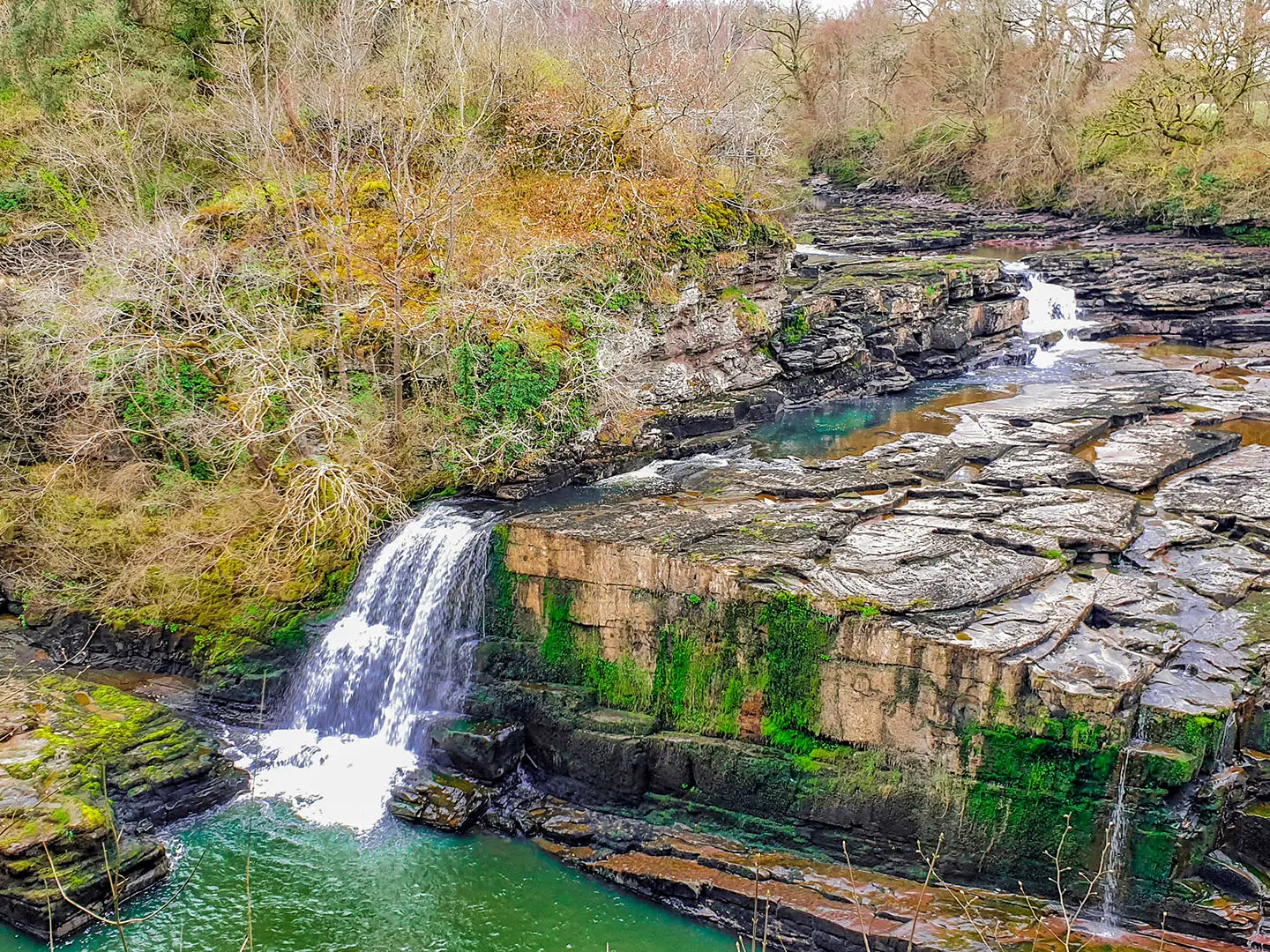
The Falls of Clyde Walk is a 6.5 km moderate loop from New Lanark in South Lanarkshire, Scotland. It is a half-day day hike, not a long-distance trail: allow roughly 2–3 hours for the wooded River Clyde gorge, waterfalls, steps and boardwalks. It suits walkers who want a short nature route with real interest, especially after rain when the falls run stronger. For another short waterfall route, compare the Aber Falls Walk.
Route Overview
Start and finish at the New Lanark World Heritage Site car park, postcode ML11 9DB, about 1 mile / 1.5 km south of Lanark. The loop follows the upper section of the Clyde Walkway through the Falls of Clyde Wildlife Reserve, heading upstream from New Lanark past Dundaff Linn to Corra Linn, then on towards Bonnington Linn, Bonnington weir and the footbridge. The return comes back through the woods to New Lanark, so no end-to-end transport is needed. Stonebyres Linn is further downstream below Lanark and is not on this loop. If you want a multi-day Scottish route instead, see the Annandale Way or the Arran Coastal Way.
New Lanark, Robert Owen and the Falls of Clyde
The falls have been a visitor draw since the 18th century, inspiring J.M.W. Turner’s paintings and verse by Wordsworth in 1802; Coleridge and Sir Walter Scott also admired them. New Lanark was founded in 1785 and became famous under social reformer Robert Owen, who ran the cotton-mill village from 1800 to 1825 as a model community. Today the Scottish Wildlife Trust manages the Falls of Clyde as a wildlife reserve within the Clyde Valley Woodlands.
Notable highlights
- Corra Linn (~28 m / 84–90 ft): The tallest and most dramatic fall on the walk, dropping in three stages through the gorge. It is the centrepiece of the route and is most powerful after heavy or sustained rain.
- Bonnington Linn (around 9–11 m): The uppermost fall, where the River Clyde splits around a rocky island. The nearby weir and footbridge are useful landmarks for the return loop.
- Dundaff Linn (about 3 m / 10 ft): The smallest of the three falls on this circuit, seen just above New Lanark early in the walk.
- New Lanark World Heritage Site: An 18th-century cotton-mill village associated with Robert Owen’s social reforms. It is the practical start and finish point for the walk.
- Bonnington Pavilion, Hall of Mirrors: A small 1708 garden building above Corra Linn, once fitted with mirrors to heighten the effect of the falls and reputedly Scotland’s first camera obscura.
- Wildlife and peregrines: The ancient gorge woodland supports over 100 bird species, badgers, otters and Daubenton’s bats. The Scottish Wildlife Trust runs a seasonal peregrine falcon watch at the falls.
Challenges to expect
The distance is short, but the gorge makes it more than a flat stroll. Expect many steps, timber boardwalk, steep ups and downs, and woodland sections that can be boggy or slippery after rain. The main hazards are steep slopes, high cliffs and fast water, so keep to the waymarked paths. The falls may look reduced outside spate because the Lanark hydro scheme diverts water.
HikeList Score
The Falls of Clyde Walk scored 86/100 on HikeList's trail-quality metrics.
See score breakdownHide breakdown
- Ideal length 55
- Balanced challenge 100
- Scenery & wildness 98
- Varied terrain 89
- Accommodation 100
- Food & support 81
- Path quality 92
- Season flexibility 63
Computed from length, challenge, scenery & wildness, terrain variety, accommodation, food & support, path quality and season flexibility.
 United Kingdom
 Scotland
Show more data Show less
- Riverside
- Woodland
- Gorge
- Surfaced Paths
- Woodland Trails
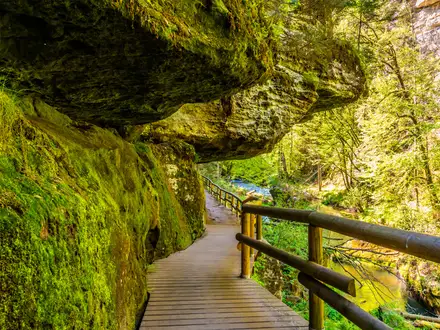
- Timber Boardwalk
- Steps
- Hotels
- Hostels
- B&Bs
- Inns
- Family Friendly
- Pet Friendly
- Restrooms
- Water Sources
- Picnic Areas
Download Our Full Guide to The Falls of Clyde Walk FREE!
Get our comprehensive guide to this hike for free. Save it for later reading or print out at home.
Photos from hikers
Taken on the trail by people who've reviewed The Falls of Clyde Walk.
The Falls of Clyde Walk: The Complete Guide
 i
Image by Rosana
i
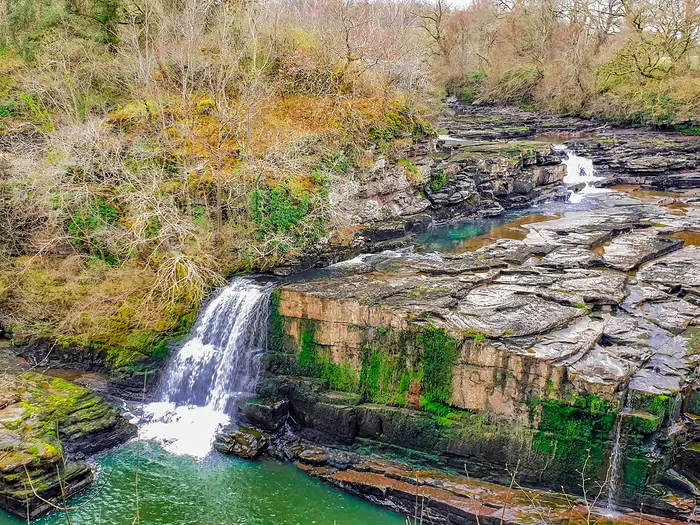
Image by Rosana The Falls of Clyde Walk is a compact but memorable half-day circuit from New Lanark into the wooded River Clyde gorge. It suits families, casual walkers and nature lovers who want waterfalls, wildlife and a real sense of place without committing to a long-distance trail.
The route follows the upper Clyde Walkway upstream past Dundaff Linn to the viewpoints around Corra Linn, the tallest and most dramatic of the falls. It then continues to Bonnington Linn, the weir and footbridge before looping back through gorge woodland to New Lanark.
This is a walk of short distance but high interest: ancient woodland, fast water, steep slopes, the ruins of Corra Castle and the historic mill village at New Lanark all sit close together. In spring and autumn the gorge is often at its most rewarding, though the falls can run low in dry spells because of the hydro scheme upstream.
Do not treat it as a flat riverside stroll. The route includes many steps, a long timber boardwalk, muddy woodland sections after rain, steep drops and fast water, so sturdy footwear and close supervision of children and dogs are sensible.
The guide below covers stages, day planning, accommodation, food, transport, terrain and common mistakes.
Stage-by-Stage Guide
Stage 1: New Lanark car park to Corra Linn via Dundaff Linn and the visitor centre
This opening section leaves the New Lanark World Heritage Site and follows the upper section of the Clyde Walkway upstream into the Falls of Clyde Wildlife Reserve. It is the most accessible-feeling part of the route at first, with surfaced paths near New Lanark, before the gorge begins to feel steeper and more enclosed.
Dundaff Linn comes early in the walk, just above New Lanark. It is the smallest of the falls, but it marks the transition from the historic mill village into the wooded River Clyde gorge.
The route then continues past the Falls of Clyde Visitor Centre area towards Corra Linn, the main waterfall of the walk. The visitor centre has been closed in recent years even though the reserve paths remain open, so do not rely on it for toilets, shelter, food or information without checking its current status before travelling.
Corra Linn is the major highlight of this stage: a three-stage fall of about 26–28 m, with Bonnington Pavilion, also known as the Hall of Mirrors, above the gorge and the ruins of Corra Castle nearby. The waterfall is at its most powerful after heavy or sustained rain; in dry spells the hydro scheme can leave the falls much reduced except on limited designated waterfall-release days.
Terrain and conditions: expect a mix of surfaced path, woodland trail, steps and sections close to steep gorge sides. The path can be muddy or slippery after rain, and the drops towards the Clyde are serious enough that children and dogs need close supervision.
Food and water: there are no dependable refreshments once you leave New Lanark. Carry water and any snacks needed for the full circuit, especially if walking with children or allowing time for wildlife watching.
Accommodation near the end: Corra Linn is not an overnight stopping point and has no accommodation. Beds are back at New Lanark or in nearby Lanark, including the New Lanark Mill Hotel, Waterhouses self-catering, the Wee Row Hostel and other hotels, inns and B&Bs in the area.
Transport and access: the practical access point for this stage is New Lanark, using the visitor-centre car park at ML11 9DB or public transport to Lanark followed by local bus, taxi or the walk down to New Lanark. There is no end-of-stage public transport at Corra Linn for normal route-planning purposes.
Navigation notes: follow the waymarked Clyde Walkway upstream from New Lanark into the reserve. The route is short, but a map or GPX is still useful in poor weather or if combining the loop with a longer Kirkfieldbank variant.
Stage 2: Corra Linn to Bonnington Linn, weir and footbridge
This is the upper gorge section, continuing upstream from the most dramatic fall to the turning point of the standard loop. The walk stays within wooded reserve terrain, with the River Clyde close by and the path working through the gorge rather than crossing open hill ground.
Bonnington Linn is the main landmark on this stage. It is the uppermost fall on the route, where the Clyde splits around a rocky island, with the nearby weir and footbridge providing the crossing point for the return leg.
The character remains enclosed and wooded, with more uneven ground than the short distance suggests. The combination of steps, damp woodland, exposed edges and fast water is the reason the route is best treated as a moderate walk rather than a simple riverside stroll.
Terrain and conditions: expect woodland paths, steps and potentially slippery sections, especially after rain. The long timber boardwalk on the route can also be slick in wet weather, so footwear with good grip matters more than the overall mileage.
Food and water: there are no food or water facilities at Bonnington Linn, the weir or the footbridge. Carry everything needed from New Lanark.
Accommodation near the end: there is no accommodation at Bonnington Linn. For an overnight stay before or after the walk, use New Lanark or Lanark rather than trying to break the route into stages.
Transport and access: Bonnington Linn footbridge is a walking-route feature rather than a practical transport hub. The normal plan is to continue the loop back to New Lanark; no end-to-end transport arrangement is needed for the standard circuit.
Navigation notes: continue upstream on the waymarked route to the weir and footbridge. Do not treat Stonebyres Linn as part of this walk; it lies downstream below Lanark and is not on the New Lanark–Bonnington Linn loop.
Warnings: stay on the marked paths and do not scramble down towards the river or cliff edges for photographs. The Clyde is fast and powerful in the gorge, and wet rock, mud and leaf litter can make informal trods hazardous.
Stage 3: Bonnington Linn footbridge to New Lanark car park through the gorge woodland
The return leg completes the circuit from the Bonnington Linn footbridge back towards New Lanark. It is longer than the outward continuation from Corra Linn and is often the muddiest part of the walk, especially where the route returns through the gorge woodland.
This stage is less about single landmark stops and more about the reserve itself: ancient gorge woodland, river views through the trees, seasonal flowers, autumn colour and birdlife. In the breeding season, the Scottish Wildlife Trust’s peregrine-falcon watch at the falls is a particular point of interest, subject to current arrangements.
The path eventually brings you back to New Lanark, where the historic mill village and visitor-centre area make a clear finish point. Because the walk is circular, transport logistics are simple: you return to the same car park and access point used at the start.
Terrain and conditions: expect woodland trails, steps, damp ground and steep-sided gorge terrain. After rain, the return paths can be boggy or slippery, so allow extra time rather than judging the stage only by its distance.
Food and water: there are no reliable facilities on the woodland return. Food, drink and toilets should be planned around New Lanark or Lanark, with current opening times checked before travelling.
Accommodation at or near the finish: New Lanark and Lanark are the sensible bases. Options include the New Lanark Mill Hotel, Waterhouses self-catering, the Wee Row Hostel at New Lanark and other hotels, inns and B&Bs in Lanark.
Transport and road access: the walk ends back at the New Lanark World Heritage Site car park, postcode ML11 9DB. By public transport, Lanark station has regular ScotRail services, including direct trains from Glasgow Central and connections from Edinburgh via Carluke; from Lanark, use local bus, taxi or walk down to New Lanark. Timetables should be checked before travelling.
Navigation notes: keep to the waymarked return and be careful at path junctions in the woodland, particularly if using a shorter circuit or the longer Kirkfieldbank variant. The standard route returns to New Lanark, not to Lanark town centre.
Warnings: there is no public parking down in the historic village itself, so drivers should use the visitor-centre car park. The gorge paths stay open year-round, but winter darkness, wet boardwalks, muddy woodland and high water after heavy rain all make a short walk feel more committing.
Recommended Itinerary
The Falls of Clyde Walk is a half-day circular route, so the useful itinerary is not an overnight schedule but a practical breakdown of the loop. Most walkers should use the standard itinerary below, allowing extra time if the paths are muddy, the boardwalk is busy, or the falls and wildlife viewpoints are a main focus.
Standard itinerary: core loop to Bonnington Linn
| Day | From | To | Approx. distance | Why this stage makes sense | Services/accommodation notes |
|---|---|---|---|---|---|
| 1 | New Lanark car park | Corra Linn, via Dundaff Linn and the Falls of Clyde Visitor Centre area | 2 km | This eases into the gorge on the upper section of the Clyde Walkway, passing Dundaff Linn before reaching Corra Linn, the main waterfall viewpoint. It is the most important section to take slowly, especially on wet steps and boardwalk. | Start from the New Lanark World Heritage Site car park, postcode ML11 9DB. The Falls of Clyde Visitor Centre has been closed in recent years, so its current status should be checked before travelling. |
| 1 | Corra Linn | Bonnington Linn, weir and footbridge | 1.5 km | This short continuation takes the route to the upper fall and the natural turning point of the loop. The weir and footbridge make this the logical point to cross for the return. | No intermediate accommodation is needed or expected. Keep to the waymarked paths: the gorge has steep slopes, cliffs and fast water close to the route. |
| 1 | Bonnington Linn footbridge | New Lanark car park, returning through the gorge woodland | 3 km | The return completes the circular walk through woodland rather than simply retracing the whole outward route. This section can be muddy or slippery after rain, so it often takes longer than the distance suggests. | Beds are available in and around New Lanark and nearby Lanark if staying locally, including the New Lanark Mill Hotel, Waterhouses self-catering, the Wee Row Hostel and other hotels, inns and B&Bs in Lanark. |
Slower variant: relaxed waterfall and wildlife half-day
| Day | From | To | Approx. distance | Why this stage makes sense | Services/accommodation notes |
|---|---|---|---|---|---|
| 1 | New Lanark car park | Bonnington Linn and back by the standard loop | About 5.9–6.5 km / 3.7–4 miles | Best for families, photographers, wildlife watchers and anyone wanting time at Corra Linn and Bonnington Linn rather than treating the walk as a quick circuit. Allow the upper end of the 2–3 hour estimate, longer if stopping often. | This still works as a day visit from Lanark or as part of a stay in New Lanark. If timing a visit for the waterfalls at full power, check current waterfall-day release dates before travelling, as the hydro scheme diverts water outside spate and designated release days. |
Faster variant: direct core circuit
| Day | From | To | Approx. distance | Why this stage makes sense | Services/accommodation notes |
|---|---|---|---|---|---|
| 1 | New Lanark car park | New Lanark car park, via Corra Linn, Bonnington Linn and the woodland return | About 5.9–6.5 km / 3.7–4 miles | Suits fitter walkers who want a short, direct circuit and are comfortable on steps, boardwalk and steep woodland paths. The core loop can be completed in about 1.5–2 hours in good conditions, but wet or icy paths can slow it down. | No end-to-end transport is needed because the walk returns to New Lanark. By public transport, use Lanark as the access point and continue to New Lanark by local bus, taxi or the downhill walk; current train and bus times should be checked before travelling. |
Longer option: Kirkfieldbank circular
| Day | From | To | Approx. distance | Why this stage makes sense | Services/accommodation notes |
|---|---|---|---|---|---|
| 1 | New Lanark | New Lanark, using the longer Kirkfieldbank variant | Roughly 11 km / 7 miles | Choose this only if a longer walk is wanted; it is not necessary for seeing the main Falls of Clyde highlights. Check official mapping before setting out, as the route is notably longer than the standard Bonnington Linn loop. | Plan it as a longer day walk rather than an overnight stage. Accommodation remains concentrated at New Lanark and Lanark rather than along the gorge path. |
Planning the Route
This is a half-day route, so planning is less about staging and more about choosing the right version of the circuit, arriving at New Lanark efficiently, and allowing enough time for the gorge paths, viewpoints and conditions underfoot.
Most walkers should allow 2–3 hours for the standard Bonnington Linn loop, especially if stopping at Corra Linn, Bonnington Pavilion, Corra Castle viewpoints or watching wildlife. Faster walkers can complete the core circuit in less time, but this route is better treated as a slow woodland and waterfall walk rather than something to rush.
Choosing the right route option
The walk naturally starts and finishes at the New Lanark World Heritage Site car park, so there is no need to arrange end-to-end transport. The main decision is whether to walk the standard loop, shorten it slightly, or extend it towards Kirkfieldbank.
| Option | Best for | Planning notes |
|---|---|---|
| Shorter circuit, about 5.9 km / 3.7 miles | Families, casual walkers, limited time | Still includes the main gorge experience and waterfalls, but expect steps, boardwalk and muddy sections after rain. |
| Standard Bonnington Linn loop, about 6.5 km / 4 miles | Most walkers | The usual choice: New Lanark, Dundaff Linn, Corra Linn, Bonnington Linn, the weir and footbridge, then back through the gorge woodland. |
| Longer Kirkfieldbank variant, roughly 11 km / 7 miles | Walkers wanting a fuller day | Adds distance beyond the core reserve circuit. Navigation, time and return logistics need a little more attention. This should be checked before travelling. |
The standard loop is the simplest plan: follow the upper section of the Clyde Walkway upstream from New Lanark, continue past the main falls to Bonnington Linn and the footbridge, then return through the woodland. The gorge makes the route feel more committing than its mileage suggests, so footwear and weather matter more than distance.
Timing your visit
The reserve paths are open year-round, but conditions vary sharply with weather. After heavy or sustained rain the falls are more impressive, while paths, steps and boardwalks can be slippery. In dry spells the Lanark Hydro Electric Scheme diverts water from above Corra Linn, so the falls may be much reduced.
If seeing the falls in full flow is a priority, check the current designated waterfall-release days with the Scottish Wildlife Trust or SP Energy Networks before travelling. These dates change and should not be assumed.
Spring and autumn are the strongest seasons for most walkers: spring brings woodland flowers and breeding-season peregrine interest, while autumn gives good gorge colour and often stronger water flow. Winter can be worthwhile, but the shaded gorge, steps and muddy woodland return call for extra care.
Accommodation and overnight planning
This is not an overnight trail. There is no need to split it into stages, and accommodation does not dictate the route.
Walkers staying locally can use New Lanark or Lanark as a base. Options include the New Lanark Mill Hotel, Waterhouses self-catering, the Wee Row Hostel at New Lanark, plus hotels, inns and B&Bs in and around Lanark. Availability and prices should be checked before booking.
Food, water and facilities
Carry water and any snacks needed for a half-day walk, particularly if walking with children or spending time at viewpoints. Do not rely on the Falls of Clyde Visitor Centre being open, as its status has varied in recent years; check current opening before depending on it for information or facilities.
New Lanark and nearby Lanark are the practical places to plan around for pre- or post-walk services. Opening times, parking arrangements and any suggested Scottish Wildlife Trust non-member donation should be checked before travelling.
Transport and parking
By public transport, plan around Lanark station, with regular ScotRail services from Glasgow Central and connections from Edinburgh via Carluke. From Lanark, New Lanark is reachable by local bus, taxi or a downhill walk; bus times should be checked before travelling.
By car, use the New Lanark visitor-centre car park at postcode ML11 9DB. There is no public parking down in the historic village itself, so plan to start from the visitor-centre parking area rather than trying to drive into New Lanark.
Because the route is circular, transport planning is straightforward: return to the same car park or to New Lanark for the onward journey back to Lanark.
Navigation and safety planning
The route is waymarked and self-guided, but the gorge is not a place to improvise shortcuts. Stay on the marked paths, especially near steep slopes, high cliffs and fast water.
The main navigational points are simple: New Lanark, Dundaff Linn, the Falls of Clyde Wildlife Reserve, Corra Linn, Bonnington Linn, the weir and footbridge, then the woodland return. A map or GPX is still useful if taking the longer Kirkfieldbank variant or if any path diversions are in place.
Small children and dogs need close supervision near drops, boardwalk edges and the river. After rain, allow extra time for muddy sections and slippery steps rather than planning the walk to a tight schedule.
Permits and access
No hiking permit is needed for the standard walk. The route lies within the Falls of Clyde Wildlife Reserve, managed by the Scottish Wildlife Trust, and normal responsible access applies.
Before setting off, check for current reserve notices, path diversions, visitor-centre opening and any requested donation. These details can change more often than the route itself.
Towns, Villages and Overnight Stops
This is a half-day circular walk, so there is no need to plan stage-to-stage accommodation. Overnight planning is mainly relevant if you are travelling to Lanarkshire the day before, combining the walk with New Lanark, or using public transport and want an early start.
New Lanark
New Lanark is the practical start and finish of the walk. The route begins by the New Lanark visitor centre and heads upstream into the Falls of Clyde Wildlife Reserve, following the upper section of the Clyde Walkway before looping back through the gorge woodland.
It is the best place to stay if the priority is being on the route. Accommodation at or very close to the World Heritage Site includes the New Lanark Mill Hotel, Waterhouses self-catering and the Wee Row Hostel. Availability and opening arrangements should be checked before booking, especially outside peak visitor periods.
New Lanark is also where drivers should aim for, using the visitor-centre car park at postcode ML11 9DB. There is no public parking down in the historic village itself, so do not plan to leave a car at the riverside or within the village streets.
Food and visitor facilities depend on what is open at New Lanark and in the reserve on the day. The Falls of Clyde Visitor Centre has been closed in recent years even though the reserve paths remain open, so do not rely on it for refreshments, toilets or route information without checking ahead.
New Lanark works well for walkers who want a relaxed visit rather than a rushed circuit. It is also the easiest base for families, as the route returns to the same point and there is no end-to-end transport to organise.
Lanark
Lanark is the main service town for the walk, about 1 mile / 1.5 km north of New Lanark. It is the most useful place for shops, pubs, cafés, accommodation choice and public transport.
For overnight stays, Lanark gives more flexibility than staying in New Lanark itself. Expect a wider mix of hotels, inns and B&Bs in and around the town, with New Lanark’s accommodation a short distance away.
Lanark railway station is the key public-transport access point. Regular ScotRail trains run to Lanark, including direct services from Glasgow Central, with connections from Edinburgh via Carluke. From Lanark, New Lanark can be reached by local bus, taxi or on foot; current bus times and taxi availability should be checked before travelling.
Lanark is the sensible place to buy food or supplies before starting, particularly if walking outside visitor-centre opening hours. The route itself passes through woodland and waterfall viewpoints rather than villages or shops.
Falls of Clyde Reserve: Dundaff Linn, Corra Linn and Bonnington Linn
Dundaff Linn, Corra Linn and Bonnington Linn are route landmarks, not overnight stops or service points. Once you leave New Lanark, the walk is a wooded gorge route with paths, steps, boardwalk, viewpoints and fast water close by, but no settlement facilities along the core loop.
Dundaff Linn is reached early, just upstream of New Lanark. Corra Linn is the main waterfall viewpoint, with Bonnington Pavilion and Corra Castle above the gorge. Bonnington Linn, the weir and the footbridge form the usual upper turning point before the return through the woods.
Do not plan food, water or shelter around these points. Carry what is needed for a short but sometimes wet and muddy walk, and allow extra time if stopping for wildlife watching or photography.
Kirkfieldbank
Kirkfieldbank is relevant only if taking the longer circular variant, which extends the walk to roughly 11 km / 7 miles. It is not part of the standard Bonnington Linn loop described above.
For most walkers, Kirkfieldbank is a route variation rather than an overnight stop. If using it to lengthen the day, check the exact route line, path conditions and any local transport options before setting out. This should be checked before travelling.
Getting to the Start
By train
Lanark is the railhead for the Falls of Clyde Walk. Regular ScotRail services run to Lanark, including direct trains from Glasgow Central and connections from Edinburgh via Carluke.
From Lanark, New Lanark lies to the south of town. The start is beside the New Lanark visitor centre at the World Heritage Site, reached from Lanark by local bus, taxi or a downhill walk. Timetables and onward transport from Lanark station should be checked before travelling, especially at weekends and outside peak hours.
If walking down from Lanark, remember that the route itself includes steps and gorge paths, and the return to the station will involve climbing back out of New Lanark after the walk. A taxi or local bus is the simpler option for anyone with limited time, children, or wet-weather kit.
By bus
Local buses link Lanark with New Lanark, but services and stopping points can change. This should be checked before travelling.
For most walkers using public transport, the practical plan is to take the train to Lanark and then use a local bus or taxi for the short onward journey to New Lanark. Because the walk is circular, no end-to-end bus or shuttle arrangement is needed.
By car
Use postcode ML11 9DB for the New Lanark World Heritage Site visitor-centre car park. The walk starts from the visitor-centre area and returns to the same place, so parking at New Lanark is the straightforward option.
There is no public parking down in the historic village itself, so do not plan to drive into New Lanark village to start the walk. Use the visitor-centre car park and allow time to walk from the car park to the start area.
Parking arrangements, charges and any access changes should be checked before travelling. Path diversions in the gorge should also be checked if visiting after storms or prolonged wet weather.
From the nearest airport
There is no trail-specific airport transfer for this short day walk. Visitors arriving by air will usually travel via Glasgow or Edinburgh, then continue by rail towards Lanark — direct from Glasgow Central, or from Edinburgh with a connection via Carluke.
Airport-to-city transport, rail times and the final bus or taxi link from Lanark to New Lanark should be checked before travelling.
Where to stay before starting
This is a half-day circular walk, so most people do not need overnight accommodation purely for the route. Staying locally is useful if combining the walk with New Lanark, Lanark or the Clyde Valley Woodlands.
Accommodation is available at New Lanark and in nearby Lanark. Options include the New Lanark Mill Hotel and Waterhouses self-catering on site, plus hotels, inns, B&Bs and the Wee Row Hostel at New Lanark.
Book ahead in busy periods and check opening, availability and any parking arrangements directly before travelling.
Getting Home from the Finish
This is a circular walk, so the finish is the same as the start: the New Lanark World Heritage Site car park at ML11 9DB. There is no separate end-point transfer to arrange, but anyone arriving by public transport still needs to get back up to Lanark for trains, buses and taxis.
By train
The nearest railway station is Lanark. Regular ScotRail trains run from Lanark to Glasgow Central, with connections towards Edinburgh via Carluke.
From the finish at New Lanark, allow time to get back to Lanark station. The route from New Lanark to Lanark is uphill, so it can feel more demanding at the end of the walk than the outward approach; use a local bus or taxi if short on time, walking with children, or finishing in poor weather.
Train times are timetable-dependent and evening services should be checked before setting off, especially if combining the walk with a long visit to New Lanark or waiting for good light at the falls.
By bus
Local buses link New Lanark/Lanark, but routes and frequencies can change. This should be checked before travelling.
If relying on a bus after the walk, check the last useful departure in advance rather than assuming there will be a convenient service from the visitor-centre area. If the timing is tight, a taxi to Lanark station is the safer fallback.
By car/taxi
Drivers finish back at the New Lanark visitor-centre car park, using postcode ML11 9DB. There is no public parking down in the historic village itself, so return to the main visitor-centre parking area rather than trying to collect a vehicle from the village.
Taxis are useful for the short transfer between New Lanark and Lanark station, particularly after dark, in heavy rain, or if the paths have been slow and slippery. Taxi availability should be checked before travelling if a timed train connection matters.
From the nearest airport
Airport access is best planned through the wider Glasgow or Edinburgh transport networks, using Lanark’s rail links as the local connection point. Exact airport transfers, journey times and late-evening options are timetable-dependent and should be checked before travelling.
For most walkers flying in or out, this walk is easiest to treat as a half-day trip from central Scotland rather than as a route requiring airport-to-trail logistics.
Where to stay at the finish
Staying overnight is not necessary for the walk itself, but it can make sense if travelling by public transport, visiting New Lanark, or timing the walk around waterfall conditions. Accommodation is available at New Lanark and nearby Lanark.
Options include the New Lanark Mill Hotel and Waterhouses self-catering on site, the Wee Row Hostel at New Lanark, plus hotels, inns and B&Bs in Lanark. Availability should be checked before travelling, particularly at weekends and during busy visitor periods.
Which Direction Should You Walk?
The Falls of Clyde Walk is best treated as a clockwise-style circuit from New Lanark, following the upper section of the Clyde Walkway upstream first. This is the standard and most intuitive direction: New Lanark to Dundaff Linn, then the Falls of Clyde Visitor Centre area, Corra Linn, Bonnington Linn, Bonnington weir and footbridge, before returning through the gorge woodland to New Lanark.
Because the route starts and finishes at the New Lanark World Heritage Site car park, direction makes no difference to transport. Walkers arriving from Lanark by bus, taxi or on foot still return to the same place, and no end-to-end pick-up is needed.
Why the standard direction works best
Walking upstream gives the route a better sense of progression. Dundaff Linn comes early as a modest first fall, Corra Linn then provides the main dramatic viewpoint, and Bonnington Linn and the weir form a natural upper turning point for the loop.
Navigation is also simplest this way, as the outward leg follows the top section of the Clyde Walkway upstream into the reserve. For a short, wooded gorge walk with steps, boardwalk and several viewpoints, that clear outward line helps avoid unnecessary route-finding.
The return through the woods is a good second half, but it can be muddier or more slippery after rain. In the standard direction, the most obvious waterfall viewpoints are reached before fatigue, fading light or deteriorating weather become an issue.
What about walking it in reverse?
The reverse direction is entirely possible, especially for walkers who prefer to get the woodland return section done first. It gives the same overall distance and ascent, and the steep steps and wooded ups and downs cannot be avoided by changing direction.
The main drawback is that the scenic build-up is weaker. Reaching Bonnington Linn first and then working downstream to Corra Linn can still be rewarding, but it feels less natural than following the River Clyde upstream from New Lanark and letting the waterfalls become progressively more impressive.
Climbs, weather and finish
There is no major directional advantage for climbing. The route gains and loses height through the gorge whichever way it is walked, with the effort coming from steps, short steep sections and slippery woodland paths rather than a single sustained ascent.
Wind direction is rarely a planning factor here because the walk sits inside a wooded river gorge. Underfoot conditions matter far more: after rain, allow extra time and take care on steps, boardwalk and muddy woodland sections.
Finishing at New Lanark is one of the practical strengths of the route. The standard direction brings you back to the visitor-centre area and car park after the full waterfall circuit, with no onward navigation or transport complication.
Recommendation
Walk the route in the standard direction: New Lanark upstream via Dundaff Linn and Corra Linn to Bonnington Linn, then back through the gorge woodland. It gives the clearest navigation, the best scenic progression and the most logical half-day circuit from the New Lanark car park.
Accommodation Along the Route
This is a half-day circular walk, so accommodation is a convenience rather than a stage-planning requirement. Most walkers either visit from Glasgow, Edinburgh or elsewhere in central Scotland, or stay one night in New Lanark or Lanark to make an easier start and allow time for the World Heritage Site as well as the gorge.
There are no overnight stops needed between New Lanark, Corra Linn and Bonnington Linn. The route stays inside the Falls of Clyde Wildlife Reserve and returns to the same car park, so luggage transfer, multi-day baggage services and inn-to-inn logistics do not apply.
| Place | Accommodation level | Best for | Notes |
|---|---|---|---|
| New Lanark | Good but concentrated | Staying right at the start/finish; combining the walk with the World Heritage Site | Options include the New Lanark Mill Hotel, Waterhouses self-catering and the Wee Row Hostel at New Lanark. This is the most convenient base if walking without a car. |
| Lanark | Good | Wider choice of hotels, inns and B&Bs; rail access | Lanark is a short distance from New Lanark and works well for walkers arriving by ScotRail. Reach the start by local bus, taxi or on foot. |
| Falls of Clyde Wildlife Reserve / gorge section | None | Day walking only | There is no route accommodation between Dundaff Linn, Corra Linn, Bonnington Linn and the return through the woods. Plan to sleep before or after the walk in New Lanark or Lanark. |
| Kirkfieldbank variant | Limited / not a main overnight base | Longer circular variant only | The longer option extends the walk, but it does not change the accommodation strategy for most walkers. Use New Lanark or Lanark as the practical base. |
Best places to stay
New Lanark is the simplest overnight base because the walk begins beside the visitor-centre area and returns to the same place. Staying there removes the need to arrange a morning transfer and is especially useful if visiting the historic village before or after the walk.
Lanark gives more flexibility, particularly for walkers using public transport. ScotRail trains serve Lanark, with direct services from Glasgow Central and connections from Edinburgh via Carluke, so staying in Lanark can make sense if arrival times or room availability are better there.
Booking and availability
Book ahead if staying at New Lanark, especially for weekends, school holidays or dates when the falls are expected to be at their most impressive after heavy rain. Accommodation close to the start is finite, and the World Heritage Site attracts visitors who are not necessarily walking the full route.
Lanark usually gives a broader spread of places to look, including hotels, inns and B&Bs, but availability and prices still vary by date. Confirm current prices, cancellation terms and check-in arrangements before booking.
Transfers and luggage
No luggage transfer is needed for this walk. If staying in Lanark without a car, the practical choices are to walk down to New Lanark, use a local bus or take a taxi; times and availability should be checked before travelling.
Drivers should use the New Lanark visitor-centre car park at postcode ML11 9DB. There is no public parking down in the historic village itself, so accommodation choice should not be based on being able to leave a car beside the lower village streets unless the property specifically provides suitable parking.
Camping and Wild Camping
The Falls of Clyde Walk is not a camping route. It is a short circular day walk from New Lanark, usually completed in 2–3 hours, with beds available in and around New Lanark and Lanark rather than any need to sleep out.
There are no practical camping stages on the core loop. The route runs through a managed wildlife reserve in a steep wooded River Clyde gorge, with boardwalks, steps, cliffs, fast water and narrow paths; these are poor conditions for pitching a tent and not somewhere to plan a wild-camp stop.
Campsites and formal camping
No campsite lies on the standard New Lanark–Bonnington Linn loop. If camping is part of a wider trip in South Lanarkshire, use a formal campsite or touring site in the wider area and treat the Falls of Clyde as a half-day outing from there. Availability, booking rules and seasonal opening should be checked before travelling.
For most walkers, the more straightforward option is to stay in New Lanark or Lanark. The route starts and finishes at New Lanark, so there is no benefit in carrying camping equipment around the loop.
Wild camping
Wild camping is not recommended on this walk. The route passes through the Falls of Clyde Wildlife Reserve and the New Lanark World Heritage Site area, then follows confined gorge paths where flat, discreet and low-impact pitches are not a realistic part of the route.
Any local rules, access restrictions or land-management requests must be checked before planning an overnight pitch. Do not camp on or beside the waymarked paths, boardwalks, viewpoints, visitor areas, historic village, car park area or near the river edge.
Water and cooking
Do not rely on the River Clyde as a camping water source here. The water is fast, access can be steep or unsafe, and the walk is short enough that drinking water should be carried from the start.
Stove use and fires are a poor fit for this wooded reserve environment. Open fires should be avoided; they risk damage to woodland, wildlife habitat and visitor infrastructure.
Leave No Trace in the reserve
If staying locally and walking the route, keep the camping impact away from the reserve itself. Take all litter out, stay on the waymarked paths, keep away from cliff edges and fast water, and avoid disturbing wildlife, especially in the breeding season around the falls.
Dogs and children need close supervision in the gorge. The same caution applies to anyone carrying a larger pack: steps, wet timber boardwalk and muddy woodland paths can be awkward after rain.
Food, Water and Resupply
This is a short half-day circuit, so resupply is not a major planning issue. The practical approach is to arrive with a drink and a small snack, especially if walking with children or taking time at the viewpoints around Corra Linn and Bonnington Linn.
Once you leave New Lanark and enter the wooded gorge, there should be treated as no dependable food stop or water refill on the route. The Falls of Clyde Visitor Centre has been closed in recent years, so do not rely on it for drinks, food or facilities without checking its current status before travelling.
Where to get food before or after the walk
New Lanark is the start and finish point, but food availability there can depend on visitor-centre and site opening arrangements. This should be checked before travelling, particularly outside main visitor hours or in winter.
Lanark, about 1 mile / 1.5 km from New Lanark, is the nearest practical place to sort out food before the walk or afterwards. If arriving by train, it makes sense to buy snacks and drinks in Lanark before heading down to New Lanark rather than assuming something will be open at the trailhead.
Water on the route
Carry enough water for the whole circuit. For most walkers on the 6.5 km / 4 mile loop, around 500 ml to 1 litre per adult is sensible in normal conditions; take more in warm weather, with children, or if adding the longer Kirkfieldbank variant.
The River Clyde is beside the route for much of the walk, but it should not be treated as a convenient drinking-water source. The gorge has steep banks, fast water and limited safe access, and any natural water would need proper treatment or filtering before drinking.
Food and water by section
| Section | Food availability | Water availability | Notes |
|---|---|---|---|
| New Lanark car park / visitor area | Possible visitor-site options, but opening can vary. This should be checked before travelling. | Do not assume a public refill is available unless current facilities are open. | Best place to start with food and water already packed. There is no public parking down in the historic village itself; use the visitor-centre car park at ML11 9DB. |
| New Lanark to Dundaff Linn and Corra Linn | No reliable food stop once on the reserve path. | No reliable treated-water refill. | Short section, but steps and viewpoints slow the pace. Carry snacks if walking with children. |
| Corra Linn to Bonnington Linn, weir and footbridge | No food outlets on the gorge path. | No treated-water refill. Natural water is not a practical option and would need treatment. | This is the upper part of the loop through the wooded gorge; stay on the waymarked paths near steep drops and fast water. |
| Bonnington Linn footbridge back to New Lanark | No food outlets until returning to New Lanark. | No treated-water refill until back at New Lanark, if facilities are open. | The return through the woods can be muddy or slippery after rain, so avoid planning a long picnic stop on exposed or awkward ground. |
| Longer Kirkfieldbank variant | Limited route-side certainty from the route information; plan as self-sufficient. | Carry enough for the full 11 km / 7 mile variant. | Take lunch or extra snacks if extending beyond the standard Bonnington Linn loop. |
Practical resupply advice
There are no long gaps by long-distance walking standards, but there is a clear gap between leaving New Lanark and returning there: treat the reserve section as self-contained. A small daypack with water, a snack, waterproof layer and any personal medication is enough for most walkers.
Sunday and winter opening hours can be shorter in small towns and visitor sites, and the Falls of Clyde Visitor Centre status can change. Check current opening times before relying on any café, shop or visitor facility for food, water or toilets.
Terrain, Conditions and Difficulty in Practice
The Falls of Clyde Walk is short, but it earns its Moderate grade through the shape of the gorge rather than through distance. Expect a compact route with repeated height changes, many steps, a long timber boardwalk, damp woodland paths and steep drops close to fast water.
There is no technical scrambling, no mountain navigation and no sustained high-level exposure. The main requirement is careful foot placement, especially after rain, and staying on the waymarked paths around the cliffs and river edges.
Path surfaces and terrain
The easiest going is around New Lanark, where the route begins on more surfaced paths beside the visitor-centre area before heading upstream into the reserve. Beyond this, the walk becomes a wooded gorge path with a mixture of earth tracks, steps, boardwalk and narrower woodland sections.
The long timber boardwalk is one of the defining features of the route. It helps carry the path through the steep-sided gorge, but timber can become slick in wet weather, under leaf fall or in shaded winter conditions.
The return through the woods can be muddier and more slippery than the outward riverside section. After rain, expect soft ground, wet leaves, greasy soil and puddled sections rather than a clean surfaced path throughout.
Climbs, descents and steps
The total ascent is around 150 m, which is modest, but it is concentrated into short wooded ups and downs. The walk climbs from New Lanark, at roughly 110–115 m beside the river, onto the gorge sides, with the higher viewpoints and paths reaching roughly 160–180 m.
The repeated flights of steps are what many walkers notice most. They break up the pace and can feel harder than the distance suggests, especially for anyone carrying a child, managing a dog, or walking with reduced mobility.
There is no summit objective and no long climb, but the route is not a level riverside stroll. Allow extra time if steps are slow, if the boardwalk is wet, or if the viewpoints around Corra Linn and Bonnington Linn are busy.
Steep drops, cliffs and fast water
The gorge setting is the route’s main attraction and its main hazard. The path passes close to steep slopes, high cliffs and the fast-flowing River Clyde, so the seriousness comes from the surroundings rather than from technical terrain.
Small children and dogs need close supervision throughout the gorge sections. This is especially important near viewpoints, on steps, on the boardwalk, and anywhere the path runs above the river.
Do not leave the waymarked paths to reach better views of the falls. The ground off path can be steep, unstable or slippery, and the river environment leaves little margin for a fall.
Mud, wet weather and seasonal conditions
The route is open year-round, but it changes noticeably with weather. Spring and autumn often bring fuller falls after rain, but they also mean wetter ground, more leaf litter and more slippery woodland paths.
In dry spells the falls can run low because the hydro scheme diverts water from above Corra Linn. That affects the spectacle more than the walking difficulty, though wet periods that make the falls more dramatic can also make the paths more slippery.
Winter conditions are usually about short daylight, cold timber, wet steps and potentially icy shaded sections rather than deep snow or mountain weather. This should be checked before travelling if conditions have been freezing.
Road walking, livestock and obstacles
Road walking is not a major feature of the standard circular route from New Lanark into the Falls of Clyde Wildlife Reserve. The walking is primarily on reserve paths, the upper section of the Clyde Walkway, boardwalk and woodland tracks.
This is a wooded river-gorge walk, not a livestock-field route. Stiles, field gates and fences are not the main difficulty to plan around; the practical obstacles are steps, wet timber, mud, steep slopes and the need to keep back from drops and fast water.
How hard is it in practice?
Fit walkers often find the core loop straightforward because it is only about 6.5 km / 4 miles. For casual walkers, families or anyone less confident on wet ground, the same route can feel more demanding because it is constantly interrupted by steps, viewpoints, damp surfaces and short climbs.
Sturdy footwear with decent grip is the most useful piece of kit. Trainers may be fine in dry spells for confident walkers, but walking shoes or boots are a better choice after rain or in autumn and winter.
The route is best treated as a half-day walk rather than rushed as a quick stroll. The safest pace is one that leaves time for the steps, the boardwalk, muddy woodland sections and careful movement around the gorge edges.
Weather and Best Time to Walk
The Falls of Clyde Walk is open year-round and is realistic in any season, but the best conditions are usually in spring and autumn. These seasons give the best combination of active waterfalls, woodland interest and manageable temperatures, with spring flowers and peregrine activity in the breeding season, and autumn colour through the gorge.
Rain matters more here than distance. After wet weather the falls are at their most impressive, especially Corra Linn, but the same conditions make the steps, timber boardwalk and woodland return paths muddy or slippery. Keep well back from cliff edges and fast water, particularly when the River Clyde is running high.
Best months
Spring and autumn are the most rewarding times to walk the standard New Lanark–Bonnington Linn loop. The falls are more likely to have a strong flow after rain, the woods are at their best, and the short 2–3 hour duration makes it easy to fit the walk around a dry weather window.
Summer is straightforward for most walkers, with long daylight hours and generally easier underfoot conditions. In prolonged dry spells, however, the waterfalls can look much reduced because the Lanark hydro scheme diverts water from above Corra Linn. If seeing the falls in full force is the priority, check current “waterfall day” release dates with the Scottish Wildlife Trust or SP Energy Networks before travelling.
Winter is possible because this is a low-level gorge walk rather than a hill route, but it should not be treated as risk-free. Ice, frost or snow can make the boardwalk, steps and steep wooded sections hazardous, and short daylight hours leave less margin for delays. In wintry or stormy conditions, choose footwear with good grip and be prepared to turn back if the path surface is unsafe.
Rain, storms and path conditions
The route is sheltered by woodland for much of its length, so wind exposure is usually less of an issue than on open upland walks. Storms can still affect the gorge through fallen branches, slippery surfaces or temporary path diversions. This should be checked before travelling after severe weather.
The suggested return through the woods can be boggy or slippery after rain. Even in dry weather, the gorge has steep drops, high cliffs and fast water close to the path, so the safest approach is to stay on the waymarked route and supervise children and dogs closely.
Daylight and timing
This is a half-day walk, so it can be started late in the day in summer, but in winter it is better treated as a morning or early-afternoon route. The wooded gorge can feel dim before sunset, and wet steps or boardwalk sections are harder to judge in poor light.
Allow extra time if the waterfalls are in strong flow, as the viewpoints around Corra Linn and Bonnington Linn are likely to slow the pace. The core loop is short, but photography stops, muddy conditions and family groups can easily push it towards the upper end of the 2–3 hour estimate.
Accommodation and seasonal practicalities
This is not an overnight trail, so seasonal accommodation planning is simple compared with a long-distance route. Beds in and around New Lanark and Lanark are useful if combining the walk with a visit to the World Heritage Site, but most walkers do the route as a day trip.
In busy holiday periods, accommodation at New Lanark or in Lanark should be booked ahead. The Falls of Clyde Visitor Centre has been closed in recent years even though the reserve paths remain open, so do not rely on it for shelter, toilets or services without checking its current status before travelling.
As with any Scottish woodland walk, basic tick precautions are sensible in the warmer months: stay on paths where possible, avoid pushing through long vegetation unnecessarily, and check clothing and skin after the walk.
Safety Notes
Emergency help
In an emergency in the UK, call 999 or 112. For a serious injury, fall, missing person or rescue from steep ground, ask for Police, then request Mountain Rescue if needed.
This is a short, popular day walk rather than a remote expedition, but the gorge terrain means an incident can be awkward to deal with. Carry a charged phone, know where you are on the loop, and do not rely on being able to describe your position only by saying “near the falls”.
Gorge, cliffs and fast water
The main hazards are the steep wooded slopes, high drops and fast water of the River Clyde, especially around Corra Linn, Bonnington Linn and the weir/footbridge area. Stay on the waymarked paths, boardwalks and viewpoints; do not scramble down banks for photographs or a closer view of the falls.
Children and dogs need close supervision throughout the gorge sections. Dogs should be kept under control near drops, steps, boardwalk edges and wildlife areas.
Water levels and the force of the falls can change, particularly after heavy or sustained rain and on designated full-flow waterfall days. Even when the falls look reduced because of the hydro scheme, the river and weir area should still be treated as dangerous.
Slips, steps and boardwalks
The route is short, but it is not a flat park path. Expect many steps, a long timber boardwalk, woodland tracks and steep ups and downs through the gorge.
After rain, sections can be muddy, greasy or slippery, especially on timber, stone steps, leaf litter and the suggested return through the woods. Wear footwear with proper grip rather than smooth-soled trainers.
Take particular care descending steps and on narrow sections where the path is close to steep ground. Walking poles can help on the steeper woodland parts, but they are not a substitute for staying away from edges.
Weather, daylight and temperature
The walk is mostly wooded rather than exposed open hill, so wind exposure is limited. The main weather risk is wet ground, poor grip and colder conditions in the shaded gorge.
In winter or after prolonged rain, allow extra time and avoid rushing the loop late in the day. The gorge can feel dark earlier than open countryside, so check daylight and start times if walking outside the main summer months.
In warm weather, carry water even though the route is only a half-day walk. Do not use the River Clyde as a casual water source.
Mobile signal, solo walking and navigation
Mobile reception should not be treated as guaranteed in the wooded gorge. Download or carry the route before setting off, and tell someone your plan if walking alone.
The loop is waymarked and relatively straightforward, but junctions around the woodland return and the Bonnington Linn turning point still require attention. If unsure, turn back to the last clear sign or landmark rather than following informal paths towards the river.
Roads, livestock and other route-specific risks
Road walking is not a major feature of the standard Falls of Clyde loop, which is mainly on reserve paths and the Clyde Walkway. Take normal care around the New Lanark car park, visitor-centre approaches and any village access on the way to or from the start.
Livestock is not a key issue on this woodland reserve route. Wildlife disturbance is more relevant: keep dogs under control and respect any seasonal guidance around the peregrine-watch area.
Check before setting off
Before travelling, check:
- current weather and recent rainfall, as this affects path grip and river conditions;
- any Scottish Wildlife Trust path diversions or reserve notices;
- whether the Falls of Clyde Visitor Centre is open, if relying on facilities there;
- daylight for the time of year;
- transport times to and from Lanark if using public transport;
- current parking arrangements at the New Lanark visitor-centre car park.
If the aim is to see the falls in full flow, check the current designated waterfall-release dates before travelling.
Gear Recommendations
This is a short gorge walk, not an expedition, but the terrain is more demanding than the distance suggests. The main kit choices are about grip, weather protection and staying safe on muddy paths, timber boardwalk, steps and steep drops beside fast water.
Footwear
Wear walking shoes or lightweight boots with a good tread. Trainers are often inadequate after rain, when the woodland paths, steps and boardwalk can be slippery.
Ankle-high boots are not essential for most walkers, but they are a sensible choice in wet weather or if taking the muddier woodland return. Clean, grippy soles matter more than heavy footwear.
Clothing and waterproofs
Carry a waterproof jacket even for a half-day outing. The gorge is shaded and damp, and spray or rain can make the route feel colder than the forecast suggests.
A warm layer is useful in spring, autumn and winter, and also if stopping at Corra Linn or Bonnington Linn for any length of time. Avoid relying on cotton layers, which stay cold once wet.
In summer, light clothing is usually enough while moving, but the woodland can still be cool. A compact waterproof and an extra layer remain worthwhile because the route does not take long to become wet underfoot after rain.
Navigation
The route is waymarked and follows the upper section of the Clyde Walkway upstream from New Lanark before looping back through the gorge woodland. Even so, carry a phone with the route saved offline, especially if using the longer Kirkfieldbank variant or walking in poor weather.
A paper map is not usually necessary for the standard Bonnington Linn circuit, but it is useful if linking the walk into a wider Clyde Walkway day. Check for any current path diversions in the gorge before setting off.
Water and food
For the standard 6.5 km / 4 mile loop, a small day bottle is enough for most walkers. Carry what you need from New Lanark or Lanark rather than depending on facilities within the reserve; the Falls of Clyde Visitor Centre has been closed in recent years, so its current status should be checked before travelling.
A snack is sensible if walking with children, stopping for wildlife watching, or extending to the longer Kirkfieldbank circular. There is no need for a full hillwalking food carry unless the walk is being combined with a longer day on the Clyde Walkway.
Trekking poles
Poles are optional. One or two poles can help on the steep wooded ups and downs, particularly in muddy conditions, but they can be awkward on narrow steps, boardwalk and busy viewpoints.
If using poles, keep them under control near cliff edges, railings and other walkers. Small children and dogs need close supervision regardless of pole use because of the steep slopes and fast water.
Electronics and power
A fully charged phone is normally sufficient for this 2–3 hour walk. A power bank is only worth carrying if using phone navigation heavily, taking many photos or extending the day beyond the standard loop.
Do not rely on phone use as a substitute for paying attention to the path. The main hazards are physical: slippery surfaces, steep drops and fast water close to the route.
Seasonal extras
In winter or after heavy rain, prioritise waterproof footwear, gloves and an insulating layer. The falls are often more impressive after sustained rain, but those are also the conditions that make the boardwalk, steps and woodland paths most slippery.
In spring and autumn, expect cool, damp woodland conditions and carry a spare layer. Spring is also a good season for wildlife watching, so binoculars can be worth packing if visiting for birds as well as the waterfalls.
In warm weather, bring sun protection for the open sections around New Lanark and insect repellent for the damp woodland. The falls can run low in dry spells because the hydro scheme diverts water, so check current waterfall-day information if timing the walk for full flow.
Day walkers, overnight visitors and fast walkers
Most people only need a small daypack: waterproof, warm layer, water, snack, phone, basic first aid and any personal medication. This is the right approach whether arriving by car at the New Lanark visitor-centre car park or by public transport via Lanark.
There is no inn-to-inn or camping version of this route. If staying in New Lanark or Lanark, leave overnight luggage at accommodation and walk with a light daypack only.
Fast walkers can complete the core loop quickly, but should not treat it like a flat park circuit. Slow down on wet boardwalk, steep steps and viewpoints above the gorge; grip and caution are more important here than pace.
Budget and Costs
This is a low-cost day walk rather than a multi-day hike. There are no stage-by-stage accommodation costs, luggage-transfer fees or end-to-end transport costs to build into the route itself.
The main costs are getting to New Lanark, parking if arriving by car, any food or drink bought locally, and an optional donation to the Scottish Wildlife Trust reserve. Current prices for transport, parking and accommodation should be checked before travelling.
Typical cost approaches
| Approach | What it looks like on this walk | Cost notes |
|---|---|---|
| Budget | Travel to Lanark by train or bus, walk or use local public transport down to New Lanark, carry snacks and water, walk the self-guided route | The path is free to walk. A suggested non-member donation of about £3 to the Scottish Wildlife Trust reserve may apply. |
| Mid-range | Train to Lanark, short local bus or taxi connection to New Lanark, café or pub food before or after the walk, possible parking charge if driving | Transport and food costs vary; check current fares, opening hours and parking arrangements before travelling. |
| Comfortable | Stay overnight at New Lanark or Lanark, take taxis between Lanark station and New Lanark, eat locally, visit as part of a wider Clyde Valley or New Lanark trip | Accommodation is the main extra cost; compare the New Lanark Mill Hotel, Waterhouses self-catering, the Wee Row Hostel and Lanark hotels, inns and B&Bs before booking. |
Walking costs and reserve donation
The Falls of Clyde route is a waymarked, self-guided walk through the reserve, so there is no compulsory trail fee for the walk itself. The Scottish Wildlife Trust suggests a non-member donation of about £3; this helps support the reserve and should be checked for the current amount.
The Falls of Clyde Visitor Centre has been closed in recent years, although the reserve paths remain open. Do not rely on the visitor centre for paid facilities, refreshments, information or donation arrangements without checking its current status.
Transport costs
By public transport, budget for return travel to Lanark, then either a local bus, taxi or downhill walk to New Lanark. ScotRail trains run to Lanark, including direct services from Glasgow Central, with Edinburgh journeys connecting via Carluke.
Taxi costs are not fixed for planning purposes here because they depend on operator, time of day and availability. If relying on a taxi between Lanark station and New Lanark, book or check locally in advance, especially outside busy daytime periods.
By car, use the New Lanark visitor-centre car park at ML11 9DB. There is no public parking down in the historic village itself. Any parking charges or restrictions should be checked before travelling.
Food and drink
For the cheapest visit, carry water and a packed lunch or snacks, as the walking time is short and there is no need to buy food on the route. This is especially sensible if visiting early, late, in poor weather, or outside main visitor hours.
For a more comfortable day, allow for food or drinks in New Lanark or Lanark before or after the walk. Opening times can vary, and the Falls of Clyde Visitor Centre should not be treated as a guaranteed refreshment stop.
Accommodation costs
Accommodation is optional because the walk can be completed in a half-day. Staying locally only makes sense if combining the walk with New Lanark, the Clyde Valley Woodlands or onward travel.
Options include the New Lanark Mill Hotel and Waterhouses self-catering at New Lanark, plus the Wee Row Hostel and hotels, inns and B&Bs in Lanark. Prices vary by season, room type and booking conditions, so current rates should be checked before booking.
Costs you usually do not need to budget for
Camping is not part of the normal Falls of Clyde Walk plan, and no campsite logistics are needed for the standard circuit. This should be treated as a day walk unless deliberately building it into a longer trip.
Luggage transfer is unnecessary because the route is circular and returns to the New Lanark car park. Guided walking packages are also not needed for most walkers, as the route is waymarked and short; any private guiding or tour arrangements would be a separate add-on rather than a core trail cost.
Luggage Transfer, Guided Tours and Support Services
This is a short circular day walk, so the usual long-distance trail support services are largely unnecessary. There is no stage-to-stage luggage transfer to arrange, no end-to-end shuttle, and no need to move accommodation between walking days.
Luggage transfer
Luggage transfer is not normally relevant for the Falls of Clyde Walk. The standard route starts and finishes at New Lanark World Heritage Site car park, so day packs are enough for most walkers.
If staying locally, leave overnight bags at accommodation in New Lanark or Lanark before starting. If arriving by car, use the New Lanark visitor-centre car park at ML11 9DB and keep valuables out of sight; there is no public parking down in the historic village itself.
Guided and self-guided options
Most walkers complete the route independently. The path is waymarked, the outward leg follows the upper section of the Clyde Walkway, and the loop is short enough to navigate with a route map or GPX from a walking route provider.
A formal walking-holiday package is not usually needed for this route. Self-guided walking companies are more useful on multi-day trails; here, accommodation, transport and food can be arranged directly in New Lanark or Lanark if required.
The most useful “support” on this walk is local interpretation rather than guiding. The Scottish Wildlife Trust manages the Falls of Clyde Wildlife Reserve, and its peregrine-falcon watch operates at the falls in the breeding season. Current dates, staffing, visitor-centre opening and any path diversions should be checked before travelling.
Taxi transfers and public-transport support
Because the walk is circular, taxis are mainly useful for the short link between Lanark and New Lanark rather than for the route itself. Lanark station is the practical railhead, with regular ScotRail services from Glasgow Central and connections from Edinburgh via Carluke.
From Lanark, New Lanark is reachable by local bus, taxi or a downhill walk. Taxi availability, bus times and return options should be checked before travelling, especially at weekends or later in the day.
| Support option | Is it useful here? | Practical note |
|---|---|---|
| Luggage transfer | Usually no | The route is a half-day circular walk returning to New Lanark. |
| Guided walking package | Usually no | The trail is waymarked and manageable independently with a map or GPX. |
| Wildlife interpretation | Sometimes | The Scottish Wildlife Trust peregrine watch may operate during the breeding season. |
| Taxi from Lanark | Useful for some walkers | Best for linking Lanark station with New Lanark if not walking or using the bus. |
| End-to-end shuttle | No | Start and finish are the same place. |
What to arrange ahead
Book accommodation in advance if staying in New Lanark or Lanark, particularly around weekends and school holidays. The New Lanark Mill Hotel, Waterhouses self-catering and the Wee Row Hostel are all on or close to the start area, with further hotels, inns and B&Bs in Lanark.
Before setting off, check three practical points: whether the Falls of Clyde Visitor Centre is open, whether there are any gorge path diversions, and whether any limited “waterfall days” are scheduled if seeing Corra Linn and Bonnington Linn in stronger flow is important.
Shorter Hikes and Best Sections
The Falls of Clyde Walk is already a short half-day circuit, so “sections” are best thought of as shorter ways to see the gorge rather than multi-day itineraries. There is no practical weekend, 3–5 day or camping version of this route itself.
| Best for | Start → end | Approx distance | Why do it | Transport notes |
|---|---|---|---|---|
| Best full day-walk version | New Lanark car park → Bonnington Linn → New Lanark car park | 5.9–6.5 km / 3.7–4 miles | The standard loop: Dundaff Linn, Corra Linn, Bonnington Linn, the boardwalk, steps and woodland return. | Circular from New Lanark, so no end-to-end transport. Use the visitor-centre car park at ML11 9DB, or travel to Lanark by train and continue by local bus, taxi or on foot. |
| Best short scenic out-and-back | New Lanark → Corra Linn → New Lanark | About 4 km / 2.5 miles | The quickest way to reach the most dramatic fall, with Dundaff Linn and the gorge woodland included. Good if time, weather or underfoot conditions make the full loop less appealing. | Same start and finish at New Lanark. This is the simplest public-transport option because it avoids needing to find a different return point. |
| Best shortest falls visit | New Lanark → Dundaff Linn area → New Lanark | Short; distance varies with turnaround point | Useful for families or anyone wanting a brief taste of the gorge without committing to the steeper upper sections. It gives an immediate view of the river and the smallest of the falls above New Lanark. | Start from the New Lanark visitor-centre area. Keep enough time for the climb back to the car park or onward connection to Lanark. |
| Best for scenery | New Lanark → Corra Linn and Bonnington Pavilion area → optional continuation to Bonnington Linn | About 4 km return to Corra Linn; longer if continuing upstream | Corra Linn is the centrepiece of the route, especially after heavy or sustained rain. The nearby Bonnington Pavilion and the ruins of Corra Castle add the best historic interest above the gorge. | Out-and-back or continue into the full loop. Check current path conditions if there has been heavy rain, as steps and woodland sections can be slippery. |
| Best for beginners | New Lanark → Corra Linn → New Lanark, or the standard loop in good conditions | About 4 km return, or 5.9–6.5 km for the loop | The route is short and waymarked, but it is not a flat stroll. Beginners should allow extra time for steps, mud, boardwalk sections and steep drops beside fast water. | Circular logistics are easy. Public transport users should check train and local bus times to Lanark before travelling. |
| Best by public transport | Lanark → New Lanark → Falls of Clyde route → New Lanark → Lanark | Walk distance on the gorge route: 5.9–6.5 km; add the access between Lanark and New Lanark if walking it | Lanark has regular ScotRail services, including direct trains from Glasgow Central and connections from Edinburgh via Carluke. The walk itself starts and finishes at New Lanark, so there is no need to arrange transport at the far end. | From Lanark station, reach New Lanark by local bus, taxi or a downhill walk. Times and onward transport should be checked before travelling. |
| Best longer variant | New Lanark → Kirkfieldbank circular variant → New Lanark | Roughly 11 km / 7 miles | The main option if the standard gorge loop feels too short. It turns the Falls of Clyde visit into a longer half-day outing, while still using New Lanark as the practical base. | Use a current map or route description before setting off, as the detailed line of the Kirkfieldbank variant is separate from the core Bonnington Linn loop. Transport remains simplest via New Lanark and Lanark. |
Weekend, multi-day and camping options
There is no meaningful “best weekend section” or “best 3–5 day section” on the Falls of Clyde Walk itself. It is a compact circular nature-reserve route, not an end-to-end trail.
For an overnight visit, base yourself in New Lanark or Lanark and treat the walk as a half-day outing. New Lanark has accommodation on site, with further hotels, inns, B&Bs and hostel-style options in and around Lanark.
Camping is not a core planning choice for this route. No overnight gear is needed for the Falls of Clyde circuit, and any local camping arrangements should be checked separately before travelling.
Highlights and Points of Interest
New Lanark World Heritage Site
New Lanark is more than the start and finish point: it is one of the main reasons to allow extra time around this short walk. The route begins beside the New Lanark visitor centre, in the late-18th-century cotton-mill village associated with social reformer Robert Owen.
If arriving early or finishing with spare time, New Lanark is the best place on the route to pause for heritage interest, visitor facilities and a slower look at the mill village before heading back to Lanark or the car park. Public parking is at the New Lanark World Heritage Site car park, not down in the historic village itself.
Dundaff Linn
Dundaff Linn is the first waterfall encountered above New Lanark and the smallest of the main falls on this loop, at about 10 ft / 3 m. It is a useful early marker that the route has left the mill village behind and entered the wooded River Clyde gorge.
It is not the dramatic centrepiece of the walk, but it is worth a short stop, especially after rain when even the smaller drops in the gorge carry more water.
Falls of Clyde Wildlife Reserve woodland
The walk runs through the Falls of Clyde Wildlife Reserve, part of the Clyde Valley Woodlands, with ancient gorge woodland, steep slopes and a long timber boardwalk above the river. This is one of the main pleasures of the route: the interest is continuous rather than concentrated only at the waterfalls.
The reserve supports over 100 bird species, along with badgers, otters and Daubenton’s bats. In the breeding season, the Scottish Wildlife Trust runs a peregrine-falcon watch at the falls; the current arrangements should be checked before travelling.
Paths can be muddy or slippery after rain, and the gorge has high cliffs, steep wooded drops and fast water. The best way to enjoy the woodland is to keep to the waymarked paths and use the established viewpoints rather than trying to reach the river edge.
Corra Linn
Corra Linn is the main viewpoint and the most dramatic fall on the walk. It drops about 84 ft / 26–28 m in three stages through the gorge and is the place to spend the most time if the falls are running strongly.
The waterfall is most impressive after heavy or sustained rain. In dry periods the Lanark Hydro Electric Scheme diverts water from above Corra Linn, so the falls can look much reduced outside spate conditions.
If the purpose of the visit is to see Corra Linn at full power, check the current designated waterfall-release dates with the Scottish Wildlife Trust or SP Energy Networks before travelling.
Bonnington Pavilion, Hall of Mirrors and Corra Castle
Above Corra Linn is Bonnington Pavilion, also known as the Hall of Mirrors, a small garden building dating from about 1708. It was once fitted with mirrors to intensify the visual effect of the falls below.
The ruins of 15th-century Corra Castle are nearby above the gorge. Together, the pavilion, castle remains and waterfall make this the richest historic viewpoint on the walk, and a good place to slow down rather than treating the route as a quick circuit.
Bonnington Linn, weir and footbridge
Bonnington Linn is the uppermost fall on the standard loop, around 30 ft / 9 m high, where the River Clyde splits around a rocky island. It is less tall than Corra Linn but gives the walk a clear upstream objective.
The adjacent Bonnington weir and footbridge form the turning point for the circular route back through the gorge woodland. This is a practical place to pause, check the return line and make sure everyone in the group is comfortable before the steeper, muddier woodland sections back towards New Lanark.
Views, water levels and timing
The most memorable views depend heavily on water level. Spring and autumn are generally the strongest seasons for waterfall atmosphere, with spring woodland flowers and autumn colour adding extra interest in the gorge.
After rain, the falls are more powerful and photogenic, but the paths, steps and boardwalk can also be more slippery. In dry spells, expect a quieter river and reduced flow over the main falls unless visiting on a scheduled release day.
Not on the standard loop: Stonebyres Linn
Stonebyres Linn is sometimes associated with the wider Falls of Clyde area, but it lies downstream below Lanark and is not on this New Lanark–Bonnington Linn loop. Do not plan on seeing it as part of the standard circular walk unless adding a separate route.
Common Mistakes and Planning Tips
| Common mistake | Practical fix |
|---|---|
| Treating the Falls of Clyde Walk as a flat heritage-site stroll. | Plan for a short but genuinely moderate gorge walk: many steps, a long timber boardwalk, steep wooded ups and downs, and muddy or slippery sections after rain. Sturdy footwear is sensible even though the core loop is only about 6.5 km / 4 miles. |
| Timing the walk for waterfalls without checking the river conditions. | The Lanark Hydro Electric Scheme normally diverts water from above Corra Linn, so the falls can look reduced in dry spells. For the most powerful flow, visit after heavy or sustained rain, or check current designated “waterfall days” with the Scottish Wildlife Trust or SP Energy Networks before travelling. |
| Assuming the Falls of Clyde Visitor Centre will be open. | The reserve and paths stay open year-round, but the Falls of Clyde Visitor Centre has been closed in recent years. Check its current status before relying on toilets, information, donations or staff presence there. |
| Parking in the historic village at New Lanark. | Use the New Lanark World Heritage Site visitor-centre car park at ML11 9DB. There is no public parking down in the historic village itself, so allow time to start from the signed visitor-centre area. |
| Underestimating the hazards because the mileage is low. | Keep to the waymarked paths, especially near Corra Linn, Bonnington Linn and the gorge edges. The main risks are steep slopes, high cliffs and fast water, not remoteness or distance. Small children and dogs need close supervision. |
| Confusing the standard loop with longer variants. | The usual walk is the riverside loop to Bonnington Linn and back, around 5.9–6.5 km / 3.7–4 miles. The Kirkfieldbank variant is a longer outing of roughly 11 km / 7 miles, so check the route choice before setting off if time, daylight or fitness are limited. |
| Expecting Stonebyres Linn to be part of the route. | The classic Falls of Clyde loop from New Lanark visits Dundaff Linn, Corra Linn and Bonnington Linn. Stonebyres Linn lies downstream below Lanark and is not on this circuit. |
| Relying only on waymarks without a route note or map. | The route is waymarked and self-guided, but woodland junctions, return paths and temporary diversions can still cause confusion. Carry a simple map, route description or GPX, and check any current path closures before setting out. |
| Forgetting that public transport still needs a final transfer. | Trains run to Lanark, including direct services from Glasgow Central, but the walk starts at New Lanark rather than at the station. Allow time for a local bus, taxi or the walk down to New Lanark, and check train and bus times before travelling. |
| Planning it as an overnight trail. | This is a half-day circular walk, not a long-distance route. Accommodation in New Lanark and Lanark is useful for a wider trip, but no overnight logistics are needed for the walk itself. |
| Arriving late in poor weather and rushing the return through the woods. | Allow 2–3 hours for a relaxed circuit, more if stopping at viewpoints or visiting New Lanark. After rain, the wooded return can be boggy or slippery, so it is better walked in unhurried daylight. |
| Assuming the gorge will be dry and clean underfoot in summer. | Even in better weather, shaded woodland, steps and boardwalk sections can hold moisture. Lightweight trainers may be fine in dry spells, but grippy soles are the safer default. |
Final Advice
The Falls of Clyde Walk is best treated as a half-day gorge walk for families, casual walkers, nature watchers and anyone staying in or near Lanark. It is short enough to fit around a visit to New Lanark, but the steps, boardwalk, mud, steep drops and fast water make it more serious than a simple riverside stroll.
The main thing to plan carefully is timing. If the aim is to see Corra Linn at its most powerful, check current waterfall-release days before travelling, as the hydro scheme normally diverts water and the falls can be much reduced in dry weather. Also check the current status of the Falls of Clyde Visitor Centre and any path diversions in the gorge.
The most rewarding section is the upstream walk from New Lanark through Dundaff Linn to Corra Linn, then onwards to Bonnington Linn and the weir. Corra Linn is the centrepiece, but the full loop is worthwhile because it gives a better sense of the wooded Clyde gorge rather than just an out-and-back visit to one viewpoint.
This is not a thru-hike and does not need section-hiking logistics. Start and finish at the New Lanark World Heritage Site car park, allow 2–3 hours if stopping at viewpoints, and use sturdy footwear after rain. Keep to the waymarked paths, supervise children and dogs closely, and do not underestimate the hazards beside the cliffs and fast-flowing river.
Reviews
How would you rate The Falls of Clyde Walk?
Tap a star to start your review — you could be the first.