Mount Haguro Pilgrimage Trail
How would you rate Mount Haguro Pilgrimage Trail?
Tap a star to share your experience and help other hikers.
Mount Haguro Pilgrimage Trail: Stone Steps Through Sacred Cedar Forest
HikeList Score
Mount Haguro Pilgrimage Trail scored 78/100 on HikeList's trail-quality metrics.
See score breakdownHide breakdown
- Ideal length 55
- Balanced challenge 100
- Scenery & wildness 98
- Varied terrain 71
- Accommodation 58
- Food & support 72
- Path quality 74
- Season flexibility 100
Computed from length, challenge, scenery & wildness, terrain variety, accommodation, food & support, path quality and season flexibility.
The Mount Haguro Pilgrimage Trail is a 4.5 km out-and-back stairway hike on Haguro-san near Tsuruoka City, Yamagata Prefecture, in northern Honshu, Japan. It is a half-day, moderate walk: technically easy and stone-paved, but with 2,446 relentless steps and roughly 320 m of cumulative ascent. It suits hikers, pilgrims and culture-focused walkers who want a short but atmospheric Dewa Sanzan route through ancient cedar forest to Sanjin Gosaiden shrine.
Route Overview
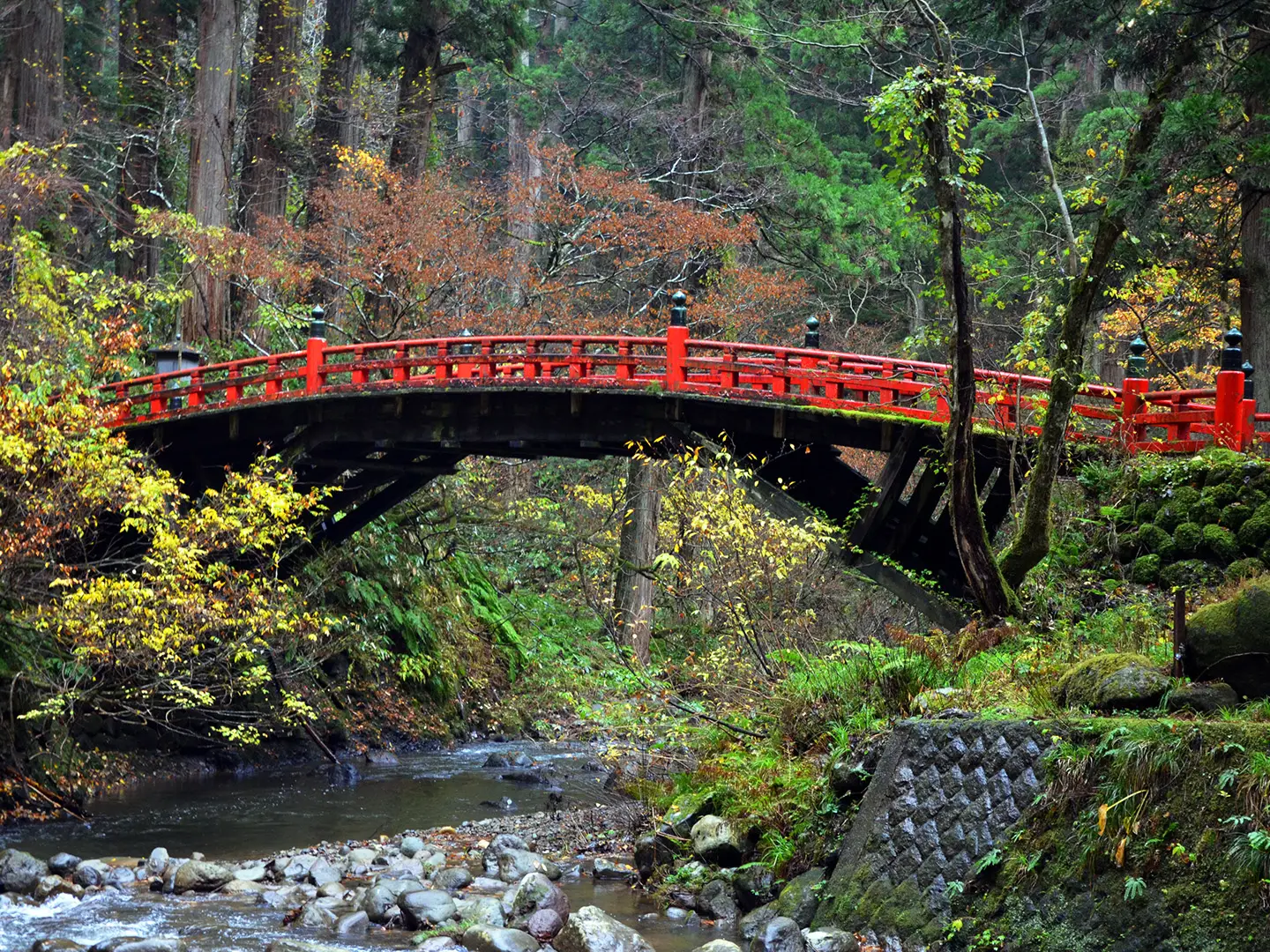
Start at Zuishinmon Gate near the Ideha Bunka Kinenkan / Ideha Museum. The classic route descends first through cryptomeria cedars to the Haraigawa river, the vermilion Shinkyo bridge and Suga-no-taki waterfall, then reaches the Five-Storied Pagoda about ten minutes in. From there the stairway climbs the three slopes — Ichi-no-saka, Ni-no-saka and San-no-saka — passing Ninosaka teahouse about halfway before reaching Sanjin Gosaiden at the summit. Most walkers return the same way, making it an out-and-back; a bus runs from the summit for a one-way finish. For longer Japanese pilgrimage planning, compare the Kumano Kodo Pilgrimage Routes or the Kumano Kodo Nakahechi Route.
Shugendo History on Mount Haguro
Mount Haguro was consecrated in 593 by Nojo Taishi, also known as Prince Hachiko, who according to legend was guided to the mountain by a three-legged crow. Haguro became a centre of Shugendo, the mountain ascetic tradition practised by yamabushi. In the Dewa Sanzan trinity it represents the present life, alongside Mount Gassan as the past and Mount Yudono as the future. Walking Haguro is the first stage of the symbolic “Journey of Rebirth”.
Notable highlights
- Five-Storied Pagoda (29 m): An unpainted wooden pagoda standing alone among the cedars about ten minutes from the start. First built in the 930s and rebuilt in 1369, it is a National Treasure and a key reason to walk the lower section slowly.
- 2,446 stone steps: The mossy stairway was laid in the 1600s and is the physical heart of the pilgrimage. Look for the 33 tiny carvings hidden in the stones, including sake cups, gourds and lotus flowers.
- Sanjin Gosaiden shrine: The summit hall enshrines the deities of all three Dewa mountains together. Its huge thatched roof is over two metres deep, making the summit feel more like a sacred precinct than a viewpoint.
- Cryptomeria cedar avenue: The path runs through towering sugi cedars, some several hundred years old. The shaded forest gives the climb its quiet, enclosed atmosphere.
- Ninosaka teahouse: A historic rest stop about halfway up the ascent. Pilgrims pause here for tea and views over the Shonai plain towards the Sea of Japan.
- Journey of Rebirth: Haguro is the accessible first stage of the Dewa Sanzan pilgrimage, a Shugendo practice walked for more than 1,400 years. If you like short shrine approaches, also see the Fushimi Inari Shrine Path.
Challenges to expect
The route is short, but the effort is sustained: 2,446 stone steps, including the steep Ni-no-saka slope, make it harder than the distance suggests. The path is shaded, mossy and can be slippery when wet or icy. Snow-free walking is typical from mid-April to early December; winter walking is possible, but crampons may be needed. Facilities are limited to places such as Ninosaka teahouse when open.
HikeList Score
Mount Haguro Pilgrimage Trail scored 78/100 on HikeList's trail-quality metrics.
See score breakdownHide breakdown
- Ideal length 55
- Balanced challenge 100
- Scenery & wildness 98
- Varied terrain 71
- Accommodation 58
- Food & support 72
- Path quality 74
- Season flexibility 100
Computed from length, challenge, scenery & wildness, terrain variety, accommodation, food & support, path quality and season flexibility.
 Japan
JapanShow more data Show less
- Forest
- Mountain
- Paved
- Stone Steps
- Flagstones
- Shukubo
- Temple Lodging
- Family Friendly
- Restrooms
- Water Sources
- Shelters
- Picnic Areas
Photos from hikers
Taken on the trail by people who've reviewed Mount Haguro Pilgrimage Trail.
Reviews
How would you rate Mount Haguro Pilgrimage Trail?
Tap a star to start your review — you could be the first.