Meteora Monasteries Trail
How would you rate Meteora Monasteries Trail?
Tap a star to share your experience and help other hikers.
Meteora Monasteries Trail: A Practical Hiking Guide
HikeList Score
Meteora Monasteries Trail scored 77/100 on HikeList's trail-quality metrics.
See score breakdownHide breakdown
- Ideal length 55
- Balanced challenge 100
- Scenery & wildness 98
- Varied terrain 59
- Accommodation 57
- Food & support 81
- Path quality 80
- Season flexibility 76
Computed from length, challenge, scenery & wildness, terrain variety, accommodation, food & support, path quality and season flexibility.
The Meteora Monasteries Trail is a moderate day hike in Thessaly, central Greece, linking the rock-top monasteries above Kastraki and Kalambaka. The popular loop from Kastraki is about 8.5 km and usually takes 4–6 hours including monastery stops; a fuller circuit of all six active monasteries is roughly 16 km. It suits walkers who want short distances, historic sites and dramatic sandstone towers, but still involves rocky paths, repeated climbs and steep monastery staircases.
Route Overview
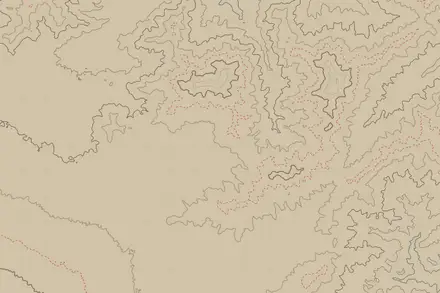
Most walkers start and finish in Kastraki village, with Kalambaka also useful for the eastern monasteries. A typical anticlockwise route from Kastraki passes St Nicholas Anapafsas, Great Meteoron, Varlaam and Roussanou, with optional extensions to Holy Trinity and St Stephen above Kalambaka. Expect old monks’ paths, oak woodland, cobbled and rock-cut sections, staircases and short road links between monasteries. The route is best treated as a loop or flexible network rather than a single fixed line. For longer Greek walking trips, compare the E4 European Long-Distance Trail Greek Section or the mountain-focused Agrafa Mountains Circuit.
Meteora: monks, ladders and a UNESCO landscape
Hermit monks settled in Meteora’s caves and fissures from around the 9th–11th centuries. Organised monastic life began when Athanasios Koinovitis of Mount Athos founded Great Meteoron in the mid-14th century, partly as refuge during Turkish incursions. For centuries the monasteries were reached by removable ladders, ropes and net baskets; rock-cut steps were added in the 1920s. Meteora became a UNESCO World Heritage Site in 1988 for both cultural and natural value.
Notable highlights
- Great Meteoron (Megalo Meteoro): The largest and oldest of the active monasteries, founded by St Athanasios in the 14th century. Hikers reach it by a long cliff-cut staircase, with the katholikon, old refectory and museum at the top.
- Varlaam Monastery: Rebuilt in 1517 by the brothers Theophanes and Nektarios after two centuries abandoned. Its frescoed church and old rope-and-windlass tower show how supplies were once hauled up the rock.
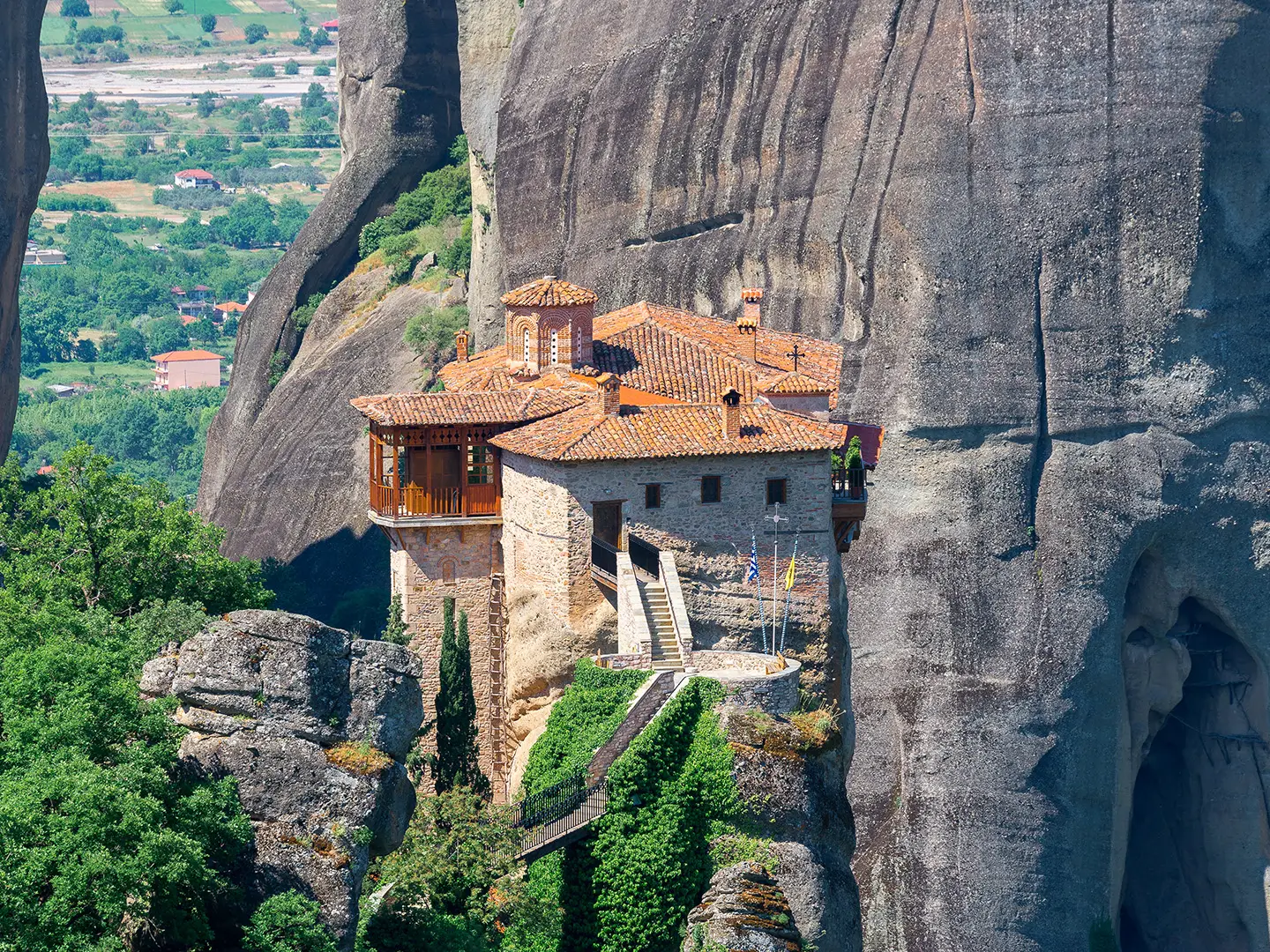
- Roussanou (St Barbara): Set low on a slender pillar and reached by short bridges, it is one of the most accessible monasteries on the route. Its position makes it a strong landmark while walking between the central rocks.
- Holy Trinity (Agia Triada): Reached by a long flight of steps from the Kalambaka side. It featured in the 1981 James Bond film For Your Eyes Only and gives wide views over the plain.
- Sunset Rock (Psaropetra) viewpoint: An open ledge between the pillars and the classic sunset viewpoint. It is a useful add-on if timing the walk for late afternoon light.
- Rock forest geology: Meteora’s sandstone and conglomerate towers rise roughly 400–550 m above the plain. The rock formations are the natural setting that makes the monastery walk unique in Greece.
Challenges to expect
The distances are short, but the walk is not flat. Expect repeated climbs and descents on rocky paths, cobbles and stone staircases, plus paved road sections between monasteries. Signage can be patchy away from the main routes, so carry a dedicated hiking map or go with a guide. Summer heat can exceed 35C, making midday walking a poor choice. Check monastery opening days and dress code before setting out.
HikeList Score
Meteora Monasteries Trail scored 77/100 on HikeList's trail-quality metrics.
See score breakdownHide breakdown
- Ideal length 55
- Balanced challenge 100
- Scenery & wildness 98
- Varied terrain 59
- Accommodation 57
- Food & support 81
- Path quality 80
- Season flexibility 76
Computed from length, challenge, scenery & wildness, terrain variety, accommodation, food & support, path quality and season flexibility.
 Greece
Show more data Show less
- Forest
- Rocky
- Dirt
- Paved
- Hotels
- Family Friendly
- Pet Friendly
- Restrooms
- Water Sources
- Picnic Areas
Photos from hikers
Taken on the trail by people who've reviewed Meteora Monasteries Trail.
Reviews
How would you rate Meteora Monasteries Trail?
Tap a star to start your review — you could be the first.