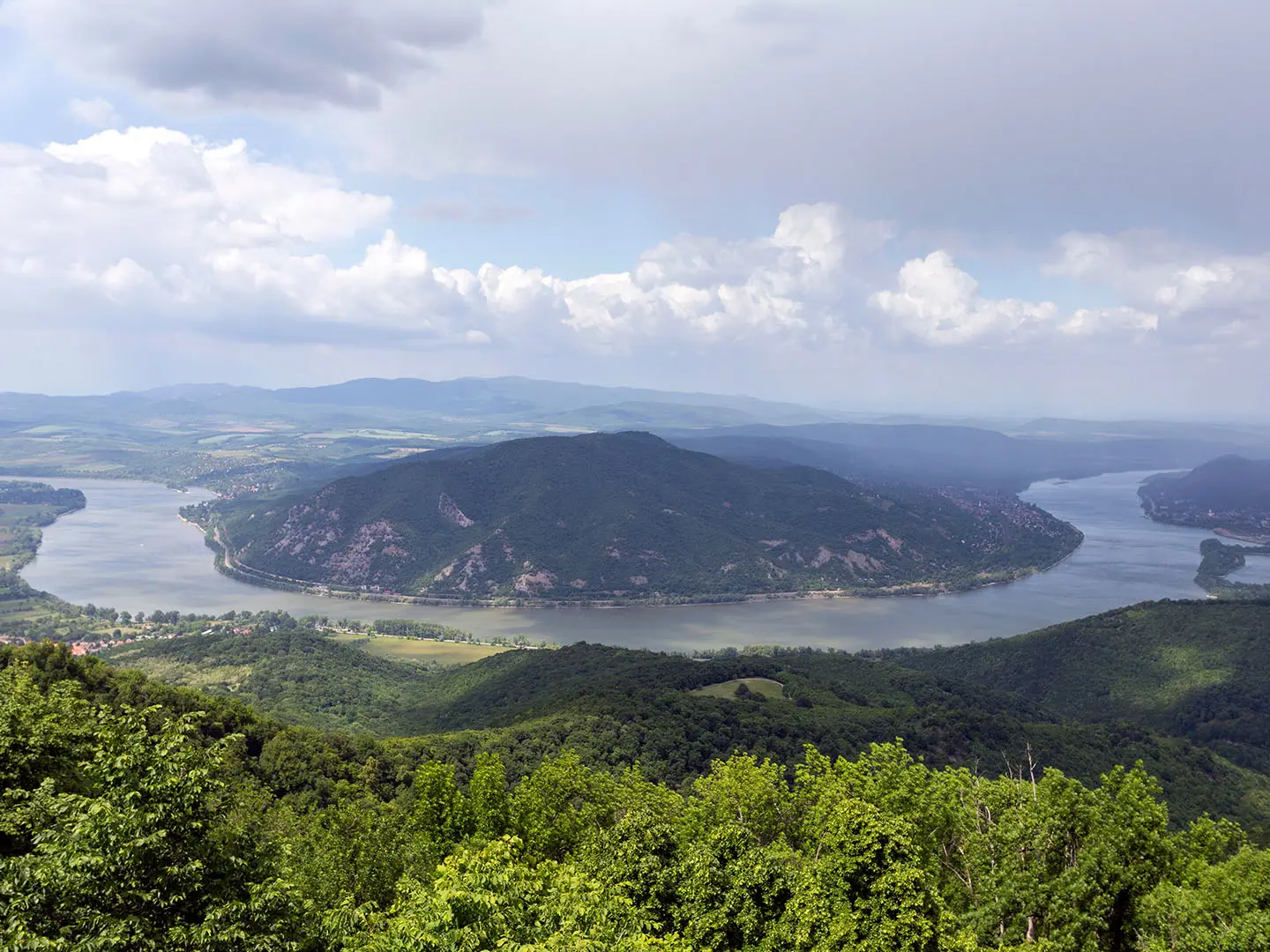
European Long-Distance Trail E4

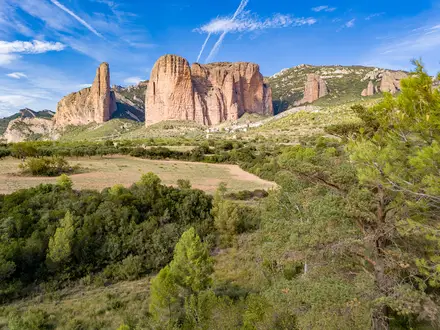
Image by skovalsky

European Long-Distance Trail E4 in Hungary: Complete Hiking Guide

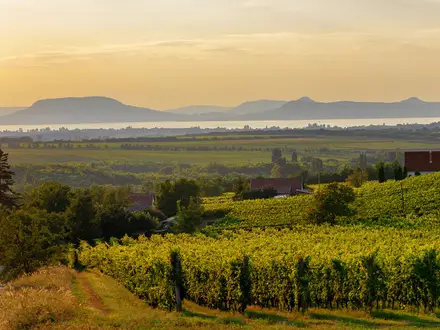
Embark on an unforgettable journey along the European Long-Distance Trail E4 as it winds through Hungary, offering a captivating blend of rolling forested mountains, lush valleys, picturesque countryside, and historic towns. This renowned hiking route stretches from the Austrian border at Kőszeg to the Slovakian border near Sátoraljaújhely, traversing diverse landscapes that showcase the heart of Central Europe.

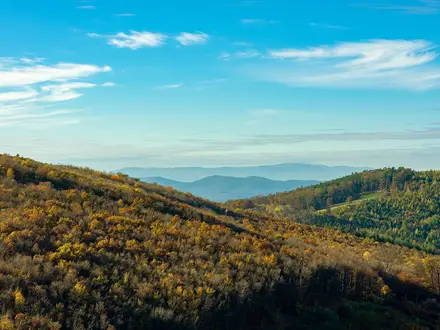
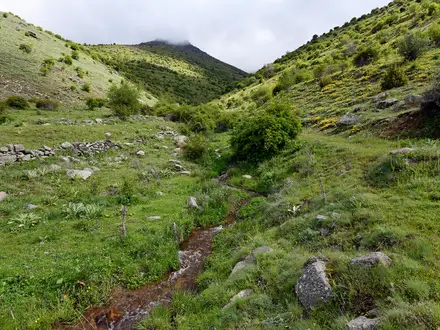
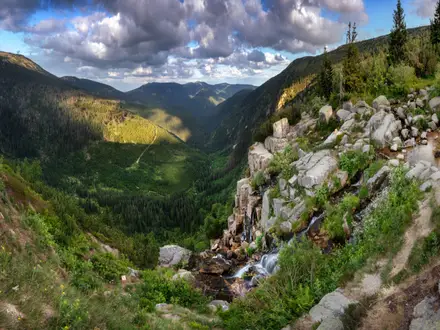
Whether you’re scaling the verdant slopes of the Kőszeg Mountains, trekking through the tranquil beech and pine forests of the Bakony and Mátra ranges, or passing medieval castles and charming villages, the E4 in Hungary promises a dynamic adventure rich in natural beauty and cultural heritage. Suitable for experienced hikers seeking challenge and variety, this trail reveals a side of Hungary best discovered on foot, where every day brings new scenery and the spirit of exploration.

Route Overview

The European Long-Distance Trail E4 in Hungary traverses the country from the Austrian border in the west near Kőszeg to the Slovakian border in the northeast around Sátoraljaújhely. Covering approximately 420 km, the route typically takes around 20 days to complete for an average long-distance hiker.

The trail passes through several regions, including the Kőszeg Mountains, Bakony Hills, Bükk Mountains, and the Mátra Mountains—the latter containing Hungary's highest peak, Kékes (1014 m). Along the way, hikers will pass through historic towns (such as Szombathely, Eger, and Gyöngyös), rolling hills and uplands, dense forests, and agricultural landscapes. Trail segments frequently follow the National Blue Trail (Országos Kéktúra) for considerable sections.

Trail conditions range from well-trodden dirt and gravel tracks to rocky paths in mountainous areas. Occasional paved sections occur when the trail passes through or near settlements. Some parts may become muddy after rainfall, and steeper regions can be challenging, especially under adverse weather conditions. Throughout the route, resupply points and accommodation options can be found in towns and villages, but longer stretches require self-sufficiency. Good route planning is necessary to optimize rest stops and overnight stays.

Historical Context of the European Long-Distance Trail E4 in Hungary

The European Long-Distance Trail E4 in Hungary weaves a route through regions steeped in history, reflecting centuries of migration, warfare, and cultural exchange in the heart of Europe. The path connects historic towns such as Kőszeg, Szombathely, and Esztergom, each with deep roots in Hungarian and Central European heritage. Kőszeg, at the trail’s starting point, is particularly noted for its renowned 1532 siege, where the city’s defenders famously withstood an Ottoman attack, an act that played a critical role in European history.

Along the way, hikers encounter Roman ruins near Szombathely, one of Hungary’s oldest cities and historically known as Savaria. Passing through the Bakony, Mátra, and Bükk mountains, the trail mirrors routes once traveled by traders, armies, and pilgrims. Medieval castles overlooking the countryside, such as those in Visegrád and Sirok, speak to centuries of frontier defense and royal intrigue. The proximity of the route to ancient religious monuments and baroque towns highlights the continuity of settlement and the importance of the region as a crossroads between east and west. As you journey east toward Sátoraljaújhely, the trail follows the footsteps of generations who have shaped Hungary’s story through resilience and adaptation to changing times.

Notable highlights

  • Kőszeg: A beautifully preserved medieval town on the Austrian border, famous for its historic old town, Jurisics Castle, and the legendary siege of 1532.
  • Kőszeg Mountains: Scenic rolling hills covered with oak and beech forests, offering panoramic views and a sense of wilderness at the start of the trail.
  • Szombathely (Savaria): One of Hungary’s oldest cities, featuring Roman ruins, a cathedral, and a vibrant downtown area ideal for resupply and exploration.
  • Ják Abbey: The Romanesque church in Ják, dating to the 13th century, is a masterpiece of Hungarian medieval architecture.
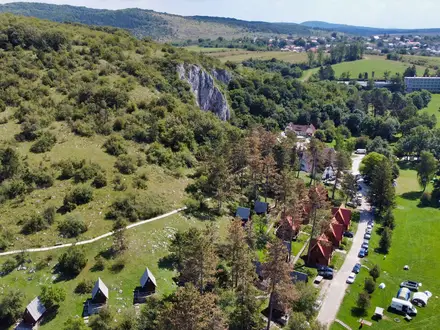
  • Bakony Hills: Known for dense forests, wildlife, dramatic limestone formations, and tranquil rural villages like Zirc and Bakonybél.
  • Zirc Cistercian Abbey: Founded in the 12th century, this abbey is a cultural hub surrounded by botanic gardens and forest trails.
  • Herend Porcelain Town: Internationally renowned for its fine hand-made porcelain, with a museum and workshops open to visitors.
  • Lake Balaton Views: Although the trail skirts the northern side, glimpses of Central Europe’s largest lake are memorable highlights with opportunities for side trips.
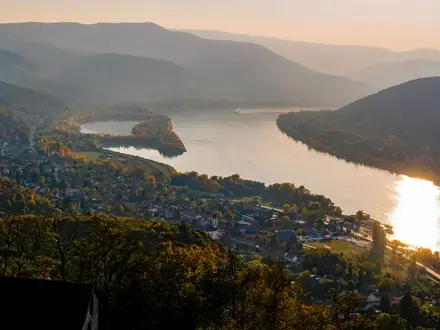
  • Visegrád Castle: A medieval fortress perched above a bend in the Danube, offering sweeping views and insights into Hungary’s royal past.
  • Danube Bend: The trail passes along this iconic natural feature, renowned for its scenery, river views, and charming riverside towns.
  • Mátra Mountains and Kékes Peak: The highest peak in Hungary (1014m) provides stunning vistas, dense pine and beech forests, and refreshing mountain air.
  • Sirok Castle Ruins: Perched on a rocky outcrop, these atmospheric ruins overlook lush valleys and offer a glimpse into Hungary’s turbulent medieval period.
  • Esztergom Basilica: Hungary's largest church, towering above the Danube and impressive for its architecture and historical significance.
  • Zemplén Hills: Rich in wildlife and remote woodlands, this region marks the scenic eastern approach toward the trail’s terminus at Sátoraljaújhely.

Challenges to expect

Hikers on the European Long-Distance Trail E4 in Hungary should be prepared for physically demanding days, particularly in the mountainous sections such as the Bükk and Mátra ranges, where steep ascents and descents can test endurance and strength. The terrain often alternates between dirt, rocky, and gravel surfaces, making the trail slippery and challenging in wet weather, and there may be long stretches without significant shade during summer, leading to heat and dehydration risk.

Navigation can pose a challenge, as trail markers may be inconsistent or faded in remote areas. Carrying detailed topographic maps or a GPS device is highly recommended, especially where the trail crosses less-developed or sparsely populated areas with limited signage. Weather patterns in Hungary can bring sudden spring and summer thunderstorms, which may make some sections muddy and more difficult to traverse, and cause temporary stream flooding or slippery rocks.

Accommodation requires foresight: while options like hotels, hostels, huts, and wild camping spots exist, some trail segments pass through remote countryside where services can be spaced far apart. Planning daily distances and overnight stops is essential, particularly for those not camping. In more isolated sections, self-sufficiency with food and water is advised, as villages and resupply points can be infrequent.

Country
Trail type
Point to point
Terrain & Landscape
  • Mountainous
  • Forest
Trail surface
  • Dirt
  • Rocky
  • Gravel
Difficulty rating
Hard
Elevation gain/loss
6000 metres
Highest point altitude
1014 metres
Distance
420 kilometres
Duration
20 days
Permits & Fees
No permits or fees
Accommodation
  • Hotels
  • Hostels
  • Huts
  • Campsites
  • Wild camping spots
Average daytime temperature
18°C
Chance of rainfall
Medium
Estimated cost
$$
Optimal hiking season
Spring
March to May
Summer
June to August
Autumn
September to November
Accessibility
  • Family Friendly
  • Pet Friendly
Facilities
  • Restrooms
  • Water Sources
  • Campsites
  • Shelters
  • Picnic Areas
Day 1
Kőszeg to Bozsok
Approx. 20km

Begin at the Austrian border in Kőszeg, a charming town surrounded by the Kőszeg Mountains. The route follows well-marked forest tracks and gentle ascents through wooded hills, passing picturesque clearings before reaching the village of Bozsok. Expect a moderate first day to ease into the journey.

Day 2
Bozsok to Szombathely
Approx. 22km

Leaving Bozsok, the trail descends to open countryside, interspersed with woodland sections before arriving in the regional hub of Szombathely. The day features mix of gravel paths and rural roads, with opportunities to restock supplies in town.

Day 3
Szombathely to Ják
Approx. 21km

Departing Szombathely, the trail heads south-east through fields and farmlands, passing small villages and following country lanes and tracks. The day ends at Ják, home to Hungary's oldest Romanesque church.

Day 4
Ják to Sárvár
Approx. 22km

The countryside route continues through rolling hills, forest patches, and rural villages. Arrive in Sárvár, known for its castle and thermal baths, following mostly flat and gentle paths.

Day 5
Sárvár to Zirc
Approx. 21km

Crossing into the Bakony Hills region, the path becomes hillier and transitions into forest-covered terrain. Forest tracks, gravel paths, and stretches of rocky ground lead toward the historic town of Zirc.

Day 6
Zirc to Bakonybél
Approx. 19km

Leave Zirc and traverse one of the prettiest forested sections through the heart of the Bakony Mountains, with moderate climbs and descents on dirt and rocky surfaces. Arrive in Bakonybél, a traditional village nestled in the hills.

Day 7
Bakonybél to Herend
Approx. 22km

Continue through the Bakony, moving from dense forest to open meadows and highland pastures. Some rocky sections are encountered before reaching Herend, famous for its porcelain manufacture.

Day 8
Herend to Veszprém
Approx. 20km

Forest trails and hilly tracks descend towards the scenic city of Veszprém. The route passes minor ridges and rural stretches before entering the city known as the 'City of Queens.'

Day 9
Veszprém to Balatonalmádi
Approx. 21km

This section heads south, descending towards Lake Balaton with mixed dirt and gravel tracks. The trail traverses vineyards and orchards before arriving at the lakeside town of Balatonalmádi.

Day 10
Balatonalmádi to Várpalota
Approx. 21km

Trail leaves the lakeshore, heading north-east through hilly terrain and forest patches, following gravel roads and woodland paths to the historical mining town of Várpalota.

Day 11
Várpalota to Csókakő
Approx. 20km

Today includes a mix of forest and agricultural land, with rolling ups and downs. Highlights include the Csókakő Castle, perched on a hill above the village and offering panoramic views.

Day 12
Csókakő to Tatabánya
Approx. 21km

Continue across the Vértes Hills with moderate elevation gains on mixed dirt and rocky trails. Pass through small villages and reach Tatabánya, a major city with excellent resupply options.

Day 13
Tatabánya to Tata
Approx. 20km

Depart Tatabánya and traverse through woodland, rolling terrain, and scenic parklands, heading towards Tata. The route is generally gentle and pleasant, following marked hiking trails.

Day 14
Tata to Ács
Approx. 22km

The path heads north through agricultural landscapes and along riverbanks, with occasional wooded areas. Reach Ács, a traditional small town reconciling the rural pace of the region.

Day 15
Ács to Komárom
Approx. 21km

Today follows quiet countryside roads and trails along the borders of the Danube River, taking in scenic river views and wetlands before arriving in Komárom, known for its fortress.

Day 16
Komárom to Esztergom
Approx. 22km

Follow the Danube and cross semi-urban and rural landscapes to reach Esztergom, one of Hungary's most historic towns. The route mixes riverbank tracks, rural roads, and sections of forest.

Day 17
Esztergom to Visegrád
Approx. 19km

The trail follows the scenic bends of the Danube, entering forested hills and rising to panoramic viewpoints before descending into the medieval town of Visegrád, nestled between mountains and river.

Day 18
Visegrád to Mátrafüred
Approx. 23km

This demanding day enters the rugged Mátra Mountains, with significant ascents on forest tracks and rocky paths, passing isolated hamlets and dense woodlands before reaching Mátrafüred.

Day 19
Mátrafüred to Sirok
Approx. 22km

Continue traversing the Mátra range, including the ascent of Kékes, Hungary's highest peak. The route continues through pine and beech forests, with frequent elevation changes, ending at Sirok, famed for its ruined fortress.

Day 20
Sirok to Sátoraljaújhely
Approx. 23km

The final day covers the undulating landscapes of northern Hungary, passing through the scenic Zemplén Hills. Expect forested tracks, ridge walks, and occasional clearings as the route heads for the border town of Sátoraljaújhely, marking the end of the E4’s Hungarian section.