Reference
The Complete Long-Distance Hiking Glossary: 60+ Terms Explained
A plain-English guide to 60+ long-distance hiking terms, from NoBo and zero days to bothies, cols, GR routes and base weight.
7 June 2026 9 min read
14 hand-picked long-distance trails
GR trails are the classic red-and-white waymarked long-distance routes of France and nearby regions, from the Corsican mountains and the French Pyrenees to Brittany’s coast, the Spanish Pyrenees, Mallorca and the Canaries. This collection is for hikers who want a numbered Grande Randonnée route with a clear identity: big traverses, multi-week journeys, compact mountain loops and coast-hugging paths.
 France · 272 km · 12 days · Moderate
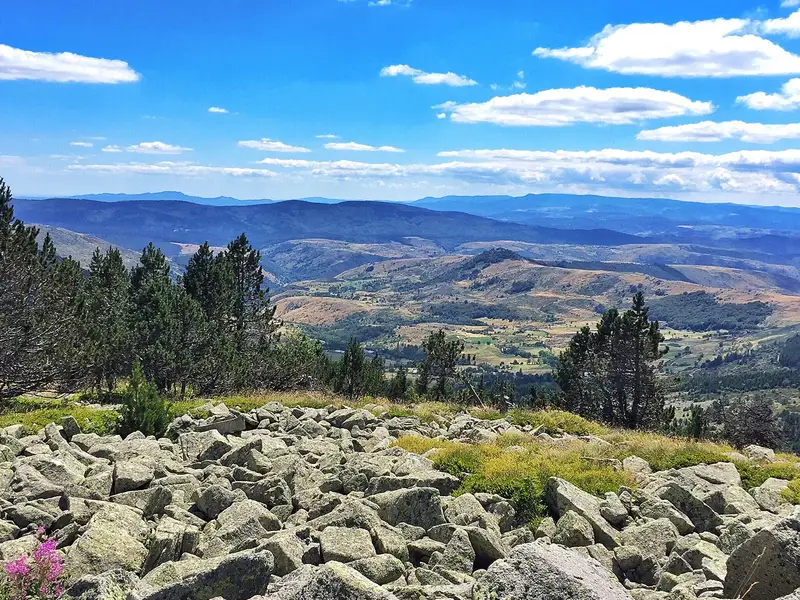
 The GR70 is a compact Grande Randonnée across the southern Massif Central, usually taking about 12 days over 272 km. Its moderate mountain and forest terrain suits hikers wanting a named GR without a month-long schedule.
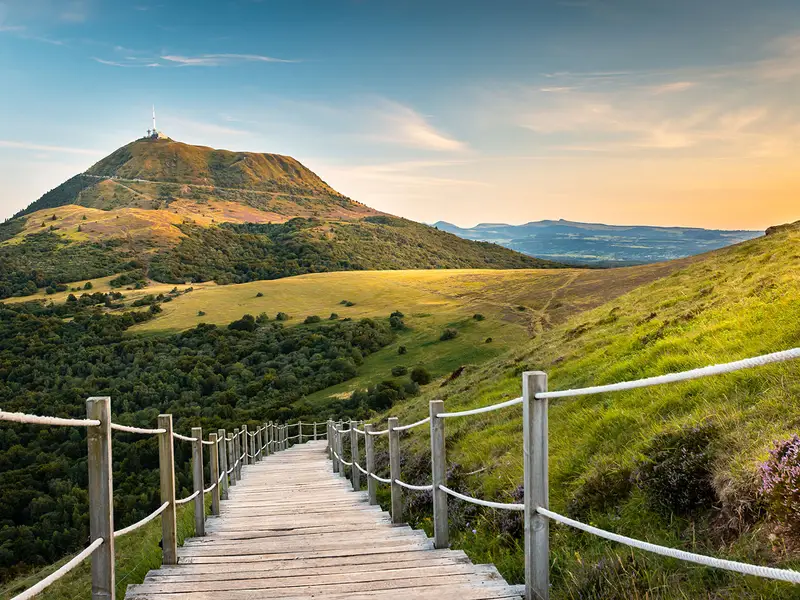 France · 198 km · 9 days · Moderate
 The GR30 is a moderate 198 km loop in central France’s Massif Central, usually completed in 9 days. It belongs here as a Grande Randonnée focused on Auvergne’s volcanic lakes and mountain-forest terrain.
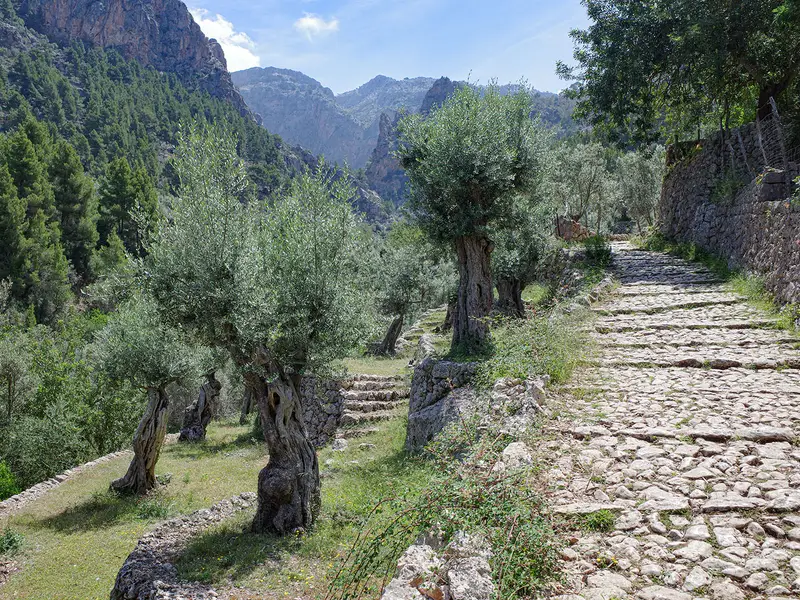
 Spain · 140 km · 8-10 days · Hard
 The GR221 adds Mallorca to the GR map, crossing the Serra de Tramuntana over roughly 140 km. Its hard rating, 8–10 day duration and mix of mountain, coastal, limestone and terrace terrain give it a distinctive island profile.
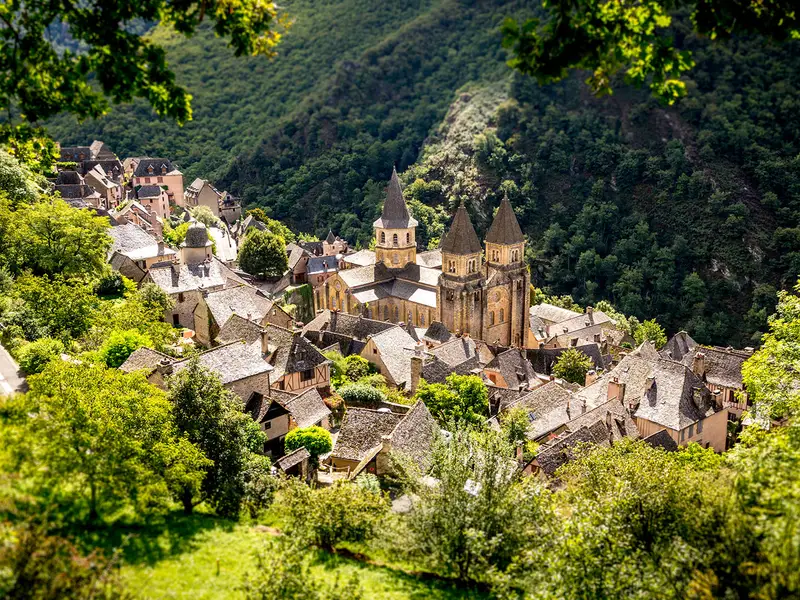 France · 735 km · 28-32 days · Moderate
 The GR65 brings the pilgrimage side of the GR network into focus, covering 735 km from Le Puy-en-Velay to Saint-Jean-Pied-de-Port. Moderate difficulty and non-technical plateau, hill, forest and river valley terrain make it a steadier long walk.
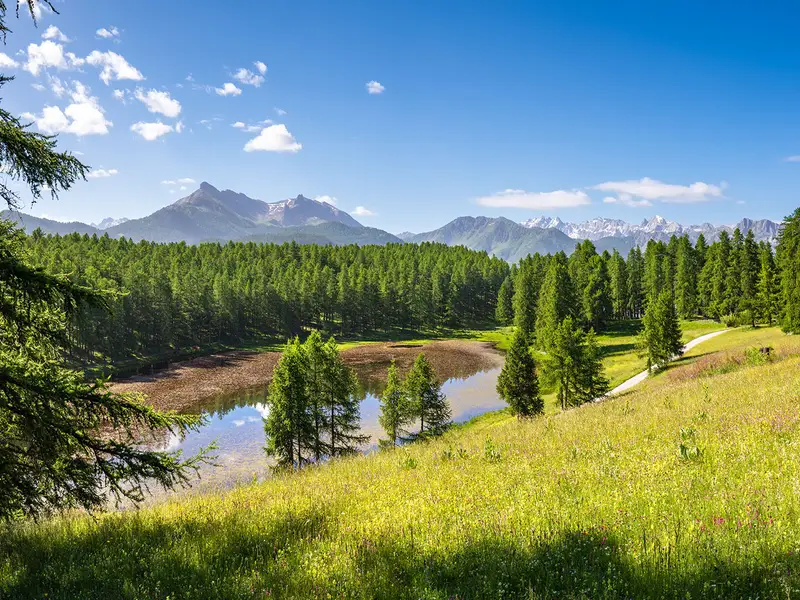 France · 130 km · 8-10 days · Hard
 The GR58 is a hard 130 km loop through Queyras Regional Park, usually walked in 8–10 days. It fits hikers seeking a shorter Alpine-style GR with mountain, forest and alpine meadow terrain.
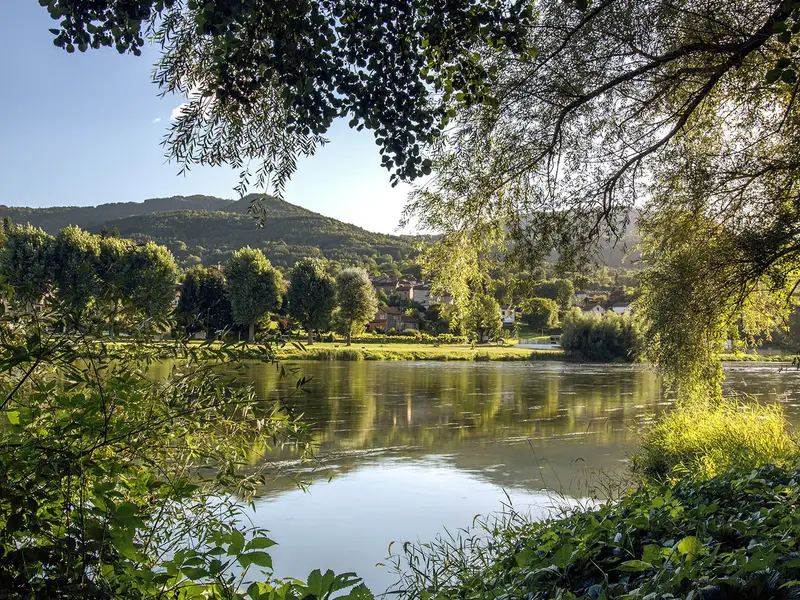 France · 1243 km · 50 days · Moderate
 The GR3 follows a 1,243 km Grande Randonnée line from Mont Gerbier-de-Jonc to the Atlantic coast in Loire-Atlantique. Moderate difficulty and riverside, forest, vineyard, mountain and coastal terrain make it a long but approachable French traverse.
 France · 1470 km · 60-75 days · Hard
 The GR4 is a major southern France crossing, running about 1,470 km from Royan to Grasse. Its hard rating and varied coastal, farmland, forest, upland, volcanic, gorge, plateau and Mediterranean terrain make it a true end-to-end project.
 France · 866 km · 52 days · Hard
 The GR10 gives the French Pyrenees their full coast-to-coast treatment, running 866 km from Hendaye to Banyuls-sur-Mer. Its hard rating, 52-day duration and mix of mountain, forest and coastal terrain make it a major GR benchmark.
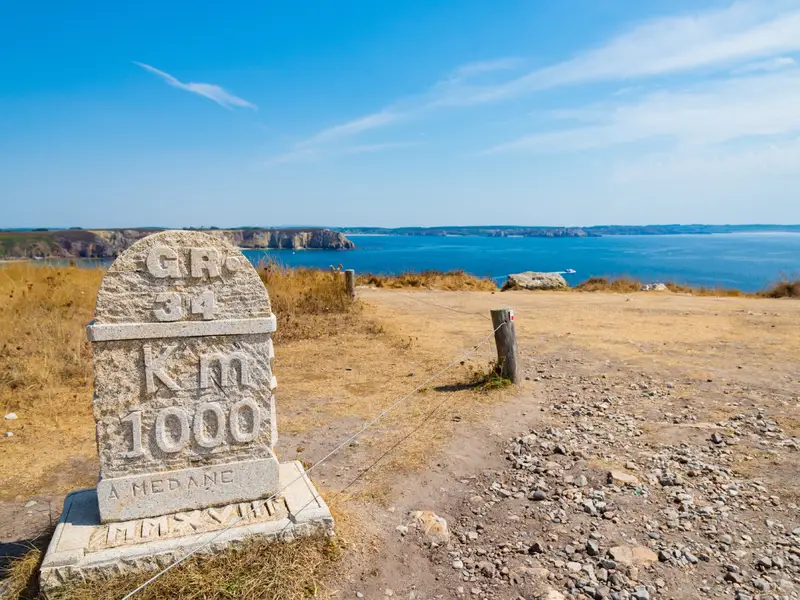 France · 2000 km · 80 days · Moderate
 The GR34 is the coastal giant of this collection: over 2,000 km from Mont-Saint-Michel to Saint-Nazaire. Its moderate difficulty and cliff top, heathland, dune and estuary terrain suit hikers drawn to Brittany’s shoreline.
 France · 176 km · 10-15 days · Expert
 The GR54 stands out because it is an expert loop rather than a point-to-point traverse. In 176 km and 10–15 days, it circles the Ecrins massif through mountainous and forest terrain.
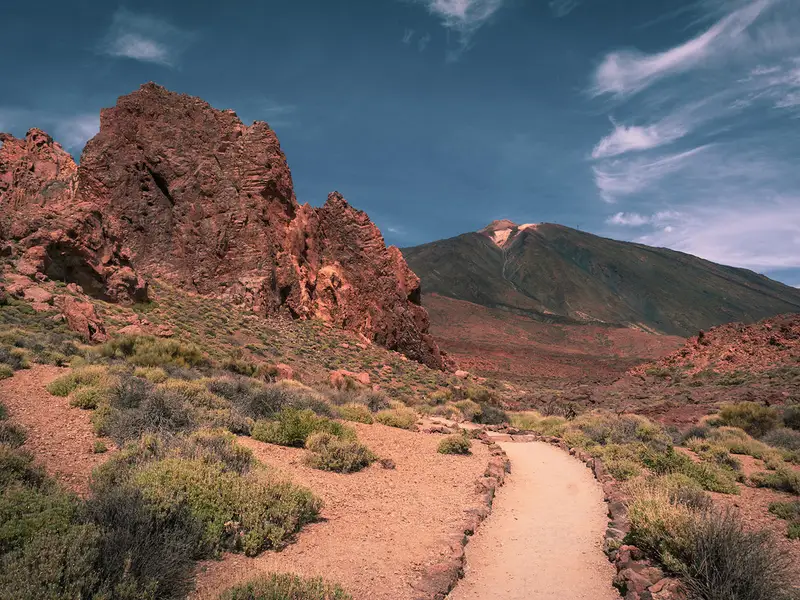 Spain · 560 km · 35 days · Hard
 The GR131 is the collection’s multi-island outlier: 560 km across all seven main Canary Islands, linked by inter-island ferries. Its hard, 35-day route combines volcanic, desert, forest, mountain and coastal terrain.
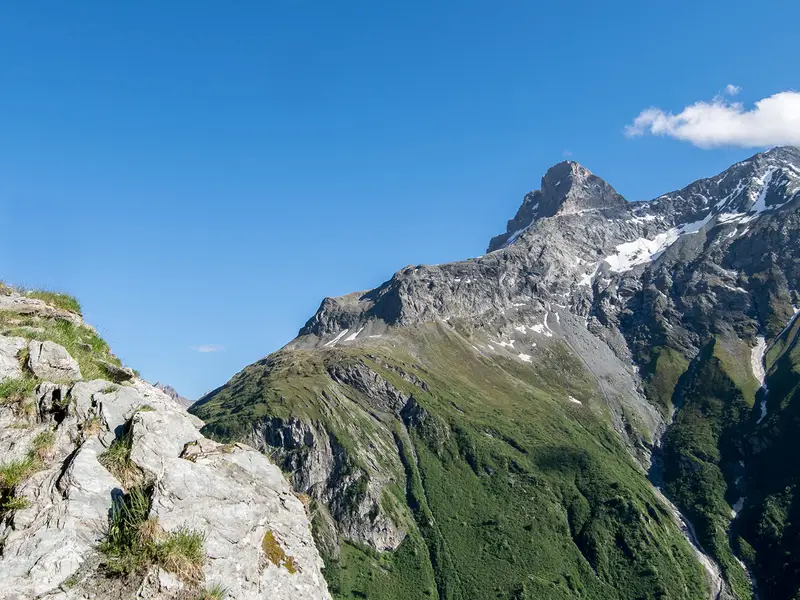 France · 620 km · 30 days · Strenuous
 The GR5 earns its place as the 620 km Grande Traversée des Alpes, a strenuous north-to-south line from Lake Geneva to the Mediterranean. Choose it for a month-long French Alps thru-hike with mountain and forest terrain.
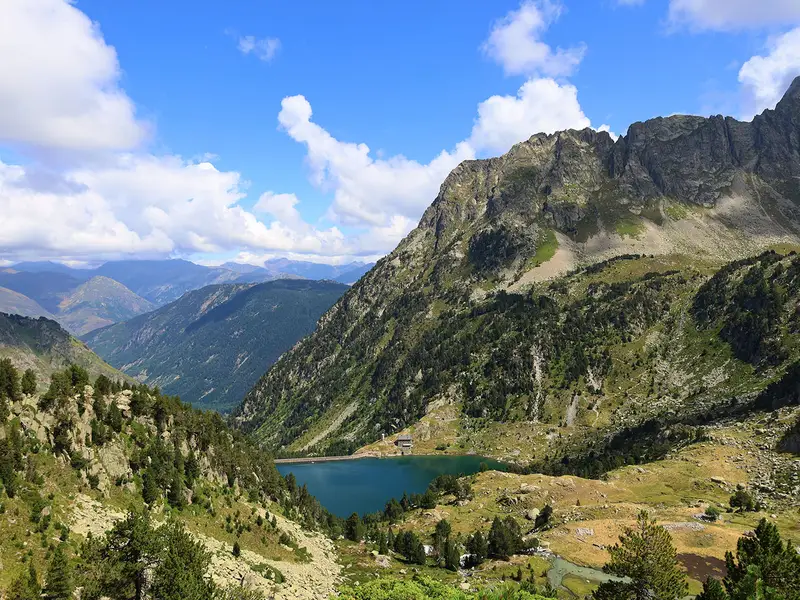 Spain · 840 km · 44-50 days · Expert
 The GR11 represents the Spanish side of the Pyrenees, crossing about 840 km from Cabo Higuer to Cap de Creus. Its expert rating and 44–50 day duration make it one of the collection’s biggest mountain commitments.
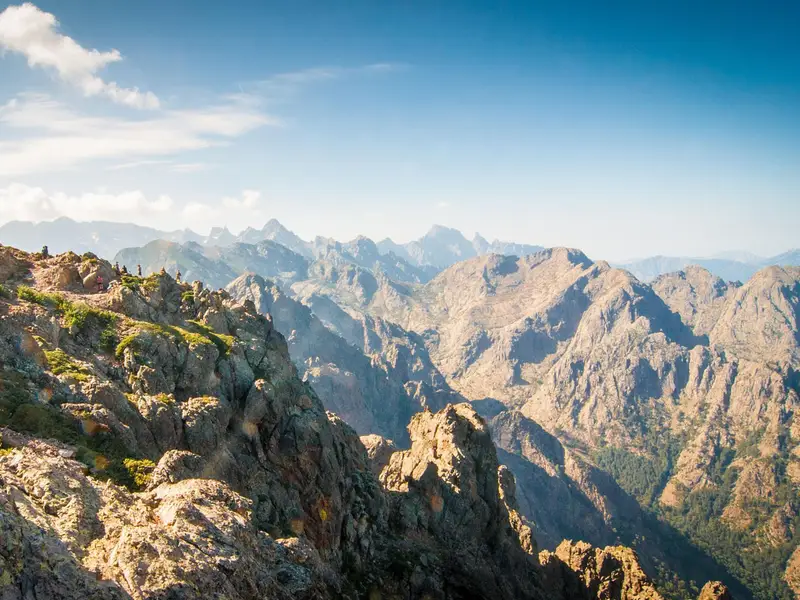 France · 180 km · 15 days · Expert
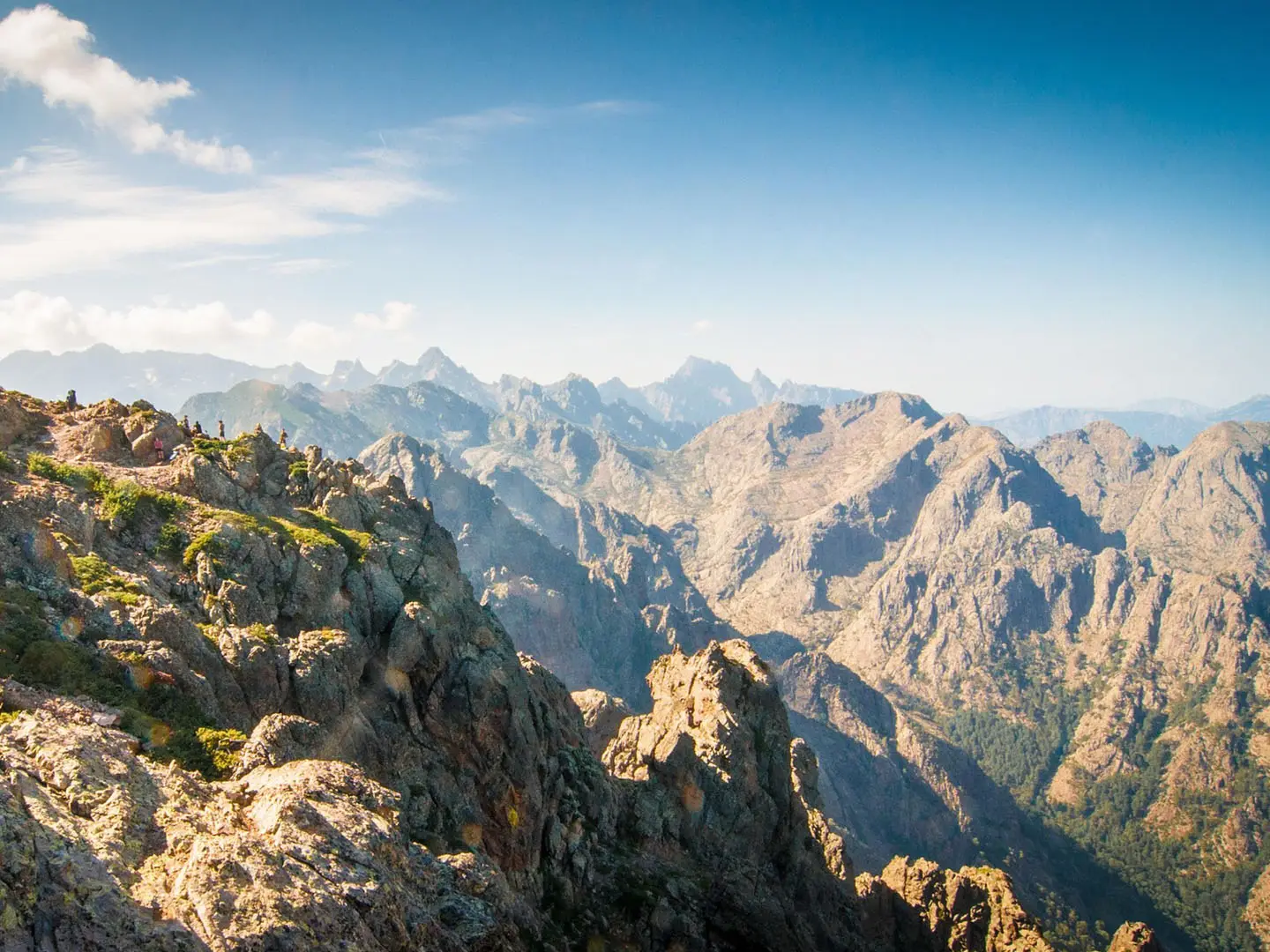
 The GR20 is the emblematic hard-edged choice: a 180 km expert traverse of Corsica’s mountainous spine, usually walked in 15 days. It belongs here as the toughest long-distance Grande Randonnée in the brief.
Start with commitment. The longest point-to-point options here are serious undertakings: the GR34 runs for around 2,000 km along Brittany, the GR4 crosses southern France over about 1,470 km, and the GR3 follows a 1,243 km line from the Ardèche to the Atlantic coast. If you want a full thru-hike but not a two-month project, routes such as the GR20, GR70, GR221, GR58, GR30 and GR54 sit in the 8–15 day range.
Difficulty matters as much as distance. The expert choices are concentrated in mountain terrain: the GR20 in Corsica, the GR11 across the Spanish Pyrenees, and the GR54 around the Ecrins. Hard and strenuous routes such as the GR5, GR10, GR221, GR131, GR58 and GR4 suit fit hikers ready for repeated long days, varied surfaces and sustained elevation changes. Moderate routes, including the GR34, GR65, GR70, GR30 and GR3, are better fits if you want a major journey without choosing the hardest category.
Use terrain to shape the experience. For high mountain walking, look to the GR20, GR10, GR5, GR11, GR54 or GR58. For coast and sea air, the GR34 is the purest coastal choice, while the GR11, GR221, GR131, GR4 and GR3 also include coastal terrain. The GR65 offers a more rolling pilgrimage-style line through plateau, hills, forest and river valley; the GR131 stands apart with volcanic, desert, forest, mountainous and coastal sections across the Canary Islands.
Most GR trails in this list are point-to-point routes, so plan transport at both ends and be realistic about completing only a section if time is limited. Loops such as the GR54, GR58 and GR30 simplify start-and-finish planning, while the GR131 adds inter-island ferry links between separate waymarked sections. Pick the route whose distance, difficulty and terrain match the trip you can actually enjoy, not just the most famous name.
A plain-English guide to 60+ long-distance hiking terms, from NoBo and zero days to bothies, cols, GR routes and base weight.