Kumano Kodo Pilgrimage Routes
How would you rate Kumano Kodo Pilgrimage Routes?
Tap a star to share your experience and help other hikers.
Kumano Kodo Pilgrimage Routes: Sacred Mountain Walk
HikeList Score
Kumano Kodo Pilgrimage Routes scored 82/100 on HikeList's trail-quality metrics.
See score breakdownHide breakdown
- Ideal length 85
- Balanced challenge 80
- Scenery & wildness 85
- Varied terrain 89
- Accommodation 75
- Food & support 81
- Path quality 84
- Season flexibility 76
Computed from length, challenge, scenery & wildness, terrain variety, accommodation, food & support, path quality and season flexibility.
The Kumano Kodo Pilgrimage Routes cross the mountainous Kii Peninsula in Wakayama, Japan, about 100 km south of Osaka. This guide covers the full Nakahechi traverse: roughly 70 km from Takijiri-oji to Kumano Nachi Taisha/Nachi Falls, typically 5 walking days, hard difficulty and about 3,400 m of cumulative ascent. It suits experienced walkers who want sacred forest trails, village guesthouses and sustained climbs, not a casual temple stroll.
Route Overview
Walk east from Takijiri-oji, the gateway to the sacred mountains near Tanabe, through Takahara, Chikatsuyu-oji, Tsugizakura-oji and Hosshinmon-oji to Kumano Hongu Taisha and Oyunohara. The core western leg to Hongu is about 38.5 km; the full point-to-point Nakahechi continues via Koguchi over the tougher Kogumotori-goe and Ogumotori-goe sections to Kumano Nachi Taisha, Nachi Falls and Daimon-zaka. For the dedicated flagship route page see Kumano Kodo Nakahechi Route; for another Kumano option compare the Kumano Kodo Iseji Route. Local buses, guesthouse reservations and luggage transfer are normally planned in advance.
A Pilgrimage Route Used for Over 1,000 Years
The Kumano Kodo has been in continuous use for well over 1,000 years. The first imperial pilgrimage, the Kumano Gokou, was made by Emperor Uda in 908, and retired and reigning emperors later made the journey 94 times across about 374 years. Pilgrims of all classes followed, said to arrive in lines like “ants”. The small oji shrines along the way mark historic stages, and Kumano belief blends Shinto, Buddhism and Shugendo mountain asceticism.
Notable highlights
- Nachi Falls (133 m): Japan’s tallest single-drop waterfall and a sacred object of worship. The classic final view pairs the cascade with the vermilion three-storey pagoda of Seiganto-ji.
- Kumano Nachi Taisha and Seiganto-ji: A grand shrine and Tendai Buddhist temple standing side by side above the falls. It is the spiritual climax of the walk and a rare surviving example of Shinto-Buddhist syncretism.
- Daimon-zaka (about 600 m, 267 steps): A moss-lined cobbled approach to Nachi, flanked by old cedars. It is one of the most atmospheric ishidatami stone sections on the route.
- Kumano Hongu Taisha and Oyunohara: The head shrine of all Kumano shrines. Nearby Oyunohara is marked by a huge torii gate where the shrine originally stood beside the Kumano River.
- Takahara: A high hamlet known as the “village in the mist”. It gives early views over the Kii mountains after the first climb from Takijiri-oji.
- Oji shrines and cobbled passes: Small wayside shrines and stone-paved climbs, including sections around Mikoshi-toge, keep the walk closely tied to its pilgrim history.
Challenges to expect
Expect a real mountain walk: sustained climbs and descents, forest paths, stone steps, cobbles and short quiet-road sections. The Hongu-to-Nachi half is the hardest, especially the Kogumotori-goe and Ogumotori-goe, including steep Dogiri-zaka. Navigation is helped by English and numbered signage, but weather is a major factor: avoid the June rainy season, midsummer humidity and August–September typhoon risk. For another demanding forest hike in Japan, see the Jomon Sugi Trail.
HikeList Score
Kumano Kodo Pilgrimage Routes scored 82/100 on HikeList's trail-quality metrics.
See score breakdownHide breakdown
- Ideal length 85
- Balanced challenge 80
- Scenery & wildness 85
- Varied terrain 89
- Accommodation 75
- Food & support 81
- Path quality 84
- Season flexibility 76
Computed from length, challenge, scenery & wildness, terrain variety, accommodation, food & support, path quality and season flexibility.
 Japan
JapanShow more data Show less
- Mountainous
- Forest
- Villages
- Cobblestone
- Stone Steps
- Dirt
- Road
- Minshuku
- Ryokan
- Guesthouses
- Family Friendly
- Restrooms
- Water Sources
- Shelters
Photos from hikers
Taken on the trail by people who've reviewed Kumano Kodo Pilgrimage Routes.
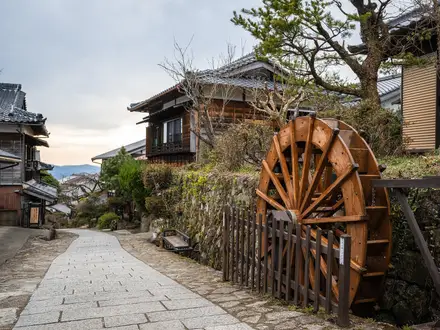
Begin the pilgrimage from the town of Tanabe, traveling by bus to Takijiri-oji, the traditional trailhead for the Nakahechi route. From here, trek steeply upward through dense forests and along mountain ridges, passing spiritual waypoints such as Tsurugi-no-miya and Takahara village. Experience scenic countryside vistas and quiet shrines, with opportunities to rest and take in the peaceful atmosphere along the route.
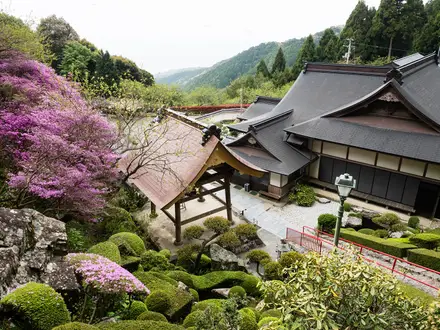
Depart from Takahara and continue along undulating forest trails, gradually climbing past ancient oji shrines and moss-covered stone markers. The route leads through scenic mountain terrain, with a mix of gentle paths and steeper sections, eventually descending into the quiet rural valley of Chikatsuyu. This section provides cultural encounters in mountain hamlets set among terraced rice fields.
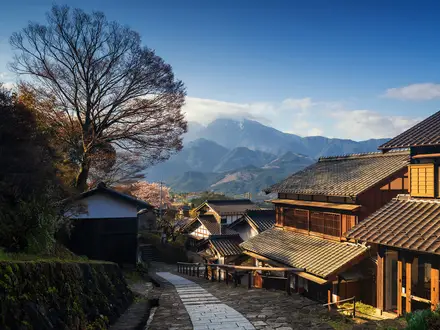
The trail on Day 3 is the most rigorous, featuring steep ascents and descents through deep forest. Pass significant spiritual sites such as Tsugizakura-oji and Kobiro-toge Pass before reaching Hosshinmon-oji, marking entry into the sacred precincts of Kumano Hongu Taisha. The path concludes in the Hongu area, where accommodation is available in Yunomine Onsen or Kawayu Onsen nearby.
This segment departs from the Hongu area and takes hikers along the Kogumotori-goe trail. The route involves traversing high ridgelines, lush forests, and numerous historical markers. After gradual descents, arrive in the small riverside hamlet of Koguchi, a tranquil resting point with basic lodging and peaceful surroundings.
The final day features the challenging Ogumotori-goe segment, including a sustained climb to the trail's highest point. Journey through forests, crests, and down ancient stone steps as you approach the endpoint at Kumano Nachi Taisha. The route culminates in views of Nachi Falls and the majestic shrine complex, a fitting conclusion to the pilgrimage trek.
Reviews
How would you rate Kumano Kodo Pilgrimage Routes?
Tap a star to start your review — you could be the first.