Trasimeno Lake Trail
How would you rate Trasimeno Lake Trail?
Tap a star to share your experience and help other hikers.
Trasimeno Lake Trail: A 3-Day Loop Around Lago Trasimeno
HikeList Score
Trasimeno Lake Trail scored 84/100 on HikeList's trail-quality metrics.
See score breakdownHide breakdown
- Ideal length 70
- Balanced challenge 90
- Scenery & wildness 82
- Varied terrain 94
- Accommodation 92
- Food & support 88
- Path quality 80
- Season flexibility 76
Computed from length, challenge, scenery & wildness, terrain variety, accommodation, food & support, path quality and season flexibility.
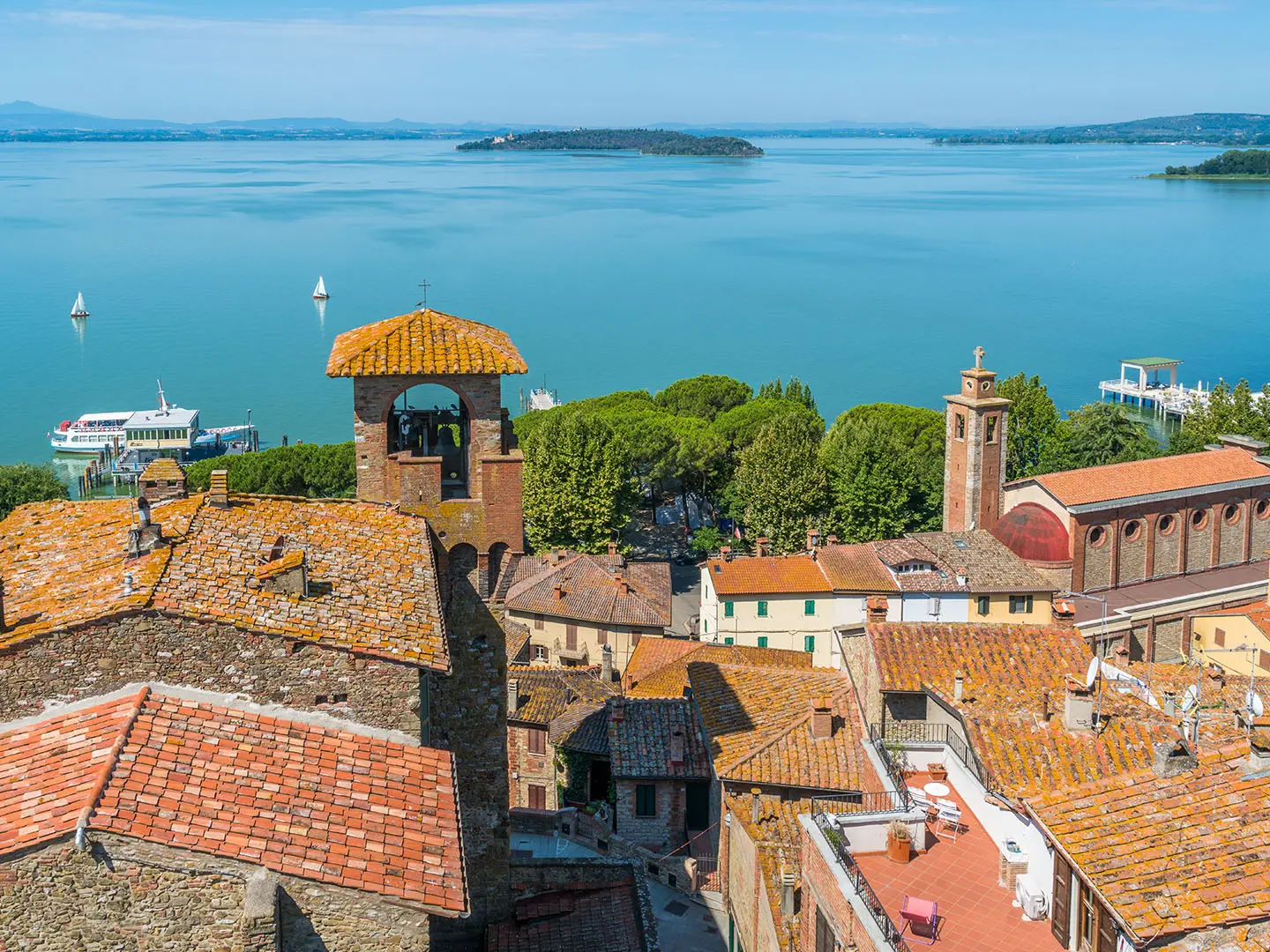
The Trasimeno Lake Trail is a circular walk around Lake Trasimeno in Umbria, central Italy. The full lakeside perimeter loop is about 70 km, usually walked in 3 days, and is moderate rather than technical: expect gentle terrain, long daily distances and summer heat. It suits hikers wanting an accessible town-to-town route with lake views, ferry options, historic villages and easy accommodation, not a remote mountain trek.
Route Overview
Because the route is a loop, there is no fixed start or finish. Most walkers begin at Castiglione del Lago or Passignano sul Trasimeno, both served by train/bus and accommodation. The circuit links shoreline towns including Tuoro sul Trasimeno, Magione, San Feliciano, San Savino and Castiglione del Lago, with short rises into low hills for views over the lake. You can walk clockwise or anticlockwise. This listing describes the nearer lakeside loop, not the longer Via del Trasimeno hill route. For other Italian multi-day walking ideas, compare the Chianti Trail, Crete Senesi Loop or the coastal Cinque Terre Coastal Trail.
Hannibal, St Francis and the Lake’s Historic Shore
The north shore near Tuoro sul Trasimeno was the site of the Battle of Lake Trasimene on 21 June 217 BC, when Hannibal ambushed the Roman army of Gaius Flaminius during the Second Punic War; around 15,000 Romans were killed, including Flaminius. Tuoro preserves a historical battle itinerary. The lake also has Franciscan associations: St Francis of Assisi spent Lent in retreat on Isola Maggiore in 1211, and Castiglione del Lago and nearby Citta della Pieve are linked with the Renaissance painter Perugino.
Notable highlights
- Lake Trasimeno (about 128 sq km): The largest lake on the Italian peninsula and the fourth largest in Italy. Its shallow, reed-fringed shore, islands and low hills shape the whole walk.
- Tuoro sul Trasimeno and the 217 BC battlefield: The north shore is where Hannibal’s ambush of Gaius Flaminius took place during the Second Punic War. A historical battle itinerary helps place the landscape in context.
- Isola Maggiore: The lake’s only inhabited island, reached by ferry. It has a small fishing village, a lace-making tradition and chapels connected with St Francis of Assisi’s Lenten retreat.
- Castiglione del Lago: A walled west-shore town on a promontory, with the Rocca del Leone fortress and Palazzo della Corgna. It is one of the most practical start/finish points.
- Magione and the Castle of the Knights of Malta: Magione anchors the eastern shore, and the Castello dei Cavalieri di Malta adds a strong medieval stop to the route.
- San Feliciano and San Savino: Eastern-shore fishing villages and ferry points for Isola Polvese, useful for breaking up the lakeside walking.
Challenges to expect
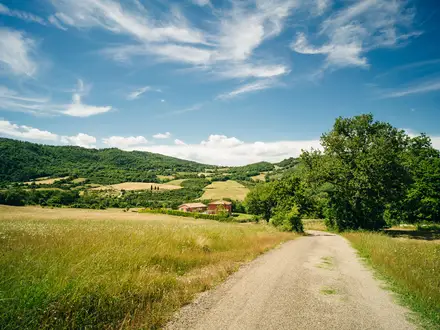
The walking is not technical, but do not underestimate the 20–25 km days if completing the loop in three days. Surfaces vary between lakeside paths, quiet lanes, strade bianche, dirt tracks and paved town sections. Waymarking is local rather than one single dedicated blaze, so carry mapping. Spring and autumn are best; high summer can be hot and humid around the lake.
HikeList Score
Trasimeno Lake Trail scored 84/100 on HikeList's trail-quality metrics.
See score breakdownHide breakdown
- Ideal length 70
- Balanced challenge 90
- Scenery & wildness 82
- Varied terrain 94
- Accommodation 92
- Food & support 88
- Path quality 80
- Season flexibility 76
Computed from length, challenge, scenery & wildness, terrain variety, accommodation, food & support, path quality and season flexibility.
 Italy
ItalyShow more data Show less
- Lakeside
- Wetlands
- Low Hills
- Woodland
- Farmland
- Dirt
- Gravel
- Paved
- B&Bs
- Agriturismi
- Hotels
- Campsites
- Family Friendly
- Pet Friendly
- Restrooms
- Water Sources
- Campsites
- Picnic Areas
In these collections
Photos from hikers
Taken on the trail by people who've reviewed Trasimeno Lake Trail.
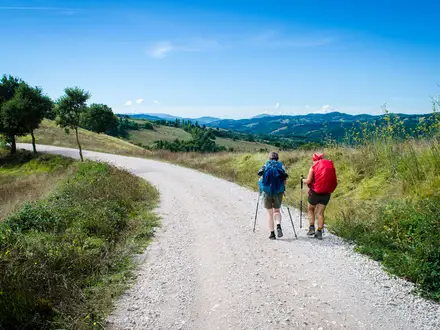
Begin your hike in the historic town of Castiglione del Lago, following the lakeshore eastward through olive groves and scenic open countryside. Pass through the small villages of Borghetto and Panicarola, with constant views of Lake Trasimeno and its wetlands. The trail gradually ascends and descends gentle hills before reaching the lively waterside town of Passignano sul Trasimeno. Along the way, take opportunities to stop at rest areas and enjoy lakeside panoramas, and consider a quick detour to the lakeside beaches for a break.
Leaving Passignano, the route heads south, passing by Tuoro sul Trasimeno where you can explore sites linked to the historic battle. Continue through open farmland and tranquil lake edges, with opportunities for birdwatching in the Oasi La Valle Nature Reserve. As you approach San Feliciano, the trail transitions through marshlands and reed beds. San Feliciano offers pleasant amenities, a lovely waterfront, and views toward Isola Polvese and Isola Maggiore.
The final stage leads from San Feliciano westward along the southern lakeshore, passing through Sant’Arcangelo and Magione. This section features a mix of rural roads and lakeside trails, with plenty of spots to rest and appreciate the surrounding scenery. Rejoining olive groves and gently rolling fields, the route circles back to Castiglione del Lago, completing the loop with views of the Rocca del Leone and the historic center. The day is relaxed, with slightly shorter mileage and more opportunities for lakeside stops or local café breaks.
Reviews
How would you rate Trasimeno Lake Trail?
Tap a star to start your review — you could be the first.