Golden Trail of the Czech Paradise (Zlatá stezka Českého ráje)
How would you rate Golden Trail of the Czech Paradise (Zlatá stezka Českého ráje)?
Tap a star to share your experience and help other hikers.
Golden Trail of the Czech Paradise: Sandstone, Castles and Forests
HikeList Score
Golden Trail of the Czech Paradise (Zlatá stezka Českého ráje) scored 91/100 on HikeList's trail-quality metrics.
See score breakdownHide breakdown
- Ideal length 93
- Balanced challenge 100
- Scenery & wildness 85
- Varied terrain 83
- Accommodation 92
- Food & support 88
- Path quality 98
- Season flexibility 89
Computed from length, challenge, scenery & wildness, terrain variety, accommodation, food & support, path quality and season flexibility.
The Golden Trail of the Czech Paradise is a 119 km red-marked long-distance trail through Český ráj in Czechia. It runs point-to-point from Mladá Boleslav to Jičín and is usually walked in 5–7 days. The route is moderate: there are no high mountains, but the full distance, roughly 2,700 m of ascent, rocky steps, ladders and narrow sandstone passages make it a proper multi-day hike. It suits walkers who want castles, rock cities, forest paths and frequent towns rather than remote wilderness.
Route Overview
This is the KČT-maintained “backbone” route of the Bohemian Paradise, waymarked in red and signed as Zlatá stezka Českého ráje. It runs between Mladá Boleslav’s Komenského náměstí and Jičín, and can be walked in either direction. The standard line passes Bakov nad Jizerou, Mnichovo Hradiště, the Příhrazy Rocks and Drábské světničky area, Sobotka or Libošovice, Kost Castle, Trosky Castle, Hrubá Skála, Valdštejn, Turnov, Malá Skála, Frýdštejn, Kozákov and the Prachovské skály near Jičín. For a shorter sandstone-focused walk in the same area, see the Hrubá Skála Rock Town Circuit; for a comparable rock-town region nearby, the Kokořínsko Rock Formations Trail.
History of the Zlatá stezka Českého ráje
Tourism in the Bohemian Paradise grew in the second half of the 19th century, including visits to the Prachovské skály by Vojta Náprstek. The Klub českých turistů began marking paths, and the name Zlatá stezka Českého ráje first appears with a described route in a 1937 KČT guidebook. The trail links older paths between castles, rock towns and lookout hills. Český ráj became one of Czechoslovakia’s first protected landscape areas in 1955 and is now a UNESCO Global Geopark.
Notable highlights
- Prachovské skály: The best-known sandstone rock city of the Bohemian Paradise, near Jičín, with towers, gorges and viewpoints. The circuit is a paid attraction and is most convenient in the main visitor season.
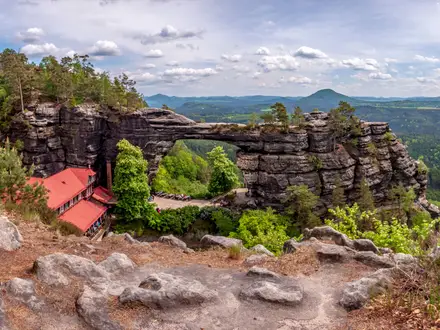
- Trosky Castle: The emblem of Český ráj, with the ruined towers Baba and Panna standing on twin volcanic necks. It is one of the most recognisable landmarks on the trail.
- Hrubá Skála and Hruboskalsko: A chateau on sandstone cliffs above a major rock city, with clifftop viewpoints over dense sandstone pinnacles. If this is your main interest, the Hrubá Skála Rock Town Circuit is a useful related option.
- Kost Castle: A well-preserved Gothic castle set among ponds and woods in the Plakánek valley near Sobotka. It is one of the strongest cultural stops on the western-middle part of the route.
- Kozákov (744 m): The highest hill of the Bohemian Paradise and the trail’s high point, topped by a lookout tower. It is known for semi-precious stones such as agate and jasper.
- Drábské světničky: A medieval rock fortress area in the Příhrazy Rocks above Dneboh. The rock rooms themselves have been closed to visitors since 2021 because of erosion damage.
Challenges to expect
Expect rolling terrain rather than mountains, but do not underestimate the full 119 km. The harder sections are in the sandstone rock cities: carved steps, ladders, rocky paths and narrow crevices can be slippery when wet or icy. Some accommodation is limited, especially around Libošovice, so book ahead. Waymarking is established, but stay on marked paths in the protected landscape area. For a harder Czech mountain route, compare the Krkonoše Traverse.
HikeList Score
Golden Trail of the Czech Paradise (Zlatá stezka Českého ráje) scored 91/100 on HikeList's trail-quality metrics.
See score breakdownHide breakdown
- Ideal length 93
- Balanced challenge 100
- Scenery & wildness 85
- Varied terrain 83
- Accommodation 92
- Food & support 88
- Path quality 98
- Season flexibility 89
Computed from length, challenge, scenery & wildness, terrain variety, accommodation, food & support, path quality and season flexibility.
 Czechia
Show more data Show less
- Forest
- Rock Formations
- Hills
- Dirt
- Rocky
- Gravel
- Hotels
- Hostels
- Campsites
- Huts
- Family Friendly
- Pet Friendly
- Restrooms
- Water Sources
- Campsites
- Picnic Areas
Download Our Full Guide to Golden Trail of the Czech Paradise (Zlatá stezka Českého ráje) FREE!
Get our comprehensive guide to this hike for free. Save it for later reading or print out at home.
In these collections
Photos from hikers
Taken on the trail by people who've reviewed Golden Trail of the Czech Paradise (Zlatá stezka Českého ráje).
Golden Trail of the Czech Paradise (Zlatá stezka Českého ráje): The Complete Guide
 i
Image by irina
i
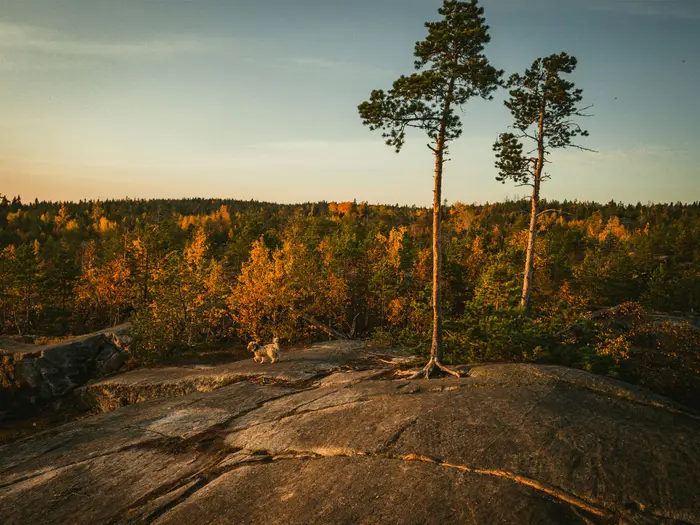
Image by irina The Zlatá stezka Českého ráje is a well-waymarked Czech long-distance walk through the sandstone country of the Bohemian Paradise. Over about 118 km, it links Mladá Boleslav with Jičín on red KČT markers, passing castles, rock towns, forest paths, quiet lanes and small trail towns.
This is not a wilderness trek, and that is part of its appeal. Turnov, Malá Skála, Mnichovo Hradiště and Jičín give the route useful transport links and regular services, while places such as Kost, Trosky, Hrubá Skála, Valdštejn and Frýdštejn keep the walking varied from day to day.
The landscape is lowland-to-hill country rather than alpine terrain, but it still feels distinctive underfoot. Sandstone steps, narrow crevices, iron ladders, rooty forest tracks and sandy paths make the rock-city sections more demanding than the modest height profile suggests.
Most walkers should allow six days, with a seventh day worthwhile if adding the paid Prachovské skály circuit from Jičín. Fit hikers can shorten the schedule, but accommodation is thin in a few places, especially around Libošovice and Sobotka, so planning the overnight stops matters.
This guide covers stages, day planning, accommodation, food, transport, terrain and the common mistakes to avoid.
Stage-by-Stage Guide
Distances below follow the standard 6-stage west-to-east itinerary from Mladá Boleslav to Jičín. Treat them as planning distances rather than exact GPS totals, and allow extra time for castle visits, rock-city viewpoints and wet sandstone underfoot.
| Stage | Route | Approx. distance | Planning character |
|---|---|---|---|
| 1 | Mladá Boleslav to Mnichovo Hradiště | 25 km | Long opening day, mostly lower country and settlement-to-settlement walking |
| 2 | Mnichovo Hradiště to Libošovice | 22 km | Sandstone terrain, Valečov, Drábské světničky viewpoint and Kost Castle |
| 3 | Libošovice to Turnov | 23 km | Big sightseeing day via Trosky, Hrubá Skála, Hruboskalsko and Valdštejn |
| 4 | Turnov to Malá Skála | 12 km | Shorter stage, useful for recovery or castle/viewpoint time around Frýdštejn and Malá Skála |
| 5 | Malá Skála to Kozákov | 10 km | Short but uphill to the trail high point at Kozákov, 744 m |
| 6 | Kozákov to Jičín | 26.5 km | Long final day through rolling country via Skuhrov and vrch Tábor |
Stage 1: Mladá Boleslav to Mnichovo Hradiště — 25 km
The route begins in the centre of Mladá Boleslav, with Staroměstské náměstí the better-supported western terminus. Some listings place the start at Komenského náměstí, so the practical approach is to locate the red KČT markers in town and follow the signed Zlatá stezka Českého ráje rather than relying on a single map pin.
This is a long first day rather than a technically difficult one. The walking leaves the urban streets of Mladá Boleslav and passes through Debř, Bakov nad Jizerou, Klokočka and Klášter Hradiště nad Jizerou before reaching Mnichovo Hradiště.
Expect a mix of town edges, quiet lanes, field and forest paths, with less of the dramatic sandstone rock-city terrain that comes later. Underfoot can still be sandy, rooty or muddy after rain, but this stage is mainly about settling into the waymarking and pacing the distance.
Mladá Boleslav and Mnichovo Hradiště are the most dependable service points for food, accommodation and onward transport. Bakov nad Jizerou is useful for access or exit because it sits on the regional rail network via Mladá Boleslav, but live train times should be checked before travelling.
Carry enough water and food to be independent between larger settlements. Smaller places on the route should not be assumed to have an open shop or café when needed, especially outside the main visitor season.
Mnichovo Hradiště is a logical overnight stop with town facilities and better accommodation prospects than the smaller villages around it. Book ahead in busy spring, summer and early autumn periods, and carry some CZK cash for smaller pensions or local businesses.
Navigation is straightforward if the red KČT waymarks are followed carefully through town sections and junctions. The main warning for this stage is distance: 25 km on the first day can feel harder with a full pack, particularly if arrival in Mladá Boleslav is late.
Stage 2: Mnichovo Hradiště to Libošovice — 22 km
Stage 2 brings the trail properly into the sandstone landscape of Český ráj. From Mnichovo Hradiště the route heads towards Valečov, Drábské světničky, Příhrazy, Dneboh and Kost before finishing at Libošovice.
The walking becomes more varied than on Stage 1, with forest paths, sandstone terrain, rocky steps and narrow sections around the Příhrazy area. Wet or icy sandstone is slippery, and the carved steps and steeper rock paths deserve slower, deliberate footwork.
Valečov and Drábské světničky are key cultural and viewpoint stops on this stage. The rock chambers at Drábské světničky have been closed to visitors since 2021 because of erosion damage, so plan for the viewpoint area rather than an enterable rock-fortress visit.
Kost Castle is the major landmark of the second half of the day, set among ponds and woodland near the Plakánek valley. Castle opening days and hours vary seasonally, with many sites much more limited outside May to September; this should be checked before travelling.
Food and drink availability is more seasonal here than in the larger towns. Start with a full bottle and enough food from Mnichovo Hradiště, and treat any castle-area or village refreshments as a bonus unless opening has been checked in advance.
Libošovice is a practical but accommodation-sensitive finish. Beds around Libošovice and nearby Sobotka are notably thinner than in Turnov, Jičín or Mladá Boleslav, so this night should be booked well ahead rather than left to chance.
Public transport and road access exist through the wider settled landscape, but the smaller end points are not as convenient as Turnov or Jičín. Any bus or rail connection for joining, leaving or shortening this stage should be checked before travelling.
Navigation requires attention around sandstone junctions and visitor paths near viewpoints and castles. Stay on the marked route, both to avoid wrong turns and because Český ráj is a Protected Landscape Area where access restrictions can apply, particularly around sensitive rock areas.
Stage 3: Libošovice to Turnov — 23 km
This is one of the richest stages of the whole trail and should not be rushed. From Libošovice the route passes near Sobotka, then continues through Nebákov, Trosky, Vidlák, Hrubá Skála and Valdštejn before descending into Turnov.
The terrain combines rolling forest and field paths with rockier sandstone sections and the volcanic basalt setting of Trosky. Expect frequent changes underfoot: sand, roots, stone steps, forest tracks and short built-up sections around visitor sites.
Trosky Castle is the unmistakable landmark of the day, with the ruined towers Baba and Panna on twin basalt necks. It is one of the most recognisable sights in Český ráj and can add significant time if visited properly rather than treated as a passing viewpoint.
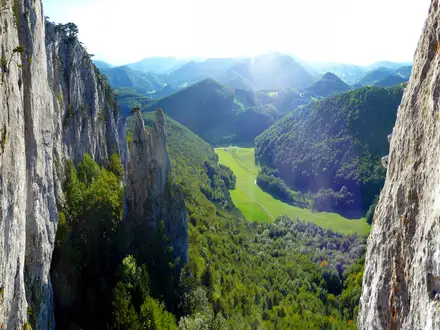
The second major highlight is Hrubá Skála and the Hruboskalsko rock city. The chateau stands above sandstone cliffs, and the surrounding viewpoints look across a dense landscape of pinnacles, forest and rock towers.
Valdštejn Castle lies between Hrubá Skála and Turnov and is another important stop. Its sandstone setting and sculpture-lined bridge make it worth allowing time for, but castle access and paid entry arrangements change by season and should be checked before travelling.
Food and drink planning should be conservative. There may be seasonal services around the main visitor attractions and settlements, but Turnov is the dependable resupply point at the end of the day; carry enough to complete the stage without relying on every kiosk or castle facility being open.
Turnov is the strongest overnight base on the route’s middle section. It has the best transport value of any intermediate stop, acting as the main rail hub of the region and the easiest place to join, leave or split the Golden Trail.
This stage has the most potential for time loss because of side visits, viewpoints and castle opening queues in busy periods. Start early if planning to visit Trosky, Hrubá Skála and Valdštejn on the same day.
Navigation through Hruboskalsko needs concentration because many local paths and viewpoint routes intersect. Follow the red KČT markers, avoid unmarked shortcuts on fragile sandstone terrain, and take extra care on rock steps after rain.
Stage 4: Turnov to Malá Skála — 12 km
Stage 4 is much shorter than the surrounding days and is useful as a recovery stage after the long Hruboskalsko day. From Turnov the route passes Dolánky and Frýdštejn before reaching Malá Skála on the Jizera.
The walking moves from the region’s main town back into wooded, rocky and village terrain. Although the distance is modest, the sandstone setting around Frýdštejn and the approaches to Malá Skála still make this a proper hiking day rather than a flat transfer.
Frýdštejn is the key landmark, a ruined rock castle with a tall round tower on a sandstone outcrop. Opening hours and entry arrangements are seasonal, so check before building a day around an interior visit.
Malá Skála is one of the most attractive overnight stops on the trail, a resort village beneath the Vranov ridge and its Pantheon. The short stage leaves time for extra viewpoints or a slower afternoon, but avoid adding too much if conditions are wet and the sandstone paths are slippery.
Turnov is the best place to stock up before leaving. Malá Skála has accommodation and visitor facilities, but availability can be tight in popular periods, so book ahead rather than assuming same-day space.
Public transport access is strongest at Turnov; connections from smaller trail towns and villages are more seasonal and should be checked before travelling. Seasonal tourist buses link trail towns in summer and at weekends, but they should not be relied on without checking the current timetable.
Navigation is generally manageable, but take care leaving Turnov and around Frýdštejn where local paths and attraction access routes can complicate the picture. The red KČT markers remain the primary guide.
Stage 5: Malá Skála to Kozákov — 10 km
Stage 5 is short in distance but important in height gain, climbing from Malá Skála through Koberovy to Kozákov. Kozákov, at 744 m, is the highest point of the Golden Trail and the highest hill in Český ráj.
The day is best treated as a steady uphill stage rather than an easy half-day stroll. The route leaves the Jizera-side resort landscape and climbs through rolling hill country towards the volcanic summit area.
Kozákov is an extinct basaltic volcano known for semi-precious stones such as agate and jasper. The summit has Riegrova chata and a 24 m metal lookout tower, with views that can reach towards the Krkonoše in clear weather.
Food and water planning is simple but should not be careless. Malá Skála is the place to start supplied; Riegrova chata is the logical end-of-stage service and accommodation point, but opening, bed availability and payment arrangements should be checked before travelling.
Staying on Kozákov is a distinctive way to break the trail, but it makes booking discipline important. Carry CZK cash, as smaller huts and tourist facilities may not always take cards.
Public transport and road access are less convenient here than in Turnov, Jičín or Mladá Boleslav. Koberovy gives an intermediate road-access point, but any bus connection or pick-up plan should be checked before travelling.
The main practical warning is weather and exposure at the high point. This is not mountain terrain, but Kozákov is still the highest and potentially windiest part of the route, so keep an extra layer accessible even on a short day.
Stage 6: Kozákov to Jičín — 26.5 km
The final stage is the longest in the standard itinerary and should be started early. From Kozákov the route continues via Skuhrov and vrch Tábor before finishing on Valdštejnovo náměstí in Jičín.
The walking returns to rolling forest, field and lane terrain rather than the concentrated rock-city sections of the middle stages. Even without high mountains, the cumulative distance after five previous days makes this a demanding finish.
Vrch Tábor is the main named high point on the way to Jičín. The day then gradually works towards the baroque townscape of Jičín, the eastern gateway to Český ráj.
Jičín’s Valdštejnovo náměstí is the official eastern terminus, with arcades and the Valdická brána tower close at hand. Many walkers stay an extra night here to add the Prachovské skály circuit, but that is a separate paid, seasonal rock-city visit rather than part of the core 118 km point-to-point trail.
Carry a full day’s food and water from Kozákov unless current services along the stage have been checked. Riegrova chata may be useful at the start if open, but the dependable resupply and accommodation base is Jičín at the end.
Jičín has the best onward transport at this end of the trail, with its station in the town centre and train or bus links towards Prague, Hradec Králové, Liberec, Mladá Boleslav and Turnov. Current train and bus times should be checked before travelling, especially if finishing late in the day.
Accommodation is much easier to arrange in Jičín than in the smaller middle-stage villages. Book ahead in peak season, particularly if adding Prachovské skály the next day.
Navigation is less intricate than in Hruboskalsko, but fatigue is the real risk. Keep following the red KČT markers through junctions, villages and the final approach to Jičín, and avoid rushing road or lane sections at the end of a long day.
Recommended Itinerary
The most practical split is the standard 6-day itinerary from Mladá Boleslav to Jičín, following the official stage pattern. It keeps most days in the low-to-mid 20 km range, but note the uneven rhythm: days 4 and 5 are short, while the final day from Kozákov to Jičín is the longest.
Standard itinerary — 6 walking days
| Day | From | To | Approx. distance | Why this stage makes sense | Services/accommodation notes |
|---|---|---|---|---|---|
| 1 | Mladá Boleslav | Mnichovo Hradiště | 25 km | A full opening day that gets clear of the urban start and moves through the western approach to Český ráj via Debř, Bakov nad Jizerou and Klášter Hradiště nad Jizerou. | Mladá Boleslav is a straightforward start point by train. Mnichovo Hradiště is a useful overnight town with better services than the smaller villages before and after it. The western terminus is best treated as Staroměstské náměstí, though signage should be checked locally because some listings use Komenského náměstí. |
| 2 | Mnichovo Hradiště | Libošovice | 22 km | This is one of the key sandstone days, passing Valečov, the Příhrazy area, Drábské světničky viewpoint area, Dneboh and Kost before reaching the Libošovice/Sobotka area. | Accommodation becomes thinner around Libošovice and Sobotka, so this is one of the most important nights to book early. Drábské světničky rock chambers have been closed since 2021 because of erosion; plan for the viewpoint area rather than an enterable rock fortress. |
| 3 | Libošovice | Turnov | 23 km | A strong middle stage through the castle-and-rock-country around Nebákov, Trosky, Vidlák, Hrubá Skála and Valdštejn before descending towards Turnov. | Turnov is the region’s main rail hub and one of the easiest places to join, leave, resupply or take a rest night. If visiting castles, check current opening hours before relying on entry, especially outside the main summer season. |
| 4 | Turnov | Malá Skála | 12 km | A deliberately short day through Dolánky and Frýdštejn to Malá Skála, useful after two longer sandstone stages and good for allowing time around viewpoints, castle ruins and the Jizera valley. | Turnov and Malá Skála both have useful services for walkers. This short stage is also a good buffer if weather, wet sandstone steps or sightseeing slowed the previous days. |
| 5 | Malá Skála | Kozákov | 10 km | Another short but purposeful day, climbing from the Jizera-side resort landscape via Koberovy towards Kozákov, the high point of the whole trail. | Kozákov has Riegrova chata on the summit, but accommodation should be booked ahead and not assumed available. Carry cash, as smaller huts and pensions may not take cards. |
| 6 | Kozákov | Jičín | 26.5 km | The longest day finishes the route eastwards via Skuhrov and vrch Tábor into Jičín, ending on Valdštejnovo náměstí. Starting from the high point makes the day manageable, but it is still a proper final stage. | Jičín has town services, onward trains and buses, and is the logical place to add an extra night for Prachovské skály. Check live transport times before committing to same-day onward travel. |
Slower / sightseeing variant — 7 days
The simplest slower version is not to split every stage differently, but to keep the 6-day trail itinerary and add an extra day in Jičín for Prachovské skály. This suits walkers who want time for the paid rock-city circuit rather than rushing straight home after the final long stage.
| Day | From | To | Approx. distance | Why this stage makes sense | Services/accommodation notes |
|---|---|---|---|---|---|
| 1–6 | Mladá Boleslav | Jičín | As standard above | Follow the standard stage pattern, keeping the established overnight points. | Book Libošovice/Sobotka and Kozákov particularly carefully. |
| 7 | Jičín | Jičín, via Prachovské skály | Check official mapping before booking | Adds the best-known sandstone rock city near Jičín without forcing it into the final trail day. | Prachovské skály is a paid, seasonal attraction. Check current opening, access and any seasonal restrictions before travelling. |
If shorter walking days are essential, use Turnov, Malá Skála or Jičín as extra overnight bases and plan the exact splits with current mapping and accommodation availability. Do not assume every intermediate village has suitable accommodation.
Faster variant — 5 walking days
Fit walkers commonly compress the route into about 5 days. The cleanest way to do this with the stage pattern is to combine the two short central/eastern days between Turnov, Malá Skála and Kozákov.
| Day | From | To | Approx. distance | Why this stage makes sense | Services/accommodation notes |
|---|---|---|---|---|---|
| 1 | Mladá Boleslav | Mnichovo Hradiště | 25 km | Keeps the standard opening stage intact. | Good start and finish towns for transport and services. |
| 2 | Mnichovo Hradiště | Libošovice | 22 km | Keeps the Příhrazy, Drábské světničky viewpoint area and Kost section as a full day. | Book the Libošovice/Sobotka-area night well ahead. |
| 3 | Libošovice | Turnov | 23 km | Preserves the major Trosky, Hrubá Skála and Valdštejn stage without overloading the day. | Turnov is the best mid-route service and rail point. |
| 4 | Turnov | Kozákov, via Malá Skála | 22 km | Combines the two short stages into one moderate day, while still passing Dolánky, Frýdštejn, Malá Skála and Koberovy before the climb to Kozákov. | This is more committing than the standard split because Kozákov accommodation is limited and should be arranged in advance. |
| 5 | Kozákov | Jičín | 26.5 km | Finishes with the standard long final stage. | Allow enough daylight and avoid depending on late onward transport without checking current timetables. |
The 5-day version is best for walkers already comfortable with consecutive 20–26 km days on mixed forest, sandstone and lane terrain. The 6-day version is the better default for first-time long-distance walkers, especially if castle visits and rock-city viewpoints are part of the plan.
Planning the Route
How many days to allow
The standard plan is 6 walking days from Mladá Boleslav to Jičín, matching the established stage pattern for the Zlatá stezka Českého ráje. This is the best default for most walkers because it keeps the daily distances manageable while leaving time for rock-city sections, castle stops and viewpoints.
Fit walkers can compress the route into about 5 days, but that makes less sense if the aim is to visit places such as Kost, Trosky, Hrubá Skála, Valdštejn or Frýdštejn during opening hours. The route is not technically severe, but the sandstone stairways, ladders, narrow passages and uneven rocky paths slow progress, especially in wet weather.
A 7-day plan is often the most rewarding version: walk the core route in 6 days, then add a separate day from Jičín for the Prachovské skály circuit. Prachovské skály is not part of the main 118 km point-to-point route and is a paid, seasonal rock-city visit, so check current opening arrangements before building the whole trip around it.
Direction and start point
The trail can be walked in either direction, but many multi-day walkers use the west-to-east line from Mladá Boleslav to Jičín. This gives a clear progression through the western towns, the central sandstone and castle country, Turnov, Malá Skála and Kozákov before finishing on Valdštejnovo náměstí in Jičín.
In Mladá Boleslav, treat Staroměstské náměstí as the route’s western terminus. Some listings place the start at Komenského náměstí, so follow the red KČT markers in town and check local signage on arrival.
Stage planning and accommodation
The route is naturally shaped by towns and villages rather than by wilderness camps. The practical overnight points are places such as Mladá Boleslav, Mnichovo Hradiště, Libošovice or nearby Sobotka, Turnov, Malá Skála, Kozákov and Jičín.
Accommodation is mixed: hotels, pensions, hostels, campsites and tourist huts. Larger towns and resort areas have the most choice, while the Libošovice/Sobotka area is a known pinch point and should be booked early, especially in the main walking season.
The official 6-day pattern works because it links viable overnight stops, but the distances are uneven. The shorter days around Turnov, Malá Skála and Kozákov are not wasted days: they sit in the most scenic and stop-heavy part of the route, with castles, ridges, viewpoints and the ascent to the trail’s high point.
| Planning choice | Best for | Main trade-off |
|---|---|---|
| 5 days | Strong walkers with limited time | Longer days and less time for castles, rock cities and viewpoints |
| 6 days | Most independent hikers | Best balance of distance, logistics and sightseeing |
| 7 days | Walkers adding Prachovské skály | Requires an extra night around Jičín |
| Section hike | Walkers using public transport | Works best via Turnov, Mladá Boleslav or Jičín |
Shortening, extending and section hiking
The easiest way to shorten the walk is to use Turnov as a break point. It is the main rail hub of the region and sits roughly around the middle of the route, making it the most practical place to join, leave or divide the trail into western and eastern halves.
Mladá Boleslav and Jičín are also on the rail network, so point-to-point logistics are manageable without a car. Seasonal tourist buses link trail towns in summer and at weekends, with some services carrying bikes, but live times should be checked before travelling.
For a longer trip, add time in Jičín for Prachovské skály, or slow the core route to allow more castle visits. Many castles and paid attractions have seasonal opening patterns, with much reduced availability outside the main season; check current hours before assuming a visit is possible on a walking day.
What matters most when planning
Accommodation is the key booking issue. Do not leave the thinner sections, especially around Libošovice/Sobotka, to chance in busy periods. Carry some cash in CZK, as smaller pensions, huts and castle ticket offices may not always take cards.
Food and water planning is straightforward compared with remote mountain routes, but it still needs attention. The trail passes regular towns, villages and refreshment stops, yet opening hours vary by season and weekday, so start each day with enough water and snacks to cover a closed pub, shop or castle kiosk.
Navigation is generally simple because the route follows the red KČT tourist markers. Even so, carry an offline map or GPX, particularly through forest, rock-city approaches and town exits where several marked routes can meet.
Weather affects the sandstone sections most. Wet or icy conditions make carved steps, roots, ladders and narrow crevices more awkward, especially around the rock cities and viewpoints. Build in more time after rain and avoid treating the route as a fast road-style march.
Access rules matter inside the Protected Landscape Area. Stay on marked paths, respect any seasonal closures and do not enter closed sandstone features. The rock chambers at Drábské světničky have been closed since 2021 because of erosion damage, so plan it as a viewpoint area rather than an enterable rock-fortress visit.
Transport is easy enough to use as part of the plan, but timetables should always be checked close to travel. Mladá Boleslav has direct trains from Prague, Jičín has trains and buses to regional centres, and Turnov is the most useful mid-route transport hub.
Towns, Villages and Overnight Stops
Accommodation planning on the Zlatá stezka Českého ráje is generally straightforward, but it is uneven. The larger towns are the safest overnight bases, while the middle section around Libošovice and Sobotka needs more care because beds are noticeably thinner.
Carry some CZK in cash. Smaller pensions, huts, refreshment stops and castle ticket offices may not accept cards, and opening hours can be seasonal around castles and rock-city areas.
| Route area | Overnight usefulness | Practical notes |
|---|---|---|
| Mladá Boleslav | Excellent start base | Rail access, urban services, accommodation before Day 1 |
| Mnichovo Hradiště | Strong Day 1 stop | Listed stage end, good place to avoid a very long opening day |
| Libošovice / Sobotka area | Important but limited | Book ahead; one of the thinner accommodation areas |
| Turnov | Best mid-route base | Main rail hub, largest practical resupply point on the route |
| Malá Skála | Good short-stage stop | Popular resort village on the Jizera, useful before Kozákov |
| Kozákov | Specialist hilltop stop | Riegrova chata on the trail high point; check availability before relying on it |
| Jičín | Excellent finish base | Rail/bus links, full town services, best base for Prachovské skály add-on |
Mladá Boleslav
Mladá Boleslav is the western terminus for most walkers following the route towards Jičín. The best-supported starting point is Staroměstské náměstí in the old town, though some secondary listings give Komenského náměstí; verify the first red KČT markers on the ground before setting off.
As a sizeable town, Mladá Boleslav is the most practical place to arrive the evening before the hike. Expect the broadest choice at this end to be in normal town accommodation rather than trail-specific lodging: hotels, pensions and other urban options.
It is also a sensible place for the first full food shop, cash withdrawal and any last kit purchases. Day 1 to Mnichovo Hradiště is around 25 km, so leaving town with water and snacks already sorted is worthwhile.
Mladá Boleslav is on the rail network, with frequent direct trains from Prague and regional connections via Bakov nad Jizerou. Live times should be checked before travelling, especially if starting early.
Debř, Bakov nad Jizerou, Klokočka and Klášter Hradiště nad Jizerou
These places sit on the western approach between Mladá Boleslav and Mnichovo Hradiště. They are useful mainly as route markers and potential short-break points rather than core overnight stops for the standard six-day itinerary.
Bakov nad Jizerou has a regional rail connection in this corridor, which can help with joining or leaving the first stage. Specific services and any local bus options should be checked before travelling.
Do not assume that every small settlement on this stretch will have reliable food or open refreshments at the time you pass through. For a normal Day 1, plan as though Mladá Boleslav and Mnichovo Hradiště are the dependable service points.
Mnichovo Hradiště
Mnichovo Hradiště is the standard first overnight stop when walking west to east. At roughly 25 km from Mladá Boleslav, it makes a logical end to the opening day before the trail enters the more distinctive sandstone and castle country around Valečov, Drábské světničky and Příhrazy.
Accommodation is available in and around the town, including the general mix of hotels, pensions and guesthouse-style options typical of the route. It is one of the safer places to secure a bed before the accommodation becomes patchier further east.
Use Mnichovo Hradiště for dinner, breakfast supplies and cash if needed. Smaller stops beyond here should not be relied on for full resupply without checking current opening hours.
Seasonal tourist buses link trail towns in Český ráj, and public transport is generally good across the region. Exact local services from Mnichovo Hradiště should be checked before committing to a section-hike plan.
Valečov, Drábské světničky, Příhrazy and Dneboh
This cluster is more important for walking interest than for overnight logistics. The route passes castle and sandstone country here, including the viewpoint area around Drábské světničky; the rock chambers themselves have been closed to visitors since 2021 because of erosion damage.
Příhrazy and Dneboh can be useful reference points when breaking up the day between Mnichovo Hradiště and Libošovice. However, they should not be treated as guaranteed service hubs unless accommodation and food have been arranged in advance.
Refreshments around tourist sites can be seasonal. In wet weather, the sandstone paths, carved steps and narrow sections in this part of Český ráj deserve more time than the map distance may suggest.
Kost, Libošovice and Sobotka
The Kost–Libošovice–Sobotka area is the key overnight-planning pinch point on the route. The official six-day schedule ends Day 2 at Libošovice, but accommodation around Libošovice and nearby Sobotka is noticeably thinner than in the larger towns.
Book this night well ahead, especially in busy spring, summer and early autumn periods. If a preferred bed is not available directly on the route, Sobotka is the main nearby name to consider, but any off-route distance and transport back to the trail should be checked before booking.
Kost Castle is one of the strongest cultural stops on this western-middle section, set among ponds and woods near the Plakánek valley. Castle opening is seasonal, with much in the region reduced or closed outside the main visitor months, so plan food and timing independently of sightseeing stops.
For resupply, this is not the place to improvise late in the day. Carry enough food from Mnichovo Hradiště to cover lunch and delays, and confirm dinner and breakfast options with the accommodation.
Nebákov, Trosky and Vidlák
These are useful landmarks between the Libošovice/Sobotka area and Hrubá Skála. Trosky Castle is one of the defining sights of the whole trail, but it is best treated as a daytime stop rather than an assured overnight base.
Food and drink around tourist attractions may be available in season, but opening can vary with the castle calendar and visitor periods. This should be checked before travelling, particularly outside July and August.
The walking here includes castle-crowned hills, ponds and mixed forest-and-field terrain. If using this area to shorten or alter a stage, arrange accommodation first rather than assuming a bed will be available in the smaller settlements.
Hrubá Skála and Valdštejn
Hrubá Skála and Valdštejn sit on one of the most popular and scenic sections of the trail, through the Hruboskalsko rock city and sandstone viewpoints. Hrubá Skála has a chateau that now operates as a hotel and spa, making it a possible overnight option for walkers who want to split the Libošovice-to-Turnov stage differently.
Valdštejn is primarily a castle stop between Hrubá Skála and Turnov. It is useful for timing the day and for sightseeing, but Turnov remains the stronger practical base for accommodation, shops and onward transport.
Expect this area to be busier than quieter rural sections, especially in the main season. Rock-city paths can be slippery when wet, so allow enough time if continuing to Turnov the same day.
Turnov
Turnov is the most important mid-route town and the easiest place to join, leave or pause the Zlatá stezka Českého ráje. It sits roughly at the midpoint and is the main rail hub of the region.
For overnight planning, Turnov is one of the safest bookings on the route. Hotels, pensions, hostels and campsites are available in and around the town, and it is a good reset point after the first three longer days.
This is the best place for a proper resupply, laundry if available through accommodation, cash, pharmacy needs and a flexible rest evening. Walkers with limited time often use Turnov as a section-hike break because rail connections are stronger here than in the smaller villages.
From Turnov, trains and buses connect with regional destinations including Jičín and other Český ráj towns. Exact departure times should be checked before travelling.
Dolánky, Frýdštejn and Malá Skála
The standard Day 4 from Turnov to Malá Skála is short at around 12 km, passing Dolánky and Frýdštejn along the way. This makes it a useful recovery day after the longer western stages, or a day with time for the ruined rock castle at Frýdštejn.
Dolánky and Frýdštejn are better treated as en-route stops than default overnight bases. Food and visitor facilities around castle or resort areas can be seasonal, so do not rely on them without checking current opening.
Malá Skála is the practical overnight target. It is a popular resort village on the Jizera beneath the Vranov ridge and its Pantheon, with accommodation in and around the village including the route’s general mix of pensions, hotels and campsite-style options.
Because the next standard stage to Kozákov is short but climbs to the trail high point, Malá Skála is a good place to eat well, rest and carry snacks for the hill section. Seasonal tourist buses may be useful in this area; live schedules should be checked.
Koberovy and Kozákov
Koberovy lies between Malá Skála and Kozákov and is mainly a route village for most walkers. It can be relevant if adjusting the short Day 5, but accommodation and food should be arranged in advance rather than assumed.
Kozákov is the highest point of the trail at 744 m and a distinctive overnight option because Riegrova chata stands on the summit. Staying here gives a very different feel from the town nights, but it should be booked and its current operation checked before relying on it.
There is also a 24 m metal lookout tower on Kozákov, with wide views in clear weather. Carry cash for hut-style payments and small purchases, as card acceptance should not be assumed.
The following day to Jičín is long at around 26.5 km on the standard itinerary. If sleeping on Kozákov, make sure breakfast, water and packed food are sorted before leaving.
Skuhrov and vrch Tábor
Skuhrov and vrch Tábor fall on the final walking day between Kozákov and Jičín. They are useful for navigation and pacing, but they are not the main accommodation focus of the route.
This final stage is one of the longer days in the six-day schedule. Unless accommodation has been pre-arranged off the standard plan, Jičín is the logical target for services, transport and the end-of-walk night.
As with other smaller settlements, treat food and refreshments as uncertain unless checked before travelling. Carry enough from Kozákov or the previous reliable stop to reach Jičín comfortably.
Jičín
Jičín is the eastern terminus, ending on Valdštejnovo náměstí, the town’s arcaded main square. It is the best place to finish the walk, recover, and decide whether to add the Prachovské skály circuit.
Accommodation availability is strong compared with the smaller villages, with the route’s usual mix of hotels, pensions, hostels and campsites in and around town. Booking ahead is still sensible in the main walking season, particularly if staying an extra night.
Jičín has the practical services expected of a larger town: food, restaurants, cash, transport and onward travel options. Its station is in the town centre, with trains and buses to Prague, Hradec Králové, Liberec, Mladá Boleslav and regular connections towards Turnov.
Many walkers add a seventh day for Prachovské skály, the best-known rock city near Jičín. It is a paid, seasonal circuit rather than part of the core point-to-point trail, so opening times, entry arrangements and transport should be checked before committing an extra day.
Getting to the Start
The usual starting point for this west-to-east itinerary is Staroměstské náměstí in the centre of Mladá Boleslav. The trail is officially marked in both directions between Mladá Boleslav and Jičín, but most multi-day walkers starting this version should aim to reach central Mladá Boleslav the evening before or early on Day 1.
There is one practical point to note: the dedicated trail material and Czech listings place the western terminus at Staroměstské náměstí, while some secondary listings give Komenského náměstí. Treat Staroměstské náměstí as the better-supported start, but check the red KČT waymarks and local signage on arrival.
By train
Mladá Boleslav hl.n. is the main rail station for the start. There are frequent direct trains from Prague to Mladá Boleslav, taking roughly 1 hr 09 min to 1 hr 37 min, with around 30 trains a day. Times and stopping patterns change, so this should be checked before travelling.
Mladá Boleslav is also connected by regional rail via Bakov nad Jizerou, which is useful if approaching from within the Český ráj area or if adjusting plans during the walk. From the station, continue into the centre for Staroměstské náměstí, where the red KČT route begins.
By bus
Buses can be useful for regional access and for end-to-start logistics, especially if returning from Jičín to a car left in Mladá Boleslav. The wider Český ráj area also has seasonal summer and weekend tourist buses, some carrying bikes, linking trail towns.
Do not rely on seasonal buses without checking the current timetable. Services vary by day and season, and this should be checked before travelling.
By car
Driving to Mladá Boleslav is straightforward enough logistically, but the route is point-to-point, not a loop. If leaving a vehicle at the start, plan the return from Jičín to Mladá Boleslav in advance, usually by public transport.
Long-stay parking details are not fixed trail infrastructure. Check current town parking rules, paid zones and any hotel or pension parking arrangements before leaving a car for several days.
From the nearest airport
For international arrivals, the practical gateway is Prague, followed by a train to Mladá Boleslav hl.n. and then onward into the town centre. Allow enough time between flight arrival, transfer across Prague and the onward train, particularly if starting the hike the same day.
Airport-to-rail transfer times and current train departures should be checked before travelling.
Where to stay before starting
Staying in Mladá Boleslav the night before is the simplest option, especially if walking the first stage to Mnichovo Hradiště. The town has accommodation options including hotels and pensions, and starting from the centre avoids a rushed morning transfer.
If arriving late, choose accommodation that makes it easy to reach Staroměstské náměstí in the morning and ask in advance about payment method and parking if needed. Carry some CZK cash, as smaller accommodation providers elsewhere on the route may not always take cards.
Getting Home from the Finish
The usual eastbound finish is Valdštejnovo náměstí in Jičín, with Jičín station in the town centre. Leaving the trail is straightforward by Czech standards, but onward journeys are timetable-dependent, especially if you finish late after the long final stage from Kozákov.
By train
Jičín station is the nearest rail station to the finish and sits within the town centre, making it the practical exit point after reaching Valdštejnovo náměstí. Trains run from Jičín towards Prague, Hradec Králové, Liberec, Mladá Boleslav and Turnov, though routes and connections vary by time of day.
Turnov is the key regional rail hub for Český ráj and is especially useful if you need to connect across the region or break the journey. Jičín–Turnov services run roughly every two hours and take about 43 minutes, but live times should be checked before travelling.
If returning to Prague, allow time for a connection rather than assuming a direct, late-evening journey will suit a hiking finish. If the final day has run long, staying in Jičín is often more comfortable than rushing for the last viable train.
By bus
Jičín also has bus links to Prague, Hradec Králové, Liberec, Mladá Boleslav and Turnov. Buses are useful for returning towards the western end of the trail, including if a car has been left around Mladá Boleslav.
In summer and at weekends, seasonal tourist buses link trail towns in Český ráj, and some carry bikes. These are useful for section-hikers and for reaching nearby villages, but they should not be treated as year-round transport; current dates and times should be checked before travelling.
By car/taxi
This is a point-to-point trail, so the simplest car plan is either to leave the car at the finish in Jičín and travel to the start before walking, or to park at the start and return from Jičín by public transport. Returning to a parked car by bus from Jičín is generally straightforward, but the exact routing depends on the day and timetable.
A taxi can be useful for local transfers around Jičín, for reaching accommodation away from the centre, or after an optional visit to Prachovské skály. Do not rely on an unplanned late-evening taxi in smaller villages without checking availability in advance.
From the nearest airport
For international flights, plan around reaching Prague first from Jičín by train or bus, then continue to the airport using Prague’s city transport or airport connections. The public-transport leg from Jičín to Prague is timetable-dependent and should be checked before booking a same-day flight.
If flying out on the same day as finishing, build in a large buffer. The final stage to Jičín is long, and missing an onward connection can easily turn a tight airport transfer into an overnight stop.
Where to stay at the finish
Jičín is one of the best places on the route to stay after finishing: it is a proper town, the trail ends in the centre, and the station is close enough for an easy departure the next morning. Staying overnight is the sensible choice if you arrive late, want a relaxed finish, or need an early onward train or bus.
Many walkers also add an extra day for the Prachovské skály rock-city circuit near Jičín. That makes Jičín the natural base for one or two nights at the end of the walk, but accommodation should still be booked ahead in busy hiking periods.
Which Direction Should You Walk?
The Zlatá stezka Českého ráje is waymarked in both directions, so there is no technical reason it must be walked one way. For most multi-day hikers, however, Mladá Boleslav to Jičín is the more practical and satisfying choice.
Standard direction: Mladá Boleslav to Jičín
The usual west-to-east direction starts in Mladá Boleslav and finishes in Jičín. It matches the common six-stage itinerary: Mladá Boleslav, Mnichovo Hradiště, Libošovice, Turnov, Malá Skála, Kozákov and Jičín.
This direction has a good sense of progression. The walk builds from the western approach through Mnichovo Hradiště, Valečov, Drábské světničky and the Příhrazy sandstone country, then reaches major Český ráj landmarks such as Kost, Trosky, Hrubá Skála, Valdštejn and Turnov. The final section takes in Malá Skála, Frýdštejn and the high point at Kozákov before descending towards the baroque finish in Jičín.
It also works well psychologically. Jičín is a strong end point, with its central Valdštejnovo náměstí, rail and bus links, and the option to add a separate day in Prachovské skály rather than rushing away immediately after finishing.
Transport is straightforward in this direction. Mladá Boleslav has direct train access from Prague, while Jičín has onward trains and buses towards Prague, Hradec Králové, Liberec, Mladá Boleslav and Turnov. If leaving a car at or near the start, returning from Jičín by public transport is usually practical, but live timetables should be checked before travelling.
At the Mladá Boleslav end, the better-supported western terminus is Staroměstské náměstí in the old town. Some listings use Komenského náměstí, so follow the red KČT waymarks locally and allow a few extra minutes to orientate at the start.
Reverse direction: Jičín to Mladá Boleslav
Walking east to west is entirely feasible and uses the same red KČT waymarking. It can suit hikers who find better accommodation availability in that order, need to finish in Mladá Boleslav for onward travel, or want to visit Prachovské skály before starting the main route.
The main drawback is the opening rhythm. If following the same stage pattern in reverse, the first full day from Jičín towards Kozákov is one of the longer stage pairings and reaches the trail’s high point early. In the standard direction, Kozákov comes near the end and is reached after a shorter stage from Malá Skála, which is often easier to manage with accommodation and energy levels.
The reverse direction also gives a less natural finish for many walkers. Mladá Boleslav is a practical transport endpoint, but Jičín generally feels like the stronger concluding town, especially if adding the Prachovské skály circuit.
Climbs, weather and accommodation flow
There is no major directional advantage for climbing. The total ascent is roughly the same either way, and the route is rolling hill country rather than a high mountain traverse. The sandstone steps, ladders and narrow rock-city passages require care in both directions, particularly when wet or icy.
Prevailing wind is not a meaningful planning factor on this route. Weather matters more for footing on sandstone, views from Kozákov and castle or rock-city opening arrangements than for direction choice.
Accommodation flow slightly favours the standard west-to-east itinerary because it aligns with the established six-stage pattern and places the larger hubs of Turnov and Jičín at useful points. The thin accommodation around Libošovice/Sobotka remains the key bottleneck whichever way the trail is walked, so that night should be booked early.
Recommendation
Walk Mladá Boleslav to Jičín unless there is a specific transport or accommodation reason to do otherwise. It follows the most common multi-day direction, fits the six-stage structure, gives a better scenic build-up, places Kozákov well in the final part of the walk, and ends in Jičín with the option of an extra Prachovské skály day.
Accommodation Along the Route
The Zlatá stezka Českého ráje works well as an inn-to-inn walk, but accommodation is unevenly spread. The larger towns — Mladá Boleslav, Mnichovo Hradiště, Turnov and Jičín — give the strongest choice of hotels, pensions and other town-based lodging, while the smaller rock-country stops need more care.
The two nights to plan first are around Libošovice/Sobotka and Kozákov. Libošovice and the Sobotka area are a thinner accommodation zone on the standard 6-day itinerary, and Kozákov relies heavily on the summit-area tourist lodge, Riegrova chata, rather than a town-sized range of options.
Book ahead in the main walking season, especially for weekends, school-holiday periods and nights near the rock-city resorts. This is not remote wilderness, but turning up late without a booking can create awkward end-of-stage logistics.
Best overnight stops
| Place | Accommodation level | Best for | Notes |
|---|---|---|---|
| Mladá Boleslav | Good | Start night before the walk | The practical western base, with the trail starting in the centre around Staroměstské náměstí. Useful if arriving by train and wanting an early start. |
| Mnichovo Hradiště | Good | End of Stage 1 | A sensible first overnight stop on the standard itinerary after the long opening day from Mladá Boleslav. |
| Libošovice / Sobotka area | Limited | End of Stage 2 | The key pinch-point on the western-middle route. Book well ahead rather than assuming there will be space on arrival. |
| Hrubá Skála area | Limited | Shorter-stage variant or comfort stop | Hrubá Skála has a chateau hotel/spa setting above the rock city, but this is not the same as a large town accommodation pool. Reserve early if using this area to break the walk. |
| Turnov | Good | Mid-route reset, restock and transport flexibility | The strongest mid-route base and the main rail hub of Český ráj. A good place for a shorter itinerary break, laundry/restock, or joining/leaving the trail. |
| Malá Skála | Good | End of Stage 4 | A popular resort village on the Jizera, well placed before the climb towards Koberovy and Kozákov. Suitable for walkers wanting a shorter day after Turnov. |
| Kozákov | Limited | High-point overnight | The route’s high point has Riegrova chata on the summit. Treat this as a book-ahead night; if it is full, arrange an alternative base and transfer plan before travelling. |
| Jičín | Good | Finish night and optional Prachovské skály day | The best eastern base, with town accommodation and transport links. Stay an extra night if adding the paid Prachovské skály circuit. |
Booking strategy
For the standard 6-day west-to-east itinerary, the natural booking sequence is:
- Mladá Boleslav — pre-walk night
- Mnichovo Hradiště
- Libošovice / Sobotka area
- Turnov
- Malá Skála
- Kozákov
- Jičín — finish night, with an optional extra night for Prachovské skály
If booking only some nights in advance, prioritise Libošovice/Sobotka and Kozákov first. Turnov, Jičín and Mladá Boleslav offer more flexibility, but weekend demand can still tighten availability in good weather.
Carry cash in CZK. Smaller pensions, tourist huts and some local services may not accept cards, and cash is also useful around castles and smaller refreshment stops.
Using transfers to solve awkward gaps
The route is generally suitable for independent inn-to-inn walking without vehicle support. Public transport is strongest at the ends and at Turnov, while local buses and seasonal tourist buses can help with shorter repositioning in the region.
For the thinner overnight sections, a local taxi or pre-arranged lift can be useful if the preferred stop is full or if staying slightly off-route. This is most relevant around Libošovice/Sobotka and Kozákov. Availability, operating hours and prices should be checked before travelling.
There is no need to plan this route as a camping-only walk. Campsites exist in and around the trail region, but the practical strength of the Zlatá stezka is the mixed network of hotels, pensions, hostels, campsites and tourist huts rather than a continuous line of formal camps at every stage end.
Camping and Wild Camping
Camping is possible on the Zlatá stezka Českého ráje, but this is not a wilderness camping route. The trail passes through a busy Protected Landscape Area with castles, rock cities, villages, private land and popular tourist centres, so the practical approach is to use established campsites or other booked accommodation rather than relying on pitching wherever you end the day.
Campsites and camping-style accommodation are available in and around several of the main trail towns and resort areas, including Mladá Boleslav, Mnichovo Hradiště, Turnov, Malá Skála, the Sobotka/Libošovice area and Jičín. Exact opening dates, tent pitches, cabin availability and prices should be checked before travelling, especially outside the main summer season.
Does this route suit camping?
Camping can work well if you are prepared to plan each night in advance. The trail is well waymarked, public transport is good, and the larger towns make it easy to resupply, eat out and break the route into shorter sections.
The main drawback is that the best hiking sections also include sandstone rock cities, carved steps, narrow passages and short ladders. A heavy camping pack will feel noticeably more awkward in places such as Příhrazy/Drábské světničky, Hruboskalsko and, if added, Prachovské skály. Keep the load compact and avoid strapping loose items to the outside of the pack.
This is also not a route where a tent removes the need to plan. Accommodation is thinner around Libošovice/Sobotka, and established camping options may not fall exactly at the end of the standard six stages. Build the itinerary around available pitches, not just the official stage towns.
Wild camping
Do not assume wild camping is permitted. Much of the route lies within the Český ráj Protected Landscape Area and UNESCO Global Geopark, with sensitive sandstone terrain, protected rock towns, nesting restrictions in some areas and extensive private land.
If considering any form of bivvying or camping away from an official site, the current local rules must be checked with the relevant municipality, landowner or protected-area authority before relying on it. In practical terms, most walkers should plan to sleep in official campsites, pensions, hostels, hotels or huts rather than wild camp.
Camping in rock cities, castle areas, viewpoints, forest reserves, meadows, farmland, car parks or near tourist attractions is not a responsible plan. These are high-use landscapes where unauthorised camping can quickly cause erosion, fire risk, disturbance and conflict with landowners.
Best areas to plan camping nights
The most realistic camping-based itinerary uses the larger service points and resort villages rather than remote pitches.
| Trail area | Camping practicality |
|---|---|
| Mladá Boleslav / Mnichovo Hradiště | Useful start or first-night areas, with town services and transport links nearby. |
| Sobotka / Libošovice area | Important to plan carefully because accommodation is thinner here; book ahead and check whether camping is available for your dates. |
| Turnov | One of the easiest places to reset the itinerary, resupply or switch between camping and indoor accommodation. |
| Malá Skála | A practical camping area for walkers breaking the shorter Turnov–Malá Skála and Malá Skála–Kozákov sections. |
| Kozákov | The summit has Riegrova chata, but do not assume tent camping is available there. Check accommodation options before committing to this overnight. |
| Jičín | A sensible finish point, especially if adding the Prachovské skály circuit as an extra day. |
Water and resupply when camping
Water is easiest to manage through towns, accommodation, campsites and refreshment stops. Do not rely on untreated ponds, streams or occasional natural water sources as your main camping supply.
Carry enough water for the walking day plus the evening if the next overnight stop is uncertain. This matters particularly on warmer days, on the exposed viewpoints and through the rock-city sections where detours for supplies can be awkward.
Food resupply is straightforward in the larger towns, especially Mladá Boleslav, Mnichovo Hradiště, Turnov, Malá Skála and Jičín. Smaller villages and huts may have limited opening hours, and some places may prefer or require cash in CZK.
Fires, cooking and Leave No Trace
Use a stove only where it is allowed by the campsite or accommodation provider. Open fires should not be treated as acceptable on this route unless a designated fireplace is explicitly provided and current local conditions allow it.
Sandstone landscapes are easily damaged, and the popular viewpoints receive heavy footfall. Camp only on durable, permitted ground, keep tents off fragile vegetation, pack out all rubbish and never leave food scraps in the forest.
Toilet waste needs particular care. Use campsite and public facilities wherever possible; do not leave waste or paper near paths, rock formations, viewpoints, castles or water sources.
Seasonal considerations
Summer gives the best chance of open campsites and tourist services, but it is also the busiest period in Český ráj. Book ahead for weekends and holiday periods, especially around Turnov, Malá Skála, Hrubá Skála, Prachovské skály and Jičín.
Spring and autumn can be excellent for walking, but camping availability becomes less predictable and nights are colder. Outside the main season, always check campsite opening dates before building a tent-based itinerary.
Food, Water and Resupply
Food and water logistics are straightforward by long-distance standards, but they are not completely town-to-town reliable. The route passes regular settlements and tourist areas, yet smaller villages, castle kiosks and seasonal cafés should not be treated as guaranteed resupply points.
The safest approach is to buy proper supplies in the larger towns — especially Mladá Boleslav, Mnichovo Hradiště, Turnov, Malá Skála and Jičín — and use smaller places for opportunistic meals, snacks and drinks when open. Carry cash in CZK, as smaller pensions, huts, kiosks and ticket offices may not take cards.
Food planning
Plan each walking day with at least lunch and emergency snacks already in the pack. This matters most on the longer stages into Mnichovo Hradiště, Libošovice, Turnov and Jičín, where a closed village pub or seasonal kiosk could leave a long gap.
Turnov is the best mid-route reset point. It is the main town and rail hub of the region, making it the logical place to restock properly before the eastern half of the trail.
Libošovice/Sobotka needs more care. Accommodation is already thinner around this part of the route, and food options should also be checked before relying on an evening meal or next-morning breakfast. If staying in a small pension, confirm whether dinner, breakfast or packed lunches are available.
Kozákov has Riegrova chata at the summit area, which makes it an important overnight and refreshment point on the official stage pattern. Opening, meals and payment options should be checked before travelling, especially outside the main summer season.
Water planning
There is no need to plan this as a dry, remote trail, but there is also no evidence of reliable public drinking fountains along every stage. Refill at accommodation, restaurants, cafés and tourist lodges whenever possible, rather than waiting until bottles are empty.
Most walkers should start each day with around 1.5–2 litres of water in normal spring or autumn conditions, and more in hot summer weather. Carry extra on the longer 25–26.5 km days and before leaving larger towns.
The landscape includes rivers, ponds and forested valleys, but natural water should not be drunk untreated. If water is taken from streams or other natural sources in an emergency, filter, boil or chemically treat it first.
Opening hours and seasonal reliability
Food businesses in the larger towns are the most dependable. Smaller village shops, pubs, castle kiosks and tourist cafés may keep short rural hours, close on certain weekdays, or operate seasonally around weekends and holidays.
Sundays and the shoulder seasons need particular care. Castles and rock-city attractions may also have seasonal opening patterns, so do not build a food plan around a café or kiosk at a paid attraction unless current hours have been checked.
| Section | Food availability | Water availability | Notes |
|---|---|---|---|
| Mladá Boleslav → Mnichovo Hradiště | Best to leave Mladá Boleslav with lunch and snacks. Services are more dependable at the start and finish than in between. | Fill before leaving town and again at accommodation or hospitality in Mnichovo Hradiště. | A long first stage of about 25 km; do not rely on every village having open food. |
| Mnichovo Hradiště → Libošovice | Mnichovo Hradiště is the key resupply point before setting out. Tourist areas around Valečov, Drábské světničky, Příhrazy and Kost may have seasonal refreshments, but this should be checked before travelling. | Refill in Mnichovo Hradiště and at open hospitality where available. | Libošovice/Sobotka is one of the thinner accommodation areas, so confirm dinner and breakfast arrangements in advance. |
| Libošovice → Turnov | Carry enough food from Libošovice/Sobotka for the walking day unless confirmed services are available. Trosky, Hrubá Skála and Valdštejn are tourist areas where refreshments may be seasonal. | Start with full bottles; refill at accommodation, cafés or restaurants when open. | Turnov is the best mid-route place for a full restock. |
| Turnov → Malá Skála | Food is easiest at Turnov and Malá Skála. The shorter distance makes this one of the simpler resupply days. | Fill in Turnov; top up in Malá Skála. | Useful stage for reducing carried food weight, but still carry snacks and water between settlements. |
| Malá Skála → Kozákov | Malá Skála is the main place to buy supplies before climbing towards Kozákov. Riegrova chata on Kozákov is the key summit-area service, but opening and meals should be checked. | Leave Malá Skála with full bottles; refill at Riegrova chata if staying or eating there. | Shorter stage, but more exposed to disappointment if the summit service is closed. |
| Kozákov → Jičín | Carry food from Kozákov for the longest final stage unless confirmed services are available en route. Jičín has the best end-of-route choice. | Start with full bottles at Kozákov and carry enough for a full day. | About 26.5 km on the official stage pattern; treat this as a full-day food and water carry. |
| Optional Jičín → Prachovské skály circuit | Buy food in Jičín before setting out. Prachovské skály is a paid, seasonal attraction, so any on-site refreshments should not be assumed without checking. | Fill in Jičín and carry enough for the circuit. | A popular add-on day, but opening times and seasonal access should be checked before travelling. |
Terrain, Conditions and Difficulty in Practice
The Golden Trail is moderate because of accumulation rather than altitude. There are no high mountains and the highest point is Kozákov at 744 m, but the full route still adds up to around 118 km and roughly 3,000 m of ascent, with several days over 20 km on mixed surfaces.
Underfoot, expect a changing mix of forest and field paths, sandy sandstone tracks, rocky and root-laced woodland paths, gravel forest roads, quiet lanes and short town sections. The route is well waymarked with red KČT markers, so the challenge is less about route-finding and more about keeping a steady pace over repeated small climbs, descents and rough sandstone sections.
Surfaces and walking character
| Terrain type | Where it matters | Practical effect |
|---|---|---|
| Forest and field paths | Throughout the route between towns and villages | Generally straightforward, but uneven underfoot and slower after rain. |
| Sandy sandstone trails | Around the rock-city areas, including Příhrazy/Drábské světničky and Hruboskalsko | Can be loose when dry and slippery when wet, especially on worn steps and sloping rock. |
| Rocky, root-laced woodland paths | Common in wooded sandstone and hill sections | Requires attention to foot placement; tiring over a full day with a pack. |
| Carved steps, iron ladders and narrow crevices | Sandstone rock cities, especially Příhrazy/Drábské světničky, Hruboskalsko and the optional Prachovské skály circuit | The most technical walking on the trail. Short sections may feel exposed or awkward with a large pack. |
| Gravel roads, quiet lanes and town walking | Around settlements such as Mladá Boleslav, Mnichovo Hradiště, Turnov, Malá Skála and Jičín | Easy navigation and faster progress, but harder on feet than soft paths over consecutive days. |
| Volcanic basalt terrain | Around Trosky and Kozákov | Rougher, rockier hill walking than the lower forest sections. |
This is not a boggy wilderness route, and there are regular towns, villages and refreshment points compared with more remote long-distance walks. However, wet sandstone, damp roots and leaf-covered steps can make short sections surprisingly slow.
The harder parts in practice
The rock-city sections are the main reason the trail should not be dismissed as an easy tourist walk. Příhrazy/Drábské světničky and Hruboskalsko involve sandstone terrain with carved stairways, narrow passages, rocky viewpoints and occasional ironwork. These are short technical features rather than sustained scrambling, but they require sure feet.
Drábské světničky should be treated as a viewpoint area on the route, not as an enterable rock-fortress visit: the rock chambers have been closed since 2021 because of erosion damage. Stay on marked paths, especially in the Protected Landscape Area, where access restrictions can apply seasonally.
The optional Prachovské skály circuit near Jičín has similar sandstone rock-city terrain, with towers, gorges, viewpoints and stairways. It is usually done as an extra day rather than as part of the core 118 km point-to-point route, and its access arrangements should be checked before travelling.
Climbs and descents
The climbing is spread across the route rather than concentrated into one alpine-style ascent. Most days involve repeated undulations through forest, castle hills, sandstone ridges and villages, which can feel more tiring than the modest elevations suggest.
Kozákov is the highest point and the most obvious summit objective. The approach to it, and the onward walking towards Jičín, makes the final part of the route more physically demanding than a simple lowland finish, particularly because the last official stage from Kozákov to Jičín is long.
Castle and viewpoint sections such as Trosky, Hrubá Skála, Valdštejn, Frýdštejn and the sandstone areas around Malá Skála also involve short climbs and descents. None are high-altitude undertakings, but they break up the rhythm and slow progress, especially in wet weather.
Exposure, ladders and footing
There is no sustained mountaineering exposure, but the route does include clifftop viewpoints, rock castles, narrow sandstone passages and short ladder or step sections. Anyone uncomfortable on steep stairways or confined rocky passages should allow extra time through the rock cities.
A large overnight pack can feel cumbersome in narrow crevices and on ladders. Trekking poles are useful on forest descents and long days, but may need to be shortened or stowed briefly where hands are needed on steps or ironwork.
Good grip matters more than heavy boots. Lightweight hiking shoes or boots with reliable soles are suitable in normal conditions; smooth-soled trainers are a poor choice for wet sandstone, roots and carved rock steps.
Road walking, towns and man-made obstacles
Road walking is not the defining character of the route, but there are quiet lanes and short urban sections through or near the trail towns. These sections are useful for resupply and accommodation access, yet they can be tiring on the feet during back-to-back 20 km days.
No special issues with stiles, gates or livestock fields define this trail from the available route information. The practical obstacles are more often sandstone steps, narrow passages, ladders, roots and repeated small ascents.
Seasonal conditions
Spring, summer and autumn are the realistic hiking seasons. Spring can bring damp woodland paths and slippery sandstone after rain, so the rock-city sections need care even when daily distances look moderate.
Summer gives the easiest underfoot conditions when dry, but sandy sandstone can become loose and dusty. Popular places such as Hruboskalsko, Malá Skála and the optional Prachovské skály circuit can also be busy, which slows movement on narrow steps and viewpoints.
Autumn is often well suited to the route, but fallen leaves can hide roots, polished rock and step edges. After rain, leaf-covered descents through forest can be more treacherous than the map profile suggests.
Winter and icy conditions change the character of the hike significantly. The carved steps, iron ladders, narrow crevices and sandstone slabs can become hazardous when icy, and much of the route infrastructure and visitor access around castles and paid rock areas may be seasonal. This should be checked before travelling.
Overall difficulty judgement
For fit walkers carrying normal long-distance kit, the Golden Trail is a moderate multi-day walk. It is beginner-friendly in the sense that it is well marked, never truly remote and passes regular settlements, but it still demands six consecutive days of walking if followed as the standard itinerary.
The main factors that make it harder are wet sandstone, rooty forest paths, the cumulative distance, the long first and final stages, and the short technical features in the rock cities. The main factors that make it easier are the strong red KČT waymarking, frequent towns and villages, modest altitude and the option to join or leave the route at transport hubs such as Turnov.
Weather and Best Time to Walk
The best period for the Zlatá stezka Českého ráje is late spring to early autumn, when the sandstone paths, forest tracks and rock-city stairways are generally at their most manageable and the trail towns have the best spread of services. May, June and September are usually the most practical months for a full multi-day walk: long enough days, fewer peak-season crowds than midsummer, and a better chance that castles and paid rock areas are operating.
July and August are also good walking months, especially if using seasonal tourist buses, but expect the popular rock-city areas around Hruboskalsko, Malá Skála and Prachovské skály to be busier. Start early on the longer stages, particularly the 25 km day from Mladá Boleslav to Mnichovo Hradiště and the 26.5 km final stage from Kozákov to Jičín.
Seasonal planning at a glance
| Season | Practical verdict for hikers |
|---|---|
| Spring | One of the best times to walk, especially from later spring. Forest and field paths can be wet after rain, and sandstone steps or roots may be slippery. Many castles and attractions operate on more limited days in May and June, so opening hours should be checked before travelling. |
| Summer | Best for daylight, services and seasonal buses. Good for a first long-distance attempt, but the busiest period in the sandstone rock cities and castle areas. Carry enough water between settlements, as some stages include long forest and hill sections away from larger towns. |
| Autumn | Often an excellent walking season, particularly September. October becomes less reliable for a full trail experience because many castles and visitor attractions reduce hours or close for the season, and accommodation choice can tighten outside the main tourist period. |
| Winter | Not recommended for a first full traverse. The route has no high mountains, but wet, icy or snow-covered sandstone, carved steps, ladders and narrow crevices can become hazardous. Many castles, refreshment stops and the Prachovské skály circuit may be closed or limited. |
Rain, rock steps and slippery sandstone
Wet weather matters more here than altitude. The trail repeatedly crosses sandstone rock cities and viewpoints, including Příhrazy/Drábské světničky, Hruboskalsko and the optional Prachovské skály circuit from Jičín. After rain, the rock steps, roots, narrow passages and iron ladders can be slick, so footwear with reliable grip is more important than heavy mountain boots.
Sandy forest paths can drain quickly in places, but shaded rock corridors and wooded descents may stay damp. Build in time for slower movement through the rock-city sections rather than planning every day purely by distance.
Heat, storms and exposed viewpoints
This is rolling lowland-to-hill country rather than alpine terrain, with the high point at Kozákov, 744 m. Even so, several stages include open field paths, castle approaches, ridges and lookout points where there is limited shade or shelter. In hot summer weather, early starts are the simplest way to make the longer days more comfortable.
The route passes frequent towns and villages, but not every stage has evenly spaced services. Do not rely on every castle kiosk, hut or village pub being open, especially outside July and August. Carry enough water and food to finish the day if a planned refreshment stop is closed.
Fog, wind and views
Fog and low cloud mainly affect the reward rather than the viability of the walk. Viewpoints at Trosky, Hrubá Skála, Valdštejn, Malá Skála and Kozákov are a major part of the route, and poor visibility can remove much of their value. If adding the Prachovské skály circuit, choose the clearest available day if the itinerary allows.
Kozákov is the most exposed point on the trail. Conditions can feel noticeably colder and windier there than in the towns below, so keep a windproof layer accessible even in otherwise mild weather.
Daylight and stage length
The standard itinerary includes several full walking days of around 22–26.5 km. In late autumn and winter, short daylight hours make these stages harder to complete comfortably, especially if the ground is wet or icy and progress through the rock sections is slow.
In spring and summer there is much more margin for castle visits, viewpoints and delays. If walking in September or October, start early and avoid planning long sightseeing stops late in the day unless accommodation is close by.
Accommodation and seasonal closures
Accommodation is easiest to arrange in the main towns and resort areas such as Mladá Boleslav, Mnichovo Hradiště, Turnov, Malá Skála and Jičín. It is thinner around Libošovice/Sobotka, so that night should be booked well ahead in any season, and especially during holidays or weekends.
Many castles on or near the route, including Trosky, Kost, Valdštejn and Frýdštejn, generally have better opening coverage in July and August, more limited schedules in May, June and September, and much reduced access from October. Prachovské skály is a paid seasonal circuit. Current opening days, entry arrangements and any Protected Landscape Area closures should be checked before travelling.
Safety Notes
The Zlatá stezka Českého ráje is not a remote mountain route, but it is still a multi-day walk with rocky ground, exposed viewpoints and several sandstone rock-city sections where slips are the main hazard. Treat it as a real hike: carry a map or offline route, check the day’s weather, and allow enough daylight for the longer stages into Mnichovo Hradiště, Turnov and Jičín.
Emergency help and mobile signal
In Czechia, call 112 for emergency help. Save it before setting off, along with the address of that night’s accommodation and any useful local contacts.
Mobile coverage is generally more likely near towns such as Mladá Boleslav, Mnichovo Hradiště, Turnov, Malá Skála and Jičín, but signal can be unreliable in forest, sandstone gorges and between smaller villages. Download maps, tickets and booking details for offline use rather than relying on data coverage all day.
Sandstone rock cities, steps and viewpoints
The most specific safety issue on this trail is the sandstone terrain. Sections around Příhrazy/Drábské světničky, Hruboskalsko, and the optional Prachovské skály circuit include carved rock steps, narrow passages, viewpoints and short iron ladders or stairways.
Sandstone, roots and wooden or metal steps can be slippery after rain, in frost or when covered with leaf litter. Use proper walking shoes with good grip, keep hands free on ladders and steep steps, and avoid rushing through narrow crevices with a large pack.
Stay behind barriers and on marked paths at viewpoints. Sandstone edges can be fragile, and shortcuts damage the protected landscape as well as increasing the risk of a fall. The rock chambers at Drábské světničky have been closed because of erosion, so treat the area as a viewpoint stop rather than an attraction to enter.
Weather, heat and cold
The route is lowland-to-hill country rather than high mountains, with the high point at Kozákov at 744 m, but weather can still change enough to matter. Open field sections, ridges and castle viewpoints can be windy or exposed, while forested valleys and rock corridors can stay damp and cool.
In hot summer weather, the sandy and rocky paths can feel dry and tiring, especially on longer days. Start early, carry enough water between villages, and do not assume every refreshment stop or castle kiosk will be open.
In spring and autumn, expect cooler mornings and shorter daylight. Wet leaves, frost or ice can make the rock-city steps and ladders considerably more awkward; if conditions are poor, slow down or shorten the day using public transport from the larger trail towns.
Road sections and village walking
The trail is mostly on paths, forest tracks, gravel roads and quiet lanes, with short town and village sections. On roads, walk facing traffic where practical, be visible in poor light, and take extra care leaving woodland onto lanes where drivers may not expect walkers.
Town sections in places such as Mladá Boleslav, Turnov and Jičín are straightforward, but waymarks can be easier to miss among street signs, parked cars and junctions. Check the next red KČT marker before leaving a square or station area.
Water, ponds and the Jizera
The route passes ponds and the Jizera area around Malá Skála, but there are no route details requiring river crossings or tidal-style planning. The main water-related safety point is simple: do not treat ponds, streams or rivers as reliable drinking water, and take care on muddy banks or wet wooden structures after rain.
Carry enough drinking water for the full day, especially on stages with fewer services. Refill only from reliable taps, accommodation or staffed refreshment stops.
Livestock, wildlife and dogs
Livestock is not a major defining hazard of this route, but field paths and village edges may still bring encounters with farm animals or dogs. Give animals space, close any gates you use, and keep food packed away when resting.
If walking with a dog, keep it under close control in the Protected Landscape Area, around castles, in rock cities and near viewpoints. Access rules for paid or seasonal attractions such as Prachovské skály should be checked before travelling.
Solo hiking
The Golden Trail is a reasonable solo route because it passes frequent towns and has good public transport options, especially around Turnov, but solo walkers should still plan conservatively. Let someone know the day’s intended finish, carry a charged phone and power bank, and avoid taking risks on wet ladders, narrow rock passages or cliff-edge viewpoints.
If tired, injured or delayed, use the trail towns and transport links rather than forcing the full planned stage. Turnov is the easiest midpoint for joining, leaving or shortening the route.
Check before setting off each day
Before leaving accommodation each morning, check:
- the day’s weather, especially rain, frost, heat or thunderstorms;
- the length of the stage and likely daylight remaining;
- water and food availability before the next town or village;
- current public transport options in case the day needs shortening;
- accommodation arrangements for thinner areas such as around Libošovice/Sobotka;
- any seasonal closures in the Protected Landscape Area, including bird-nesting or climbing restrictions;
- access and opening arrangements for paid or seasonal places such as Prachovské skály and castles;
- that offline maps or GPX files are saved and the phone is charged.
Carry some cash in CZK, as smaller pensions, huts and ticket offices may not take cards. This is not only convenient; it can matter if a planned food stop, bus option or accommodation payment cannot be handled by card.
Gear Recommendations
Pack for a well-serviced lowland and hill trail, not a remote mountain expedition. The main gear risks on the Zlatá stezka Českého ráje are wet sandstone, rooty forest paths, carved rock steps, iron ladders, narrow crevices and several long walking days with accommodation and services unevenly spaced.
Footwear
Choose footwear with reliable grip on rock, roots and sandy forest paths. Lightweight hiking shoes or trail shoes are suitable for many walkers in dry spring, summer and early autumn conditions, provided they have a firm sole and good tread.
Waterproof hiking shoes or light boots are the safer choice if walking after rain, in colder shoulder-season weather, or with a heavier pack. The rock-city sections around Příhrazy/Drábské světničky, Hruboskalsko and the optional Prachovské skály circuit can be slippery when wet or icy, and smooth-soled trainers are a poor choice.
A narrow, stable shoe is useful on carved sandstone steps and ladders. Very bulky footwear can feel clumsy in the tighter rock passages.
Clothing and Weather Protection
A waterproof jacket should be carried on every stage, even in summer. Much of the route is through forest and rolling hill country, where wet vegetation, muddy paths and cool shade can make a dry forecast feel less comfortable than expected.
A light insulating layer is sensible for early starts, spring and autumn days, and the higher ground around Kozákov. The route does not reach alpine height, but Kozákov is the high point at 744 m and can be cooler and windier than the towns below.
Useful clothing layers include:
| Item | Why it matters here |
|---|---|
| Waterproof jacket | Rain, wet forest, exposed viewpoints and cooler shoulder-season weather |
| Light fleece or synthetic layer | Morning starts, evenings, Kozákov and damp conditions |
| Quick-drying hiking trousers or shorts | Sandy and rocky paths, town-to-town walking, warm summer days |
| Spare socks | Helpful after wet sandstone, muddy forest sections or long 20 km+ stages |
| Hat and gloves in spring/autumn | Especially for early or late-season starts and the Kozákov stage |
Waterproof trousers are not essential for everyone in settled summer weather, but they are worth packing in spring and autumn or if the forecast is poor.
Navigation
The route is waymarked with red KČT tourist markers, so navigation is generally straightforward. Even so, carry offline mapping or a downloaded GPX track, especially where the trail passes through towns, castle areas, forest junctions and rock-city path networks.
A phone with offline maps is usually enough for confident walkers, but it should not be the only power-dependent tool on a multi-day route. A small power bank is strongly recommended, particularly if using the phone for navigation, transport checks, accommodation contact and photos.
A paper map or printed stage notes are useful backup for anyone section-hiking from transport hubs such as Turnov or adjusting stages around accommodation availability.
Water and Food Carry
Do not treat this as a wilderness carry, but do not start each day empty either. The trail passes through towns, villages and tourist areas, yet services are not evenly spaced and opening hours can be seasonal around castles, huts and rock-city sites.
Carry enough water for a full morning or afternoon between reliable stops. In hot summer weather, or on longer stages such as Mladá Boleslav to Mnichovo Hradiště and Kozákov to Jičín, start with extra capacity rather than assuming the next refreshment stop will be open.
Food planning should be conservative on the thinner accommodation and service sections around Libošovice/Sobotka. Carry at least lunch, snacks and an emergency reserve on days when shops or restaurants may be limited or seasonal.
Carry cash in CZK. Smaller pensions, huts, castle ticket offices and seasonal stops may not take cards, and entry fees or simple refreshments are easier to manage with cash.
Trekking Poles
Trekking poles are useful but not mandatory. They help on the rolling ascent and descent, on rooty forest tracks, and during the longer days with cumulative fatigue.
They should be collapsible or easy to stow. In the rock cities, on iron ladders, carved steps and narrow crevices, free hands are often safer than using poles.
Packs and Luggage
Keep the pack compact. A wide or overstuffed rucksack is awkward in narrow sandstone passages and on ladders, and unnecessary for most inn-to-inn itineraries.
For a six-day inn-to-inn walk, a modest hiking pack with rain cover or internal dry bags is usually sufficient. Dry bags are particularly useful for spare clothing, electronics and documents during wet forest stages.
Inn-to-Inn Hikers
Inn-to-inn walkers can keep gear light because towns, pensions, guesthouses, hotels and some tourist huts lie along or near the route. The priority is comfortable footwear, rain protection, a warm layer, daily food and water, navigation, cash and charging capacity.
Pack for flexibility rather than comfort items. Accommodation can be thin around Libošovice/Sobotka, so walkers with pre-booked nights may still need to complete longer or less convenient stages rather than stopping early.
Recommended extras for inn-to-inn walkers:
- Lightweight sandals or clean shoes for evenings.
- Small towel if staying in simpler pensions, hostels or huts.
- Plug adaptor if needed for Czech sockets.
- Power bank and charging cable.
- Blister kit and basic first-aid supplies.
- Cash in CZK for smaller stops and entries.
Campers
Camping is possible as part of a campsite-based itinerary, with campsites in and around some trail towns and tourist areas. This should be planned stage by stage rather than assumed every night, because accommodation and services are uneven and some sections have fewer options.
Carry a compact tent, sleeping bag, mat and stove setup only if booked or clearly planned around legal campsites. Wild-camping rules and local restrictions are not covered here; this should be checked before travelling, especially because the route crosses the Český ráj Protected Landscape Area.
Campers should pay extra attention to pack size. Ladders, steps and narrow rock passages are harder with a tall or wide camping pack, so keep gear streamlined and attach nothing loosely to the outside.
Fast and Section Hikers
Fast walkers and section hikers can travel very light, especially when using rail access at Mladá Boleslav, Turnov or Jičín. A daypack should still include waterproofs, warm layer, water, food, offline navigation, cash, basic first aid and a headtorch if there is any chance of finishing late.
Do not under-pack for short stages such as Turnov to Malá Skála or Malá Skála to Kozákov. These are not technically high mountain days, but sandstone paths, viewpoints, castles and forest detours can make progress slower than the map distance suggests.
Seasonal Extras
In summer, carry sun protection, especially for open field sections, viewpoints, castle approaches and the Kozákov lookout area. Insect repellent can be useful around forest, ponds and warm still evenings.
In spring and autumn, prioritise grip, warmth and waterproofing. Wet sandstone and leaves can make steps and rock passages slippery, and much of the castle and tourist infrastructure operates seasonally, so carry more food and do not rely on every refreshment point being open.
If conditions are icy, treat the rock-city sections with caution. Narrow sandstone crevices, carved steps and iron ladders become much more serious when frozen or wet.
Budget and Costs
Costs on the Zlatá stezka Českého ráje are in Czech koruna — CZK / Kč. Czechia is not in the eurozone, and smaller pensions, huts and castle ticket offices may not take cards, so carry enough cash for food, entry fees and occasional accommodation payments.
There is no single hut-to-hut tariff for this route. The budget depends mainly on whether you use campsites, hostels and simple pensions, or book hotels in the larger towns such as Mladá Boleslav, Turnov and Jičín. Current accommodation and transport prices should be checked before booking.
Main cost items
| Cost item | What to budget for |
|---|---|
| Accommodation | Usually 5 nights for the standard 6-day walk, or 6+ nights if adding Prachovské skály from Jičín. Options include hotels, pensions/guesthouses, hostels, campsites and tourist huts such as Riegrova chata on Kozákov. |
| Food and drink | Breakfasts, packed lunches, café/pub meals and trail snacks. Larger towns give more choice; smaller villages and hill stops can be cash-based and seasonal. |
| Public transport | Train to Mladá Boleslav, return from Jičín, or mid-route access via Turnov. Train and bus times should be checked before travelling. |
| Attractions | Castles, lookout towers and the optional Prachovské skály circuit. Castle and rock-city entries are typically modest, roughly 50–160 Kč per paid site, but current prices and opening days should be checked. |
| Contingency | A short taxi, extra night, bad-weather reroute, laundry or replacement gear. This is especially useful because accommodation is thinner around Libošovice/Sobotka. |
Budget approach
A low-cost trip means using hostels, campsites where convenient, simple pensions, supermarket food and public transport at both ends. This works best for hikers willing to be flexible with meals and room standards.
Book the thin accommodation sections early, particularly around Libošovice/Sobotka, where leaving it late can force a more expensive stay or a detour by bus or taxi. Campsites can reduce costs, but they should not be assumed at every stage end.
Keep attraction spending selective. If the priority is walking rather than sightseeing, it is easy to pass several castles and viewpoints without paying for every interior visit.
Mid-range approach
Most independent walkers should budget for pensions or modest hotels, one cooked meal most days, café stops where available, and a few paid attractions such as Kost, Trosky, Valdštejn, Frýdštejn or the optional Prachovské skály circuit.
This is the most practical style for the standard 6-day itinerary. It avoids carrying camping equipment, gives more reliable overnight comfort, and still keeps transport costs low by using trains and buses rather than private transfers.
Comfortable approach
A more comfortable trip means booking better hotels in larger towns, adding an extra night in Jičín for Prachovské skály, eating most meals in restaurants and using taxis to simplify awkward accommodation gaps.
This approach is easiest around Mladá Boleslav, Turnov, Malá Skála and Jičín, where services are stronger. It is still worth booking early, because the route passes small villages and popular rock-city areas where availability can tighten in season.
Transport costs
Public transport is normally the cheapest way to handle this point-to-point route. Mladá Boleslav has direct trains from Prague, Jičín has rail and bus links, and Turnov is the main mid-route rail hub.
Seasonal tourist buses operate in the region, including some services carrying bikes, but they are not a substitute for checking live timetables. Train and bus fares change, so current prices should be checked before travelling.
Taxis, luggage transfer and packages
Taxis are best treated as a contingency rather than the core plan. They are most useful for reaching an off-route accommodation, dealing with bad weather, or shortening a stage, particularly where overnight options are limited. Availability and prices should be checked locally.
No route-wide luggage-transfer system should be assumed for the Zlatá stezka Českého ráje. If luggage transport is essential, arrange it directly with accommodation providers or a local operator before booking the itinerary. This should be checked before travelling.
Guided or self-guided packages may be available through Czech walking or tourism operators, but independent booking is straightforward because the route is well waymarked and uses towns with public transport access. Package prices, inclusions and luggage arrangements should be checked before booking.
Luggage Transfer, Guided Tours and Support Services
Luggage transfer
Dedicated, route-wide luggage transfer is not a standard feature to assume on the Zlatá stezka Českého ráje. Most independent walkers should plan to carry their own overnight kit, especially as the route is moderate, well waymarked and passes through regular towns and villages rather than remote mountain country.
If walking with a heavier bag is a problem, the most practical alternatives are:
- book accommodation that can help arrange a one-off local transfer;
- use taxis between overnight stops where available;
- split the route with public transport, especially around Turnov, the main rail hub;
- base yourself for selected sections in towns such as Turnov or Jičín and walk with a day pack.
Do not leave luggage transfer until arrival in the smaller stops. Accommodation is thinner around Libošovice/Sobotka, and any bag movement there should be arranged in advance with the place you are staying. Current availability and CZK prices should be checked before booking.
Self-guided walking packages
A self-guided package can make sense for walkers who want accommodation pre-booked, route notes prepared and transfers handled where possible. On this trail, that is most useful if you are travelling in peak season, walking without Czech language skills, or want to include the optional Prachovské skály day from Jičín without managing local logistics yourself.
A typical self-guided arrangement would normally include booked accommodation, daily route information, luggage support where available and advice on public transport. Provider names and inclusions vary, so check exactly what is covered before paying: luggage movement, accommodation standard, meals, castle or rock-city entry fees, and emergency support are not automatically included.
For confident independent hikers, a package is not essential. The red KČT waymarking, rail access at both ends, the rail hub at Turnov and the regular settlement pattern make this one of the easier Czech multi-day walks to organise independently.
Guided walking
A fully guided end-to-end walk is not necessary for navigation. The trail follows the red KČT tourist markers and is designed as a marked backbone route through Český ráj.
Guiding is more relevant if you want interpretation of the sandstone rock cities, castles, geology of the UNESCO Global Geopark, or cultural stops such as Trosky, Kost, Hrubá Skála, Valdštejn and Jičín. It can also be useful for groups, first-time walkers, or visitors who prefer not to handle Czech transport and accommodation arrangements themselves.
English-language guiding, private guiding and any fixed-date group departures should be booked before arrival. This should be checked before travelling, particularly outside the main spring-to-autumn walking season.
Taxi transfers and public-transport support
Local taxi transfers are best treated as a backup or pre-arranged support service, not as something to rely on spontaneously in every village. Arrange them through accommodation wherever possible, particularly for smaller overnight stops and for any early-morning or evening movement.
Public transport is often the simpler support option. Mladá Boleslav and Jičín are both on the rail network, and Turnov is the easiest mid-route place to join, leave or shorten the walk. Seasonal tourist buses also operate in the Český ráj area, with some services carrying bikes, but live timetables should be checked before travelling.
Useful support tactics include:
| Need | Practical option |
|---|---|
| Shortening the whole walk | Join or leave at Turnov rather than walking the full point-to-point route |
| Avoiding a heavy pack | Use a town base for one or two sections and travel out by train or bus |
| Recovering from bad weather or fatigue | Use rail/bus links from the larger towns rather than pushing through rock-city sections in poor conditions |
| Adding Prachovské skály | Stay in Jičín and treat it as a separate day, checking seasonal opening and entry arrangements |
| Moving luggage | Arrange directly with accommodation or a local taxi in advance; do not assume a fixed baggage service exists |
What to arrange ahead
Book the constrained parts first: accommodation around Libošovice/Sobotka, any night on or near Kozákov, and weekend or summer stays in popular places such as Turnov, Malá Skála and Jičín. Carry cash in CZK, as smaller pensions, huts and some attraction ticket offices may not take cards.
If using support services, confirm these before setting out:
- whether luggage transfer is actually included or only available on request;
- exact pick-up and drop-off addresses for bags;
- taxi availability for smaller villages;
- current CZK prices;
- cancellation rules if bad weather affects the rock-city sections;
- live train and bus times;
- seasonal opening for castles and Prachovské skály.
Shorter Hikes and Best Sections
The Golden Trail is easy to split because it passes regular towns, villages and visitor areas, with Turnov acting as the most useful mid-route transport hub. The main constraint is not navigation but logistics: accommodation is noticeably thinner around Libošovice/Sobotka, and some castles or rock-city attractions are seasonal.
| Best for | Start → end | Approx. distance | Why choose it | Transport and logistics |
|---|---|---|---|---|
| Best day walk for most hikers | Turnov → Malá Skála | 12 km | The shortest official stage, with a compact mix of Jizera-valley scenery, Dolánky, Frýdštejn and the approach to Malá Skála. Good if you want a rewarding sample without committing to a long day. | Turnov is the easiest rail hub on the route. Seasonal tourist buses link trail towns, but current times for Malá Skála should be checked before travelling. |
| Best scenic day | Libošovice → Turnov | 23 km | One of the richest sections of the whole trail, linking Trosky, Vidlák, Hrubá Skála, the Hruboskalsko rock city and Valdštejn before finishing in Turnov. | Strong finish logistics at Turnov. Start logistics and accommodation around Libošovice/Sobotka need planning; book ahead and check local transport before relying on it. |
| Best weekend section | Mnichovo Hradiště → Turnov, overnight around Libošovice | 45 km | A strong two-day cross-section of the western-middle trail: Valečov, the Drábské světničky viewpoint area, Příhrazy, Kost, Trosky, Hrubá Skála and Valdštejn. | Turnov is straightforward for onward rail travel. Accommodation around Libošovice/Sobotka is the weak point, so reserve early. Current connections to Mnichovo Hradiště should be checked before travelling. |
| Best 3-day section | Turnov → Jičín, overnight at Malá Skála and Kozákov | 48.5 km | A compact eastern finish with Frýdštejn, Malá Skála, the climb to Kozákov — the trail high point — and the final approach to Jičín. This is one of the simplest multi-day slices because both ends are major transport points. | Turnov and Jičín are both on the rail network, and Jičín also has bus links to Prague, Hradec Králové, Liberec, Mladá Boleslav and Turnov. Book Riegrova chata or other Kozákov-area accommodation ahead. |
| Best for public transport | Mladá Boleslav → Turnov | 70 km | A logical three-day half-trail using the official stages to Mnichovo Hradiště, Libošovice and Turnov. It captures many of the classic castles and sandstone sections while ending at the region’s main rail hub. | Mladá Boleslav has frequent direct trains from Prague, and Turnov is the main rail hub of Český ráj. This is the cleanest section for hikers who want rail at both ends. |
| Best for beginners | Turnov → Malá Skála | 12 km | Short, well waymarked and not committing, while still feeling like the Golden Trail rather than a town stroll. Expect normal sandstone-region footing rather than a flat path. | Use Turnov as the reliable transport anchor. If returning the same day, check current bus options or plan a pre-arranged transfer. |
| Best for villages and accommodation | Mladá Boleslav → Mnichovo Hradiště | 25 km | A settled first-stage section through Debř, Bakov nad Jizerou, Klokočka and Klášter Hradiště nad Jizerou, with larger towns at either end. It is practical when bed availability matters more than chasing the most dramatic rock scenery. | Mladá Boleslav is well connected by train from Prague. Check current onward transport from Mnichovo Hradiště before booking a one-way day. |
| Best camping-friendly short section | Turnov → Malá Skála | 12 km | Campsites are part of the accommodation mix in and around the larger trail towns and rock-city resorts, making this the most sensible short camping-based sample. | Campsite opening periods can be seasonal. This should be checked before travelling, especially outside summer weekends. |
Best extra day: Prachovské skály from Jičín
Prachovské skály is not part of the core 118 km point-to-point route, but it is the most obvious add-on once you reach Jičín. The usual approach is to stay in Jičín and walk a separate circular day to the rock city, often treated as a seventh day after completing the trail.
Allow for it as a paid, seasonal attraction rather than a free always-open footpath. Opening times, ticket prices and any seasonal restrictions should be checked before travelling.
Highlights and Points of Interest
The Zlatá stezka Českého ráje is strongest where sandstone scenery and historic sites overlap: ruined castles on rock towers, chateaux above cliff edges, and viewpoints over the Český ráj UNESCO Global Geopark. If time is limited, the most rewarding places to slow down are the rock-city and castle sections around Příhrazy, Kost, Trosky, Hrubá Skála, Valdštejn, Malá Skála, Kozákov and Jičín.
Many castles and paid attractions have seasonal opening, with much reduced access outside the main visitor months. Check current opening hours before building a walking day around an interior visit, and carry some cash in CZK for smaller ticket offices and refreshment stops.
Key highlights along the trail, west to east
| Place | Why it matters | Planning note |
|---|---|---|
| Mladá Boleslav | Western trailhead, starting from Staroměstské náměstí in the old centre. | Some listings place the start at Komenského náměstí; Staroměstské náměstí is the better-supported trail terminus, but check waymarking locally. |
| Valečov and Drábské světničky | Early castle-and-sandstone section, with the medieval rock fortress of Drábské světničky above Dneboh. | The rock chambers at Drábské světničky have been closed since 2021 because of erosion damage; treat this as a viewpoint/route highlight rather than an enterable attraction. |
| Příhrazy sandstone area | One of the first major sandstone landscapes on the route, with rocky paths, steps and forested viewpoints. | Sandstone can be slippery when wet or icy; stay on marked paths in the Protected Landscape Area. |
| Kost Castle and Plakánek valley | Kost is one of the route’s strongest historic stops: a well-preserved Gothic castle among ponds and woods near the head of the Plakánek valley. | Worth allowing extra time if castle visits are a priority. Opening days vary by season. |
| Libošovice / Sobotka area | Useful overnight area near Kost and the western-middle part of the trail. | Accommodation is thinner here than in larger towns; book ahead if stopping nearby. |
| Trosky Castle | The emblem of Český ráj: two ruined Gothic towers, Baba and Panna, standing on twin basalt volcanic necks. | One of the clearest places to spend extra time, especially in good visibility. Check seasonal access before relying on an interior or tower visit. |
| Hrubá Skála and Hruboskalsko | A chateau, now used as a hotel and spa, set above sandstone cliffs and the dense Hruboskalsko rock city. Clifftop viewpoints look across towers and forest. | This is one of the most scenic sandstone sections on the core trail; allow unhurried time for viewpoints. |
| Valdštejn Castle | The oldest castle of the Bohemian Paradise, built on sandstone blocks and reached by a sculpture-lined bridge. | Sits naturally between Hrubá Skála and Turnov, making it an easy cultural stop without a major detour. |
| Turnov | The region’s main town and rail hub, known as the “heart of the Bohemian Paradise” and historically associated with garnet jewellery and gem-cutting. | Best midpoint for rest, resupply, transport connections or splitting the trail into sections. |
| Frýdštejn | A ruined rock castle near Malá Skála, with a tall round bergfrit on a sandstone outcrop. | A compact but memorable castle stop on the approach to the Jizera valley and Malá Skála. |
| Malá Skála and the Vranov ridge | Resort village on the Jizera beneath the Vranov ridge and its Pantheon, a 19th-century romantic rock park with carved reliefs and viewpoints. | Good place to slow the itinerary if combining walking with viewpoints and village services. |
| Kozákov | The high point of the trail at 744 m, highest hill of Český ráj. This extinct volcano is known for agate and jasper and has Riegrova chata plus a 24 m metal lookout tower. | In clear weather, the tower gives views towards the Krkonoše. This is the most prominent summit-style objective of the walk. |
| Vrch Tábor | Hill section on the final approach towards Jičín. | Useful as part of the last long day from Kozákov to Jičín rather than a separate destination. |
| Jičín | Eastern terminus on Valdštejnovo náměstí, an arcaded baroque square. The town is associated with the Valdická brána tower and the storybook robber Rumcajs. | A strong place for an extra night, especially if adding Prachovské skály. |
| Prachovské skály | The best-known sandstone rock city in the region, protected since 1933, with towers, gorges and viewpoints. | Usually walked as a paid optional circuit from Jičín rather than as part of the core 118 km trail. Check seasonal opening and current entry arrangements. |
Best viewpoints and rock scenery
The finest sandstone scenery comes in several separate blocks rather than one continuous gorge. The most important are Příhrazy / Drábské světničky, Hruboskalsko around Hrubá Skála, and the optional Prachovské skály circuit near Jičín.
These areas include carved steps, narrow passages, rock viewpoints and occasionally iron ladders. They are a major reason to walk the trail, but they also make the route more demanding in wet, icy or crowded conditions.
For broader landscape views, Kozákov is the key summit. Its lookout tower gives the route’s biggest panorama, with views towards the Krkonoše in good conditions.
Castles and historic stops worth extra time
For walkers who want to visit interiors or towers rather than simply pass by, prioritise Kost, Trosky, Hrubá Skála, Valdštejn and Frýdštejn. Together they show the classic character of Český ráj: castles, ruins and chateaux built into or above sandstone and volcanic rock.
Opening patterns vary strongly by season. In the main summer months access is generally easier, while many sites reduce opening or close outside the visitor season; check current days and times before committing to a tight schedule.
Towns and villages for a slower itinerary
Turnov is the most practical place to pause because it combines trail position, rail access and town services. It is also the best choice for joining or leaving the route midway.
Malá Skála is the most attractive resort-style pause on the trail, with the Jizera, the Vranov ridge and the Pantheon close at hand. Jičín is the best end-of-walk stop, both for its baroque centre and for access to the optional Prachovské skály day.
Libošovice / Sobotka is useful for access to Kost and the western-middle section, but beds can be limited compared with Turnov or Jičín. Book this area earlier than the larger towns if following the standard six-day itinerary.
Common Mistakes and Planning Tips
Treating a well-marked trail as a casual stroll
Mistake: The Zlatá stezka Českého ráje is beginner-friendly compared with alpine routes, but it is still a multi-day walk of about 118 km with roughly 3,000 m of cumulative ascent. The sandstone rock-city sections add carved steps, narrow crevices, roots, rock and short iron ladders.
Fix: Plan it as a proper long-distance hike: broken-in footwear, a realistic daily pace, wet-weather layers and enough time for slow sections through Příhrazy, Hruboskalsko and around the rock viewpoints. In wet or icy conditions, the sandstone and timber steps can be much slower than the map distance suggests.
Leaving the Libošovice / Sobotka night too late
Mistake: Accommodation is reasonably good in larger trail towns such as Mladá Boleslav, Mnichovo Hradiště, Turnov, Malá Skála and Jičín, but it is noticeably thinner around Libošovice and Sobotka. This is one of the easiest places to create an awkward long day by failing to book ahead.
Fix: Secure the middle-stage accommodation before fixing the rest of the itinerary. If nothing suitable is available near Libošovice or Sobotka, adjust the stage plan early rather than assuming a last-minute pension will appear.
Assuming every village has food, cashless payment and long opening hours
Mistake: The route passes frequent settlements, but not every village is a reliable resupply point. Smaller pensions, huts and castle ticket offices may also prefer or require cash.
Fix: Carry CZK in cash and start each day with enough food for the walking stage, especially on the longer days from Mladá Boleslav to Mnichovo Hradiště, Libošovice to Turnov, and Kozákov to Jičín. Treat cafés, kiosks and castle refreshment stops as useful bonuses rather than the only food plan.
Planning the 6-day itinerary without checking actual accommodation locations
Mistake: The official 6-stage structure is logical, but accommodation is not evenly spread along the trail. Booking by stage name alone can leave a long extra walk at the end of the day, or a transfer that undermines the simplicity of the route.
Fix: Check exactly where the accommodation sits in relation to the red KČT route before booking. This matters most around smaller places and around Kozákov, where the hilltop location affects both the end of day 5 and the start of day 6.
Underestimating the long final day from Kozákov to Jičín
Mistake: The highest point, Kozákov at 744 m, feels like a natural climax, but the official itinerary still has a long final stage to Jičín. It is easy to arrive on Kozákov tired and then underestimate the remaining distance.
Fix: Keep the previous day conservative if following the 6-day schedule. A fit walker may cover the route in five days, but most hikers will be better served by protecting the Kozákov-to-Jičín day rather than compressing it further.
Treating Prachovské skály as part of the core route
Mistake: Prachovské skály is one of the region’s best-known rock cities, but it is usually walked as an optional extra day from Jičín. It is a paid, seasonal circuit, not part of the core 118 km point-to-point trail.
Fix: Add a seventh day in Jičín if Prachovské skály is important to the trip. Check current opening arrangements and entry requirements before travelling, especially outside the main summer season.
Expecting all castles and rock attractions to be open whenever the trail is walkable
Mistake: The walking route is best in spring, summer and autumn, but many castle interiors and visitor attractions operate seasonally. Much is shut from October, and opening days can be limited outside July and August.
Fix: If visiting Kost, Trosky, Valdštejn, Frýdštejn, Hrubá Skála or Prachovské skály is central to the plan, check opening days before fixing dates. Build flexibility into days with multiple cultural stops, as opening hours and ticketed access can shape the walking schedule.
Planning to enter Drábské světničky
Mistake: Drábské světničky is often described as a medieval rock fortress, but the rock chambers themselves have been closed to visitors since 2021 because of erosion damage. Planning around an interior visit will lead to disappointment.
Fix: Treat Drábské světničky as a viewpoint and route highlight rather than an enterable attraction. Stay on marked paths and respect any access restrictions in the Protected Landscape Area.
Relying only on red waymarks without a backup map
Mistake: The trail is well waymarked with KČT red tourist markers, but junctions in towns, forest tracks and rock-city areas can still be missed, especially when tired or in poor weather. The western terminus also has a known naming discrepancy in secondary listings.
Fix: Follow the red KČT markers, but carry an offline map or GPX as a backup. For the western end, use Staroměstské náměstí in central Mladá Boleslav as the better-supported terminus, while being aware that some listings name Komenského náměstí; this should be checked on the ground.
Forgetting that this is a point-to-point route
Mistake: The Zlatá stezka Českého ráje is not a loop. A car left at Mladá Boleslav or Jičín still needs a return plan.
Fix: Use public transport where possible. Mladá Boleslav and Jičín are both on the rail network, and Turnov is the easiest mid-route rail hub for joining, leaving or shortening the walk. If relying on buses back to a parked car, check live times before travel, particularly at weekends and outside the main season.
Ignoring seasonal tourist-bus and weekend timetable differences
Mistake: Public transport is good for a rural long-distance trail, but seasonal tourist buses and weekend services do not run like city transport. A missed connection can turn a simple exit from the route into a long wait.
Fix: Check current train and bus times for the exact walking dates. Turnov is the safest fallback point because it is the region’s main rail hub, while Jičín has onward trains and buses to Prague, Hradec Králové, Liberec, Mladá Boleslav and Turnov.
Wearing footwear suited only to dry park paths
Mistake: Much of the trail is lowland and forest walking, but the surface is not uniform. Expect sandy sandstone, rock steps, roots, gravel roads, quiet lanes and slippery sections in the rock cities.
Fix: Use footwear with reliable grip on damp rock and rooty paths. Trekking poles can help on longer days, but they may need to be stowed briefly on ladders, narrow steps or confined sandstone passages.
Pushing too hard through the scenic middle section
Mistake: The stretch through Kost, Trosky, Hrubá Skála, Valdštejn and Turnov contains many of the route’s strongest sights. Planning it as a pure mileage exercise can leave too little time for viewpoints, castle visits and slow rock-city walking.
Fix: Keep the Libošovice-to-Turnov day realistic and start early if planning to stop at castles or viewpoints. If time is tight, prioritise the places that are open and directly on the route rather than trying to add every nearby attraction.
Overlooking Protected Landscape Area restrictions
Mistake: Český ráj is a UNESCO Global Geopark and Protected Landscape Area, and access restrictions can apply, including seasonal bird-nesting or climbing closures. Cutting corners in sandstone areas also worsens erosion.
Fix: Stay on marked paths, obey local closure notices and do not treat climbers’ paths or eroded shortcuts as walking-route alternatives. Any seasonal access notices should be checked before travelling if the itinerary depends on a specific rock area or viewpoint.
Final Advice
The Golden Trail of the Czech Paradise is best for walkers who want a full multi-day hike without committing to remote mountain terrain. It suits confident beginners as well as experienced hikers who value castles, rock cities, viewpoints and easy public transport more than wilderness isolation.
The main planning priority is accommodation. Turnov, Malá Skála, Mladá Boleslav and Jičín have the strongest service base, but the Libošovice/Sobotka area is thinner, so book that part early rather than assuming a bed will be available on arrival. Carry some cash in CZK, especially for smaller pensions, huts, castle entries and local refreshment stops.
The most rewarding sections are the sandstone landscapes: Příhrazy and Drábské světničky, Hruboskalsko between Hrubá Skála and Valdštejn, and the optional Prachovské skály circuit from Jičín. Kozákov adds the broadest high-point panorama, while Trosky and Kost are the key castle stops to protect time for if opening hours allow.
The route works well as a complete 6-day thru-hike because the red KČT waymarking gives it a clear line across Český ráj from Mladá Boleslav to Jičín. It is also easy to section-hike, especially around Turnov, which is the most useful mid-route transport hub.
Do not underestimate the rock-city terrain. The trail is moderate overall, but wet sandstone steps, narrow crevices, roots and short ladders can slow progress and become slippery in rain or ice. Check current train and bus times, castle opening hours, Prachovské skály access and any seasonal closures before travelling, and treat Drábské světničky as a viewpoint area rather than an enterable rock fortress, as the chambers have been closed since 2021.
The first official KČT stage starts at Mladá Boleslav and heads north along the Jizera towards Mnichovo Hradiště on the red-marked Golden Trail, passing the ruins of Michalovice and Zvířetice.
This stage climbs into the sandstone-and-castle landscape of Český ráj via the Příhrazy Rocks and the Drábské světničky area (the rock rooms themselves have been closed to visitors since 2021) before reaching Libošovice near Sobotka.
The headline stage links Libošovice with Turnov, passing the Bohemian Paradise's marquee landmarks: Kost Castle in the Plakánek valley, Trosky Castle, the Hrubá Skála chateau and Hruboskalsko rock city, and Valdštejn.
A shorter day from Turnov up the Jizera to Malá Skála, one of the main resort villages on the route, with the rock castle of Frýdštejn and the Vranov-Pantheon ridge nearby.
This stage climbs to Kozákov, the highest hill of the Bohemian Paradise at 744 m and the trail's high point, a former volcano known for agate and jasper and crowned by a lookout tower with views to the Krkonoše.
The final official stage descends to Jičín, the baroque gateway town at the eastern end of the route, tied to the storybook robber Rumcajs. Many walkers add an extra day for the Prachovské skály rock-city circuit nearby.
Useful Links
Hand-picked external resources for planning and researching the Golden Trail of the Czech Paradise (Zlatá stezka Českého ráje) — official trail sites, maps and GPX downloads, baggage transfer and local information. Each link opens in a new tab.
Official & reference
-
 Zlatá stezka Českého ráje – Wikipedia cs.wikipedia.org
The Czech Wikipedia article for the trail, covering its 119 km red-marked route from Mladá Boleslav to Jičín, its 1937 KČT origins, and the full list of castles, rock cities and viewpoints it passes.
-
 Golden Trail of the Czech Paradise – Český ráj official tourism site cesky-raj.info
The official Bohemian Paradise tourism board's page for the trail, with a stage-by-stage breakdown (Mladá Boleslav to Jičín), the landmarks on each section, waymarking notes and a downloadable PDF map and brochure.
Maps & GPX
-
 Zlatá stezka Českého ráje – route, GPX and maps (zlatastezka.com) zlatastezka.com
Dedicated trail project page offering downloadable GPX tracks plus mapy.cz and komoot links for the full ~118 km route in both directions, with elevation (~3,000 m), refreshment stops and accommodation pointers.
Planning & logistics
- Seasonal tourist & cyclo buses (with bike transport) – Český ráj cesky-raj.info
Official list of summer/weekend tourist bus lines serving the trail towns (Mladá Boleslav, Mnichovo Hradiště, Turnov, Sobotka, Kost, Jičín), useful for reaching the start/finish, skipping stages or returning to base; includes fares and rail connections.
Local area & national parks
- Geopark Český ráj – UNESCO Global Geopark (official) geoparkceskyraj.cz
Official site of the Bohemian Paradise UNESCO Global Geopark that the trail crosses, with background on the sandstone rock cities and volcanic peaks, interactive maps, geosites and visitor information.
-
 CHKO Český ráj – Protected Landscape Area (AOPK ČR) ceskyraj.aopk.gov.cz
The official nature-conservation authority page for the Český ráj Protected Landscape Area, with how-to-behave-in-nature rules, seasonal climbing/access closures (e.g. for bird nesting) and details on the area's wildlife and flora.
External links are provided for convenience and are not affiliated with HikeList. Always check official sources for the latest trail conditions before you set out.
Reviews
How would you rate Golden Trail of the Czech Paradise (Zlatá stezka Českého ráje)?
Tap a star to start your review — you could be the first.