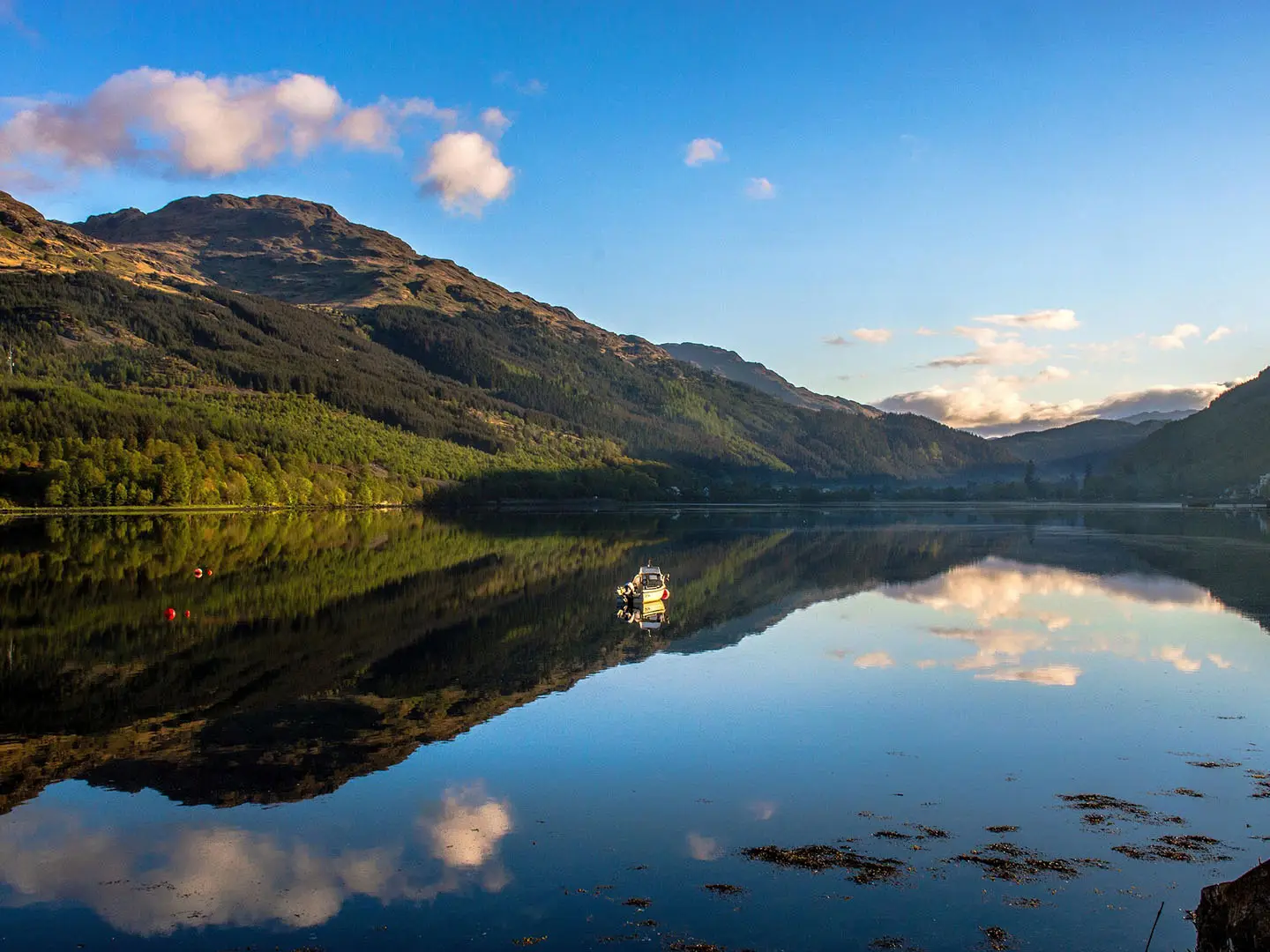
Three Lochs Way
How would you rate Three Lochs Way?
Tap a star to share your experience and help other hikers.
Three Lochs Way: A Complete Hiking Guide
HikeList Score
Three Lochs Way scored 87/100 on HikeList's trail-quality metrics.
See score breakdownHide breakdown
- Ideal length 74
- Balanced challenge 100
- Scenery & wildness 68
- Varied terrain 100
- Accommodation 100
- Food & support 88
- Path quality 92
- Season flexibility 89
Computed from length, challenge, scenery & wildness, terrain variety, accommodation, food & support, path quality and season flexibility.
The Three Lochs Way is a 55 km / 34 mile point-to-point trail in Scotland, running from Balloch to Inveruglas on the west side of Loch Lomond in Loch Lomond & The Trossachs National Park. Usually walked in 3 to 4 days, it is easy to moderate: low-level by long-distance standards, but with around 1,500 m of ascent, boggy sections and some undulating hill ground. It suits walkers wanting a well-linked Highland-edge route through Loch Lomond, the Gare Loch and Loch Long country.
Route Overview
The route is usually walked south to north from Balloch railway station to Inveruglas, so the scenery builds from the Lowlands towards the Southern Highlands. It is a linear, broadly semi-circular route west of Loch Lomond, passing Helensburgh, Garelochhead, Arrochar and Tarbet before finishing on Loch Lomond’s western shore. The four natural stages are Balloch to Helensburgh, Helensburgh to Garelochhead, Garelochhead to Arrochar via Tarbet, and Arrochar to Inveruglas. Public transport is unusually strong for a short long-distance trail: the route broadly parallels the West Highland railway, with Waterbus connections at Tarbet and Inveruglas. For other Scottish options, compare the Arran Coastal Way or Ayrshire Coastal Path.
History of the Three Lochs Way
The Three Lochs Way was conceived in 1991 by Alan Day, secretary of the Helensburgh & District Access Trust. The trust began formally promoting the route in 2010, and it is now one of Scotland’s Great Trails, designated by NatureScot. The path is used by about 1,500 people each year, with roughly 300 completing the full Balloch to Inveruglas route.
Notable highlights
- Hill House, Helensburgh: Charles Rennie Mackintosh’s celebrated domestic design and an Art Nouveau landmark overlooking the Clyde, passed at the edge of Helensburgh.
- The Cobbler and the Arrochar Alps: The craggy 884 m Cobbler, also known as Ben Arthur, dominates the skyline above Arrochar at the head of Loch Long.
- Glen Loin woodlands: A native woodland near Arrochar and Site of Special Scientific Interest, known for red squirrels; the path here is shared with the Loch Lomond & Cowal Way.
- Loch Sloy and the Sloy hydro-electric scheme: Huge pipelines drop from the Loch Sloy dam beneath Ben Vorlich to Inveruglas, marking the approach to the route’s northern end.
- Highland Boundary Fault crossing: The trail physically crosses the geological divide between Lowlands and Highlands, with the scenery changing from gentler farmland to mountain, crag and loch terrain.
- Loch Lomond and Firth of Clyde views: Early elevated viewpoints, including Goukhill Muir above Helensburgh, give broad views towards Loch Lomond, Ben Lomond and the Firth of Clyde.
Challenges to expect
This is not a high-altitude route, with a highest point of 284 m, but it still needs normal long-distance fitness. Expect minor roads, hard tracks, forest roads, footpaths and some boggy or undulating going. Stage 3, from Garelochhead to Arrochar via Tarbet, is the longest and most remote section. Waymarking is mostly good, but carry a map or offline route. If you prefer quieter southern Scotland trails, also see the Annandale Way.
HikeList Score
Three Lochs Way scored 87/100 on HikeList's trail-quality metrics.
See score breakdownHide breakdown
- Ideal length 74
- Balanced challenge 100
- Scenery & wildness 68
- Varied terrain 100
- Accommodation 100
- Food & support 88
- Path quality 92
- Season flexibility 89
Computed from length, challenge, scenery & wildness, terrain variety, accommodation, food & support, path quality and season flexibility.
 United Kingdom
 Scotland
Show more data Show less
- Upland
- Open Hill
- Forest
- Lochside
- Minor Roads
- Hard Tracks
- Forest Roads
- Footpaths
- Boggy Sections
- Hotels
- Inns
- Guesthouses
- B&Bs
- Family Friendly
- Pet Friendly
- Restrooms
- Water Sources
- Campsites
- Picnic Areas
Download Our Full Guide to Three Lochs Way FREE!
Get our comprehensive guide to this hike for free. Save it for later reading or print out at home.
In these collections
Photos from hikers
Taken on the trail by people who've reviewed Three Lochs Way.
Three Lochs Way: The Complete Guide
 i
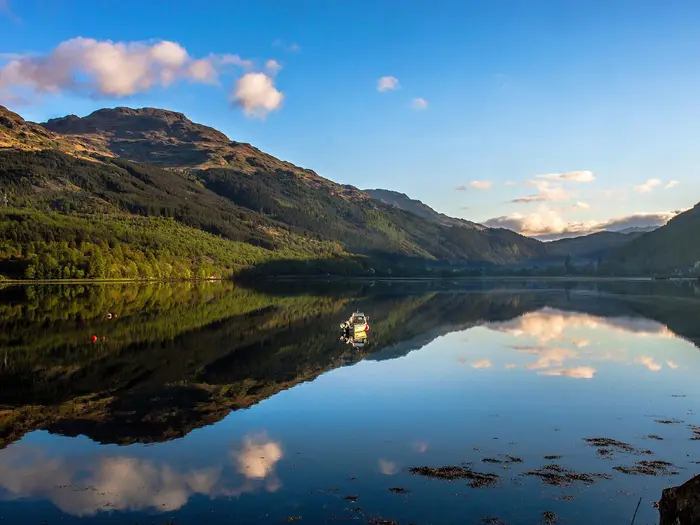
Image by CameraMan095
i
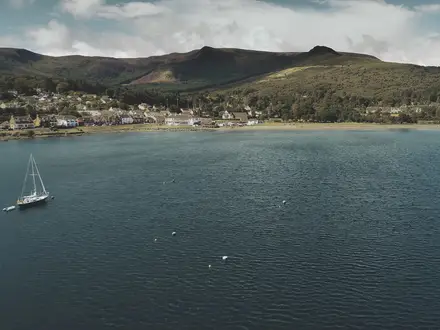
Image by CameraMan095 The Three Lochs Way is a compact Scottish long-distance trail with a big change of character: 55 km from Balloch at the southern end of Loch Lomond to Inveruglas on its western shore. It suits reasonably fit walkers who want a first multi-day route with proper hill-country atmosphere, waymarking and unusually useful public transport.
The route arcs west of Loch Lomond through Helensburgh, Glen Fruin, Garelochhead, Tarbet and Arrochar, linking Loch Lomond, the Gare Loch and Loch Long. It crosses the Highland Boundary Fault, so the walking builds from gentler farmland and forest into rougher moorland, craggy horizons and lochside mountain views.
This is not a high-level mountain traverse: the trail seldom rises above 250 m, with its high point on Goukhill Muir above Helensburgh. Even so, around 1,500 m of cumulative ascent, wet ground after rain and the longer Garelochhead–Arrochar section mean it should be treated as a real long-distance walk, not a casual stroll between towns.
The practical appeal is strong. Balloch, Helensburgh, Garelochhead and Arrochar & Tarbet are tied into the West Highland railway, while accommodation is available in the main towns and villages, though the thinner central section needs advance planning.
This guide covers stages, day choices, accommodation, food, transport, terrain and common mistakes.
Stage-by-Stage Guide
Stage 1: Balloch to Helensburgh — 14.5 km
The opening stage leaves Balloch railway station and climbs away from the southern end of Loch Lomond towards the Stoneymollan road, then onto the Killoeter / Ben Bouie upland. It is a useful first-day test: not technically difficult, but it gains height steadily and gives an early taste of the undulating hill ground that characterises the route.
The key high ground is Goukhill Muir above Helensburgh, the route’s high point at around 281–284 m. In clear weather this is one of the best viewpoints on the whole Three Lochs Way, with Loch Lomond, Ben Lomond and the Firth of Clyde all coming into view.
Expect a mix of minor road, track, forest/forestry road and open hill path. After wet weather, the upland sections can be soft or boggy underfoot, so waterproof footwear is useful even though the route is generally low-level.
Balloch is the main place to stock up before starting. There should be no assumption of reliable food or water once the route has left town for the upland section, so carry enough for the day and check opening times before relying on any individual business.
Helensburgh is the natural overnight stop, with hotels, guesthouses and B&Bs. It also has strong onward transport options, making this an easy stage to walk as a day section if needed.
Navigation is helped by waymarking, but the open sections above Balloch and Helensburgh still deserve proper map attention in poor visibility. The route crosses the shoulder/slopes of Ben Bouie rather than the summit, so do not be drawn onto higher ground unless deliberately taking a separate detour.
Public transport is straightforward at both ends: Balloch has the start railway station, and Helensburgh is a well-linked town on the wider rail network. This makes Stage 1 one of the simplest parts of the route to shorten, reverse or use as a standalone day walk.
Stage 2: Helensburgh to Garelochhead — 10.5 km
This is the shortest of the four standard stages, but it should not be dismissed as merely a link between towns. Leaving Helensburgh, the route passes the edge of town by The Hill House, Charles Rennie Mackintosh’s celebrated Art Nouveau building, before moving into quieter countryside towards Glen Fruin.
Glen Fruin gives this section its character: a gentle, enclosed glen with historical interest as the site of the 1603 Battle of Glen Fruin. The walking is generally easier than the longer central stage, but the route still uses a mixture of road, track and path rather than a continuous surfaced trail.
The landscape transition becomes more obvious here as the route moves away from the Clyde-side townscape into the Highland-edge glens. The Three Lochs Way physically crosses the Highland Boundary Fault, and this middle part of the route is where the scenery begins to feel more Highland than Lowland.
Helensburgh is the place to buy food before setting off. Garelochhead is the end-of-stage village and the next practical overnight halt, but services are thinner than in Helensburgh, so accommodation and evening food should be planned ahead.
Accommodation is available in and around Garelochhead, but choice is more limited than in the larger towns. Booking ahead is sensible, especially if walking a fixed 4-day itinerary.
Garelochhead has a railway station on the West Highland Line, which gives this stage good public transport value for section-walkers. Rail times should be checked before travelling, particularly if depending on an evening departure.
Navigation is generally manageable, but take care where the route changes between minor roads, tracks and paths. Wet ground is possible after rain, and the usual rural cautions apply around livestock, gates and estate or farm access.
Stage 3: Garelochhead to Arrochar via Tarbet — 20.5 km
This is the longest and most committing day on the Three Lochs Way. It crosses the hill country between Garelochhead and the head of Loch Long, passing through the Glen Mallan / Glen Douglas area before dropping towards Tarbet and Arrochar.
The stage feels noticeably more remote than the Balloch–Helensburgh and Helensburgh–Garelochhead sections. It includes rugged Highland-edge ground, hard tracks, hill paths and moorland, with views across Loch Long and towards the Arrochar Alps when the weather allows.
Argyll’s Bowling Green and Glen Douglas are the defining features of this section. The walking remains moderate by mountain standards, but the distance, cumulative ascent and remoteness make it the stage most likely to expose weak pacing, poor weather planning or insufficient food and water.
The route crosses or skirts MOD-managed land associated with the Faslane / Glen Douglas / Garelochhead training areas. Check for any current military access notices before setting out and follow all signed instructions on the ground.
There should be no reliance on food or drink between Garelochhead and the Tarbet / Arrochar area. Carry a full day’s supplies from Garelochhead, including enough water for the long central crossing; any water taken from burns or hill sources should be treated.
Tarbet and Arrochar form the practical end-of-stage area. Accommodation is available in the Arrochar / Tarbet area, but this is one of the key nights to book ahead because there is no convenient large town immediately beyond it on the route.
Arrochar & Tarbet railway station gives useful access to the West Highland Line, and Tarbet also has Loch Lomond Waterbus connections. Timetables for both rail and Waterbus services should be checked before relying on them.
Navigation matters more on this stage than anywhere else on the trail. The route is waymarked, but a map and offline GPX are strongly recommended, particularly in low cloud, heavy rain or fading light across the higher and more open ground.
The main warnings are length, exposure to weather and wet underfoot conditions rather than technical difficulty. Start early enough to avoid rushing the final miles, and do not treat this as a casual half-day just because the Three Lochs Way is a relatively low-level trail.
Stage 4: Arrochar to Inveruglas — 9.5 km
The final stage is shorter in distance but still has meaningful ascent, with the route leaving Arrochar and heading through Glen Loin towards Coiregrogain and Inveruglas. It is a compact finish rather than a simple lochside stroll.
Glen Loin is one of the most attractive woodland sections of the route. It is a native woodland and Site of Special Scientific Interest, known for red squirrels, and here the path is shared with the Loch Lomond & Cowal Way.
The skyline is dominated by the Arrochar Alps, especially The Cobbler / Ben Arthur, which is seen as a landmark from the route rather than climbed by it. As the route approaches Inveruglas, the Loch Sloy hydro-electric scheme becomes a major feature, with the pipelines descending towards the western shore of Loch Lomond.
Arrochar is the sensible place to start with food and water for the day. The stage is short enough for most walkers to manage without resupply, but do not rely on finding services before the finish unless current options have been checked.
The official finish is at Inveruglas car park and visitor point beside the A82, opposite Ben Lomond. Loch Sloy dam lies up a track beyond Inveruglas and is a detour rather than part of the standard finish.
Accommodation is not as naturally concentrated at Inveruglas as at the earlier overnight stops, so many walkers will either arrange onward transport from the finish or stay in the wider Arrochar / Tarbet / Loch Lomond area. This should be planned before starting the stage.
Transport from the finish needs particular attention. Inveruglas has road access on the A82 and Waterbus links may connect with Tarbet and Inversnaid, while the nearby Arrochar & Tarbet station is the key rail option for leaving the area; current rail and Waterbus timetables should be checked before travelling.
Navigation is usually straightforward where the path follows established woodland and glen routes, but the final day still needs a map or offline route if visibility is poor or if connecting onward from Inveruglas. Watch for wet or muddy ground in Glen Loin after rain, and take normal care on any sections using or crossing roads near settlements and the A82 finish.
Recommended Itinerary
The cleanest way to walk the Three Lochs Way is over four days, using the natural stage breaks at Helensburgh, Garelochhead and Arrochar. This keeps the longest and most remote section — Garelochhead to Arrochar via Tarbet — as a single, deliberate hill day rather than an add-on to another stage.
Standard itinerary: 4 days
Best for most walkers with normal long-distance fitness, especially those booking accommodation in advance and wanting balanced days without rushing the central hill section.
| Day | From | To | Approx. distance | Why this stage makes sense | Services/accommodation notes |
|---|---|---|---|---|---|
| 1 | Balloch | Helensburgh | 14.5 km | A straightforward opening day from Balloch railway station, climbing west towards Stoneymollan and the Killoeter/Ben Bouie upland before reaching Goukhill Muir, the route’s high point above Helensburgh. | Balloch is the easiest public-transport start. Helensburgh has the broadest choice of overnight services on the route, so it makes a practical first stop. |
| 2 | Helensburgh | Garelochhead | 10.5 km | A shorter day, useful after the opening climb and before the longer central stage. The route leaves Helensburgh past The Hill House and continues through Glen Fruin towards the Gare Loch. | Garelochhead accommodation is thinner than Helensburgh, so book ahead. This is also a sensible place to check conditions and any access notices before the MOD-managed hill ground beyond. |
| 3 | Garelochhead | Arrochar, via Tarbet | 20.5 km | The key committing day of the walk: longer, more remote and hillier-feeling than the mileage alone suggests, crossing the Glen Douglas / Argyll’s Bowling Green area with views towards Loch Long and the Arrochar Alps. | Carry food, water, map/offline GPX and waterproofs. Check for military access notices before setting out. Accommodation is generally sought in Arrochar or Tarbet and should be booked ahead. |
| 4 | Arrochar | Inveruglas | 9.5 km | A shorter final stage through Glen Loin and towards Coiregrogain, finishing at Inveruglas beside Loch Lomond near the Loch Sloy hydro scheme. | Inveruglas is a finish point rather than a major overnight base. Plan onward travel in advance using the Waterbus or nearby rail options, and verify current timetables before relying on them. |
Slower variant: 5 days with a Tarbet split
This suits walkers who want deliberately short days, prefer not to finish the long central section by continuing all the way to Arrochar, or need to work around accommodation availability. It is less efficient than the standard plan because splitting at Tarbet creates a very short onward leg to Arrochar; check official mapping before booking.
| Day | From | To | Approx. distance | Why this stage makes sense | Services/accommodation notes |
|---|---|---|---|---|---|
| 1 | Balloch | Helensburgh | 14.5 km | Keeps the opening upland section intact and ends in the best-served town on the route. | Good choice of overnight options compared with smaller settlements. |
| 2 | Helensburgh | Garelochhead | 10.5 km | A short, manageable stage through Glen Fruin before the more remote hill country. | Book Garelochhead ahead; options are more limited. |
| 3 | Garelochhead | Tarbet | Part of the 20.5 km Garelochhead–Arrochar stage; check official mapping before booking | Shortens the longest day by stopping before Arrochar, useful for walkers who prefer not to carry on after the remote central section. | Tarbet accommodation and Waterbus plans should be arranged in advance. Check exact overnight location against the route before committing. |
| 4 | Tarbet | Arrochar | Remainder of the 20.5 km Garelochhead–Arrochar stage; check official mapping before booking | A deliberately easy linking day, mainly worthwhile if using Arrochar as the final overnight base before Inveruglas. | Arrochar/Tarbet is one of the main accommodation clusters on the route, but availability can still be limited. |
| 5 | Arrochar | Inveruglas | 9.5 km | Keeps the final Glen Loin and Inveruglas stage relaxed, with time for onward transport connections. | Verify Waterbus and rail times before relying on them from the finish area. |
Faster variant: 3 days
This is the best faster schedule for fit walkers who are comfortable with a longer first day and want to avoid overloading the more remote Garelochhead–Arrochar section.
| Day | From | To | Approx. distance | Why this stage makes sense | Services/accommodation notes |
|---|---|---|---|---|---|
| 1 | Balloch | Garelochhead, via Helensburgh | 25 km | Combines the 14.5 km Balloch–Helensburgh stage with the 10.5 km Helensburgh–Garelochhead stage, creating a long but logical first day before the central hills. | Start early from Balloch railway station. Book Garelochhead accommodation ahead, as arriving tired with no reservation is a poor plan. |
| 2 | Garelochhead | Arrochar, via Tarbet | 20.5 km | Keeps the most remote section as a self-contained day, rather than adding it to another stage. | Carry full hill-day essentials and check MOD access notices before travel. Overnight in Arrochar or Tarbet should be booked in advance. |
| 3 | Arrochar | Inveruglas | 9.5 km | A short final day, useful for onward transport from Inveruglas or the nearby Arrochar & Tarbet rail area. | Confirm current rail and Waterbus timetables before setting out, especially if finishing late in the day. |
A more aggressive 3-day plan can combine the final two stages from Garelochhead to Inveruglas, but that makes for around 30 km including the most remote section of the route. For most walkers, the 25 km / 20.5 km / 9.5 km split is the better fast option.
Planning the Route
How many days to allow
Most walkers should plan the Three Lochs Way over four days, using the natural overnight stops at Helensburgh, Garelochhead and Arrochar/Tarbet. This keeps each day manageable and gives enough margin for wet ground, hill weather and transport connections at the finish.
A three-day itinerary is realistic for fit walkers travelling light, but it usually means combining stages or accepting one longer day. The key section to plan around is Garelochhead to Arrochar via Tarbet, which is the longest and most remote part of the route, with fewer easy escape options once committed to the hill ground.
The route is not long enough to require expedition-style planning, but it does reward careful logistics. Accommodation, public transport and access notices matter more here than sheer mileage.
Natural stages and overnight stops
The route divides cleanly into four sections, and these are the simplest way to book it:
| Stage | Section | Approx distance | Planning notes |
|---|---|---|---|
| 1 | Balloch to Helensburgh | 14.5 km | A straightforward first day, leaving Balloch by waymarks towards Stoneymollan and the Killoeter/Ben Bouie upland before descending to Helensburgh. |
| 2 | Helensburgh to Garelochhead | 10.5 km | Shorter in distance, but still worth treating as a full walking day if visiting The Hill House or taking time through Glen Fruin. |
| 3 | Garelochhead to Arrochar via Tarbet | 20.5 km | The longest and most committing stage, crossing rugged hill country around Glen Mallan and Glen Douglas. Carry a map or offline GPX and check military access notices before setting off. |
| 4 | Arrochar to Inveruglas | 9.5 km | A shorter final day through Glen Loin and towards Loch Lomond, but do not leave onward transport from Inveruglas to chance. |
Accommodation is most naturally arranged in Helensburgh, Garelochhead and Arrochar/Tarbet. Options are thinner around the central hill section, so Garelochhead and Arrochar/Tarbet should be booked ahead rather than treated as flexible stops.
Three-day versus four-day itineraries
A four-day walk is the best fit for most independent hikers. It avoids an overlong first or final day, gives time to manage weather delays, and matches the places where accommodation and transport are available.
A three-day walk suits strong walkers who are comfortable with longer days and can book accommodation to match. The main decision is how to handle the middle of the route: the Garelochhead–Arrochar section is already substantial, so combining it with another stage can make for a demanding day.
Walking the route slowly is rarely inefficient, because the settlements are well spaced and public transport is unusually useful for a short Scottish trail. Rushing it can work, but it reduces the flexibility that makes the route attractive in unsettled weather.
Shortening, extending and section hiking
Section hiking is very practical. The route broadly follows the corridor of the West Highland railway, with useful stations at Balloch, Helensburgh, Garelochhead and Arrochar & Tarbet, plus a request stop near the northern end. Rail times should be checked before travelling.
This makes it possible to walk individual stages as day walks, return later for missing sections, or abandon to a station if the weather turns poor. The central hill section between Garelochhead and Arrochar/Tarbet needs the most caution, as it is the least convenient place to change plans once underway.
At the northern end, plan the exit from Inveruglas before starting the final day. The finish is at the Inveruglas car park and visitor point beside the A82, and onward options include the Loch Lomond Waterbus from Inveruglas or returning to the nearby Arrochar & Tarbet station. Current rail and Waterbus timetables should be checked before relying on them.
Accommodation and food planning
Book accommodation before walking, especially for Garelochhead and Arrochar/Tarbet. Balloch and Helensburgh are larger and better connected, but availability can still tighten during busy spring, summer and autumn periods.
Food planning is straightforward if overnighting in the main settlements, but do not assume that every small place will have the food you need at the time you arrive. Carry lunch and snacks for each stage before leaving the morning settlement, particularly before the Garelochhead to Arrochar stage.
Water should be treated in the same practical way. Start each day with enough for the full section, and do not rely on finding usable hill water on the moorland or forestry stretches.
Navigation and mapping
The Three Lochs Way is waymarked, but it should not be treated as a path that needs no navigation. The route uses a mix of minor roads, hard tracks, forestry roads, footpaths and open hill, and some sections can be wet, indistinct or slower after rain.
Carry a map and know how to use it, with an offline GPX or mapping app as a useful backup. OS Explorer 347 and 364, and OS Landranger 56, are associated with the area, but sheet numbers should be checked before relying on them.
Navigation matters most on the central section through the Glen Douglas / Garelochhead hill ground, and in poor visibility on the higher moorland stretches such as around Goukhill Muir. The route seldom reaches high altitude, but low cloud, wind and persistent rain can still make waymarking harder to follow.
Access, weather and timing
The main access consideration is the MOD-managed ground around HM Naval Base Clyde / Faslane, Glen Douglas and the Garelochhead training areas. Check for current military access notices before walking the central section, and follow any local instructions on the ground.
The best walking seasons are spring, summer and autumn. Underfoot conditions can be boggy after rain, particularly on hill and moorland sections, so waterproof footwear and reliable waterproof clothing are sensible even in settled forecasts.
Because the route crosses from the gentler Lowland fringe into Highland-edge terrain, weather can feel more serious than the overall height suggests. Build enough time into each day for slow going on wet ground, navigation pauses and transport connections at either end.
Towns, Villages and Overnight Stops
The Three Lochs Way is unusually well served for a short Scottish long-distance route, but accommodation is still concentrated in a few places. Balloch, Helensburgh, Garelochhead and Arrochar/Tarbet are the practical overnight bases; the hill and glen sections between them have few services and should be treated as carry-through terrain.
Book Garelochhead and Arrochar/Tarbet ahead, especially if walking the route over four days. The central Garelochhead–Arrochar stage is the longest and most remote section, so starting it with food, water and an onward bed arranged is sensible.
Balloch
Balloch is the normal starting point, with the route beginning at Balloch railway station near the southern end of Loch Lomond. Waymarks lead west out of town towards the Stoneymollan road and the Killoeter/Ben Bouie upland.
It is a useful arrival night if travelling from farther away, particularly because trains run to Balloch from Glasgow Queen Street. Staying here also allows an early start on the Balloch–Helensburgh section without needing to build in morning travel.
Accommodation and food options are broader here than on the hill sections, but exact availability and opening hours should be checked before travelling. Balloch is also the best place to make any last adjustments before leaving Loch Lomondside for the first upland part of the route.
Stoneymollan
Stoneymollan is a road and viewpoint area above Balloch rather than an overnight base. It comes early on the first stage as the route gains height away from the town.
Do not plan on services here. It is best treated as part of the walk between Balloch and Helensburgh, with food and water carried from Balloch.
Goukhill Muir
Goukhill Muir, above Helensburgh, is the high point of the Three Lochs Way at roughly 281–284 m depending on mapping reference. It is a panoramic hill section, not a settlement or practical stopping place.
There is no accommodation or resupply on the moor itself. In poor weather, this exposed ground can feel very different from the urban start at Balloch, so have navigation available even though the trail is waymarked.
Helensburgh
Helensburgh is the first major overnight stop and the natural end of the opening Balloch–Helensburgh stage. It sits on the Clyde side of the route before the trail turns north towards Glen Fruin and Garelochhead.
This is one of the strongest service points on the walk, with a railway station and a choice of town accommodation such as hotels, guesthouses and B&Bs. It is a good place to resupply before the quieter second stage.
Food, pubs, cafés and shop options should be checked for current opening times, especially outside peak season. For many walkers, Helensburgh is the most convenient first night because the first stage is a moderate 14.5 km and finishes in a proper town.
The Hill House
The Hill House is passed on the edge of Helensburgh as the trail leaves the town. It is a route landmark rather than an overnight stop.
Do not rely on it for trail logistics unless planning a specific visit. Entry arrangements, opening times and any facilities should be checked before travelling.
Glen Fruin
Glen Fruin is the quiet glen followed between Helensburgh and Garelochhead. It is a scenic and historically notable part of the route, associated with the 1603 Battle of Glen Fruin, but it is not a service village.
There should be no expectation of shops, cafés or accommodation along this section. Leave Helensburgh with what is needed for the day and continue to Garelochhead for the next practical stop.
Garelochhead
Garelochhead is the natural overnight stop after the Helensburgh–Garelochhead stage. It sits by the Gare Loch and is important because it comes immediately before the longest and most remote day of the route.
Accommodation exists here, but the choice is thinner than in larger towns, so book ahead rather than arriving speculatively. Food and drink arrangements should also be checked in advance, particularly if arriving late or walking outside the main holiday season.
Garelochhead has a station on the West Highland railway, making it a useful access or exit point for section-hikers. It is also the place to check conditions and access notices before crossing the MOD-managed hill country around Glen Douglas and the Faslane/Garelochhead training areas.
Glen Mallan and Glen Douglas
Glen Mallan and Glen Douglas form part of the remote central hill section between Garelochhead and Arrochar. This is carry-through country rather than a place to look for overnight services.
The stage from Garelochhead to Arrochar via Tarbet is about 20.5 km, making it the longest day on the standard four-day itinerary. Carry a map or offline GPX, check for any military access restrictions before setting out, and do not assume there will be food, shelter or transport once committed to the glen crossing.
Tarbet
Tarbet is reached near Loch Lomond before the route continues towards Arrochar. It is paired logistically with Arrochar for accommodation and transport planning, as the Arrochar & Tarbet station serves this part of the route.
Tarbet can be useful for breaking up the end of the long Garelochhead–Arrochar day, depending on where accommodation is available. It is also a key point for Loch Lomond Waterbus connections, including links across to Inversnaid and the West Highland Way, but current sailings must be verified before relying on them.
Food, pubs, cafés and shops should be checked before travel. If staying here rather than Arrochar, make sure the next morning’s route back onto the Three Lochs Way is clear from the booked accommodation.
Arrochar
Arrochar is the main overnight base after the long central stage and the usual stop before the final short day to Inveruglas. It sits at the head of Loch Long, with the Cobbler and the Arrochar Alps dominating the skyline, although the Three Lochs Way does not climb those summits.
Accommodation is available in the Arrochar/Tarbet area, but it should be booked ahead because this is a key stop on a route with limited alternatives nearby. Arriving here with a confirmed bed is particularly important after the 20.5 km Garelochhead–Arrochar stage.
The nearby Arrochar & Tarbet station gives the village strong public transport value for section-hikers. Food and evening meal options should be checked in advance, especially if arriving outside normal dining hours.
Glen Loin
Glen Loin lies beyond Arrochar on the final stage towards Inveruglas. The route passes through native woodland and shares this section with the Loch Lomond & Cowal Way.
This is not a resupply or overnight stop. Treat it as a quiet walking section between the Arrochar/Tarbet service area and the finish at Inveruglas.
Coiregrogain
Coiregrogain is passed on the approach towards Inveruglas and the Loch Sloy hydro landscape. It is a route location rather than a practical base.
There should be no assumption of accommodation, shops or cafés here. Continue to Inveruglas for the end of the trail, or return towards Arrochar/Tarbet if using rail connections.
Inveruglas
Inveruglas is the northern finish of the Three Lochs Way, at the car park and visitor point beside the A82 on the western shore of Loch Lomond. It is opposite Ben Lomond and close to the Loch Sloy hydro-electric scheme, with the dam lying up a track beyond the route.
It is better treated as a finish point than an overnight base. Accommodation planning normally centres on Arrochar/Tarbet, onward transport, or another pre-arranged stop nearby; exact options should be checked before travelling.
Transport from the finish needs planning. Loch Lomond Waterbus services may link Inveruglas with Tarbet and other points, and the wider route is supported by the West Highland railway, but current rail and Waterbus timetables should be verified before relying on them.
Getting to the Start
By train
Balloch railway station is the start of the Three Lochs Way, so arriving by train is the simplest option. The route begins at the station, with waymarks leading west out of Balloch towards Stoneymollan and the Killoeter/Ben Bouie upland.
Balloch has direct rail services from Glasgow Queen Street, making Glasgow the most straightforward main gateway for walkers coming from elsewhere in Scotland or the rest of the UK. Current train times should be checked before travelling, especially if planning a same-day start or connecting from a long-distance service.
The railway is also useful for section-walking because the Three Lochs Way broadly parallels the West Highland Line, with stations at Helensburgh, Garelochhead and Arrochar & Tarbet further along the route.
By bus
Bus travel may be possible for local access to Balloch and the Loch Lomond area, but the train is usually the cleaner option because the trail starts directly at Balloch station. Current bus routes, stops and weekend services should be checked before travelling.
If staying away from Balloch station, allow for the first short transfer in the morning. A pre-booked taxi can be useful where accommodation is not within easy walking distance of the start.
By car
Balloch sits at the southern end of Loch Lomond and is a practical road-access start point. However, the Three Lochs Way is a point-to-point walk ending at Inveruglas, not a loop, so leaving a car at the start creates a return-transport problem at the end of the hike.
If driving to Balloch, check long-stay parking rules before leaving a vehicle for several days. This should be checked before travelling.
A common solution is to use public transport for at least one end of the journey: travel to Balloch by train, then leave the finish using the Loch Lomond Waterbus from Inveruglas or by connecting with rail at Arrochar & Tarbet. Current rail and Waterbus timetables should be checked before relying on this plan.
From the nearest airport
For air arrivals, the practical approach is to transfer into Glasgow, then continue by train from Glasgow Queen Street to Balloch. Airport-to-city transport and onward rail times should be checked before travelling, particularly for late arrivals.
If landing too late to reach Balloch comfortably, staying in Glasgow and taking a morning train to Balloch is often simpler than trying to force a same-day transfer and first walking stage.
Where to stay before starting
Balloch is the most convenient place to stay before beginning the walk because the trail starts at the railway station. It also gives the cleanest start for the first section to Helensburgh.
Glasgow is a workable alternative if accommodation in Balloch is full or if arriving by long-distance train or air. In that case, allow time in the morning to reach Balloch by train before starting the opening 14.5 km stage to Helensburgh.
Book ahead in busy periods. Although the route has unusually good transport links for a short Scottish long-distance trail, accommodation pinch points can still affect the overall itinerary, especially if also booking nights in Garelochhead and Arrochar later on.
Getting Home from the Finish
The Three Lochs Way finishes at Inveruglas car park and visitor point beside the A82 on the western shore of Loch Lomond. It is not as straightforward a finishing town as Balloch, Helensburgh, Garelochhead or Arrochar, so the homeward journey should be planned before setting off, especially if finishing late in the day.
By train
The most practical rail option is to connect with the West Highland railway, which broadly parallels the route. Arrochar & Tarbet station is the main named station near the final section, and the route also has access to a request stop near the finish; current stopping patterns and request-stop arrangements should be checked before travelling.
If using Arrochar & Tarbet station, plan how to get there from Inveruglas. The Loch Lomond Waterbus links Tarbet and Inveruglas, and can be useful for connecting the finish with Tarbet and the station area, but sailings are seasonal and timetable-dependent. Verify current Waterbus and rail times before relying on this as the same-day exit plan.
For onward travel to Glasgow or the wider rail network, build the itinerary around the day’s available West Highland Line services. Late-afternoon finishes leave less margin, so check the last usable train before committing to the final day’s walking schedule.
By bus
Inveruglas sits beside the A82, but bus use from the finish should not be assumed without checking the current timetable. Services, stopping points and evening options can change, and rural Loch Lomond journeys may be limited compared with the rail-linked towns earlier on the route.
If travelling by bus, check exactly where the nearest usable stop is, whether it serves Inveruglas in the required direction, and whether there is a realistic connection with trains or onward buses. This should be checked before travelling.
By car/taxi
For pick-up by car, Inveruglas car park is the obvious meeting point at the finish. Drivers should allow for A82 journey times and mobile signal gaps around the loch, and walkers should agree a clear meeting time rather than relying on last-minute messages.
For taxi use, arrange the journey in advance rather than hoping to call one on arrival. Arrochar, Tarbet and other route towns are more practical bases for arranging local transport than the finish itself, but availability, fares and evening coverage should be checked before booking.
If a car has been left at Balloch, remember that this is a point-to-point route. The return to the start will need a planned combination of rail, Waterbus, bus or taxi rather than a simple loop back to the vehicle.
From the nearest airport
There is no airport connection at Inveruglas. For flights, plan to return first by rail, bus, Waterbus connection or taxi towards the Scottish rail network, with Glasgow the most practical major hub for many Three Lochs Way itineraries.
Airport transfers are highly timetable-dependent from this finish. Leave generous time between the final walking day and any flight, and check the full chain of connections before booking.
Where to stay at the finish
Inveruglas is a finish point rather than a full service village, so it is usually better to overnight in Arrochar or Tarbet if a same-day journey home looks tight. These are already on the route and are the main accommodation bases near the final stage.
Staying the night before or after the final leg also gives more flexibility if Waterbus, rail or taxi times do not line up neatly. Accommodation on the Three Lochs Way can be thinner around the central and northern sections, so book Arrochar/Tarbet beds ahead rather than leaving this to the end of the walk.
Which Direction Should You Walk?
The Three Lochs Way is normally walked south to north, from Balloch to Inveruglas. That is the standard direction used by the route description, the natural stage order and most planning itineraries: Balloch → Helensburgh → Garelochhead → Arrochar/Tarbet → Inveruglas.
Walking it in reverse is perfectly possible, and the waymarking and public transport make either direction workable. For most independent walkers, however, Balloch to Inveruglas is the better choice.
Balloch to Inveruglas: the standard direction
Starting at Balloch railway station is straightforward, especially if arriving by train from Glasgow Queen Street. From there, the route leaves the southern end of Loch Lomond and climbs west towards Stoneymollan, Ben Bouie and Goukhill Muir before dropping to Helensburgh.
This direction gives the best scenic progression. The route starts on the gentler southern fringe of Loch Lomond, then crosses the Highland Boundary Fault and gradually becomes more rugged, with the Gare Loch, Loch Long, Glen Douglas, the Arrochar Alps and finally the northern shore of Loch Lomond at Inveruglas.
The stage pattern also works well psychologically. The first two days are moderate, the longest and most remote section comes between Garelochhead and Arrochar, and the final day from Arrochar to Inveruglas is shorter but still has enough ascent to feel like a proper finish.
Finishing at Inveruglas gives a stronger sense of arrival than ending in Balloch. You finish beside Loch Lomond, opposite Ben Lomond, with the Loch Sloy hydro-electric scheme close by and the Highland scenery at its most dramatic on the route.
Inveruglas to Balloch: when the reverse makes sense
Walking north to south can work well if accommodation availability dictates it, or if onward travel from Balloch is more convenient at the end of the trip. Balloch is an easy place to leave from by rail, so the reverse direction can be attractive for walkers who want the simplest possible final journey.
The main drawback is that reaching the start at Inveruglas can be more timetable-dependent. The brief transport options are the Loch Lomond Waterbus, the nearby Arrochar & Tarbet station, and a request stop near the finish; current rail and Waterbus timetables should be checked before travelling.
The reverse also puts the short Inveruglas to Arrochar section first, followed immediately by the longest and most committing day across the central hill ground to Garelochhead. That is manageable, but it gives less of a gradual build-up than the standard direction.
Climbs, weather and accommodation
There is no major climbing advantage either way. The route is undulating rather than mountainous, with around 1,500 m of total ascent, and the high point on Goukhill Muir is reached on the Balloch–Helensburgh section. Reversing the route changes the order of the climbs, not the overall effort.
Weather is not a strong reason to choose one direction. The open sections above Helensburgh, through Glen Fruin and across the Garelochhead–Arrochar hill ground can all feel exposed in poor conditions, whichever way they are walked. Carry a map or offline GPX, especially for the central section across MOD-managed hill ground, and check for any military access notices before setting out.
Accommodation works in both directions because the same overnight stops are used: Helensburgh, Garelochhead and Arrochar/Tarbet. The thinner choice around Garelochhead and Arrochar means those nights should be booked ahead, regardless of direction.
Recommendation
Walk the Three Lochs Way from Balloch to Inveruglas unless transport or accommodation forces the reverse. It has the easiest start, the most natural scenic progression from Lowland edge to Highland loch-and-mountain country, a sensible four-stage rhythm and the more satisfying finish on Loch Lomond at Inveruglas.
Accommodation Along the Route
The Three Lochs Way works well as an inn-to-inn walk, provided the overnight stops are planned around the natural stage ends: Balloch, Helensburgh, Garelochhead and Arrochar/Tarbet. These are real settlements with accommodation, but the spread is uneven: Balloch and Helensburgh have the strongest choice, while Garelochhead and the Arrochar/Tarbet area need earlier booking.
The main planning issue is the central part of the route. Between Garelochhead and Arrochar the walk crosses more remote hill ground through Glen Mallan / Glen Douglas, with no useful accommodation on the section itself. Treat this as a full walking day and secure beds at both ends before committing to dates.
Summer weekends, public holidays and good-weather periods can put pressure on beds around Loch Lomond, Loch Long and the Arrochar Alps. Booking ahead is strongly recommended for a 3- or 4-day itinerary, especially if walking as a group or wanting private rooms rather than whatever is left.
| Place | Accommodation level | Best for | Notes |
|---|---|---|---|
| Balloch | Good | Pre-walk night; easy start by rail | The route starts at Balloch railway station, so staying here makes a simple first morning. Useful if arriving from Glasgow the previous evening. |
| Helensburgh | Good | First overnight stop on a 4-day itinerary | A practical town stop after the Balloch–Helensburgh section, with a stronger accommodation base than the smaller villages later on. |
| Garelochhead | Limited | Essential overnight stop before the longest stage | Accommodation is thinner, so book ahead. This is the key place to secure before walking the remote Garelochhead–Arrochar section. |
| Tarbet | Limited | Alternative or shared stop with Arrochar | The route reaches Tarbet before Arrochar on the long central stage. It can be useful if accommodation in Arrochar is full, but availability should be checked before travelling. |
| Arrochar | Limited to moderate | Overnight before the final stage to Inveruglas | A logical stop before the short final day. Demand can be high because of the Arrochar Alps and Loch Long setting, so early booking is sensible. |
| Inveruglas | None to very limited | Finish point only | The trail finishes at the Inveruglas car park and visitor point beside the A82. Plan onward travel or return to accommodation elsewhere rather than assuming a bed at the finish. |
Best overnight patterns
A standard 4-day walk is the easiest accommodation plan: Balloch or nearby before the start, then Helensburgh, Garelochhead and Arrochar/Tarbet. This keeps the longest day to the Garelochhead–Arrochar section and avoids needing to find accommodation in the middle of the hill crossing.
A 3-day itinerary is possible but usually means combining stages and being more flexible about where to stay. Because the route has railway stations at Balloch, Helensburgh, Garelochhead and Arrochar & Tarbet, some walkers can shorten or adjust days by using public transport, but current rail times should be checked before building an itinerary around this.
Camping and informal options
The accommodation mix includes some campsites and informal options near Loch Lomond, but these should not be treated as evenly available along the whole route. The inland and central hill sections are better planned as self-sufficient walking days between booked overnight stops.
If camping, check current local access guidance, site availability and any seasonal restrictions before travelling. Do not assume that a legal or suitable camping option will appear at each stage end, particularly around busier lochside locations.
Luggage transfer and taxi back-up
The route’s good transport links make it easier than many short long-distance trails to adjust plans, but luggage transfer should not be assumed. If walking light is important, arrange bag movement directly with accommodation providers or a private operator before booking the trip.
Taxi transfers may help if accommodation is unavailable at Garelochhead, Tarbet or Arrochar, but availability in smaller settlements can be limited and should be booked in advance. A transfer plan is most useful as a fallback for the central section, where accommodation gaps matter most.
Camping and Wild Camping
Camping is possible on the Three Lochs Way, but it is not the simplest way to organise the route. The trail is short, well linked by public transport, and passes accommodation centres at Balloch, Helensburgh, Garelochhead, Tarbet and Arrochar, so many walkers use B&Bs, inns or guesthouses rather than carrying camping kit.
The main practical issue is spacing. The central Garelochhead–Arrochar section is the longest and most remote part of the walk, and much of this area crosses or skirts MOD-managed hill ground around Glen Douglas, Faslane and Garelochhead training areas. Do not plan to camp there without checking current access notices and local restrictions before travel.
Campsites and organised camping
There are some campsites and informal camping options near Loch Lomond, which makes the Loch Lomond end of the route the most realistic area for camping-based logistics. Availability, opening dates and whether a site accepts small backpacking tents should be checked before travelling.
On-route camping provision is thinner away from Loch Lomond. Helensburgh, Garelochhead, Tarbet and Arrochar are better treated as accommodation-and-resupply points unless a current campsite or formal camping option has been booked or checked locally.
If planning a full camping itinerary, work backwards from confirmed camping places rather than assuming a pitch will be available at the end of each stage. The route’s natural stages are short enough for accommodation-based walking, but they do not automatically line up with formal campsites.
Wild camping: legality and practical reality
Wild-camping rules in Scotland, including any local byelaws or permit systems within Loch Lomond & The Trossachs National Park, must be checked before travelling. This is particularly important around Loch Lomond, including the Balloch and Inveruglas ends of the route, where visitor pressure and seasonal controls can affect where camping is allowed.
Do not assume that every open-looking hillside is suitable for a tent. Parts of the route cross farmland, forestry, access tracks, moorland, MOD-managed land and areas close to settlements or roads. Camping should be discreet, late-pitched, early-struck, well away from buildings, livestock, paths, roads and enclosed fields, and only where access is clearly responsible and permitted.
The central hill section between Garelochhead and Arrochar may look like the obvious wild-camping stretch on a map, but it is also the section where access checks matter most. Military access notices, training activity and estate or forestry operations can all affect what is sensible on the ground. This should be checked before travelling.
Water and cooking
Do not rely on finding safe drinking water at a convenient pitch. The route passes lochs, burns and wet ground in places, but natural water should be filtered, treated or boiled, and it may be affected by livestock, forestry work or poor drainage after rain.
Carry enough water for the more remote sections, especially between Garelochhead and Arrochar. Balloch, Helensburgh, Garelochhead, Tarbet and Arrochar are the practical places to refill from public or accommodation-based supplies.
Stove use is usually more appropriate than open fires on this route. Open fires can damage vegetation, increase wildfire risk and create conflict near farmland, forestry, settlements and popular lochside areas. Follow current local fire guidance and avoid lighting fires entirely in dry, windy or restricted conditions.
Leave No Trace expectations
Camp only where it is clearly responsible to do so, keep groups small, and leave no visible trace of the pitch. Pack out all litter, food waste and hygiene products, even if they are biodegradable.
Toilet waste must be dealt with well away from watercourses, paths, buildings and grazing animals. In busy or sensitive areas near Loch Lomond, carry-out options may be more appropriate than digging.
The Three Lochs Way is not a wilderness trail, and poor camping practice is highly visible near the towns, lochsides and access tracks. If camping rules are unclear for a particular place, use formal accommodation or a confirmed campsite instead.
Food, Water and Resupply
The Three Lochs Way is not a wilderness food-carry, but it should still be planned as a town-to-town route with some long gaps between reliable services. Food is easiest at the larger settlements — Balloch, Helensburgh, Tarbet and Arrochar — while Garelochhead is a key overnight point where options are thinner and should be checked before travelling.
Do not assume there will be food on the hill sections. Once the route leaves Balloch for Stoneymollan and Goukhill Muir, Helensburgh for Glen Fruin, or Garelochhead for Glen Douglas, treat the day as self-sufficient until the next settlement.
Resupply strategy
For a standard 4-day itinerary, most walkers can buy or arrange food at overnight stops, then carry lunch, snacks and emergency food for the next stage. The most important day to prepare for is Garelochhead to Arrochar via Tarbet, which is the longest section at about 20.5 km and crosses the route’s most remote hill ground.
If staying in accommodation, ask in advance about breakfast times and packed lunches, especially for an early start. If camping or walking out of season, carry more food than the daily mileage suggests, as rural opening hours can be limited and seasonal.
Sunday trading, public holidays and winter shoulder-season hours can affect cafés, pubs, village shops and other food stops. Specific opening times should be checked before travelling, particularly in Garelochhead, Tarbet, Arrochar and at the Inveruglas finish.
Water planning
Start each day with enough water to reach the next settlement without relying on public taps or cafés being open. This is especially important on the exposed upland and glen sections, where there may be no treated water available on route.
Natural water may be present in the hills and glens, but it should not be treated as safe without filtering, boiling or chemical treatment. The route passes through farmland, forestry, boggy ground and MOD-managed hill country, all of which can affect water quality.
In warm weather, carry more than usual for the longer climbs and open sections. In wet or cool weather, do not underestimate water needs simply because the ground is damp; boggy terrain does not mean drinkable water.
| Section | Food availability | Water availability | Notes |
|---|---|---|---|
| Balloch to Helensburgh | Food is easiest at Balloch before starting and at Helensburgh at the end. Treat the Stoneymollan, Ben Bouie and Goukhill Muir section as having no resupply. | Fill up before leaving Balloch. Do not rely on treated water until Helensburgh. | Carry lunch or substantial snacks if starting late or walking slowly. |
| Helensburgh to Garelochhead | Helensburgh is the main place to buy food before setting off. Do not assume food is available through Glen Fruin. Garelochhead options should be checked ahead. | Refill before leaving Helensburgh. Natural water in the glen should be treated if used. | A shorter day, but still worth carrying lunch because services between the settlements are not reliable. |
| Garelochhead to Arrochar via Tarbet | This is the key carry day. Buy or arrange food before leaving Garelochhead, and plan as though there is no reliable food until Tarbet or Arrochar unless a specific stop has been checked. | Carry a full day’s water supply from the start, or be prepared to filter/treat natural water. Do not assume taps on the MOD-managed hill ground. | Longest and most remote stage of the route. Carry lunch, spare snacks and an emergency reserve. |
| Arrochar to Inveruglas | Arrochar is the practical place to start with food. Do not rely on food at Inveruglas without checking current facilities and opening times. | Fill up in Arrochar. There is no guaranteed treated water on the way to Inveruglas. | A shorter final stage, but the finish is not a full-service town, so onward food plans matter. |
Terrain, Conditions and Difficulty in Practice
The Three Lochs Way is low-level by Highland standards, but it is not a flat lochside stroll. The route seldom rises above 250 m, with its high point on Goukhill Muir above Helensburgh at around 281–284 m, yet the cumulative ascent is about 1,500 m over 55 km. The difficulty comes from repeated undulations, mixed surfaces and wet ground rather than altitude or technical terrain.
Most walkers with normal long-distance fitness should find the route easy to moderate. The central Garelochhead to Arrochar stage is the main exception: it is longer, more remote, crosses open hill ground around Glen Douglas, and needs more self-sufficiency than the town-to-town sections might suggest.
Path surfaces and underfoot conditions
Expect a varied mix of minor roads, hard tracks, forestry roads, footpaths and open hill. The easier going is generally on firm tracks and road sections around Balloch, Helensburgh, Glen Fruin, Tarbet, Arrochar and Inveruglas. These sections make progress straightforward, especially in dry weather.
The rougher walking is on the upland and moorland sections, particularly where the route crosses open ground above Balloch and Helensburgh, and on the more remote central section between Garelochhead and Arrochar. After rain, some sections can be boggy or wet underfoot, so waterproof footwear is more useful than lightweight road-style shoes.
There is little genuinely technical terrain. The route does not climb The Cobbler, Ben Lomond, Ben Vorlich or Ben Bouie’s summit, and there is no scrambling. However, wet grass, muddy paths and uneven hill tracks can still slow progress, especially with a multi-day pack.
Road walking and tracks
Road and track walking is part of the character of the route, particularly where it links towns, glens and rail-served settlements. These sections help make the Three Lochs Way accessible and logistically simple, but they can feel hard on the feet over several days.
The opening out of Balloch towards Stoneymollan, the approaches to Helensburgh and the route through or near settlements all involve firmer surfaces. The Glen Fruin section is gentler in character than the hillier ground before and after it, but still forms part of an undulating day rather than a completely level walk.
Climbs, descents and exposure
The climbs are generally modest rather than steep mountain ascents. The first day still includes a meaningful pull up towards the Stoneymollan and Goukhill Muir area before descending towards Helensburgh. That early high ground gives the first sense of the route’s Highland-edge character and can feel exposed in poor weather.
The Helensburgh to Garelochhead stage has less total ascent than the opening day, but the terrain remains rolling. The longest and most committing section is from Garelochhead to Arrochar via Glen Douglas and Tarbet, with open hill country, longer gaps between services and broader exposure to wind, rain and low cloud.
The final stage from Arrochar to Inveruglas is short, but it is not just a flat walk to the finish. It passes through Glen Loin and towards Coiregrogain before reaching Inveruglas, with a notable amount of ascent for its length.
| Section | Terrain in practice | Difficulty notes |
|---|---|---|
| Balloch to Helensburgh | Town edge, minor roads/tracks, upland and moorland around Stoneymollan and Goukhill Muir | One of the hillier-feeling sections because of the climb from low ground to the route’s high point |
| Helensburgh to Garelochhead | Town edge near The Hill House, then glen and mixed rural walking through Glen Fruin | Shorter and usually less demanding, but still undulating |
| Garelochhead to Arrochar via Tarbet | Remote hill and glen country around Glen Douglas, with longer stretches between settlements | The hardest day in practice: longest stage, most committing terrain and fewer easy bail-out options on foot |
| Arrochar to Inveruglas | Woodland, hill tracks and glen walking through Glen Loin and towards Coiregrogain | Short distance, but with enough ascent to make it a proper final stage |
Mud, bog and wet weather
Wet ground is one of the main practical challenges. The Clyde Sea Lochs fringe and Loch Lomond area receive frequent rain, and the route includes moorland, forestry and open hill where drainage can be poor. Boggy patches are most likely to matter after sustained rain, when progress becomes slower and drier lines may be limited.
In spring and autumn, waterproof boots or robust trail shoes with good grip are sensible. In summer, the same advice still applies after wet spells; the route’s low altitude does not guarantee dry paths.
Livestock, gates and access boundaries
The route passes through a mix of farmland, forestry, open hill and managed land, so expect gates, fences and access boundaries in places. Leave gates as found and keep dogs under close control, particularly through farmland and where livestock may be present.
Much of the central Garelochhead–Arrochar section crosses or skirts MOD-managed hill ground around the Faslane, Glen Douglas and Garelochhead training areas. Check for current military access notices before setting out, and carry a map or offline GPX rather than relying only on waymarks.
Navigation difficulty
The Three Lochs Way is waymarked and is one of Scotland’s Great Trails, which keeps the navigation easier than on many informal Highland routes. Even so, waymarking should not be treated as the only navigation tool. Open ground, forestry tracks, poor visibility and junctions around settlements can all cause mistakes if attention slips.
A map and offline route line are particularly important between Garelochhead and Arrochar. This is the section where mist, rain, MOD access notices or a missed turn would have the biggest practical consequences.
Seasonal difficulty
Spring, summer and autumn are the normal walking seasons. Spring can bring cooler conditions and wet hill ground; summer gives longer daylight but does not remove the need for waterproofs; autumn can be excellent, but shorter days make the longer Garelochhead to Arrochar stage less forgiving.
Winter is not the standard season for this route. Although the trail is low-level, exposed moorland, short daylight and wet or icy surfaces can make it more serious than the height profile suggests.
What makes it easier or harder
The route is easier because it is relatively low, well linked by public transport and broken naturally by settlements such as Helensburgh, Garelochhead, Tarbet and Arrochar. The surfaces are often firm, and there is no sustained mountain climbing or technical ground.
It becomes harder when walked with a heavy pack, in persistent rain, or on a 3-day schedule that combines stages into longer days. The most important planning point is not the maximum height, but the combination of cumulative ascent, wet ground and the remote feel of the central hill section.
Weather and Best Time to Walk
The Three Lochs Way is best planned for spring, summer or autumn. It is a low-level route by Scottish long-distance standards, seldom rising above 250 m and topping out around Goukhill Muir above Helensburgh, but it is still a west-of-Scotland hill and loch walk: wet ground, wind, low cloud and fast-changing conditions can affect any stage.
The most reliable planning window is the warmer half of the year, when daylight is longer and public transport, accommodation and visitor services are easier to use. The route is not a high mountain traverse, but the central Garelochhead–Arrochar section crosses more remote, open hill ground, so poor weather there matters more than the modest altitude suggests.
Seasonal planning
| Season | What it means on this route | Practical advice |
|---|---|---|
| Spring | Often a good time for a 3–4 day itinerary, with improving daylight and fewer peak-season pressures. Paths and moorland sections may still be wet after prolonged rain. | Carry full waterproofs and warm layers. Book Garelochhead and Arrochar accommodation ahead, especially around weekends and holiday periods. |
| Summer | Long daylight makes the 20.5 km Garelochhead–Arrochar stage easier to manage. Accommodation demand is likely to be higher in Balloch, Helensburgh, Arrochar/Tarbet and around Loch Lomond. | Book beds early. Expect insects in still, damp conditions around woodland, lochside and sheltered glens; carry repellent and check for ticks after walking through long grass or bracken. |
| Autumn | Often a strong choice for quieter walking, but days shorten and wet ground becomes more likely. Mist and low cloud can make the open hill sections less straightforward. | Start early on longer days, carry a map or offline GPX, and do not rely on waymarking alone in poor visibility. Check current rail and Waterbus timetables before travel. |
| Winter | The route can be physically possible in benign conditions because it is low-level, but it is outside the main recommended walking season. Short daylight, cold rain, wind, ice or snow on higher tracks, and reduced services can all complicate a multi-day plan. | Suitable only for walkers prepared for winter day length and conditions. Confirm accommodation, transport and any local access notices before committing. |
Rain, mud and underfoot conditions
Wet ground is one of the main weather issues on the Three Lochs Way. The route uses a mix of minor roads, hard tracks, forestry roads, paths and open hill, with boggy or undulating sections, especially after rain.
Waterproof boots or trail shoes with good grip are more important than heavy mountain equipment for most walkers. Gaiters can be useful after prolonged wet weather, particularly on the more open sections between Garelochhead, Glen Douglas, Tarbet and Arrochar.
Wind, mist and exposure
Although the route is not high, it has exposed hill and moorland stretches. Goukhill Muir, the ground above Helensburgh, and the central section towards Glen Douglas and Arrochar can feel much more serious in wind, driving rain or low cloud than the altitude suggests.
In mist, the views over Loch Lomond, Loch Long and the surrounding hills may disappear quickly, and navigation can become less obvious away from towns and roads. Carrying a map or offline route file is sensible, particularly for the Garelochhead–Arrochar stage.
Snow and cold
Snow is not the defining challenge of this route, but winter cold, ice and occasional snow can affect the higher tracks and open hill ground. The modest high point does not remove the need for warm layers, gloves, hat and a reliable waterproof shell outside the main walking season.
If winter weather is forecast, treat the walk as a short-daylight hill route rather than a simple lowland path. Transport connections and accommodation opening patterns should be checked before travelling.
Daylight and stage timing
Daylight matters most on the Garelochhead to Arrochar via Tarbet stage, which is the longest and most remote day at about 20.5 km. In summer it is a comfortable long day for fit walkers; in autumn or winter it needs an early start and a realistic pace.
The shorter stages into Helensburgh, Garelochhead and Inveruglas are easier to manage around poor weather or transport connections. If the forecast is unsettled, a 4-day itinerary gives more flexibility than compressing the route into 3 days.
Seasonal closures and access checks
There are no seasonal trail closures to plan around in the normal sense, but the central part of the route crosses or skirts MOD-managed hill ground around the Garelochhead, Glen Douglas and Faslane area. Any military access notices should be checked before walking that section.
Transport can also be seasonal or timetable-dependent, especially the Loch Lomond Waterbus and onward connections from Inveruglas or Arrochar & Tarbet. This should be checked before travelling.
Safety Notes
The Three Lochs Way is a relatively low-level Scottish long-distance route, but it should still be treated as a hill walk rather than an urban path. The main safety issues are changeable weather, wet or boggy ground, open moorland sections, some road walking, and the longer, more remote Garelochhead–Arrochar stage.
Emergency help
In an emergency in the UK, call 999 or 112 and ask for Police, then Mountain Rescue if the incident is on the hill or away from easy road access.
Mobile reception should not be relied on everywhere, especially on the more open central hill ground between Garelochhead, Glen Douglas and Arrochar. Carry an offline map or GPX, keep enough battery in reserve, and let someone know the day’s intended stage and expected finish point if walking alone.
Navigation and remoteness
The route is waymarked, but a waymarked trail is not a substitute for navigation. Mist, forestry works, poor visibility, damaged signs or a missed turn can make progress less obvious, particularly on open or forestry sections.
The Garelochhead to Arrochar via Tarbet stage is the longest and most committing day at around 20.5 km. It crosses hill country around Glen Mallan / Glen Douglas, with fewer easy escape options than the town-to-town stages at the start of the route. Start this section with enough food, water, daylight and phone battery to finish without depending on shops, cafés or transport part-way through.
Much of the central section crosses or skirts MOD-managed land around the Faslane, Glen Douglas and Garelochhead training areas. Check for any current military access notices before setting off. This should be checked before travelling.
Weather and exposure
The trail seldom rises above about 250 m, with the high point on Goukhill Muir above Helensburgh, but the route is still exposed to Scottish west-coast weather. Rain, wind, low cloud and rapid temperature changes can make open ground feel much more serious than the modest altitude suggests.
Carry waterproofs, a warm layer, hat and gloves outside high summer, and be prepared for wet underfoot conditions after rain. Boggy or greasy sections can slow progress and increase fatigue, especially on the hill and moorland stretches.
In warm weather, the main risks are dehydration, sun exposure and underestimating the effort of repeated ascent and descent. The route has around 1,500 m of cumulative ascent, so carry enough water between settlements and do not assume every burn or stream is suitable for drinking untreated.
Roads, traffic and rail-linked towns
The Three Lochs Way uses a mixture of paths, tracks, forest roads, open hill and minor roads. On road sections, walk facing oncoming traffic where there is no pavement, take extra care on bends and in poor visibility, and make yourself visible in dull weather.
The route starts at Balloch railway station and passes through or near rail-linked towns and villages including Helensburgh, Garelochhead and Arrochar / Tarbet, but transport should not be treated as a safety net without checking times. Verify current rail and Waterbus timetables before relying on them, especially if planning to shorten a day or leave the route early.
Livestock, forestry and shared-use paths
The route passes through farmland, glens, forestry and open hill. Expect livestock in rural sections and give animals space, particularly with dogs. Keep dogs under close control and avoid walking between cows and calves.
Some tracks may be shared with cyclists, estate traffic or forestry vehicles. Stay alert on forestry roads and wider tracks, especially where sightlines are limited.
Lochs and water hazards
The route links Loch Lomond, the Gare Loch and Loch Long, but water safety is straightforward rather than technical: there are no route-specific tide or ferry hazards to plan around on the walking line. The main risks are cold water, slippery lochside rocks or banks, and fatigue near the end of a stage.
Do not enter cold water to cool off unless conditions are clearly safe, and avoid taking risks near steep or slippery edges. After heavy rain, paths and tracks can hold water and become slow or awkward underfoot.
Solo walking
This is a suitable route for many independent walkers, but solo hikers should be more conservative on the central stage. Share the planned route, carry navigation that works without signal, and have a realistic turn-back or exit plan if the weather deteriorates.
If walking outside the main spring-to-autumn season, daylight and weather margins become much tighter. The route is best planned in spring, summer or autumn.
Daily pre-walk checks
Before setting off each morning, check:
- the day’s weather forecast, including wind, rain and temperature;
- daylight available for the planned stage;
- map, offline route file and phone battery / power bank;
- food and water for the full day, especially between Garelochhead and Arrochar;
- any MOD access notices for the central hill section;
- current rail or Waterbus times if relying on public transport;
- accommodation check-in arrangements at the day’s finish;
- whether waterproofs and warm layers are accessible, not buried at the bottom of the pack.
Gear Recommendations
The Three Lochs Way is not a high mountain route, but it is still a Scottish long-distance trail with wet ground, exposed hill sections and one notably remote day between Garelochhead and Arrochar. Pack for changeable weather rather than for altitude: the route seldom rises above 250 m, but it crosses open moorland, forest tracks, minor roads and boggy ground where poor visibility and persistent rain can make progress slower than the distance suggests.
Footwear
Waterproof trail shoes or lightweight walking boots are the best fit for most walkers. The route includes hard tracks, minor roads and town sections, so heavy mountain boots are not essential, but soles need enough grip for wet grass, forestry tracks and boggy moorland.
After rain, expect wet underfoot conditions on the hill and moor sections, especially away from the towns. Low gaiters are useful if the forecast is wet or if walking in spring or autumn, when saturated ground is more likely.
Waterproofs and warm layers
Carry a proper waterproof jacket and waterproof trousers, even on a short itinerary. The trail runs along the Highland edge between Loch Lomond, the Gare Loch and Loch Long, and exposed sections such as Goukhill Muir, Glen Fruin, Glen Douglas and the approach towards Inveruglas can feel much colder than the towns below.
A warm mid-layer is sensible year-round. In spring and autumn, add a hat and gloves; in summer, a light insulated layer is still worth carrying for stops, rain delays and the central hill section.
Navigation
The route is waymarked, but do not rely on waymarks alone. Carry an offline map or GPX on a charged phone, plus a paper map and compass if visibility is poor or if walking the Garelochhead–Arrochar section in unsettled weather.
OS Explorer 347 and 364, or OS Landranger 56, cover the general area, but sheet numbers should be checked before travelling. The central section crosses or skirts MOD-managed hill ground around Glen Douglas, Faslane and Garelochhead, so check for military access notices before setting out.
Water and food
For inn-to-inn walkers, water can usually be refilled at accommodation and in the main settlements, but the hill sections should be treated as self-sufficient stretches. Carry enough water for the day’s conditions, especially between Garelochhead and Arrochar, where the route is longest and most remote.
Food planning is straightforward if accommodation is booked in Balloch, Helensburgh, Garelochhead and Arrochar/Tarbet, but lunch and snacks should be carried each day. Do not rely on finding food once away from the settlements, particularly on the Garelochhead–Arrochar stage.
Trekking poles
Trekking poles are optional rather than essential. They are useful on boggy ground, long track descents and the cumulative ascent of roughly 1,500 m, especially for walkers carrying overnight kit.
Poles are less useful on the road and hard-track sections, so collapsible poles are preferable if using public transport or moving between town accommodation.
Power and electronics
A small power bank is strongly recommended if using a phone for navigation, rail times, Waterbus information or accommodation contact details. The route has good transport links by long-distance trail standards, but relying on a phone all day in wet weather can drain batteries quickly.
Keep electronics in a dry bag or waterproof case. Offline maps are important because reception and battery life should not be treated as guaranteed on the open hill sections.
Sun and insect protection
Open sections above Loch Lomond, Glen Fruin, Glen Douglas and Loch Long can be exposed in clear weather, so carry sunglasses, sunscreen and a cap or brimmed hat in spring and summer. There is enough woodland and lochside walking for insect repellent to be useful in warm, still conditions.
If walking inn-to-inn
Inn-to-inn walkers can keep packs relatively light. The priority is a reliable waterproof system, spare dry layers, daily food and water, navigation, a power bank and a small first-aid kit.
Even with accommodation booked each night, avoid stripping the pack down too far. The central Garelochhead–Arrochar section is a proper hill day by low-level standards, and poor weather can make it feel much more committing than the route’s modest high point suggests.
If camping
Campers need to be more selective because the route includes road, town and track walking where a heavy pack quickly becomes tiring. A lightweight tent, warm sleeping system, waterproof pack liner and dry bags are more useful than bulky expedition kit.
Some campsites and informal options exist near Loch Lomond, but overnight plans should be made carefully and checked before travelling. Do not assume there will be a suitable pitch at the end of every stage, especially around the thinner central section between Garelochhead and Arrochar.
If fast-packing or section hiking
Fast or section hikers can travel light, particularly when using the railway stations at Balloch, Helensburgh, Garelochhead and Arrochar & Tarbet. The minimum kit should still include waterproofs, an insulating layer, navigation, food, water and a charged phone with backup power.
For the shorter Balloch–Helensburgh and Helensburgh–Garelochhead sections, a compact daypack is usually enough in settled weather. For the Garelochhead–Arrochar section, carry the same essentials as for a full mountain day: it is the longest, most remote stage and the least forgiving place to be under-equipped.
Budget and Costs
The Three Lochs Way can be kept relatively affordable because it is short, well linked by public transport and passes through or near service towns such as Balloch, Helensburgh, Garelochhead and Arrochar/Tarbet. The biggest variable is accommodation: indoor beds in the smaller overnight stops can be limited, so booking late can push costs up.
All costs below are broad planning estimates in GBP. Prices change seasonally and between providers, so confirm current prices before booking.
Typical total spend
These estimates are per person for a 3–4 day walk, excluding travel from home to Glasgow or the wider area.
| Style | Likely total | What it assumes |
|---|---|---|
| Budget / camping-focused | £120–£250 | Simple food, some camping or very low-cost accommodation where available, public transport, minimal paid extras |
| Budget indoor | £250–£450 | B&Bs, guesthouses or modest hotels, pub/café meals mixed with supermarket food, public transport |
| Mid-range | £450–£700 | En-suite rooms where available, regular meals out, cafés, occasional taxi if useful |
| Comfortable | £700+ | Better rooms, flexible bookings, luggage transfer or taxi assistance, meals out each day |
A 4-day itinerary usually costs more overall than a 3-day itinerary because of the extra night, but it reduces daily effort and gives more flexibility if weather or transport connections are awkward.
Accommodation costs
Accommodation is the main budget item. Balloch, Helensburgh and Arrochar/Tarbet usually give the widest choice, while Garelochhead is a more important place to book ahead because it sits before the longest and most remote stage to Arrochar.
| Accommodation type | Planning range per person per night | Notes |
|---|---|---|
| Campsite / basic camping option | £10–£30 | Availability and rules vary, especially near Loch Lomond; check before relying on camping |
| Hostel / bunkhouse-style bed, where available | £25–£50 | Do not assume this option exists at every overnight stop |
| B&B / guesthouse | £50–£100 | Often the most practical mid-budget option on this route |
| Hotel / inn | £80–£160+ | Costs rise in busy periods and in places with limited rooms |
| Single room supplement | Variable | Solo walkers should expect a higher per-person cost than two walkers sharing |
For a standard 4-day walk with overnight stops in Helensburgh, Garelochhead and Arrochar/Tarbet, budget for three nights on trail. Some walkers may also need a pre-walk night in Balloch or a post-walk night near Arrochar/Tarbet, depending on train and Waterbus timings.
Food and drink
Food costs are manageable if breakfasts are included in accommodation and lunches are bought from shops before each stage. Carry food for the Garelochhead to Arrochar section, as it is the longest and most committing day.
| Food style | Planning range per person per day | Notes |
|---|---|---|
| Self-catered / supermarket-heavy | £10–£20 | Best for keeping costs down; carry lunch and snacks |
| Mixed budget | £20–£40 | Shop lunches, occasional café stop, simple evening meal |
| Meals out most days | £40–£70+ | Pub or restaurant dinners can quickly become a major cost |
Do not rely on finding food exactly when needed on the hill sections. Buy supplies in the towns and villages rather than leaving lunch to chance.
Transport costs
The route is unusually well served for a short long-distance trail. Balloch has rail access from Glasgow Queen Street, and the West Highland railway serves places including Helensburgh, Garelochhead and Arrochar & Tarbet. A request stop near the finish and Loch Lomond Waterbus links around Tarbet and Inveruglas can also be useful, but timetables should be checked before travelling.
Public transport is normally the cheapest way to handle the point-to-point logistics. Rail and Waterbus fares vary by date, operator and ticket type, so check current prices before booking.
Allow extra budget if using taxis, especially from Inveruglas, Arrochar/Tarbet or Garelochhead when connections do not line up. Rural taxi availability can be limited; pre-book where possible and agree the fare in advance.
Luggage transfer, taxis and packages
A luggage transfer can make the route easier, particularly for walkers staying indoors and carrying only a daypack. However, dedicated baggage services should not be assumed without checking current availability for the Three Lochs Way and the exact overnight stops.
Guided or self-guided packages may be available through walking holiday companies, but costs vary widely depending on accommodation level, baggage transfer, maps, route notes and support. Expect package prices to sit well above a do-it-yourself public-transport itinerary, and compare carefully against booking rooms, trains and any taxis separately.
Where costs can rise
The most common budget surprises on the Three Lochs Way are:
- booking accommodation late in Garelochhead or Arrochar/Tarbet;
- needing a taxi because rail or Waterbus timings do not suit the finish at Inveruglas;
- choosing a 4-day itinerary rather than a faster 3-day crossing;
- relying on meals out rather than carrying lunches and snacks;
- walking solo and paying single-room rates.
For the best balance of cost and reliability, book the key overnight stops first, then fit trains, Waterbus options and any taxis around those bookings.
Luggage Transfer, Guided Tours and Support Services
The Three Lochs Way is short enough that many walkers carry their own overnight kit, especially on a 3-day or 4-day itinerary. Its main advantage is logistics: Balloch, Helensburgh, Garelochhead and Arrochar/Tarbet are all linked by rail, so the route is easier to self-support than many Highland walks.
Support is still useful if you want to walk with a light daypack, are booking higher-comfort accommodation, or need help around the finish at Inveruglas. Arrange these services before travel rather than assuming they can be sorted on the day, particularly around Garelochhead, Arrochar and Inveruglas.
Luggage transfer
Do not assume the Three Lochs Way has the same depth of dedicated baggage-transfer services as busier Scottish long-distance trails. If luggage transfer is important, book it early and check that the operator will cover the full Balloch to Inveruglas line, not just the more popular Loch Lomond or West Highland Way corridors.
A practical approach is to arrange accommodation first, then ask each place whether they can accept bags during the day and whether they have a local taxi contact for luggage moves. This is especially relevant for the Garelochhead to Arrochar stage, which is the longest and most remote section of the walk.
For luggage transfer, check the following before booking:
| Question | Why it matters on this route |
|---|---|
| Will bags be moved to Helensburgh, Garelochhead and Arrochar/Tarbet? | These are the key overnight stops for most 4-day itineraries. |
| Will the service handle Inveruglas? | The route finishes at Inveruglas car park and visitor point beside the A82, not in a large town. |
| Can accommodation accept bags before check-in? | Smaller guesthouses and B&Bs may have limited staffed hours. |
| What happens if access or timings change? | The central section crosses or skirts MOD-managed hill ground, so any military access notices should be checked before setting out. |
| Are there bag size or weight limits? | This affects walkers carrying camping gear or extra kit. |
Prices and operating dates vary, so current details should be checked when booking.
Self-guided walking packages
A self-guided package suits walkers who want accommodation booked, daily notes or GPX files supplied, and luggage moved between stops. On this route, it is most useful for visitors unfamiliar with the area or anyone who wants the transport and finish logistics handled in advance.
A typical self-guided arrangement would cover the natural overnight sequence of Balloch, Helensburgh, Garelochhead and Arrochar/Tarbet, with onward arrangements from Inveruglas. Check carefully whether Inveruglas pick-up or transfer is included, as the finish is not as straightforward as ending in Helensburgh or Arrochar.
Even on a package, carry independent navigation. The route is waymarked, but the Garelochhead to Arrochar section is longer, more remote and crosses open hill and moorland ground where mist, wet ground and access notices can complicate a day.
Guided walking
A guide is not necessary for most competent walkers. The Three Lochs Way is waymarked, relatively low-level and broken by settlements with public transport, making it a good first multi-day walk for reasonably fit hikers.
Guided support may still be worthwhile for groups, less confident navigators, or walkers interested in the Highland Boundary Fault, Glen Fruin, the Gare Loch and Loch Long landscape, or the military and hydro-electric history around Glen Douglas and Loch Sloy. Availability, group size and prices should be checked before travelling.
Taxi transfers and local pick-ups
Taxis are often the most flexible support option for this route, particularly for luggage moves, accommodation transfers, or shortening a day. They are most useful around Garelochhead, Arrochar/Tarbet and Inveruglas, where services are thinner than in Balloch or Helensburgh.
The finish needs particular planning. Inveruglas has an A82 car park and visitor point, with onward options involving the Loch Lomond Waterbus or nearby rail access via Arrochar & Tarbet, but timetables should be checked before relying on them. If timings do not align, a pre-booked taxi may be the simplest way to connect back to accommodation or the railway.
When support is unnecessary
For many walkers, support services are optional rather than essential. A fit walker with a modest pack, pre-booked accommodation and offline maps can complete the route independently over 3 or 4 days.
The main exceptions are walkers who cannot comfortably carry overnight gear, those staying off-route, and anyone with tight travel connections at Inveruglas. In those cases, luggage transfer or a booked taxi removes a significant amount of uncertainty.
Shorter Hikes and Best Sections
The Three Lochs Way is one of the easier Scottish long-distance trails to split into short trips because most natural stage towns have rail access. Timetables on the West Highland Line, Balloch services and the Loch Lomond Waterbus should still be checked before travelling, especially if planning a linear day walk with no spare time at the finish.
| Best for | Start → end | Approx. distance | Why choose it | Transport notes |
|---|---|---|---|---|
| Best day walk | Balloch → Helensburgh | 14.5 km | The strongest single-day introduction: a station-to-station walk from Loch Lomond over the Stoneymollan road area and Goukhill Muir, the route’s high point, with views towards Loch Lomond, Ben Lomond and the Firth of Clyde. | Balloch railway station is the official start. Helensburgh has rail services for the return journey; check current train times before setting out. |
| Best beginner section | Helensburgh → Garelochhead | 10.5 km | The shortest natural stage, with modest ascent and a clear finish in a village. It passes The Hill House area on the edge of Helensburgh and follows Glen Fruin towards Garelochhead. | Rail access at Helensburgh and Garelochhead makes this the simplest low-commitment section. Check train times, as services may not suit a late finish. |
| Best weekend section | Helensburgh → Arrochar, via Garelochhead and Tarbet | 31 km over 2 days | A good two-day version: an easier first day through Glen Fruin, then the longer and wilder Garelochhead–Arrochar stage through Glen Douglas and the remote hill ground above Loch Long. | Start by rail at Helensburgh, overnight at Garelochhead, and finish using Arrochar & Tarbet station. Book Garelochhead and Arrochar/Tarbet accommodation ahead, and check any military access notices for the central section before travelling. |
| Best 3-day section | Balloch → Arrochar | 45.5 km over 3 days | This gives most of the character of the route without continuing to Inveruglas: the Loch Lomond start, Goukhill Muir, Helensburgh, Glen Fruin, Garelochhead, Glen Douglas, Tarbet and the arrival at the head of Loch Long beneath the Arrochar Alps. | Use Balloch station at the start and Arrochar & Tarbet station at the finish. Natural overnights are Helensburgh and Garelochhead, but accommodation in smaller route settlements should be booked in advance. |
| Best section for scenery | Garelochhead → Arrochar, via Tarbet | 20.5 km | The longest and most committing stage, but also the most rugged: open hill country around Glen Mallan and Glen Douglas, views across Loch Long, and the approach to the Arrochar Alps with The Cobbler dominating the skyline. | Rail access is available at Garelochhead and Arrochar & Tarbet. This is a long day walk; carry a map or offline GPX, and check military access notices for the MOD-managed hill ground before setting out. |
| Best for public transport | Balloch → Helensburgh | 14.5 km | The simplest linear outing, with a railway station at both ends and no need to arrange a lift. It also includes one of the route’s best viewpoints, so it does not feel like a compromise section. | Particularly suitable for walkers coming from Glasgow by train to Balloch. Return from Helensburgh by rail; check current services before relying on a same-day connection. |
| Best for villages and accommodation | Balloch → Garelochhead, via Helensburgh | 25 km over 2 days | A gentler two-day trip with the easiest accommodation pattern: start in Balloch, overnight in Helensburgh, then continue through Glen Fruin to Garelochhead. It keeps each walking day moderate and avoids the more remote central stage. | Railway access at Balloch, Helensburgh and Garelochhead gives useful flexibility. Accommodation in Helensburgh is the most straightforward part of this plan; Garelochhead should be booked ahead. |
| Best short camping-flavoured option | Arrochar → Inveruglas | 9.5 km | A short final-stage outing through Glen Loin and towards Loch Lomond, with the Loch Sloy hydro landscape marking the approach to Inveruglas. It suits walkers wanting a short day rather than a full multi-day backpack. | Start from Arrochar/Tarbet and finish at Inveruglas, where onward options may include the Loch Lomond Waterbus or a nearby rail connection. Campsites and informal options are more relevant around Loch Lomond than on the inland stages; current availability and access arrangements should be checked before travelling. |
Highlights and Points of Interest
The Three Lochs Way is strongest as a changing landscape walk: it starts on the Lowland edge at Balloch, crosses upland moor and glen country above the Clyde sea lochs, then finishes back on Loch Lomond beneath bigger Highland hills. The best use of extra time is usually in Helensburgh, Arrochar/Tarbet or at the Loch Lomond viewpoints near Inveruglas, rather than trying to add difficult summit detours to the main route.
Goukhill Muir and the first big views
Goukhill Muir, above Helensburgh, is the route’s high point at around 281–284 m and one of its best viewpoints. From this upland section the view opens across Loch Lomond, Ben Lomond and the Firth of Clyde, making it the first point on the walk where the route feels properly expansive.
This is worth treating as more than a quick pass-through if the weather is clear. In poor visibility, it is also one of the places where a map or offline route line is useful, as the trail is on open, undulating ground rather than within a town or lochside corridor.
Helensburgh and The Hill House
Helensburgh is the main built-up stop on the early route and a practical place to slow the pace, resupply or break the walk. It also gives access to one of the route’s main cultural highlights: The Hill House, Charles Rennie Mackintosh’s celebrated Art Nouveau house on the edge of town.
The trail passes The Hill House as it leaves Helensburgh, so it is the most straightforward built-in sightseeing stop on the Three Lochs Way. If planning to go inside rather than simply pass the building, opening arrangements should be checked before travelling.
The Highland Boundary Fault
One of the defining features of the route is that it physically crosses the Highland Boundary Fault. This is not just a geological detail: the walking character changes noticeably as the route moves from gentler farmland and forest into more rugged hill, crag and loch scenery.
For walkers choosing the Three Lochs Way as a first multi-day Scottish trail, this transition is a major part of the appeal. The route gives a compact introduction to the shift from Lowland fringe to Highland-edge terrain without requiring sustained high mountain walking.
Glen Fruin
Between Helensburgh and Garelochhead, the route follows Glen Fruin, a quiet glen with a gentler character than the rougher ground that follows later. It is also a place with historic significance as the site of the 1603 Battle of Glen Fruin.
This section is worth taking steadily rather than rushing between accommodation stops. It is one of the more understated parts of the walk, with its interest coming from the enclosed glen landscape and the sense of leaving Helensburgh behind for quieter country.
Gare Loch, Glen Douglas and Argyll’s Bowling Green
The central Garelochhead to Arrochar stage is the longest and most remote part of the Three Lochs Way, and it contains some of the route’s most memorable hill-country walking. The route crosses rugged ground around Glen Douglas and Argyll’s Bowling Green, with high-level views towards Loch Long.
This is the section where the walk feels most committing, despite the route’s generally low altitude. Much of this area crosses or skirts MOD-managed hill ground around Glen Douglas, Garelochhead and the Faslane area, so any military access notices should be checked before setting out.
Tarbet, Arrochar and Loch Long
Tarbet and Arrochar are natural places to pause, both for services and for scenery. The route reaches the head of Loch Long at Arrochar, where the surrounding hills give the walk a much more Highland feel.
The Cobbler, or Ben Arthur, dominates the skyline above Arrochar and is one of the great landmark views of the route. The Three Lochs Way does not climb it, so walkers should treat it as a dramatic backdrop unless deliberately adding a separate hill day with suitable fitness, weather and navigation.
Glen Loin woodlands
Near Arrochar, the route passes through Glen Loin woodlands, a native woodland and Site of Special Scientific Interest. This section is also shared with the Loch Lomond & Cowal Way, giving it a more established long-distance trail feel.
Glen Loin is known for red squirrels, so it is a good place to slow down and walk quietly rather than simply pushing on to the finish. As with all wildlife areas, sightings are never guaranteed, but the woodland is a clear change of texture after the more open hill ground.
Loch Sloy, Inveruglas and the finish on Loch Lomond
The final approach to Inveruglas brings the route back to Loch Lomond, with views across the water towards Ben Lomond. The finish at Inveruglas car park and visitor point is also close to the Loch Sloy hydro-electric scheme, whose large pipelines descend towards the loch.
Loch Sloy dam itself lies up a track beyond Inveruglas, so it should be treated as an optional add-on rather than part of the standard Three Lochs Way. Anyone considering a detour should allow time and check onward transport from Inveruglas or Arrochar & Tarbet before committing to extra walking.
Common Mistakes and Planning Tips
Treating the route as “easy” because it is low-level
Mistake: Underestimating the Three Lochs Way because it seldom rises above 250 m and has a high point of only around 284 m on Goukhill Muir.
Fix: Plan for a proper multi-day hill walk. The route still has around 1,500 m of cumulative ascent, with repeated undulations, moorland sections and wet ground after rain. Waterproof footwear, a reliable waterproof layer and realistic daily timings matter more here than the headline altitude suggests.
Leaving the Garelochhead–Arrochar day too casual
Mistake: Assuming the third natural section is just another short linking day between villages.
Fix: Treat Garelochhead to Arrochar via Tarbet as the key planning day. At around 20.5 km, it is the longest stage and crosses the most remote hill country, including Glen Mallan / Glen Douglas ground with fewer easy bail-out options than the town-to-town sections. Start early, carry enough food and water for the full day, and have offline navigation available.
Not booking the thin accommodation nights early enough
Mistake: Booking Balloch and Helensburgh first, then leaving Garelochhead or Arrochar/Tarbet until later.
Fix: Secure the middle and northern nights first, especially Garelochhead and Arrochar/Tarbet. Accommodation is more limited than in the larger start and early-route towns, and the central section is awkward if a bed is not available where the natural stages end.
Assuming public transport removes the need to plan the finish
Mistake: Relying on the Three Lochs Way’s strong transport links without checking the final connection from Inveruglas.
Fix: Plan the exit before booking the walk. The route finishes at Inveruglas by the A82, with onward options involving the Loch Lomond Waterbus and nearby West Highland Line access via Arrochar & Tarbet. Timetables, request stops, seasonal sailings and Sunday services should be checked before travelling.
Depending only on waymarks
Mistake: Following the waymarks without carrying independent navigation, especially through the more open ground between Garelochhead and Arrochar.
Fix: Carry a map and/or an offline GPX track, plus enough battery capacity to use it all day. Waymarking is useful, but mist, forestry operations, poor weather or missed junctions can still cause problems on tracks, open hill and moorland.
Ignoring military access notices
Mistake: Forgetting that parts of the central route cross or skirt MOD-managed ground around the Faslane, Glen Douglas and Garelochhead training areas.
Fix: Check for current access notices before setting off on the Garelochhead–Arrochar section, and follow any signed instructions on the ground. This should be checked before travelling.
Planning food and drink around assumed village services
Mistake: Expecting every overnight stop or passing village to have the food, opening hours and resupply options needed at exactly the right time.
Fix: Buy key supplies in the larger settlements and carry a day’s food on the hill sections. Balloch, Helensburgh, Garelochhead and Arrochar/Tarbet are the main planning points; opening hours, evening meals and breakfast availability should be checked when booking accommodation.
Misreading landmark views as route objectives
Mistake: Assuming the route climbs The Cobbler, Ben Bouie summit or reaches Loch Sloy dam because these names dominate descriptions and views.
Fix: Keep the main line clear. The Three Lochs Way crosses the shoulder/slopes of Ben Bouie rather than its summit, The Cobbler is a landmark view above Arrochar, and Loch Sloy dam lies up a track beyond Inveruglas rather than on the main through-route. Add detours only if time, weather and onward transport allow.
Compressing the walk without considering terrain and logistics
Mistake: Turning the 3–4 day route into an aggressive schedule simply because it is only 55 km.
Fix: Match the itinerary to fitness, daylight and accommodation. Four days gives natural stage ends at Helensburgh, Garelochhead, Arrochar and Inveruglas; three days is feasible for fitter walkers but makes the central planning less forgiving. The distance is modest, but the ascent, boggy ground and transport timings can make rushed days inefficient.
Forgetting how wet the ground can be
Mistake: Packing as if the route is mostly firm tracks and minor roads.
Fix: Expect a mix of road, hard track, forestry road, footpath, open hill and boggy sections. After rain, slower progress and wet feet are realistic, particularly away from the towns. Gaiters are optional, but waterproof footwear and spare dry socks are sensible.
Not checking the weather for exposed upland sections
Mistake: Using a town forecast for Balloch or Helensburgh and assuming conditions will feel similar on Goukhill Muir, Glen Douglas or the open ground above the lochs.
Fix: Check a mountain-area forecast as well as local town weather. The route is low by Highland standards, but open moorland, wind, rain and poor visibility can still make navigation and pacing harder.
Using old timings, maps or GPX files without a sanity check
Mistake: Downloading an old route file, printing notes once and never checking whether access, forestry works, transport or services have changed.
Fix: Compare any GPX or printed route notes with current mapping and the official Three Lochs Way information before departure. OS Explorer 347 and 364, or OS Landranger 56, cover the area, but sheet numbers should be checked before relying on them.
Final Advice
The Three Lochs Way is best suited to walkers who want a short, manageable Scottish long-distance trail with genuine Highland-edge character but without the scale or remoteness of a major mountain route. It works particularly well as a first multi-day hike for reasonably fit walkers, provided the central Garelochhead to Arrochar section is treated with respect.
The key planning task is not the total distance, but the spacing of services. Balloch, Helensburgh, Garelochhead and Arrochar/Tarbet give the route unusually good transport and accommodation options, but the longer middle day across Glen Douglas and the hill ground towards Arrochar is more committing. Book Garelochhead and Arrochar accommodation ahead, carry a map or offline GPX, and check for any military access notices affecting the MOD-managed ground before setting off.
The most rewarding part of the trail is the gradual shift from Lowland fringe to Highland scenery. Goukhill Muir gives an early panoramic view over Loch Lomond and the Firth of Clyde, but the route comes into its own as it crosses the Highland Boundary Fault and moves through Glen Fruin, Glen Douglas, Loch Long and the Arrochar Alps skyline.
For most walkers, the full Balloch to Inveruglas thru-hike is the best way to experience the route, because the landscape builds naturally from the southern end of Loch Lomond towards the wilder northern finish. That said, the West Highland railway makes section-hiking very practical, with stations at Balloch, Helensburgh, Garelochhead and Arrochar & Tarbet, plus onward options near Inveruglas. Rail and Loch Lomond Waterbus timetables should be checked before travelling.
Do not underestimate the route simply because it is low-level and only 55 km. Around 1,500 m of ascent, wet ground after rain, exposed moorland sections and a long third stage can make it feel tougher than the headline distance suggests. With sensible pacing, booked overnight stops and flexible transport plans, the Three Lochs Way is one of Scotland’s most accessible short long-distance walks.
Start at Balloch railway station by Loch Lomond and walk west towards Helensburgh. This stage has about 400 m of ascent and includes early elevated views towards Loch Lomond, Ben Lomond and the Firth of Clyde.
A shorter stage from Helensburgh to Garelochhead, with about 200 m of ascent. The route continues through a mix of minor roads, tracks and paths as it works around the Gare Loch.
The longest and most remote stage of the Three Lochs Way, crossing upland and open hill ground towards Arrochar and Tarbet. Expect more committing walking than on the shorter town-to-town sections.
The final stage leaves Arrochar for Inveruglas on the western shore of Loch Lomond. The route shares the Glen Loin path with the Loch Lomond & Cowal Way and finishes near the Sloy hydro-electric scheme.
Reviews
How would you rate Three Lochs Way?
Tap a star to start your review — you could be the first.