Monmouthshire and Brecon Canal Walk
How would you rate Monmouthshire and Brecon Canal Walk?
Tap a star to share your experience and help other hikers.
Monmouthshire and Brecon Canal Walk: Easy Canal Walking in Bannau Brycheiniog
HikeList Score
Monmouthshire and Brecon Canal Walk scored 75/100 on HikeList's trail-quality metrics.
See score breakdownHide breakdown
- Ideal length 70
- Balanced challenge 50
- Scenery & wildness 78
- Varied terrain 87
- Accommodation 74
- Food & support 81
- Path quality 98
- Season flexibility 89
Computed from length, challenge, scenery & wildness, terrain variety, accommodation, food & support, path quality and season flexibility.
The Monmouthshire and Brecon Canal Walk is a 56 km / 35 mile point-to-point towpath route in south-east Wales, running from Brecon to Cwmbran through Bannau Brycheiniog (Brecon Beacons) National Park. Most walkers take 2 to 4 days. It is an easy long-distance walk: almost entirely flat, level and well suited to first-time multi-day hikers, inn-to-inn walkers and anyone wanting Usk valley scenery without mountain ascent.
Route Overview
The route starts at Brecon canal basin by Theatr Brycheiniog wharf and follows the navigable canal south towards Cwmbran, finishing around Five Locks / Pontymoile, the current limit of navigation. Key places en route include Brynich Aqueduct, Talybont-on-Usk, Llangynidr, Gilwern, Govilon, Goytre Wharf, Pontymoile and Pontypool, with Crickhowell and Abergavenny nearby. This is a linear, point-to-point walk, so plan how you will return from Cwmbran or split the route around overnight stops. For a hillier national-park crossing, compare it with the Beacons Way; for another low-level canal route, see the Ashby Canal Trail.
Canal history
The modern Monmouthshire & Brecon, or “Mon & Brec”, Canal combines two historic waterways: the Monmouthshire Canal, opened from Newport to Pontymoile in 1796, and the Brecknock & Abergavenny Canal, which reached Brecon in 1800. Built to move iron, coal and limestone towards Newport, it carried rising coal traffic from 3,500 tons in 1796 to 150,000 tons by 1809. Railway competition led to decline, abandonment came in 1962, and the Brecon-to-Pontymoile section reopened from 1970.
Notable highlights
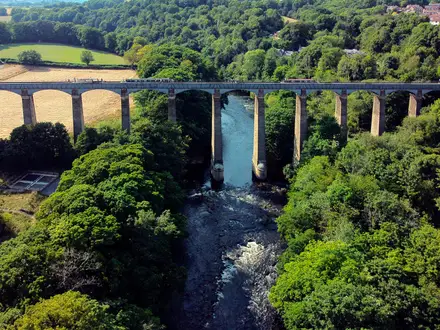
- Brynich Aqueduct: An elegant 18th-century stone aqueduct just south-east of Brecon, carrying the canal over the River Usk. It is one of the first major engineering features on the walk.
- Ashford Tunnel: A 375-yard / 343 m tunnel near Talybont-on-Usk. There is no towpath through it, so walkers detour over the hill above the tunnel.
- Llangynidr flight of locks: The canal’s main lock flight, with five locks stepping the water down through a wooded stretch. It is the clearest change of level on an otherwise flat route.
- Goytre Wharf: A restored historic wharf with lime kilns, a cafe, visitor facilities and information on the canal’s industrial past. It makes a natural rest or overnight stop.
- Talybont-on-Usk: A canal-side village with a wharf, pubs and accommodation, set below the wooded hillside of the central Beacons.
- National park scenery and wildlife: Much of the route threads Bannau Brycheiniog National Park, with Usk valley views, farmland, woodland, herons, kingfishers and waterside flora.
Challenges to expect
The walking is easy, but do not expect a fully polished urban path throughout. The compacted soil and gravel towpath can become muddy or waterlogged after rain, especially in winter. Some bridges have restricted width and headroom, and access points can involve short steep inclines. Navigation is straightforward beside the canal, but the Ashford Tunnel requires a detour over the top.
HikeList Score
Monmouthshire and Brecon Canal Walk scored 75/100 on HikeList's trail-quality metrics.
See score breakdownHide breakdown
- Ideal length 70
- Balanced challenge 50
- Scenery & wildness 78
- Varied terrain 87
- Accommodation 74
- Food & support 81
- Path quality 98
- Season flexibility 89
Computed from length, challenge, scenery & wildness, terrain variety, accommodation, food & support, path quality and season flexibility.
 United Kingdom
 Wales
WalesShow more data Show less
- Canal
- Riverside
- Farmland
- Woodland
- Dirt
- Gravel
- B&Bs
- Inns
- Family Friendly
- Dog Friendly On Leash
- Restrooms
- Picnic Areas
- Public Transport Access Points
In these collections
Photos from hikers
Taken on the trail by people who've reviewed Monmouthshire and Brecon Canal Walk.
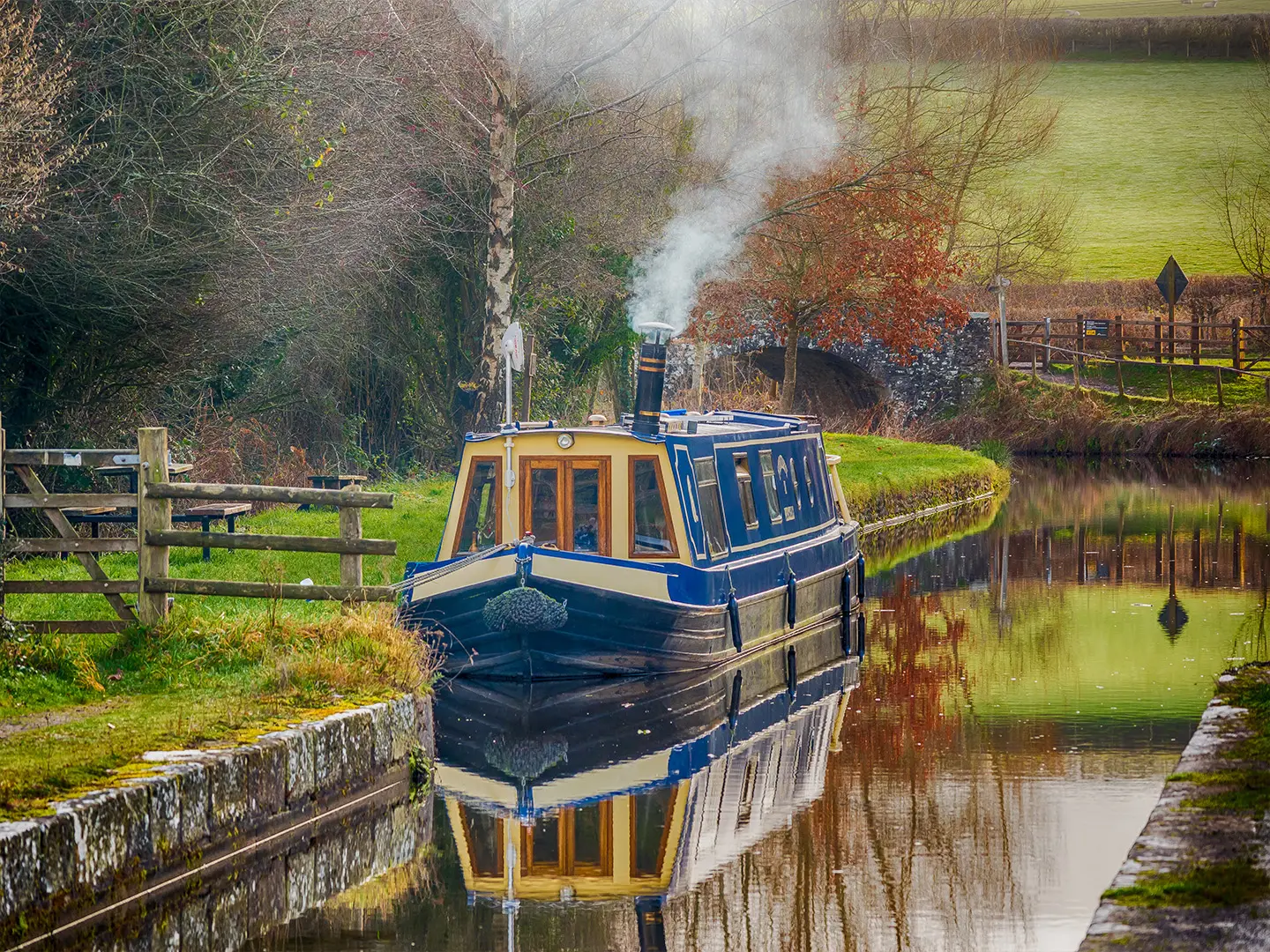
Starting from the historic Brecon Basin, the route follows the well-maintained canal towpath in a southeasterly direction as it leaves Brecon’s vibrant center. Skirting the boundary of the Brecon Beacons National Park, you’ll encounter tranquil stretches of water with views of wooded valleys and hills. The path passes under iconic stone bridges and through open farmland, with the opportunity to observe local wildlife along the canal banks. Reaching the aqueduct at Brynich provides a scenic midpoint for this stage. The day’s walk concludes at the canal wharf in Talybont-on-Usk, a popular spot known for its friendly pubs and accommodation.
Leaving Talybont-on-Usk, the path rises gently onto the wooded hillside, offering distant views of the Brecon Beacons. You’ll pass through a dramatic tunnel before continuing along tranquil tree-shaded banks toward Llangynidr. This section features lush countryside, multiple stone bridges, and a series of historic locks, making it one of the most scenic portions of the canal. The walk finishes in Llangynidr, a charming village with amenities for an overnight stay.
From Llangynidr, the path follows the meandering canal through gently rolling countryside, with mountain views as a backdrop. This relatively remote segment passes through open fields and wooded stretches, offering a peaceful, rural atmosphere. Historic features, including lift bridges and old wharves, punctuate the route. Approaching the bustling site of Goytre Wharf, you’ll find visitor facilities, a café, and information displays about the canal’s history, making it an ideal stop for a rest and overnight stay.
The final stage heads south from Goytre Wharf toward Cwmbran, entering a more urban landscape while retaining sections of quiet green corridor. The route passes the outskirts of Pontypool, crosses under a number of old railway bridges, and winds through parkland and residential areas as the canal approaches its end-point. This stage features a mix of restored and less-developed canal sections. The path ends in Cwmbran, marking the completion of the Monmouthshire and Brecon Canal Walk.
Reviews
How would you rate Monmouthshire and Brecon Canal Walk?
Tap a star to start your review — you could be the first.