Harzer Hexenstieg (Witches' Trail)
How would you rate Harzer Hexenstieg (Witches' Trail)?
Tap a star to share your experience and help other hikers.
Harzer Hexenstieg (Witches' Trail): Harz Crossing Guide
HikeList Score
Harzer Hexenstieg (Witches' Trail) scored 88/100 on HikeList's trail-quality metrics.
See score breakdownHide breakdown
- Ideal length 85
- Balanced challenge 100
- Scenery & wildness 85
- Varied terrain 83
- Accommodation 83
- Food & support 88
- Path quality 98
- Season flexibility 89
Computed from length, challenge, scenery & wildness, terrain variety, accommodation, food & support, path quality and season flexibility.
The Harzer Hexenstieg is a 97 km point-to-point hike across the Harz in Germany, from Osterode am Harz in Lower Saxony to Thale in Saxony-Anhalt. Usually walked in 5 days, it is a moderate route suited to reasonably fit hikers who want forest tracks, moorland, mining history and a Brocken summit crossing without technical mountain terrain. The main challenge is cumulative distance, with some long stages and exposed weather on the 1,141 m Brocken.
Route Overview
The standard route runs west to east from Osterode am Harz to Thale, passing Lerbach, Buntenbock, Altenau, Torfhaus, the Brocken, Drei-Annen-Hohne, Konigshutte and Altenbrak. It is a linear trail, not a loop, but buses and the Harz narrow-gauge railway make access, staged walking and luggage transfer practical. The main route crosses the Brocken via the historic Goetheweg; an alternative variant bypasses the summit via Sankt Andreasberg and Braunlage. If the Brocken is your main focus, compare this thru-hike with the shorter Brocken Circuit or the nearby Harzer Grenzweg (Border Trail).
Witches, mining water and the Brocken
The Harzer Hexenstieg was created by the Harzklub, the Harz Tourism Association and the Harz National Park, officially opening on 3 October 2003. It was first certified as a German Quality Trail by the German Hiking Association in December 2007. Its name comes from Harz witch folklore: the Brocken, popularly the Blocksberg, and the Hexentanzplatz above Thale are legendary witches' gathering places, a reputation popularised by Goethe's Faust. Walpurgis Night is still celebrated in the region every 30 April.
Notable highlights
- Brocken (1,141 m): The highest peak in northern Germany and the centrepiece of the main route. The Goetheweg approach crosses protected moorland, while the bare summit is exposed and often foggy.
- Oberharzer Wasserwirtschaft: A UNESCO World Heritage system of historic mining ponds and water ditches, including features such as the Oderteich reservoir and Dammgraben. It shows how water powered Harz silver mining.
- Bode Gorge (Bodetal): The trail follows this deep rock gorge on the final descent towards Thale. Its steep valley scenery gives the last section a very different feel from the Harz forests and moors.
- Hexentanzplatz and Rosstrappe: Granite clifftop viewpoints above the Bode Gorge near Thale. Both are tied to the witch and Walpurgis legends behind the trail’s name.
- Torfhaus and the moors: At about 800 m, Torfhaus is the highest settlement in Lower Saxony and gives classic views towards the Brocken. The surrounding high bog is crossed on boardwalk sections of the Goetheweg.
- Ruebeland dripstone caves: Near the route at Ruebeland, the Baumannshohle is one of Germany’s oldest show caves and includes an underground concert hall.
Challenges to expect
Expect moderate walking rather than technical hiking: forest tracks, footpaths, boardwalks over protected moor and granite uplands. The Brocken ascent is the main effort, and some stages are long, up to about 28 km. The summit is treeless, exposed and notoriously foggy, so carry layers even in the main May–October season. Waymarking is strong, with a white witch symbol on green, but stay on marked paths in Harz National Park zones.
HikeList Score
Harzer Hexenstieg (Witches' Trail) scored 88/100 on HikeList's trail-quality metrics.
See score breakdownHide breakdown
- Ideal length 85
- Balanced challenge 100
- Scenery & wildness 85
- Varied terrain 83
- Accommodation 83
- Food & support 88
- Path quality 98
- Season flexibility 89
Computed from length, challenge, scenery & wildness, terrain variety, accommodation, food & support, path quality and season flexibility.
 Germany
Show more data Show less
- Forest
- Moorland
- Upland
- Forest Tracks
- Footpaths
- Boardwalk
- Hotels
- Guesthouses
- Pensions
- Family Friendly
- Pet Friendly
- Restrooms
- Water Sources
- Campsites
- Shelters
- Picnic Areas
Download Our Full Guide to Harzer Hexenstieg (Witches' Trail) FREE!
Get our comprehensive guide to this hike for free. Save it for later reading or print out at home.
Photos from hikers
Taken on the trail by people who've reviewed Harzer Hexenstieg (Witches' Trail).
Harzer Hexenstieg (Witches' Trail): The Complete Guide
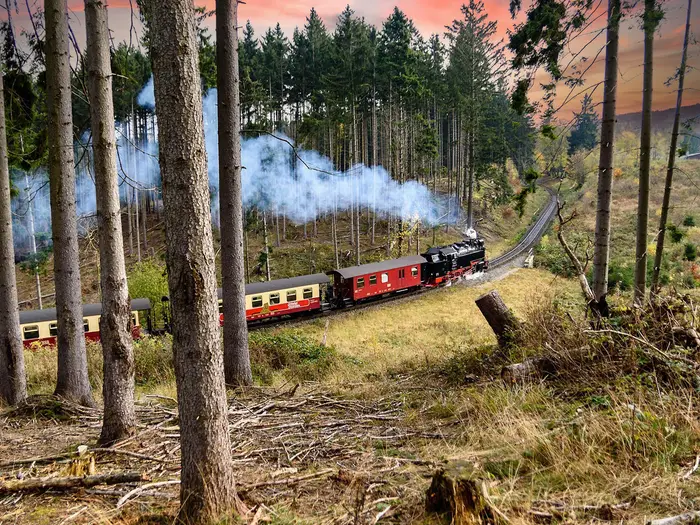 i
Image by geraldfriedrich2
i
Image by geraldfriedrich2 The Harzer Hexenstieg is a compact but varied west-to-east crossing of the Harz mountains, running from the half-timbered town centre of Osterode am Harz to Thale at the mouth of the Bodetal. It suits reasonably fit walkers who want a well-waymarked German long-distance trail with forest, moor, mining heritage and one famous summit, without technical or alpine ground.
The route builds steadily from the Oberharz mining landscape, threading past the historic ponds, dams and ditches of the UNESCO-listed Oberharzer Wasserwirtschaft. Around Torfhaus it reaches open high bog on the Goetheweg, where boardwalks lead towards the Brocken, the 1,141 m high point of the Harz and northern Germany.
The Brocken gives the trail its weather and much of its mythology: an exposed, often fog-bound granite dome associated with witches, Walpurgisnacht and Goethe’s Faust. The finish is very different, dropping through the rocky Bodetal (Bode Gorge) towards Thale beneath the Hexentanzplatz and Rosstrappe cliffs.
This is a moderate hike, but not a soft one. The main demands are five consecutive days on foot, one long stage of around 29 km, the climb and exposure of the Brocken, muddy forest sections after rain, and the seasonal winter closure of the Bodetal gorge path between Treseburg and Thale.
This guide covers the stages, best direction and timing, accommodation, food, transport, terrain, variants and common planning mistakes.
Stage-by-Stage Guide
Stage 1: Osterode am Harz to Buntenbock — approx. 11 km
The opening stage is deliberately short and gives a manageable start to the Harzer Hexenstieg before the longer Oberharz and Brocken days. The trail begins at the Bleichestelle in Osterode am Harz, where the Hexenstieg start portal stands beside the river Söse in the historic Fachwerk town centre.
The white-witch waymarks lead east out of Osterode towards Lerbach, leaving the town for forest tracks and paths typical of the western Harz. Expect a steady transition from urban edge to wooded Mittelgebirge terrain rather than any technical walking.
Lerbach is the main place passed before the route continues to Buntenbock, a small Oberharz settlement with mining-country character. The stage is more about settling into the waymarking and gaining height into the Harz than about major viewpoints.
Food and water are easiest to organise before leaving Osterode am Harz. Buntenbock has accommodation in the general mix of guesthouses, inns and holiday flats used along the route, but opening patterns and evening food should be checked before travelling, especially outside peak season.
Osterode am Harz has rail access via Osterode am Harz Mitte / Leege, making this a straightforward starting point. Buntenbock is a practical overnight stop in the standard five-day schedule, but onward public transport options and any bus connections should be checked before travelling.
Navigation is straightforward if the white-witch waymarks are followed carefully out of Osterode, where urban streets and exits from town are the easiest places to miss a turn. After rain, expect muddy forest sections; waterproof footwear is more useful here than heavy mountain kit.
Stage 2: Buntenbock to Torfhaus — approx. 22 km
This is the stage where the route properly enters the historic Oberharz mining-water landscape. It crosses the Clausthal plateau area, with Clausthal-Zellerfeld near the route, then continues through the UNESCO-listed Oberharzer Wasserwirtschaft of ponds, dams and water ditches that once powered Harz silver mining.
The walking is mainly on forest tracks, gravel paths and natural footpaths, with the route passing through or near Altenau before continuing towards Torfhaus. Historic water features such as the Dammgraben and the Oderteich reservoir are key parts of this section’s character, so progress can feel more cultural-landscape than wilderness.
Terrain is not technical, but the stage is twice the length of the first day and should not be underestimated. Paths can be wet or muddy after rain, and the higher Oberharz climate can feel noticeably cooler and more exposed as Torfhaus is approached.
Food and water planning matters more than on Stage 1. Buntenbock and Altenau are the sensible places to think about supplies, but walkers should not rely on finding frequent cafés or shops exactly when needed; carry enough water and lunch for the day, and check current opening times before setting out.
Torfhaus is a key overnight point because it positions you directly for the Goetheweg and Brocken crossing the next morning. Accommodation should be booked ahead in the main walking season, and evening meal arrangements should be confirmed when booking.
Road access is possible at the settlements on or near the stage, and regional buses may be useful for staged walking or shortening a day. HATIX can be useful for overnight guests on regional buses, but it is not valid on Deutsche Bahn or the Harzer Schmalspurbahnen narrow-gauge trains.
The main navigation task is staying with the Hexenstieg through the network of forestry and mining-water paths around the Oberharzer Wasserwirtschaft. Waymarking is a strength of the route, but a map or GPX is still useful where multiple tracks meet around reservoirs, ditches and woodland junctions.
Stage 3: Torfhaus to Drei-Annen-Hohne — approx. 20 km
This is the signature stage of the Harzer Hexenstieg, crossing the Brocken, the highest summit of the Harz and of northern Germany. From Torfhaus, the route takes the Goetheweg (Goethe’s path) across the Torfhausmoor, using boardwalks over protected high bog before the final climb to the 1,141 m summit.
The approach gives the classic open views towards the Brocken when the weather allows. The summit itself is a bald, weather-beaten granite dome with former Cold War infrastructure and the Brockenbahn steam railway, but it is very often in cloud, fog and wind.
Terrain is still non-technical, but this is the most exposed part of the route. Boardwalks can be slippery when wet or icy, and the summit area can feel severe even when lower stages are mild, so waterproofs, warm layers, hat and gloves are sensible outside high summer and still useful on cool summer days.
After the Brocken, the route descends through the central Harz towards Drei-Annen-Hohne, with Schierke near the route. The change from open summit to forested descent is marked, and the day can feel long if visibility or weather on the Brocken slows progress.
Food and drink may be available at Torfhaus and on or near the Brocken, but opening times should be checked before relying on them. Carry enough water and food to complete the stage independently, as bad weather, closures or timetable choices can affect plans on the summit.
Drei-Annen-Hohne and nearby Schierke are important logistics points because the Harzer Schmalspurbahnen serves the area, and the Brockenbahn also reaches the summit. These trains are useful for escape routes, section hiking and bad-weather adjustments, but HATIX is not valid on the HSB narrow-gauge railway.
Accommodation around Drei-Annen-Hohne and Schierke should be booked early, particularly on weekends and in the main walking season. Beds can thin out in this central part of the route compared with the larger towns.
Navigation on the Goetheweg is generally clear, but in fog the Brocken should be treated with respect. Stay on marked paths, especially through the Nationalpark Harz and protected bog areas, and check Brocken weather before committing to the crossing.
Stage 4: Drei-Annen-Hohne to Altenbrak — approx. 29 km
This is the longest and most demanding day in the standard five-stage itinerary. It is not difficult in a technical sense, but the distance makes an early start advisable, especially if carrying full luggage or walking in wet conditions.
The stage leaves the Brocken area behind and continues east through forested Harz terrain towards Königshütte. From there, walkers need to be aware that route choices exist between Königshütte and Altenbrak: a northern variant via Rübeland, and a southern Köhlerpfad variant via Hasselfelde and the Rappbodetalsperre area.
Both options keep the day in the roughly 28–30 km range, so the choice should be made for interest and logistics rather than in the hope of a short day. Rübeland is associated with the Baumannshöhle show cave, but this is a near-route side trip rather than a feature on the main waymarked line.
The terrain is mainly forest tracks, gravel paths and natural woodland paths. After rain, mud and slow going are realistic, and the length of the stage gives small delays more consequence than on earlier days.
Food and water planning is critical on this stage. Do not assume frequent resupply between Drei-Annen-Hohne, Königshütte and Altenbrak; start with enough food and water for a long day, and check any planned stops before travelling.
Altenbrak is the standard overnight stop before the Bodetal finale. Accommodation here should be booked well ahead, as beds are limited compared with larger resort towns and the long approach leaves little flexibility at the end of the day.
Public transport and road access are more useful for contingency planning than for casual mid-stage changes. Regional buses may help in the wider area, and HATIX can be useful for overnight guests on eligible buses, but current timetables should be checked before relying on them.
Navigation is most important around the Königshütte-to-Altenbrak route choice. Carry a map or GPX that matches the intended variant, follow the white-witch signs carefully, and avoid drifting onto the other line unless that is the deliberate plan.
Stage 5: Altenbrak to Thale — approx. 14 km
The final stage is shorter but scenically one of the strongest parts of the walk. From Altenbrak the route continues through the Bode valley towards Treseburg, then enters the Bodetal (Bode Gorge) for the dramatic approach to Thale.
The Bodetal is a deep, rocky gorge with granite cliffs rising above the river, and it gives a very different finish from the forests, moors and mining-water landscapes earlier on the trail. Hexentanzplatz and Rosstrappe stand above Thale and tie the end of the route back to the witch and Walpurgis legends associated with the Brocken.
The path through the gorge is a walking path rather than a technical mountain route, but it can be rougher, narrower and more enclosed than the broad forest tracks used elsewhere. Take care on wet or icy surfaces and allow time for slower progress through the gorge.
The major seasonal warning is the winter closure of the Bodetal gorge path between Treseburg and Thale because of ice and snow, roughly from November to March. A marked alternative via the Hexentanzplatz is used when the gorge path is closed, but exact closure dates and the current diversion should be checked before travelling.
Food and water are easier to manage than on the previous stage because Altenbrak, Treseburg and Thale are all relevant settlements on the final day. Even so, carry water and snacks into the gorge rather than depending on finding services at the exact moment needed.
Thale is the best-served endpoint on the eastern side of the trail, with the finish at Thale Bahnhof beneath the Hexentanzplatz and Rosstrappe cliffs. The railway station is directly useful for onward travel, and the train journey between Thale and Osterode am Harz takes about four hours.
Navigation is usually simple if the waymarks are followed from Altenbrak through Treseburg and into the Bodetal. The key planning point is seasonal: if walking in late autumn, winter or early spring, confirm whether the gorge path is open before committing accommodation and transport around a standard five-day itinerary.
Recommended Itinerary
Standard 5-day itinerary
The usual Harzer Hexenstieg schedule is five walking days from Osterode am Harz to Thale. It keeps the route manageable for a reasonably fit hiker, but Day 4 is still a long stage and should be treated as the main distance test of the walk.
| Day | From | To | Approx. distance | Why this stage makes sense | Services/accommodation notes |
|---|---|---|---|---|---|
| 1 | Osterode am Harz | Buntenbock | 11 km | A short first day lets you start from the Bleichestelle in Osterode am Harz without needing a very early departure. It gives time to settle into the waymarking and climb eastwards through the first Harz forest section towards the Oberharz. | Osterode am Harz is the best place to arrive by rail before starting. Buntenbock has accommodation, but availability should be checked before booking the rest of the route. |
| 2 | Buntenbock | Torfhaus | 22 km | This is the main Oberharz mining-water landscape stage, crossing the area of the Oberharzer Wasserwirtschaft towards the higher ground around Torfhaus. It is a more substantial day than Day 1 but still leaves the Brocken crossing for fresh legs the following morning. | Torfhaus is a key overnight before the Brocken stage. Book ahead in busy periods, especially if walking in spring, summer or autumn holiday periods. |
| 3 | Torfhaus | Drei-Annen-Hohne | 20 km | This is the centrepiece stage over the Brocken via the Goetheweg (Goethe's path), with boardwalk over high bog before the exposed climb to the 1,141 m summit. Finishing at Drei-Annen-Hohne keeps the Brocken day contained and places you on the Harzer Schmalspurbahnen / Brockenbahn network for transport flexibility. | Accommodation can also be sought around Schierke or Drei-Annen-Hohne, depending on availability and how strictly you want to follow the stage end. The Brockenhotel on the summit is an option for those wanting to split or slow the high-level section, but it should be booked well ahead. |
| 4 | Drei-Annen-Hohne | Altenbrak | 29 km | This is the longest standard day and the one most walkers should plan around. It descends through the eastern Harz via Königshütte before continuing towards Altenbrak, with two recognised route choices between Königshütte and Altenbrak: the northern variant via Rübeland or the southern Köhlerpfad variant via Hasselfelde and the Rappbodetalsperre area. | Start early and avoid treating this as an easy recovery day after the Brocken. Beds thin out in the middle of the route, and Altenbrak accommodation should be booked well in advance. If planning the Rübeland side trip for the Baumannshöhle, check opening times and allow extra time. |
| 5 | Altenbrak | Thale | 14 km | A shorter final stage gives time for the Bodetal (Bode Gorge) descent between Treseburg and Thale, which is one of the most dramatic sections of the route. The trail finishes at Thale Bahnhof, making onward rail travel straightforward. | The Bodetal gorge path between Treseburg and Thale is closed in winter because of ice and snow, with an alternative via the Hexentanzplatz. Exact closure dates and diversion status should be checked before travelling, especially from late autumn to early spring. |
Slower variant: 6 days or more
A slower itinerary suits walkers who prefer shorter days, want more time for the Oberharzer Wasserwirtschaft, or do not want Day 4 to dominate the trip. The most useful adjustment is to break the long Drei-Annen-Hohne to Altenbrak section by using an intermediate overnight around Königshütte, or to reshape the Brocken stage with an overnight at the Brockenhotel, Schierke or Drei-Annen-Hohne depending on availability.
Exact split distances depend on the chosen overnight and route variant, so check official mapping before booking. This is also the more sensible approach in winter or marginal conditions, when daylight is shorter and the Bodetal closure can force a longer or slower final approach to Thale.
| Variant | Best for | How to plan it |
|---|---|---|
| 6 days with a split long eastern stage | Walkers who are comfortable with the Brocken but not with a 29 km fourth day | Keep the first three days broadly as above, then split the Drei-Annen-Hohne to Altenbrak leg with an overnight around Königshütte or another suitable serviced stop. Check official mapping before booking. |
| 6 days with more time around the Brocken | Walkers who want a less pressured high-point stage or want to use the Brockenhotel | Shorten the Torfhaus to Drei-Annen-Hohne day by overnighting on or near the Brocken, then continue to Drei-Annen-Hohne or Schierke the next day. Book the Brocken/Schierke area well ahead. |
| Winter or late-season schedule | Walkers dealing with short daylight, snow, ice or the Bodetal diversion | Allow an extra day and check the Treseburg–Thale gorge closure before travelling. The marked alternative via the Hexentanzplatz may change the feel and timing of the final day. |
Faster variant: 4 days
A 4-day Harzer Hexenstieg is realistic only for strong walkers who are comfortable with repeated long days of around 25 km, carrying suitable kit and starting early. It compresses the standard stages and leaves less margin for bad weather on the Brocken, transport delays, or accommodation gaps.
Do not assume the standard overnight towns will create even 4-day distances. A faster schedule should be built around available beds in Osterode am Harz, Buntenbock, Altenau, Torfhaus, Schierke, Drei-Annen-Hohne, Königshütte, Altenbrak and Thale, then checked against official mapping before booking.
| Variant | Best for | Main caution |
|---|---|---|
| 4 days | Fit, efficient walkers used to consecutive long-distance days | The Brocken remains exposed and often fog-bound, and the Drei-Annen-Hohne to Altenbrak section is already long in the standard itinerary. Build in realistic timings rather than simply dividing 97 km by four. |
| 5 days | Most independent hikers | This is the best balance of distance, accommodation logistics and time for the Brocken and Bodetal. |
| 6+ days | Slower walkers, winter walkers, or anyone wanting side trips | More forgiving, but accommodation and transport still need advance planning in the remoter middle sections. |
Planning the Route
How many days to allow
Most walkers should plan the Harzer Hexenstieg as a five-day walk. That schedule fits the natural overnight stops and avoids turning the Brocken crossing into an unnecessarily rushed day.
Strong walkers sometimes compress the route into four long days, but that leaves little margin for poor weather on the Brocken, slower going on muddy forest paths, or the long stage from Drei-Annen-Hohne to Altenbrak. A slower itinerary is often more practical if you want time for the Oberharzer Wasserwirtschaft, the Brocken summit, or short detours near the route.
In winter or late autumn, the route needs extra care because the Bodetal (Bode Gorge) path between Treseburg and Thale is closed in the winter months, roughly November to March, due to ice and snow. A marked alternative runs via the Hexentanzplatz, but closure dates and diversion details should be checked before travelling.
The standard five-day structure
The usual stage plan is shaped by where accommodation is available. The middle of the route is less flexible than the start and finish, so overnight bookings matter more than the headline distance suggests.
| Day | Stage | Approx. distance | Planning notes |
|---|---|---|---|
| 1 | Osterode am Harz to Buntenbock | 11 km | A short opening stage, useful if arriving by train the same day. The route leaves the Bleichestelle in Osterode am Harz and heads towards Lerbach and the Oberharz plateau. |
| 2 | Buntenbock to Torfhaus | 22 km | A fuller day through the mining-water landscape of the Oberharzer Wasserwirtschaft, including the historic ponds and ditches around the Clausthal plateau. |
| 3 | Torfhaus to Drei-Annen-Hohne | 20 km | The key Brocken day, using the Goetheweg over moorland and boardwalk before the exposed summit. Allow time for cloud, wind and slower going near the high point. |
| 4 | Drei-Annen-Hohne to Altenbrak | 29 km | The longest standard day and the one that needs the earliest start. Accommodation at Altenbrak should be booked well ahead. |
| 5 | Altenbrak to Thale | 14 km | A shorter but important final day through Treseburg and the Bodetal to Thale. In winter, the gorge closure changes the logistics. |
The five-day plan is balanced, but not evenly paced. Day 4 is the main distance challenge, while Day 3 is the main weather-exposure day because of the Brocken.
Fast, slow or split itineraries
A four-day itinerary is realistic only for fit walkers who are comfortable with repeated long days and who can still keep a safety margin for Brocken weather. It is not the best choice for a first multi-day hike in the Harz, or for anyone relying on short winter daylight.
A six-day itinerary can make the route more comfortable, especially if using the Brockenhotel, staying near Schierke, or building in time for side trips such as Rübeland and the Baumannshöhle. It is also sensible when the Bodetal diversion is in force or when transport connections dictate a shorter first or final day.
The route is not a wilderness trek, but it is not equally easy to stop anywhere. The best plan is to book nights around the recognised stage towns and then adjust walking days around those reservations.
Route choices and variants
The standard main route crosses the Brocken and is the classic Harzer Hexenstieg line. This is the route most walkers should plan unless weather, season or personal preference makes the high summit crossing unsuitable.
There is also a Brocken-bypass variant via Sankt Andreasberg and Braunlage, which is longer at about 107 km. This can be useful if avoiding the Brocken in poor conditions, but it changes the character of the route and should be planned as a different itinerary rather than a simple minor detour.
Between Königshütte and Altenbrak, walkers can choose between two route options: a northern variant via Rübeland and a southern Köhlerpfad variant via Hasselfelde/Rappbodetalsperre. Both are long, roughly 28–30 km, so the decision should be made before accommodation is booked.
Rübeland and the Baumannshöhle are near the route rather than on the main waymarked line. Treat them as a side trip or variant choice, not as an automatic part of the standard crossing.
Accommodation planning
Accommodation is the main constraint on this hike. The common overnight places include Osterode am Harz, Buntenbock, Altenau, Torfhaus, Schierke/Drei-Annen-Hohne, Königshütte, Altenbrak and Thale, with a mix of hotels, Pensionen, Gasthöfe/Gasthäuser and holiday flats.
The most important bookings are around the remote middle and eastern stages. Brocken/Schierke and Altenbrak should be booked well ahead, especially in busy walking periods or around popular Harz events such as Walpurgisnacht on 30 April.
An overnight at the Brockenhotel can turn the summit crossing into a special shorter-stage plan, but availability and current conditions should be checked before booking. Many local hosts and walking operators also offer self-guided packages with Gepäcktransport (luggage transfer).
Wild camping is not permitted, and much of the route lies in or near the Nationalpark Harz. Plan each night around booked accommodation rather than hoping to improvise outdoors.
Food and water
Food planning should follow the stage towns rather than the map alone. Some days pass through or near settlements, while the Brocken and forest sections can still feel remote for several hours.
Carry enough water and lunch for each full day, particularly on the Torfhaus–Brocken–Drei-Annen-Hohne stage and the long Drei-Annen-Hohne–Altenbrak stage. Do not rely on finding frequent shops or cafés between overnight stops; opening times should be checked locally.
Breakfast and evening meals are usually easiest to arrange through accommodation in the stage towns. If staying in smaller villages, confirm food availability when booking the bed.
Navigation and waymarking
The route is well waymarked with the white witch on a broomstick on a green ground; in the Nationalpark Harz the marking is a white witch in a green circle. Navigation is generally straightforward, but a map or GPX track is still worth carrying.
This is especially important where variants split, where forestry work may affect tracks, and in poor visibility near the Brocken. Fog is common on the summit, and the open granite dome can feel very different from the sheltered forest tracks below.
In the Nationalpark Harz, stay on marked paths and respect any temporary path instructions. This should be checked before travelling if conditions are wintry or if recent storms have affected the forest.
Transport and section hiking
Both ends work well by rail: Osterode am Harz is on the regional network via Herzberg/Northeim, and Thale Hauptbahnhof sits at the finish. The transfer between Osterode am Harz and Thale takes about four hours by train, so it is usually worth deciding in advance whether to travel home from Thale or return to the start.
Section hiking is practical because the Harz has useful public transport links. The Harzer Schmalspurbahnen (HSB) narrow-gauge railway, including the Brockenbahn, serves the Brocken area and has stations at Drei-Annen-Hohne and Schierke. Regional buses also help with staged walking and escape options.
Overnight guests receive the HATIX guest card for free regional buses, but it is not valid on the HSB narrow-gauge trains or Deutsche Bahn. Train, bus and Brockenbahn timetables should be checked before travelling, especially outside the main walking season.
Weather and seasonal decisions
The main walking seasons are spring, summer and autumn. The route is moderate in technical terms, but the Brocken is exposed, often fog-bound and can be much harsher than the lower forest stages.
Carry waterproofs, warm layers and a navigation backup even if the forecast looks settled. The high point is only 1,141 m, but it is the highest summit in northern Germany and can catch walkers out when wind, cloud and rain arrive together.
Winter planning is a separate exercise rather than a simple colder version of the summer route. The Bodetal closure, shorter daylight and the exposed Brocken all make a longer itinerary and current local checks essential.
Towns, Villages and Overnight Stops
Accommodation on the Harzer Hexenstieg is based around small Harz towns, resort villages and guesthouses rather than campsites or huts. Wild camping is not permitted, and much of the route lies in or close to the Nationalpark Harz, so overnight stops should be booked in advance.
The standard five-day schedule uses Buntenbock, Torfhaus, Drei-Annen-Hohne and Altenbrak as the main overnight points between Osterode am Harz and Thale. Beds can be limited in the more remote middle of the route, especially around the Brocken, Schierke/Drei-Annen-Hohne and Altenbrak, so these nights are the ones to secure first.
Osterode am Harz
Osterode am Harz is the western trailhead in Niedersachsen. The official start is at the Bleichestelle in the historic half-timbered town centre, where the Hexenstieg start portal and white-witch waymarks lead east towards Lerbach.
It is the best place to arrive the night before starting if travelling by public transport or if an early first stage is preferred. As a proper town, it is also the most practical place at the western end to sort last-minute food, cash, maps or forgotten kit before entering the smaller Harz settlements.
Accommodation is available in town, with the usual mix of hotels, guesthouses and holiday accommodation. Book ahead during busy walking periods, but Osterode generally gives more flexibility than the small villages later on the route.
Osterode am Harz is reachable by rail via the regional network, with stations including Osterode am Harz Mitte / Leege. Train times and the best station for a particular accommodation should be checked before travelling.
Lerbach
Lerbach is the first village east of Osterode on the way towards the Oberharz. It is useful mainly as an early-route waypoint rather than a standard overnight stop on the five-day itinerary.
Most walkers continue beyond Lerbach to Buntenbock on day one. It can still be useful if starting late from Osterode, shortening the first day, or planning a slower crossing, but accommodation and food options should be checked before committing to it as a night stop.
Public transport options may exist through regional buses in the Harz area, but this should be checked before travelling. Overnight guests in participating Harz towns receive the HATIX guest card for free regional buses, but it is not valid on Deutsche Bahn or the Harzer Schmalspurbahnen.
Buntenbock
Buntenbock is the usual first overnight stop on the standard west-to-east itinerary, around 11 km from Osterode am Harz. It sits in the Oberharz mining landscape, with the early stages of the Hexenstieg moving through the historic ponds and water-management features of the Oberharzer Wasserwirtschaft.
It is a practical stop because it keeps the first day short and leaves the longer crossing to Torfhaus for day two. Accommodation is available, but this is a small settlement rather than a large service town, so beds and evening meals should be arranged before arrival.
Do not rely on turning up late and finding a full range of food options. If accommodation does not provide dinner or breakfast, this should be checked before travelling.
Clausthal-Zellerfeld
Clausthal-Zellerfeld lies near the route rather than being a standard line-of-walk overnight on the main five-day schedule. It is one of the key Oberharz mining towns and a useful practical alternative if Buntenbock or Altenau accommodation is full, or if a walker wants to adjust stage lengths.
Because it is larger than the nearby villages, it can be a sensible place for resupply, rest or a more comfortable overnight. Exact access from the waymarked Hexenstieg, local buses and accommodation locations should be checked against the planned stage before booking.
For hikers interested in the route’s mining-water heritage, this is one of the better bases near the Oberharzer Wasserwirtschaft area. It is not, however, an automatic stop on the direct five-day itinerary.
Altenau
Altenau is on the second stage between Buntenbock and Torfhaus. It is a useful intermediate service point on what is otherwise a longer day across the Oberharz towards the high ground below the Brocken.
It can work as an overnight stop for hikers splitting the Buntenbock–Torfhaus stage into shorter days. Accommodation is available in and around Altenau, with hotels, guesthouses and holiday flats typical of the Harz resort towns.
Food and local services are more plausible here than on the more remote upland sections, but opening hours should still be checked, especially outside peak season. Regional buses may help with section hiking or shortening a day; this should be checked before travelling.
Torfhaus
Torfhaus is the standard second overnight stop and a key logistical point before the Brocken stage. It is the highest settlement in Lower Saxony, at around 800 m, and sits by the Torfhausmoor and the start of the classic Goetheweg approach towards the Brocken.
This is a good place to stop because the following day includes exposed high ground, boardwalk over protected bog and the climb to the Brocken summit. Starting from Torfhaus also gives the best chance of crossing the summit in a controlled day rather than arriving late in poor weather.
Accommodation is available, but Torfhaus is a small upland settlement and should not be treated like a large town. Book ahead, check whether evening food and breakfast are included or nearby, and carry enough snacks and water for the Brocken day.
The Brocken is often in cloud and fog, and weather can be much harsher than in the valleys. Check the Brocken forecast before leaving Torfhaus and be prepared to continue in low visibility on waymarked paths.
Brocken
The Brocken is the high point of the Harzer Hexenstieg at 1,141 m and the exposed centrepiece of the route. The main trail crosses the summit between Torfhaus and Drei-Annen-Hohne via the Goetheweg and the open granite uplands.
Most walkers do not need to sleep on the summit, but the Brockenhotel provides the option of an overnight at the high point. This can be a memorable stop and can also split the Torfhaus–Drei-Annen-Hohne stage, but it must be booked well ahead and is exposed to the full force of Brocken weather.
The summit is served by the Brockenbahn steam railway, part of the Harzer Schmalspurbahnen network. This is useful for bail-out planning or for non-walking companions, but HATIX is not valid on the narrow-gauge trains, and timetables and fares should be checked before travelling.
Do not treat the Brocken as a normal village stop. Weather, cloud, fog and wind are central planning factors, and walkers should stay on marked paths within the Nationalpark Harz.
Schierke
Schierke lies near the route on the south-eastern side of the Brocken and is one of the most useful alternatives to Drei-Annen-Hohne for the third night. It is especially relevant if accommodation at Drei-Annen-Hohne is unavailable or if a different connection to the Harzer Schmalspurbahnen is preferred.
The village is served by the narrow-gauge railway network, including the Brockenbahn route. This makes it useful for staged walking, bad-weather escape from the Brocken area or linking with luggage-transfer arrangements.
Accommodation is available, but the Brocken/Schierke area should be booked early. Check the exact distance from the waymarked Hexenstieg to the accommodation before committing, as Schierke is near the route rather than always directly on the standard line.
Drei-Annen-Hohne
Drei-Annen-Hohne is the standard third overnight stop after crossing the Brocken from Torfhaus. It is also a key transport point because it has a station on the Harzer Schmalspurbahnen narrow-gauge railway.
This is one of the most important logistics nodes on the route. It allows walkers to break, join or leave the trail more easily than in many other sections, and it is a natural staging point before the long day towards Altenbrak.
Accommodation is available in the Drei-Annen-Hohne/Schierke area, but demand can be high and options are not unlimited. Book this night early, particularly if relying on luggage transfer or walking during busy holiday periods.
The following stage to Altenbrak is the longest standard day, at about 29 km. Food, breakfast timing and packed-lunch arrangements should be settled before leaving.
Königshütte
Königshütte lies on the fourth stage between Drei-Annen-Hohne and Altenbrak. It is an important mid-route settlement on a long day and can be used to modify the standard itinerary if the full Drei-Annen-Hohne–Altenbrak stage is too demanding.
Accommodation is available in Königshütte, making it a useful alternative overnight for walkers spreading the route over six or more days. This can be a sensible adjustment in poor weather, with a heavier pack, or for anyone wanting to avoid a near-30 km day.
Food and local services should be checked before relying on them, as the main itinerary does not use Königshütte as the overnight stop. From this area, the route choices towards Altenbrak and the wider Rappbodetalsperre/Rübeland area become relevant, so confirm the intended variant before booking.
Rübeland
Rübeland is near the route and lies on the bypass / north variant rather than directly on the main waymarked line used by many walkers. It is most relevant for hikers choosing the variant between Königshütte and Altenbrak, or for those making a side trip.
The village is known for the Baumannshöhle, one of Germany’s oldest show caves, but this is an optional detour rather than part of the standard Hexenstieg walking line. Allow extra time if adding it to the stage, and check opening times before travelling.
Rübeland can be useful as an alternative stop or service point depending on the chosen route variant. Accommodation, food and transport links should be checked directly before planning a night here.
Altenbrak
Altenbrak is the standard fourth overnight stop and one of the most important bookings on the whole trail. It sits in the Bode valley before the final approach through Treseburg and the Bodetal (Bode Gorge) to Thale.
This night should be booked well ahead because the preceding stage from Drei-Annen-Hohne is long and there are fewer practical fallback options late in the day. Arriving without a reservation is a poor plan, especially if walking with luggage transfer.
Accommodation is available in Altenbrak, including the typical Harz mix of guesthouses, inns and holiday accommodation. Check dinner arrangements and breakfast times, as the final stage is shorter but still involves the gorge route to Thale.
In winter and periods of snow or ice, the Bodetal gorge path between Treseburg and Thale is closed, with an alternative via the Hexentanzplatz. Exact closure dates and the current diversion should be checked before travelling.
Treseburg
Treseburg lies between Altenbrak and Thale and acts as the gateway into the lower Bodetal. It is not the standard overnight stop on the five-day itinerary, but it is a useful place to know because the gorge section begins here for many walkers.
It can be used to shorten or reshape the final day, particularly if walking a slower itinerary or avoiding a rushed passage through the gorge. Accommodation and food options should be checked before relying on Treseburg as a stopping point.
The Treseburg–Thale gorge path is a major seasonal planning issue. In winter, it is closed because of ice and snow, and walkers must use the marked alternative via the Hexentanzplatz; current dates should be checked before travelling.
Bodetal (Bode Gorge)
The Bodetal is not an overnight stop, but it is the defining final walking section before Thale. The gorge path between Treseburg and Thale is narrow, rocky in places and enclosed by steep granite walls, so it deserves time rather than being treated as a simple town approach.
There are no accommodation assumptions to make inside the gorge itself. Plan food, water and timing from Altenbrak or Treseburg, and avoid entering the section late in poor conditions.
The winter closure between Treseburg and Thale is essential. The alternative route via the Hexentanzplatz changes the character and timing of the final day, so late-autumn and winter walkers should check the current status before travelling.
Hexentanzplatz / Rosstrappe
The Hexentanzplatz and Rosstrappe are clifftop viewpoints above Thale and the Bodetal. They are closely tied to the witch and Walpurgis legends behind the Harzer Hexenstieg, but for route planning they matter most as high-level landmarks around the final approach.
The marked winter alternative from Treseburg to Thale uses the Hexentanzplatz when the gorge path is closed. This makes it more than a sightseeing detour for off-season walkers.
These are not standard overnight stops for the Hexenstieg itinerary. Treat them as viewpoints or route features above the finish, and check the exact line of the day’s route if diverting from the main gorge path.
Thale
Thale is the eastern finish in Sachsen-Anhalt. The trail ends at Thale Bahnhof, at the mouth of the Bodetal below the Hexentanzplatz and Rosstrappe, where a Hexenstieg gateway marks the end.
It is the most practical place to spend the final night if onward trains do not line up with the end of the walk, or if extra time is wanted for the Bodetal viewpoints. Accommodation is available in town, and services are more convenient here than in the smaller Bode-valley villages.
Thale Hauptbahnhof is the terminus of a branch off the line via Halberstadt/Magdeburg, and it sits directly at the finish. This makes the eastbound finish unusually straightforward for a mountain crossing, but current Deutsche Bahn times should still be checked before travelling.
The train transfer between Osterode am Harz and Thale takes about four hours. HATIX is useful for regional buses during a stay in the Harz, but it is not valid on Deutsche Bahn services or the Harzer Schmalspurbahnen.
Getting to the Start
The Harzer Hexenstieg starts in Osterode am Harz, in Niedersachsen (Lower Saxony). The official start is at the Bleichestelle, an old cloth-bleaching meadow beside the river Söse in the historic town centre, where the Hexenstieg start portal and white-witch waymarks lead east towards Lerbach.
By train
Osterode am Harz is on the regional rail network, with local stations at Osterode am Harz Mitte and Osterode am Harz Leege. Services connect via Herzberg and Northeim, so most longer journeys involve changing from the main Deutsche Bahn network onto a regional train for the final approach.
For most walkers, Osterode am Harz Mitte is the practical station for reaching the town centre and the Bleichestelle, but station choice should be checked against accommodation location and current train times. This should be checked before travelling.
If leaving a car at one end or returning after the walk, note that the transfer between Osterode am Harz and Thale takes about four hours by train. Thale Hauptbahnhof is directly at the finish, which makes the east-to-west return straightforward, but it still needs planning around regional connections.
By bus
Regional buses operate in the Harz and can help with local access, but the start is normally approached by train rather than by a long-distance bus. Bus timetables in the Harz vary by route, season and day of week, so they should not be treated as a fallback without checking times in advance.
Overnight guests in participating Harz accommodation receive the HATIX guest card, which gives free use of regional buses in the area. HATIX is not valid on Deutsche Bahn trains or on the Harzer Schmalspurbahnen (HSB) narrow-gauge railway, including the Brockenbahn.
If arriving late, or if accommodation is away from the station or Bleichestelle, a local taxi may be the simplest final transfer. Availability should be checked before travelling, especially outside normal daytime hours.
By car
Driving to Osterode am Harz is possible, but the route is point-to-point and finishes far away in Thale. Unless using a luggage-transfer or accommodation package that includes vehicle logistics, plan carefully how the car will be recovered at the end.
The simplest car-based strategy is often to park where overnight accommodation allows it, then return by train from Thale after the walk. Do not assume that long-stay parking is available at the Bleichestelle itself; ask accommodation providers or local tourist information about current parking options before booking.
Some walkers prefer to leave the car at the finish in Thale and travel by train to Osterode am Harz before starting. This avoids a long transfer after the final stage, but the same roughly four-hour rail transfer still applies and should be built into the first day’s plan.
From the nearest airport
No airport sits close to the trailhead in a way that removes the need for onward rail travel. International arrivals should plan the journey around rail connections into the Deutsche Bahn network, then continue by regional train via Northeim or Herzberg to Osterode am Harz.
Because the final approach depends on regional services, the best airport is not simply the one that looks nearest on a map. Choose the airport by checking same-day rail connections to Osterode am Harz and allowing enough time for missed connections or a late arrival. This should be checked before travelling.
Where to stay before starting
Staying in Osterode am Harz the night before the walk is the most convenient option. It puts you close to the Bleichestelle start portal, allows time to find the first white-witch waymarks, and avoids beginning the first stage after a complicated morning of train connections.
Osterode has the usual small-town mix of hotels, guesthouses and holiday accommodation. If using Gepäcktransport (luggage transfer), confirm the collection point, luggage-label arrangements and first overnight stop before setting off.
A pre-walk night in Osterode is particularly useful if continuing beyond the standard first stage to Buntenbock or if starting in poor weather. The first day is not the hardest stage, but beginning rested and with transport already completed makes the rest of the crossing much easier to manage.
Getting Home from the Finish
By train
The Harzer Hexenstieg finishes directly at Thale Bahnhof, so the simplest exit is by rail. There is no extra transfer at the end of the walk: once you reach the Hexenstieg-Tor at the station, you are already at the public-transport hub for leaving Thale.
Thale Hauptbahnhof is the terminus of a branch line with onward connections via Halberstadt and Magdeburg. From there, continue through the Deutsche Bahn regional and long-distance network as required. Current rail times should be checked before travelling, especially if aiming for a same-day connection after finishing the final stage.
If returning to the start at Osterode am Harz, allow for a long cross-Harz rail transfer of around four hours between Thale and Osterode. Build in a buffer if onward accommodation, international trains or flights depend on making that connection.
Finishing late in the day can make rail logistics tight. The final approach through the Bodetal (Bode Gorge) is not a place to rush for a train, and in winter the Treseburg–Thale gorge path is closed with a marked alternative via the Hexentanzplatz; closure dates and the diversion should be checked before a late-season walk.
By bus
Regional buses operate around the Harz and can be useful for local onward movement from Thale or for reaching nearby accommodation. Services are timetable-dependent and may be limited outside the main daytime travel window, so do not rely on turning up late and finding an easy connection.
Overnight guests in participating Harz accommodation receive the HATIX guest card for free regional buses. HATIX is not valid on Deutsche Bahn trains or on the Harzer Schmalspurbahnen / Brockenbahn narrow-gauge trains, so it is mainly useful for local bus travel rather than the main journey home from Thale.
If using buses after the finish, check the current timetable before setting off on the final stage. This is particularly important on Sundays, public holidays and in shoulder-season periods.
By car/taxi
For hikers who left a car at the start in Osterode am Harz, the practical return is normally by train from Thale, with the town-to-town transfer taking about four hours. A taxi all the way back across the Harz would be a long private transfer and should be arranged in advance rather than assumed on arrival.
Local taxis may be useful for reaching accommodation in or around Thale, or for a short transfer if finishing late. Availability at the station should not be relied on without checking locally, especially in the evening.
If a luggage-transfer or self-guided package has been booked, confirm exactly where the final bag drop is in Thale and whether any onward transfer is included. Gepäcktransport (luggage transfer) normally solves baggage logistics, not necessarily the journey home.
From the nearest airport
Thale does not have an airport connection at the trail finish. The usual approach is to leave Thale by rail via Halberstadt and Magdeburg, then continue to the most suitable airport city on the wider German rail network.
Because airport choice depends on flight route, rail timetable and where the onward journey ends, the best airport connection should be planned through current train schedules before booking flights. Avoid tight same-day flight departures after the final stage unless there is a large rail buffer or an overnight in Thale.
Where to stay at the finish
Staying overnight in Thale is often the easiest option after completing the route. The station is at the finish, so an overnight stop removes the pressure to hurry through the Bodetal and gives a clean start for rail travel the next morning.
Thale has the expected range of finish-town accommodation, including hotels, guesthouses and holiday flats. Booking ahead is sensible in busy periods and around popular Harz travel dates.
An overnight in Thale is especially sensible if the final day includes the winter alternative via the Hexentanzplatz, if the weather has slowed progress in the Bodetal, or if the onward rail journey is long. It also gives more flexibility if returning to Osterode am Harz by the roughly four-hour train transfer.
Which Direction Should You Walk?
The Harzer Hexenstieg is conventionally walked west to east, from Osterode am Harz to Thale, and that remains the best direction for most hikers. The waymarking works in both directions, but the route’s story, stage rhythm and finish all make more sense from Osterode over the Brocken to the Bodetal (Bode Gorge).
West to east: Osterode am Harz to Thale
This is the traditional and most common direction. You start at the Bleichestelle in the half-timbered centre of Osterode am Harz, follow the white-witch waymarks east through Lerbach, Buntenbock and the Oberharzer Wasserwirtschaft mining-water landscape, then build towards the high point on the Brocken.
The scenery progression is a real strength of this direction. The first stages move through forest, mining ponds and water ditches around the Clausthal plateau; the middle of the route crosses the exposed high ground via Torfhaus, the Goetheweg and the Brocken; the final stages then drop through the Harz towards Altenbrak, Treseburg and the dramatic finish through the Bodetal to Thale.
The climbing also feels more naturally paced west to east. The route gains height over the opening stages rather than forcing the biggest mountain section immediately, and the Brocken arrives as the central objective rather than an early obstacle. The long Drei-Annen-Hohne to Altenbrak stage is still demanding, but in this direction it comes after the summit crossing rather than as a long uphill pull towards it.
Transport is straightforward at both ends, so direction is not dictated by access. Osterode am Harz is on the regional rail network via Herzberg/Northeim, while Thale Hauptbahnhof sits at the finish. The transfer between Osterode and Thale takes about four hours by train, so walkers leaving a car at one end should plan that link carefully and check current timetables before travelling.
Accommodation flow also suits the standard direction. The usual overnight pattern runs through Buntenbock, Torfhaus, Drei-Annen-Hohne or nearby Schierke, and Altenbrak, with the option of the Brockenhotel on the summit. Beds are thinnest around the central and Bode-valley sections, so Brocken/Schierke and Altenbrak should be booked early.
The finish in Thale is the strongest psychological ending on the trail. The Bodetal gorge, with the Hexentanzplatz and Rosstrappe above it, gives the walk a clear final set-piece before the route ends at the railway station. In winter or late autumn, the Treseburg–Thale gorge path may be closed because of ice and snow, with an alternative via the Hexentanzplatz; current closure dates should be checked before travelling.
East to west: Thale to Osterode am Harz
Walking east to west is entirely possible, but it is less natural for most itineraries. You begin with the Bodetal, one of the route’s biggest highlights, almost immediately, which can make the later stages feel quieter rather than building towards a finale.
The reverse direction also makes the height profile feel tougher in places. From the low ground around Thale and the Bode valley, the route works back up through the Harz towards the Brocken rather than descending away from it. The long Altenbrak to Drei-Annen-Hohne stage is likely to feel more strenuous in this direction because it comes as a long inland climb rather than part of the west-to-east descent from the higher Harz.
Reverse walking can still suit specific logistics. It may work if onward rail travel is easier from Osterode am Harz, if accommodation is only available in a reverse sequence, or if a luggage-transfer operator can support that direction. This should be checked before booking, especially around Schierke/Drei-Annen-Hohne, the Brocken and Altenbrak.
Recommendation
Walk Osterode am Harz to Thale unless there is a clear transport or accommodation reason to reverse it. West to east is the traditional direction, gives the best build-up to the Brocken, places the Oberharzer Wasserwirtschaft and high moorland in a logical sequence, and saves the Bodetal gorge and Thale finish for the final day.
Accommodation Along the Route
The Harzer Hexenstieg works well as an inn-to-inn walk. The usual overnight pattern is Osterode am Harz before the start, then Buntenbock, Torfhaus, Drei-Annen-Hohne or nearby Schierke, Altenbrak, and Thale at the finish.
Accommodation is mainly in hotels, Pensionen (guesthouses), Gasthöfe / Gasthäuser (inns) and holiday flats. This is not a hut-to-hut trail, and wild camping is not permitted, with much of the route passing through or close to the Nationalpark Harz.
The main planning issue is not the start or finish, but the middle of the route. Beds thin out around the Brocken, Schierke / Drei-Annen-Hohne and Altenbrak, so these nights should be booked well ahead, especially for weekends, holiday periods and the main walking season.
Best Overnight Stops
| Place | Accommodation level | Best for | Notes |
|---|---|---|---|
| Osterode am Harz | Good | Night before starting | Practical start base with rail access and the official trail start at the Bleichestelle in the town centre. Staying here avoids a rushed first morning. |
| Lerbach | Limited | Emergency or short-stage stop | A small settlement on the early route towards Buntenbock. Do not rely on it as a main overnight without arranging accommodation in advance. |
| Buntenbock | Limited | Standard first overnight | The usual end of the short first stage from Osterode. Choice is smaller than in larger Harz towns, so book rather than arriving speculatively. |
| Clausthal-Zellerfeld | Good | Fallback near the early route | Near the route rather than the standard overnight point. Useful if Buntenbock is full or if the early stages are being adjusted. Any transfer or walking link should be checked before travelling. |
| Altenau | Good | Stage adjustment before Torfhaus | A useful resort town before the climb towards Torfhaus and the Brocken area. Can help split or reshape the Buntenbock–Torfhaus section. |
| Torfhaus | Limited | Brocken approach night | The standard overnight before crossing the Brocken via the Goetheweg. Accommodation is in a high, exposed settlement and should be booked early. |
| Brocken | Limited | Summit overnight | The Brockenhotel gives the option of sleeping on the summit itself. This can be memorable but should be treated as a specific booked plan, not a flexible fallback. |
| Schierke | Good | Alternative to Drei-Annen-Hohne | Near the route and useful for the Brocken / HSB narrow-gauge railway area. Often a practical substitute if Drei-Annen-Hohne is full. |
| Drei-Annen-Hohne | Limited | Standard third overnight | The usual staging point after Torfhaus. Beds are limited, so Schierke is the main nearby alternative to consider. |
| Königshütte | Limited | Breaking up the long fourth day | Useful if the Drei-Annen-Hohne to Altenbrak stage is too long for the available daylight or fitness. Availability should be arranged in advance. |
| Rübeland | Limited | North variant or side-trip logistics | Near the route and relevant to the northern variant / Baumannshöhle area rather than the direct main line for every walker. Check the exact route choice before booking here. |
| Altenbrak | Limited | Standard fourth overnight | A small Bode-valley resort village and the key overnight before the Bodetal (Bode Gorge) finale. This is one of the most important places to reserve early. |
| Treseburg | Limited | Alternative final-stage base | Gateway village for the lower Bodetal between Altenbrak and Thale. Can be useful for a shorter final day or if Altenbrak is full. |
| Thale | Good | Finish night | The trail ends at Thale Bahnhof, making it the easiest place to stay after finishing or before onward rail travel. |
Booking Strategy
For the classic five-day schedule, book the whole chain before committing to travel dates. The most sensitive nights are Torfhaus, Brocken / Schierke / Drei-Annen-Hohne and Altenbrak, because there are fewer convenient substitutes once the route reaches the higher and more wooded central Harz.
Osterode am Harz and Thale are easier to handle because they are larger start and finish towns with rail access. Even there, booking ahead is sensible if arriving late in the day or travelling at weekends.
Holiday flats can be useful but may not suit a fast through-hike if they require multi-night stays. Pensionen and inns are usually more practical for one-night walking stages, but exact conditions vary by host and should be checked before booking.
Luggage Transfer and Off-Route Nights
Many local hosts and walking operators offer self-guided packages with Gepäcktransport (luggage transfer). These are a good fit for the Harzer Hexenstieg because the route is built around overnight villages rather than mountain huts.
If a key village is full, regional buses and the Harzer Schmalspurbahnen / Brockenbahn can help with staged walking and off-route accommodation, particularly around Schierke and Drei-Annen-Hohne. Overnight guests receive the HATIX guest card for free regional buses, but it is not valid on the HSB narrow-gauge trains or Deutsche Bahn.
Taxi transfers can also solve an awkward accommodation gap, but they should be arranged in advance rather than assumed on the day. This should be checked before travelling.
Camping and Shelters
Do not plan this route around wild camping. It is not permitted, and the Nationalpark Harz rules require walkers to stay on marked paths.
Shelters and rest spots may be useful during the day, but they are not an accommodation strategy for the Harzer Hexenstieg. For a straightforward and compliant trip, plan booked indoor accommodation for every night.
Camping and Wild Camping
Camping is not the natural way to hike the Harzer Hexenstieg. The route is built around overnight stops in towns and villages such as Buntenbock, Torfhaus, Drei-Annen-Hohne, Altenbrak and Thale, with hotels, guesthouses, inns and holiday flats forming the main accommodation network.
Wild camping is not permitted, and this matters on this trail. A substantial part of the route passes through the Nationalpark Harz and protected landscapes, including high bog around the Goetheweg and the Brocken approach, where walkers must stay on marked paths and avoid damaging sensitive ground.
Campsites and organised camping
There may be campsites or camping-style accommodation in the wider Harz region, but no specific campsite on the Harzer Hexenstieg route is available from the trail information. If planning to camp, identify and book legal sites before travelling rather than assuming there will be a pitch at the end of each stage.
This is particularly important in the middle of the route. The Brocken, Schierke/Drei-Annen-Hohne area and Altenbrak are key overnight points, but beds and services can be limited at busy times, and the same caution applies to any camping alternative nearby. This should be checked before travelling.
A camping-based itinerary may also require detours off the waymarked line to reach legal pitches. That can make the longer stages, especially Drei-Annen-Hohne to Altenbrak, more demanding than the standard guesthouse itinerary.
Wild camping legality and practical reality
Do not plan to wild camp on the Harzer Hexenstieg. Much of the route crosses the Nationalpark Harz, and camping outside authorised sites is not permitted. Bivvying discreetly in forest, on moorland, near reservoirs or in the Bodetal (Bode Gorge) should not be treated as an acceptable fallback.
The practical reality is also poor for informal camping. The route includes protected bog boardwalks, managed forest, tourist villages, exposed summit terrain on the Brocken and the narrow Bodetal gorge near the finish. These are not suitable places to pitch a tent, and leaving the marked path in protected areas risks both environmental damage and enforcement problems.
Private land is another issue. Fields, woodland edges, ponds and water-management features around the Oberharzer Wasserwirtschaft are not open camping land. Permission would be needed from the landowner, and in protected areas even landowner consent may not override conservation rules.
Does the route suit a tent-based hike?
For most walkers, no. The Harzer Hexenstieg is better suited to a light pack, pre-booked accommodation and, if wanted, Gepäcktransport (luggage transfer). Carrying camping kit adds weight on a route where the challenge is mainly cumulative distance, long forest stages and the exposed Brocken crossing rather than remoteness.
Camping can work only if legal pitches are arranged in advance and the itinerary is adapted around them. Expect less flexibility than on a hut-to-hut or campsite-rich trail. If campsite locations do not line up with the standard five stages, use buses, the Harzer Schmalspurbahnen / Brockenbahn where appropriate, or split stages differently rather than relying on an unofficial pitch.
| Section | Camping practicality |
|---|---|
| Osterode am Harz to Buntenbock | Short opening stage with settlement-based accommodation; any camping option should be checked locally before relying on it. |
| Buntenbock to Torfhaus | Passes through the Oberharzer Wasserwirtschaft landscape; do not camp by historic ponds, ditches or reservoirs unless at an authorised site. |
| Torfhaus to Brocken to Drei-Annen-Hohne | Poor for camping. The Goetheweg, high bog and Brocken summit are exposed and protected; use legal accommodation instead. |
| Drei-Annen-Hohne to Altenbrak | Long stage with limited mid-stage flexibility; a tent does not solve the logistics unless a legal pitch has been arranged. |
| Altenbrak to Thale via Treseburg and the Bodetal | The gorge is not suitable for informal camping. In winter the Treseburg–Thale gorge path is closed because of ice and snow, with an alternative via Hexentanzplatz. |
Water, cooking and fires
Do not rely on untreated natural water. The route passes rivers, reservoirs, ponds, bog and historic mining-water channels, but these are not drinking-water sources for hikers. Carry enough water from accommodation and settlements, and refill from legitimate taps, cafés, inns or shops where available.
Cooking should be kept to authorised camping areas only. Open fires are not appropriate on this route, especially in forest, national-park land and dry periods. Stove use may also be restricted outside formal camping areas, so check local rules before travelling if planning any kind of outdoor cooking.
Leave No Trace on this route
The most important low-impact rule is simple: stay on the marked Harzer Hexenstieg path, especially in the Nationalpark Harz, on the Goetheweg boardwalks and around the Brocken. High bog and regenerating forest are easily damaged by trampling.
Carry out all litter, including food scraps and toilet paper. Do not wash in ponds, ditches, reservoirs or the Bode, and keep well away from watercourses if toileting is unavoidable between settlements. In practice, the better plan is to use facilities in towns, guesthouses and cafés rather than treating the trail as a wilderness camping route.
Food, Water and Resupply
The Harzer Hexenstieg is not a wilderness food-carrying route, but it is also not a trail where food appears at regular intervals. The safest plan is to rely on breakfast and evening meals at accommodation, then carry a packed lunch and snacks for each stage.
Osterode am Harz and Thale are the most dependable places for full resupply at the start and finish. Between them, services are concentrated in overnight settlements such as Buntenbock, Altenau, Torfhaus, Schierke / Drei-Annen-Hohne and Altenbrak, but rural opening hours can be short and seasonal.
Do not assume that every village has an open shop when you arrive. Sunday closures are a normal planning issue in Germany, and small cafes, inns and village shops may close on rest days or outside the main walking season. Packed lunches should be arranged with accommodation the night before whenever the next day is long or remote.
Food planning by section
| Section | Food availability | Water availability | Notes |
|---|---|---|---|
| Osterode am Harz to Buntenbock | Best stocked at Osterode am Harz before starting. Buntenbock has accommodation, but do not rely on late-opening shops. | Fill bottles before leaving Osterode; refill at accommodation in Buntenbock. | A short first stage, but still start with lunch or snacks if setting off after shops have closed. |
| Buntenbock to Torfhaus | Services are limited once out on the Clausthal mining plateau and through the Oberharzer Wasserwirtschaft landscape. Altenau and Torfhaus are the key practical food points on or near this stage. | Refill at accommodation before leaving Buntenbock and again at serviced stops or accommodation. Natural water from ponds, ditches and reservoirs should not be treated as drinking water without filtration / treatment. | Carry a full day’s food. The historic mining-water system is a landscape feature, not a guaranteed potable water source. |
| Torfhaus to Brocken to Drei-Annen-Hohne | Torfhaus is the best place to start stocked. The Brocken has summit infrastructure and the Brockenhotel, but opening hours and availability should be checked before relying on it. Schierke is near the route, and Drei-Annen-Hohne is the stage end. | Fill at Torfhaus. Refill only at serviced places or accommodation; the Goetheweg and Brocken approach should be treated as exposed hill ground with no dependable water. | This is the key exposed day. Carry lunch, high-energy snacks and enough drink for wind, cold and slow progress in fog or poor weather. |
| Drei-Annen-Hohne to Königshütte / Altenbrak | This is the longest standard stage, with the main practical food problem being the gap between stage ends. Königshütte is passed before Altenbrak, but do not depend on finding an open shop or meal stop en route. | Start full from Drei-Annen-Hohne. Refill only where a serviced stop or accommodation is available. | Carry the day’s lunch and extra snacks. If staying in Altenbrak, book dinner or check local meal options in advance. |
| Altenbrak to Treseburg / Bodetal to Thale | Altenbrak and Treseburg are small Bode-valley resort villages; Thale is the reliable finish-point resupply. | Fill before leaving Altenbrak. Refill at serviced villages if open, otherwise carry enough to reach Thale. | The final day is shorter, but the Bodetal (Bode Gorge) is not a place to depend on informal water or food stops. In winter the Treseburg–Thale gorge path is closed, so timings and the alternative route should be checked before travelling. |
How much to carry
For most walkers, each stage should begin with enough food for the whole walking day: lunch, emergency snacks and something extra in case accommodation, cafes or buses do not line up with the plan. This matters most on the Torfhaus–Brocken–Drei-Annen-Hohne stage and the long Drei-Annen-Hohne–Altenbrak stage.
A normal bottle carry is usually sufficient between villages in settled weather, but the Brocken day deserves a more cautious approach. The summit is exposed and often fog-bound, so progress can be slower and colder than expected; carry enough water or hot drink to avoid depending on summit services.
In warm weather, or if walking the 29 km Drei-Annen-Hohne to Altenbrak stage in one push, start with more water than would be carried on a short valley stage. Accommodation is the most reliable refill point, so fill bottles every morning before leaving.
Natural water
The route passes reservoirs, ponds, ditches and streams, especially through the UNESCO-listed Oberharzer Wasserwirtschaft. These are important historic water-management features and should not be assumed safe to drink from untreated.
If natural water is used, it should be filtered or otherwise treated. In the Nationalpark Harz, stay on marked paths and avoid trampling sensitive bog and stream margins simply to reach water.
Practical resupply tips
Ask accommodation in Buntenbock, Torfhaus, Drei-Annen-Hohne / Schierke and Altenbrak about breakfast times, evening meals and packed lunches when booking. This is especially important where beds are limited and the next day has few reliable stops.
Plan around German Sunday and public-holiday closures. If starting on a Sunday, buy trail food in Osterode am Harz beforehand; if finishing late in Thale, do not depend on shops still being open.
Where luggage transfer (Gepäcktransport) is used, keep all food, water, waterproofs and warm layers in the daypack. Do not send lunch, spare drink or Brocken-weather kit ahead with the bags.
Terrain, Conditions and Difficulty in Practice
The Harzer Hexenstieg is a moderate Mittelgebirge walk rather than a technical mountain route. The paths are generally well made and waymarked, with no scrambling, no alpine exposure and no specialist equipment required in normal three-season conditions. The difficulty comes from the length of the stages, the climb and weather on the Brocken, and the way surfaces can deteriorate after rain or in winter.
Underfoot, expect a mix of broad forest tracks, gravel paths, narrower woodland footpaths and sections of boardwalk over protected bog. The route is not a stile-heavy farmland walk, and livestock fields are not a major planning issue. It is also not mainly road walking, although short built-up sections are inevitable when leaving or entering places such as Osterode am Harz, Buntenbock, Altenau, Torfhaus, Drei-Annen-Hohne, Altenbrak and Thale.
Surfaces and underfoot conditions
The western and central parts of the route use many forestry and gravel tracks through spruce and mixed woodland. These are usually straightforward for navigation and pace, but they can be hard on feet over repeated long days, especially with a full pack. Trail shoes or light boots with good grip are normally sufficient in dry conditions; waterproof footwear is useful after wet weather.
Natural footpaths become more important in the higher and more enclosed sections, especially around the Nationalpark Harz and the approach to the Brocken. Mud is a realistic issue after rain, particularly on shaded forest paths and around wet upland ground. The high bog sections near the Goetheweg are protected by Bohlenstege (boardwalks), which keep walkers off fragile ground but can be slippery when wet, frosty or covered with leaves.
The Brocken itself is different in character from the forest stages. The summit is a bare, weather-beaten granite dome at 1,141 m, and the final approach can feel much more exposed than the map distance suggests. Fog, wind and sudden temperature changes are common enough that warm layers, waterproofs and reliable navigation should be carried even when the lower valleys feel benign.
Climbs, descents and daily effort
The total ascent is moderate for a 97 km crossing, at roughly 1,200 m, but it is not evenly distributed. The route climbs gradually from Osterode am Harz onto the Clausthal mining plateau, rises again towards Torfhaus, and then makes its most important ascent over the Brocken before descending eastwards towards Königshütte and the Bode valley.
The Brocken day is the psychological and weather crux. The walking is not technical, but the combination of boardwalk, open moorland, exposed summit and possible fog means it should be treated as a proper upland stage rather than a simple forest walk. In poor visibility, staying with the marked route is important, especially within the Nationalpark Harz where walkers must remain on marked paths.
The longest physical day in the standard five-day schedule is the Drei-Annen-Hohne to Altenbrak stage, at about 29 km. This is where many walkers find the route harder than the “moderate” label suggests. Starting early matters, particularly if carrying luggage, walking in wet weather, or using the Königshütte–Altenbrak route choices where the day still remains long.
Section-by-section terrain character
| Section | Terrain in practice | Main difficulty |
|---|---|---|
| Osterode am Harz to Buntenbock | Leaving the Fachwerk town centre, the route heads east towards Lerbach and into the Oberharz landscape. Expect mostly non-technical tracks and paths. | A gentle opening stage, but still with climbing as the route leaves the Söse valley and gains height. |
| Buntenbock to Torfhaus | Forest tracks and paths through the Oberharzer Wasserwirtschaft mining-water landscape, including historic ponds, dams and water ditches around the Clausthal plateau. | Longer distance and potentially wet ground; navigation is eased by waymarking but the day is more sustained. |
| Torfhaus to Brocken to Drei-Annen-Hohne | Boardwalk over high bog on the Goetheweg, then the exposed granite uplands of the Brocken before descending through forest towards Drei-Annen-Hohne. | The key upland stage: wind, fog, cold and slippery boardwalks can make it much tougher than the gradient alone suggests. |
| Drei-Annen-Hohne to Altenbrak | Long forest and valley walking via Königshütte, with route choices between Königshütte and Altenbrak. | The longest standard stage, around 29 km, so fatigue and time management are the main issues. |
| Altenbrak to Thale | Bode valley and the Bodetal (Bode Gorge), with rockier, more dramatic terrain between Treseburg and Thale. | Shorter distance but more enclosed, rocky gorge terrain; in winter this section is closed because of ice and snow. |
Mud, bog and wet weather
The Harz is a wet upland region, and the Hexenstieg should be planned with damp ground in mind. Forest tracks can hold puddles and ruts, narrow paths can become greasy, and boardwalks near Torfhaus can be slick. After prolonged rain, progress may be slower than the distances imply.
Gaiters are not essential for everyone, but they are useful in wet spells. Poles can help on slippery descents, on muddy forest paths and during the long day into Altenbrak. A dry pair of socks in the pack is a small but worthwhile precaution on multi-day itineraries.
Rocky and technical terrain
There is no scrambling and no technical climbing on the standard route. The rockiest walking is associated with the Brocken summit area and the Bodetal finale, where the surroundings become steeper and more rugged. These sections require attention underfoot, particularly when wet, icy or covered with leaf litter, but they remain walking terrain.
The Bodetal between Treseburg and Thale is the one section where conditions can materially change the itinerary. The gorge path is closed in the winter months, roughly November to March, because of ice and snow, with a marked alternative via the Hexentanzplatz. Exact closure dates and the current diversion should be checked before travelling.
Seasonal conditions
Spring, summer and autumn are the normal walking seasons. Spring can bring wet paths and lingering cold on the Brocken, while summer offers the easiest daylight and accommodation logistics but can still produce poor visibility on the summit. Autumn is often good for walking, though shorter days make the long Drei-Annen-Hohne to Altenbrak stage less forgiving.
Winter changes the character of the route significantly. Snow and ice on the Brocken, slippery boardwalks, short daylight and the Bodetal winter closure all make a standard five-day crossing less practical. A sixth or longer day is sensible for winter-style conditions, and the Brocken weather plus current Nationalpark Harz path information should be checked before setting out.
What makes it easier or harder
The Hexenstieg is easier than many long-distance mountain routes because it is fully waymarked, has no technical ground, and passes through or near settlements often enough to support staged walking. The Harzer Schmalspurbahnen, including the Brockenbahn, and regional buses can also make escape routes and section walking practical, though timetables should be checked before relying on them.
It becomes harder when walkers underestimate the combination of long days and upland weather. A 20 km stage over the Brocken in fog and wind is very different from a 20 km forest walk in settled weather. Likewise, the 29 km stage to Altenbrak can be demanding simply because it comes after several days already on foot.
Good fitness, early starts, waterproof clothing, warm layers for the Brocken and footwear that copes with mud are the main practical requirements. For most reasonably fit walkers, the route is comfortably achievable in five days; for slower walkers, winter walkers or anyone carrying a heavy pack, building in more time will make the crossing far more manageable.
Weather and Best Time to Walk
The Harzer Hexenstieg is best planned for spring, summer or autumn, when the full route is normally walkable and the Bodetal (Bode Gorge) path between Treseburg and Thale is available. The most important weather factor is not altitude in an alpine sense, but the Brocken: at 1,141 m it is exposed, often in cloud or fog, and can feel much harsher than the forested stages below.
For most walkers, the safest planning window is from late spring through early autumn. Earlier spring and later autumn can still work, but expect wetter paths, shorter daylight and a greater need to check conditions on the Brocken and in the Bodetal before committing to fixed accommodation.
Season-by-season planning
| Season | What to expect | Planning advice |
|---|---|---|
| Spring | Generally suitable, but the high ground around Torfhaus, the Goetheweg and the Brocken can still feel cold and exposed. Forest tracks and bog-edge paths may be muddy after rain. | Carry proper waterproofs and warm layers, even if Osterode am Harz or Thale feel mild. Check the Bodetal winter closure dates before an early-season walk. |
| Summer | The easiest season for daylight and scheduling, especially for the long Drei-Annen-Hohne to Altenbrak stage. Forest sections offer shelter, but the Brocken summit remains exposed and can still be foggy. | Book accommodation ahead in the thinner middle section, especially around Brocken/Schierke and Altenbrak. Start long stages early rather than relying on late finishes. |
| Autumn | Often a good walking season, but daylight shortens and wet leaves, mud and mist become more likely. The Brocken can be cold, windy and fog-bound even when lower villages are settled. | Keep stage timings conservative and avoid arriving late into the Bodetal. Late-autumn walkers must check whether the Treseburg–Thale gorge path is still open. |
| Winter | The standard route is materially affected by snow and ice. The Bodetal gorge path between Treseburg and Thale is closed in the winter months, roughly November to March, with an alternative via the Hexentanzplatz. | Not the normal season for this hike. Allow an extra or longer day, carry winter kit, check Brocken weather, path status and transport timetables, and verify the Bodetal closure dates before travelling. |
Brocken weather: the main route hazard
The Brocken is the one place on the trail where conditions can change the character of the day. The summit is a bare, weather-beaten granite dome, frequently shrouded in cloud and fog, and the approach from Torfhaus via the Goetheweg crosses open high bog on boardwalk before the final climb.
Navigation is helped by the waymarking, but fog can reduce visibility and make the high ground feel much more serious. Windproof and waterproof layers should be carried even in summer, and a warm layer belongs in the pack for the summit stage rather than in the luggage transfer bag.
The boardwalk sections over the Torfhausmoor and Goetheweg are there to protect the bog and keep walkers on the correct line. They can be slick in rain, frost or lingering damp, so footwear with reliable grip is more important than lightweight town shoes.
Rain, mud and trail surface
This is a forest, moor and gorge route, so rain affects comfort more than technical difficulty. Broad gravel tracks usually remain straightforward, but natural footpaths can become muddy, especially in wooded sections and around the high bog approach to the Brocken.
After sustained wet weather, expect slower progress and dirtier footwear rather than dangerous river crossings or technical obstacles. Poles are useful on longer wet days, particularly on descents and in the Bodetal, but they are not essential for fit walkers with good balance.
Daylight and stage timing
Daylight matters most on the longer middle and eastern stages. The Drei-Annen-Hohne to Altenbrak day is the longest standard stage, and in poor weather it should be started early enough to avoid finishing in dusk.
In spring and autumn, avoid planning the route as if it were a midsummer schedule. Shorter daylight, fog on the Brocken and mud underfoot can all reduce pace, even though the route is not technically difficult.
Seasonal closure: Bodetal between Treseburg and Thale
The key closure to plan around is the Bodetal gorge path between Treseburg and Thale, which is closed in the winter months because of ice and snow. The usual alternative is a marked route via the Hexentanzplatz above Thale.
The closure is roughly from November to March, but exact dates and current path status should be checked before travelling. This is particularly important for late-autumn and early-spring itineraries, when accommodation may already be booked but the gorge path may not be available.
Accommodation and seasonal demand
The route is built around overnight stops in towns and resort villages, but beds thin out in the remote middle of the trail. Brocken/Schierke and Altenbrak should be booked well ahead in the main walking season, and also around busy local periods such as Walpurgisnacht on 30 April.
In winter and the quieter shoulders of the season, do not assume every service, bus connection or luggage-transfer option is operating to a convenient schedule. Accommodation, Gepäcktransport (luggage transfer), Brockenbahn and bus times should be checked directly before committing to a fixed itinerary.
Safety Notes
The Harzer Hexenstieg is a waymarked, non-technical Mittelgebirge route, but it is still a multi-day mountain crossing. The main safety issues are weather on the Brocken, slippery forest and bog paths after rain, the long Drei-Annen-Hohne to Altenbrak stage, and the seasonal closure of the Bodetal (Bode Gorge) path between Treseburg and Thale.
Emergency help
Germany uses 112 for emergency ambulance and fire services. Use it for serious injury, hypothermia, a fall, getting lost in dangerous conditions, or any incident where a hiker cannot continue safely.
Carry enough battery to make an emergency call at the end of a long day, not just at the start. A power bank is sensible, especially if using a phone for navigation, weather checks and accommodation contact.
Mobile signal and navigation
Do not rely on continuous mobile reception across the forested and higher parts of the Harz. The route is well waymarked with the white witch symbol, but fog, snow patches, forestry works or tiredness can still make route-finding harder than expected.
Carry an offline map or downloaded GPX for the day’s stage, plus a way of checking your position without a data connection. This matters most around the Brocken, in the Nationalpark Harz, and on the longer forest sections between Drei-Annen-Hohne, Königshütte and Altenbrak.
Brocken weather and exposure
The Brocken is the exposed high point of the trail at 1,141 m and is frequently in cloud and fog. Conditions can be much colder and windier than in Torfhaus, Schierke or Drei-Annen-Hohne, even in the main hiking season.
Carry a waterproof jacket, warm layer, hat and gloves on the Brocken stage, not just in winter. In poor visibility, stay on the marked Goetheweg and official paths, particularly across the protected moorland and boardwalk sections.
Check the Brocken weather forecast before setting off from Torfhaus or Drei-Annen-Hohne. If visibility is very poor or conditions are deteriorating, allow extra time and keep a conservative pace.
Mud, boardwalks and forest tracks
The route includes forest tracks, natural footpaths, gravel paths and Bohlenstege (boardwalks) over high bog. After rain, muddy sections and wet timber can be slippery.
Wear footwear with reliable grip rather than lightweight town shoes. Trekking poles can help on wet boardwalks, muddy descents and the longer day into Altenbrak, but pole tips should be placed carefully on timber to avoid slipping.
Bodetal winter closure
The gorge path between Treseburg and Thale is officially closed in the winter months because of ice and snow, with a marked alternative via the Hexentanzplatz. The closure is usually relevant from roughly November to March, but exact dates and conditions should be checked before travelling.
Do not try to force the gorge route when it is closed. The Bodetal is steep-sided and rocky, and ice can make the path unsafe even when lower towns feel mild.
Long days and fatigue
The stage from Drei-Annen-Hohne to Altenbrak is the main endurance test, at roughly 29 km in the usual five-day schedule. Start early, carry food and water, and avoid assuming there will be frequent services in the remote middle of the day.
Fatigue is a real safety factor on this trail because the route is not technically difficult and can feel straightforward for long periods. Keep enough time in reserve for navigation pauses, bad weather, missed turns, and slower going on muddy ground.
Water, ponds and the Bode
The early stages pass the historic ponds, ditches and reservoirs of the Oberharzer Wasserwirtschaft, and the final approach follows the Bodetal landscape. These are features to walk beside, not water sources to rely on.
Carry enough drinking water for each stage and refill in towns or at accommodation. Avoid stepping onto wet dam edges, unstable banks or slippery rocks near the Bode, especially after rain.
Heat, cold and seasonal conditions
In summer, the combination of forest tracks, long stages and limited midday services means dehydration and heat fatigue are possible. Start early on warm days and carry more water than would be needed for a short lowland walk.
In spring and autumn, expect rapid changes in temperature, particularly around Torfhaus, the Goetheweg and the Brocken. A fine morning in Osterode am Harz, Altenau or Thale does not guarantee mild conditions on the higher ground.
Roads, towns and traffic
The Hexenstieg is primarily a walking route on paths and tracks, but town approaches, station access and links to accommodation may involve roads. Use pavements where available and take extra care at the start and end of stages when attention is often divided between waymarks, phones and luggage.
Solo hikers
Solo walking is realistic on this route, provided daily plans are conservative. Tell accommodation where you are heading, keep a working phone accessible, and do not leave late for the Brocken stage or the long Drei-Annen-Hohne to Altenbrak stage.
If using the Harzer Schmalspurbahnen, Brockenbahn or regional buses as escape options, check the current timetable before relying on them. HATIX is useful for regional buses for overnight guests, but it is not valid on the HSB narrow-gauge trains or Deutsche Bahn.
Daily pre-start checklist
Before leaving each morning, check:
- the day’s weather, especially wind, fog and temperature on the Brocken stage;
- whether the Bodetal path between Treseburg and Thale is open if walking late autumn, winter or early spring;
- the length of the stage and where the next reliable food and water stops are;
- accommodation check-in arrangements, particularly in Brocken/Schierke and Altenbrak where beds can be limited;
- offline maps or GPX are loaded and the phone has enough battery;
- any needed bus, Brockenbahn or onward rail times;
- that the route remains on marked paths inside Nationalpark Harz.
Gear Recommendations
The Harzer Hexenstieg is not a technical mountain route, but it crosses wet forest, high bog, exposed upland and the rocky Bodetal (Bode Gorge). Pack for a waymarked Mittelgebirge crossing where the hardest gear decisions are weather protection, reliable footwear and carrying enough food and water for the longer middle stages.
Footwear
Choose footwear that copes with gravel forest tracks, muddy woodland paths, boardwalk on the Goetheweg (Goethe's path) and rockier walking in the Bodetal. Lightweight walking boots or sturdy trail shoes with good grip are both suitable in normal spring-to-autumn conditions; boots give more support if carrying a full pack or walking after prolonged rain.
The Brocken summit area is exposed and can be wet, cold and foggy even when the lower stages feel mild. Waterproof footwear is useful, but grip matters more than heavy mountain boots on this route.
Waterproofs and Warm Layers
Carry a proper waterproof jacket every day, not just a packable town rain shell. Waterproof overtrousers are strongly recommended for the Brocken stage and for wet autumn conditions, especially where wind and cloud make the summit feel much colder than the valleys.
A warm mid-layer, hat and light gloves are sensible even outside winter. The climb from Torfhaus over the Goetheweg to the Brocken crosses open high ground and protected bog before reaching the bare summit, where there is little shelter from wind and poor visibility.
Navigation
The trail is fully waymarked with the white witch symbol, but do not rely on waymarks alone. Carry an offline map or GPX track on a phone, plus enough battery to use it through a full day.
This matters most on the Brocken stage, where fog is common, and on the longer Drei-Annen-Hohne to Altenbrak stage, where fatigue and late finishes make navigation mistakes more costly. A paper map or printed route notes are a sensible backup if using a phone as the main navigation tool.
Before a late-autumn or winter trip, check the status of the Bodetal path between Treseburg and Thale. It is closed in the winter months because of ice and snow, with an alternative via the Hexentanzplatz; dates and conditions should be checked before travelling.
Water and Food Carry
This is an inn-to-inn trail through named towns and villages, but not every stage has convenient services exactly when needed. Start each day with enough water for several hours of walking, and carry more on the longer middle stages and in warm weather.
Packed food is particularly important on the Drei-Annen-Hohne to Altenbrak stage, which is the longest day in the standard five-day schedule. Do not assume that cafés, shops or inns will be open when passing; opening days and hours in smaller Harz villages can vary, so this should be checked before travelling.
Trekking Poles
Trekking poles are useful rather than essential. They help on the climb to the Brocken, on long gravel descents, and in muddy forest after rain.
They are also helpful for reducing fatigue on the longer stages if carrying a heavier pack. On boardwalk sections over bog, keep pole tips controlled and avoid damaging the path surface or surrounding protected ground.
Power and Electronics
Carry a power bank if navigating by phone, using GPX files, checking weather, or relying on transport apps for buses, Deutsche Bahn or the Harzer Schmalspurbahnen / Brockenbahn. Cold, wet and windy conditions on the Brocken can drain phone batteries faster than expected.
A waterproof phone pouch or dry bag is useful. Keep accommodation details and emergency contacts accessible offline, especially for the more remote middle of the route where beds are thinner and changes are harder to improvise.
Sun, Insects and Small Essentials
The route is heavily forested in places, but the Goetheweg, the Brocken summit and open high-bog sections still need sun protection in clear weather. Carry sunglasses, sun cream and a cap or brimmed hat in summer.
Insect repellent can be useful in warmer months around forest, bog and still water in the Oberharzer Wasserwirtschaft landscape. A basic blister kit is worth carrying from day one: the route is moderate, but repeated 20 km-plus days on gravel tracks can be hard on feet.
Inn-to-Inn Hikers
Most walkers stay in hotels, Pensionen, Gasthöfe / Gasthäuser and holiday flats, often with Gepäcktransport (luggage transfer). With luggage transfer, a daypack is enough, but it still needs to hold waterproofs, warm layers, food, water, navigation, a power bank and personal medication.
Do not send all warm clothing ahead on the Brocken day. The summit can be foggy, windy and cold while Torfhaus, Schierke or Drei-Annen-Hohne are much milder.
Campers
This is not a wild-camping route. Much of the Harzer Hexenstieg passes through the Nationalpark Harz, where wild camping is not permitted, so camping plans must use legal, pre-arranged overnight options off or near the route.
Anyone carrying camping gear should keep the load modest, as the route still includes long stages and the Brocken climb. Availability of legal campsites or other camping-style accommodation near the chosen stage ends should be checked before travelling; do not rely on being able to pitch informally in forest or national-park land.
Fast and Section Hikers
Fast walkers compressing the route into four days should prioritise a light but weatherproof setup: grippy footwear, full waterproofs, warm layer, reliable navigation, head torch, power bank, and enough food and water to move through closed or limited-service sections without delay.
Section hikers using rail, buses, HATIX regional buses or the HSB narrow-gauge railway should still carry hill kit for the day’s terrain. A transport-assisted stage can quickly become a full walking day if a connection is missed, weather slows progress, or the Brockenbahn timetable does not suit the plan.
Budget and Costs
The Harzer Hexenstieg is normally a hotel-and-guesthouse walk rather than a camping route. The main costs are accommodation in small Harz towns, meals, rail travel to Osterode am Harz and from Thale, and any optional use of the Harzer Schmalspurbahnen / Brockenbahn or Gepäcktransport (luggage transfer).
Exact prices vary by season, weekday, room type and how early beds are booked, so current rates should be checked before booking. This is especially important for Torfhaus, Brocken/Schierke/Drei-Annen-Hohne and Altenbrak, where availability can be tighter than in the larger towns.
What to budget for
| Cost item | What applies on this route | Budget note |
|---|---|---|
| Accommodation | Hotels, Pensionen, Gasthöfe / Gasthäuser and holiday flats in stage towns such as Osterode am Harz, Buntenbock, Torfhaus, Drei-Annen-Hohne, Altenbrak and Thale | Usually the largest cost. Book the remote middle stages early. |
| Food | Breakfasts, packed lunches, café/restaurant stops where available, and evening meals in overnight villages | Check whether breakfast is included and whether the host can provide a packed lunch. |
| Rail to/from the trail | Osterode am Harz and Thale are both rail-accessible; the transfer between them takes about four hours by train | Deutsche Bahn/regional rail fares are not covered by HATIX. Check current fares and timetables before travelling. |
| Local buses | Useful for some stage adjustments and escape options | Overnight guests receive the HATIX guest card for free regional buses, but not for Deutsche Bahn or HSB trains. |
| HSB / Brockenbahn | The narrow-gauge railway serves the Brocken area, including Drei-Annen-Hohne and Schierke | A scenic or practical extra, but it is not covered by HATIX. Check current fares and timetables. |
| Taxis | Useful where bus times do not fit, especially for awkward stage starts/finishes or missed connections | Treat as a contingency cost rather than a core plan. This should be checked before travelling. |
| Luggage transfer | Gepäcktransport is available through local hosts and self-guided walking operators | Adds cost but can make the long Drei-Annen-Hohne to Altenbrak stage easier. Confirm coverage for each overnight stop. |
| Camping | Wild camping is not permitted, and much of the route lies in the Nationalpark Harz | Do not plan this as a wild-camping budget route. Campsite availability on or near the stage line should be checked before travelling. |
Budget approach
The lowest-cost practical version is to keep the itinerary simple: use guesthouses or modest inns, avoid the Brockenhotel summit overnight, carry packed lunches, and rely on regional buses where the HATIX guest card applies. Start and finish travel should be booked around the rail links to Osterode am Harz and Thale rather than using long taxi transfers.
A strict budget should still allow for paid accommodation every night. Wild camping is not a fallback option in the Nationalpark Harz, and the spacing of settlements means accommodation choice can be limited on the central stages.
Mid-range approach
Most walkers should budget for comfortable Pensionen or Gasthöfe, breakfast included where possible, restaurant dinners in overnight towns, and occasional café stops or supplies during the day. This is the most realistic cost profile for the standard five-day walk.
Allow extra for one or two transport conveniences: a short taxi if a bus connection fails, or an HSB / Brockenbahn journey if weather, timing or tired legs make it useful. These costs are optional, but they are worth building into the budget as flexibility.
Comfortable approach
A more comfortable plan uses better-located hotels, shorter transfers, possible Gepäcktransport, and perhaps a summit or near-summit overnight around the Brocken area if available. Self-guided packages with accommodation booking and luggage transfer are also offered by local operators.
This approach reduces planning effort and pack weight, but it should be booked well ahead. The limiting factor is not only price but availability in the smaller overnight places, especially Brocken/Schierke and Altenbrak.
Nights to count
For the standard five-day itinerary, the trail itself normally requires four accommodation nights between Osterode am Harz and Thale: Buntenbock, Torfhaus, Drei-Annen-Hohne and Altenbrak. Many walkers will also need a pre-walk night in Osterode am Harz and/or a post-walk night in Thale, depending on rail timings.
That means a practical budget should usually be based on 4–6 paid nights, not just the five walking days. Strong walkers compressing the route to four days may save one night, but longer days reduce flexibility and make luggage transfer and meal planning more important.
Luggage Transfer, Guided Tours and Support Services
The Harzer Hexenstieg is well suited to supported walking. It is a point-to-point route with regular overnight villages, rail access at both ends, the Harzer Schmalspurbahnen / Brockenbahn in the central section, and regional buses that make short transfers and bail-out plans realistic.
Support is useful but not essential. Fit walkers carrying lightweight overnight kit can complete the trail independently, while those who prefer daypacks can use Gepäcktransport (luggage transfer) or book a self-guided package.
Luggage transfer and self-guided packages
Many local hosts and walking-holiday operators offer Gepäcktransport (luggage transfer) between booked accommodation along the Harzer Hexenstieg. This is the most practical support service for the route, especially on the longer Drei-Annen-Hohne to Altenbrak stage and for walkers who do not want to carry a full pack over the Brocken.
Companies such as Kleins Wanderreisen offer self-guided Harzer Hexenstieg packages, typically built around pre-booked accommodation, route information and luggage transfer. Exact inclusions, start dates, luggage rules and prices vary, so confirm current details before booking.
For independent walkers arranging luggage transfer directly, agree the following in advance:
| Check | Why it matters |
|---|---|
| Exact overnight stops | The standard five-day route uses places such as Buntenbock, Torfhaus, Drei-Annen-Hohne and Altenbrak, but some itineraries use nearby alternatives such as Schierke. |
| Main route or variant | The standard line crosses the Brocken; the Brocken-bypass via Sankt Andreasberg and Braunlage is longer, and there are route choices between Königshütte and Altenbrak. |
| Bag limits and labelling | Operators and hosts may have their own rules on weight, number of bags, collection times and where luggage must be left. |
| Remote-stage logistics | Beds and transfer options thin out in the middle of the route, so the Brocken/Schierke area and Altenbrak should be booked early. |
| Winter or late-season changes | The Bodetal (Bode Gorge) path between Treseburg and Thale is closed in winter months because of ice and snow, with an alternative via the Hexentanzplatz. This should be checked before travelling. |
Do not assume every guesthouse will move bags on request. Some accommodation may help arrange onward luggage, but this should be agreed before arrival rather than negotiated on the morning of departure.
Guided walking
A guide is not normally required for competent hillwalkers. The trail is a signed German Qualitätswanderweg, using the white-witch waymark, and the terrain is non-technical: forest tracks, footpaths, boardwalk over high bog and the exposed but straightforward Brocken summit.
Guided support may still suit walkers who want interpretation of the Oberharzer Wasserwirtschaft mining-water landscape, the Brocken and the Bodetal, or who prefer a group format with accommodation handled for them. Availability of guided departures is more variable than self-guided luggage-transfer packages. This should be checked before travelling.
Taxis, trains and buses as support
Taxis can be useful for short transfers between accommodation and the trail, especially where a bed is booked off the exact line in a nearby town or village. They are also a sensible back-up if weather on the Brocken turns poor, if a walker needs to shorten a stage, or if the Bodetal closure affects a late-season itinerary.
Public transport is part of the route’s support network. Osterode am Harz and Thale are both rail-served, and the Harzer Schmalspurbahnen, including the Brockenbahn, connects key points around the central section, with stations such as Drei-Annen-Hohne and Schierke. Regional buses can also help with staged walking and escape routes.
Overnight guests receive the HATIX guest card for free regional buses in the Harz area, but it is not valid on the Harzer Schmalspurbahnen or Deutsche Bahn. Current rail, bus and Brockenbahn timetables should be checked before travelling.
When support is worth paying for
Luggage transfer is most worthwhile if walking the standard five-day schedule with full accommodation already booked, or if carrying less weight over the Brocken is a priority. It also helps on the long fourth day to Altenbrak, where a heavy pack can make the stage feel substantially harder.
A full self-guided package is best for walkers who want the route arranged end-to-end in German accommodation systems, with less time spent coordinating guesthouses, bag moves and stage logistics. Independent hikers who are comfortable booking directly can usually arrange the trail themselves, provided accommodation is secured early in the busier and more constrained overnight points.
Shorter Hikes and Best Sections
The Harzer Hexenstieg is easy to shorten because several stage towns connect to regional buses, and the Harzer Schmalspurbahnen (HSB) narrow-gauge railway serves the Brocken area, Schierke and Drei-Annen-Hohne. Timetables vary by season, and HATIX guest-card bus travel is not valid on HSB trains or Deutsche Bahn, so connections should be checked before travelling.
| Best for | Section | Approx. distance | Why choose it | Transport notes |
|---|---|---|---|---|
| Best day walk | Altenbrak to Thale via Treseburg and the Bodetal | 14 km | The most dramatic short taste of the trail: Bode-valley villages, the rocky Bodetal (Bode Gorge) and the finish beneath Hexentanzplatz and Rosstrappe. | Thale Hauptbahnhof is directly at the finish. Use regional buses for access to Altenbrak; this should be checked before travelling. The Treseburg–Thale gorge path is closed in winter, roughly November to March, with a marked alternative via Hexentanzplatz. |
| Best weekend section | Buntenbock to Drei-Annen-Hohne via Torfhaus and the Brocken | 42 km | A compact two-day crossing of the route’s central highlights: Oberharz mining-water landscapes, Torfhausmoor, the Goetheweg and the Brocken summit. | Start access to Buntenbock is by local/regional transport; this should be checked before travelling. Drei-Annen-Hohne is on the HSB narrow-gauge railway. Book accommodation at Torfhaus, Schierke or Drei-Annen-Hohne well ahead in busy periods. |
| Best 3-day section | Torfhaus to Thale via Drei-Annen-Hohne and Altenbrak | 63 km | The most scenic eastern half: high bog, the Brocken, forested descent, the long Drei-Annen-Hohne–Altenbrak stage and the Bodetal finale. | Torfhaus is reached by regional bus; Thale has rail services from the finish. The 29 km day from Drei-Annen-Hohne to Altenbrak is long, so start early and secure the Altenbrak night in advance. |
| Best section for scenery | Torfhaus to Drei-Annen-Hohne over the Brocken | 20 km | The classic mountain day: boardwalk on the Goetheweg, exposed Brocken summit, granite uplands and descent towards the HSB railway corridor. | Useful for walkers using buses to Torfhaus and the HSB at Drei-Annen-Hohne or Schierke. Brocken weather can be severe even when the valleys are mild. |
| Best for beginners | Osterode am Harz to Buntenbock | 11 km | A manageable first stage with the official start at the Bleichestelle, a waymarked exit through Osterode and a gentler introduction before the longer Harz stages. | Osterode am Harz has rail access. Onward transport from Buntenbock relies on local/regional services; this should be checked before travelling. |
| Best for public transport | Torfhaus to Drei-Annen-Hohne, with optional HSB use around the Brocken area | 20 km | The easiest central section to combine with rail-based logistics, especially if weather or timing makes the Brockenbahn useful. | HSB stations at the Brocken, Schierke and Drei-Annen-Hohne give practical options, but HATIX is not valid on HSB trains. Check HSB/Brockenbahn times before setting off. |
| Best for villages and accommodation | Osterode am Harz to Torfhaus via Buntenbock and Altenau | 33 km | A good two-day sample of the western route, with half-timbered Osterode, Buntenbock, the Oberharz mining plateau and established walking bases around Altenau and Torfhaus. | Rail access at Osterode makes the start straightforward. Accommodation is more available here than in the remoter middle sections, but Torfhaus can still book up. |
Camping and wild-camping options
This is not a strong camping route. Much of the Harzer Hexenstieg passes through or near the Nationalpark Harz, and wild camping is not permitted.
For shorter trips, plan around hotels, Pensionen, Gasthöfe/Gasthäuser and holiday flats in the stage towns instead. If a campsite-based itinerary is required, exact legal sites and transport links should be checked before travelling rather than assuming camping is available on or near each stage.
Highlights and Points of Interest
Osterode am Harz and the Bleichestelle
The route begins in the historic half-timbered town centre of Osterode am Harz, at the Bleichestelle beside the river Söse. This old cloth-bleaching meadow has the Hexenstieg start portal and is worth allowing time for before the first stage, especially if arriving by rail the day before.
From here the white-witch waymarks lead east out of town towards Lerbach. Osterode is the best place to settle last-minute food, cash or equipment needs before the quieter early stages into the Oberharz.
Buntenbock and the Oberharz mining landscape
Buntenbock is a small, useful overnight stop and one of the first places where the route’s mining-water heritage becomes central to the walk. The surrounding Oberharz landscape is shaped by historic silver mining rather than by natural lakes alone, so the ponds, dams and channels are part of the story, not just scenery.
Nearby Clausthal-Zellerfeld is associated with the Oberharz mining towns and sits close to the route. If building in a slower itinerary, this area is one of the better places to spend extra time for mining heritage rather than summit views.
Oberharzer Wasserwirtschaft: ponds, dams and water ditches
The Oberharzer Wasserwirtschaft (Upper Harz Water Management System) is one of the defining features of the western half of the Harzer Hexenstieg. This UNESCO-listed network of mining ponds, dams and water ditches once supplied water power for Harz silver mining, and the trail threads through it across the Clausthal plateau.
Two key names to look for are the Oderteich reservoir and the Dammgraben. For hikers, the interest is practical as well as historical: these stretches tend to be gentler than the Brocken day, with broad tracks and a sense of travelling through an engineered upland landscape rather than a purely wild forest.
Altenau and Torfhaus
Altenau is a natural pause point before the higher ground around Torfhaus. It sits between the mining-water landscape and the Brocken approach, making it a useful place to break the route if avoiding a long day into Torfhaus.
Torfhaus is the highest settlement in Lower Saxony, at roughly 800 m, and is the classic launch point for the Goetheweg. It is one of the most important places on the route for checking weather before committing to the exposed Brocken crossing.
Goetheweg and the Torfhausmoor
The Goetheweg (Goethe’s path) is one of the most memorable walking sections of the whole route. From Torfhaus it crosses protected high bog on Bohlenstege (boardwalks), giving the classic approach towards the Brocken before the final climb.
This section is visually distinctive: open moor, wet ground, dwarf spruce and, in clear weather, views towards the bare summit dome. Stay on the marked path and boardwalks through the bog and Nationalpark Harz terrain.
Brocken / Blocksberg
The Brocken is the high point and symbolic centre of the Harzer Hexenstieg. At 1,141 m it is the highest summit in the Harz and in northern Germany, reached on the main route via the Goetheweg.
The summit is a bald, weather-beaten granite dome and should be treated as a real mountain environment despite the moderate grading of the trail. Cloud, fog and exposure are common, so it is worth allowing spare time here only when conditions are suitable.
The Brocken is also the legendary Blocksberg, the witches’ gathering place tied to the trail’s name and to Walpurgis folklore. The Brockenbahn steam railway reaches the summit, which can be useful for non-walking companions, escape logistics or a deliberately shorter stage; current Harzer Schmalspurbahnen timetables should be checked before travelling.
Schierke and Drei-Annen-Hohne
Schierke lies near the route below the Brocken and is one of the practical accommodation areas for the central stages. Beds can be limited in the Brocken/Schierke area, so this is not a place to leave booking until late in the season.
Drei-Annen-Hohne is another important staging point and has a station on the Harzer Schmalspurbahnen network. It is a useful transport and overnight node before the long stage towards Altenbrak.
Königshütte and the route choices towards Altenbrak
Königshütte marks the transition from the Brocken-side forests towards the Bode-valley stages. Beyond here, walkers need to be clear which line they are following, as route choices exist between Königshütte and Altenbrak.
The north variant passes near Rübeland, while the southern Köhlerpfad variant runs via the Hasselfelde/Rappbodetalsperre area. Both are long walking options, so this is a planning decision rather than a casual detour to make late in the day.
Rübeland and the Baumannshöhle
Rübeland is near the route on the bypass / north variant and is the access point for the Baumannshöhle. This is one of Germany’s oldest show caves and includes an underground concert hall.
It is best treated as a side trip rather than a core feature of the main waymarked line. Opening times, access and any visit logistics should be checked before travelling, especially if trying to fit it into the long Königshütte–Altenbrak stage.
Altenbrak and Treseburg
Altenbrak and Treseburg are small Bode-valley resort villages and the gateways to the lower Bodetal. Altenbrak is a key overnight stop on the standard five-day schedule, and accommodation should be booked ahead because options thin out on the remote middle and eastern stages.
Treseburg is the important entry point for the gorge section to Thale. If walking with extra time, the Bode valley is a good area to slow the pace before the final dramatic section.
Bodetal (Bode Gorge)
The Bodetal (Bode Gorge) is the route’s major natural finale: a deep, rock-walled gorge between Treseburg and Thale, with granite cliffs up to around 250 m high. It gives a sharp contrast to the forest tracks, mining ponds and high moor of the earlier stages.
This is one of the places where the Harzer Hexenstieg feels most rugged underfoot, even though it is not an alpine route. The gorge path between Treseburg and Thale is closed in winter because of ice and snow, with an alternative via the Hexentanzplatz; exact closure dates should be checked before travelling.
Hexentanzplatz and Rosstrappe
The Hexentanzplatz and Rosstrappe are clifftop viewpoints above the Bodetal near Thale. Both are tied to the witch and Walpurgis legends that run through the identity of the Harzer Hexenstieg.
They are worth extra time if finishing in Thale with daylight to spare, or if using the winter diversion when the gorge path is closed. The views down into the Bodetal help make sense of the final descent and the dramatic position of Thale at the gorge mouth.
Thale and the Hexenstieg-Tor
The trail finishes at Thale Bahnhof, directly at the rail terminus and below the Hexentanzplatz and Rosstrappe cliffs. A Hexenstieg-Tor marks the end of the route.
Thale is the easiest place to finish without onward road transfers, as the railway station sits at the end of the walk. If allowing a spare night after completion, it is the logical base for visiting the viewpoints above the Bodetal rather than rushing onto a train immediately.
Common Mistakes and Planning Tips
Mistake: booking accommodation too late in the middle stages
Beds are most constrained where the route is least flexible: around the Brocken, Schierke / Drei-Annen-Hohne and Altenbrak. These are also awkward places to improvise because the surrounding terrain is forested, protected or spread out between small settlements.
Fix: book the Brocken / Schierke / Drei-Annen-Hohne and Altenbrak nights first, then build the rest of the itinerary around them. If using Gepäcktransport (luggage transfer), confirm the exact overnight stops directly with the operator before committing to train tickets.
Mistake: treating the 5-day itinerary as evenly paced
The standard schedule is not five equal days. The biggest trap is the Drei-Annen-Hohne to Altenbrak stage, which is around 29 km and can feel much harder than the headline “moderate” grade suggests.
Fix: start early on the long middle-to-late stages, especially after the Brocken crossing. Slower walkers should consider adding time rather than compressing the route into four long days.
Mistake: underestimating the Brocken because it is not alpine
The Brocken is only 1,141 m, but it is a bare, exposed summit and is very often in cloud, fog and poor visibility. The Goetheweg approach includes boardwalk over protected high bog, and the summit weather can feel very different from conditions in Torfhaus or Schierke.
Fix: carry proper waterproofs, warm layers and navigation even in settled weather. Check the Brocken forecast before leaving Torfhaus, and allow extra time if visibility is poor.
Mistake: ignoring the winter closure of the Bodetal gorge
The Bodetal (Bode Gorge) path between Treseburg and Thale is closed in the winter months, roughly November to March, because of ice and snow. This affects the final stage and can turn a straightforward finish into a different route via the Hexentanzplatz.
Fix: spring, summer and autumn are the normal seasons for the Hexenstieg. For any late-autumn or winter plan, check the current Bodetal closure dates and the marked alternative before travelling.
Mistake: downloading the wrong route variant
The route length varies because there are several variants. The standard direct main route over the Brocken is around 94–97 km, while the Brocken-bypass variant via Sankt Andreasberg and Braunlage is 107 km. There are also route choices between Königshütte and Altenbrak, including a north variant via Rübeland and a southern Köhlerpfad variant.
Fix: decide in advance whether the plan is the main Brocken route or a variant, then use current official stage maps or GPX files for that exact line. Do not mix accommodation bookings from one version with navigation files from another.
Mistake: assuming HATIX covers every useful transport option
Overnight guests receive the HATIX guest card for free regional buses, which can be useful for staged walking and short transfers. It is not valid on the Harzer Schmalspurbahnen, including the Brockenbahn, and it is not valid on Deutsche Bahn trains.
Fix: separate the transport plan into three categories: regional buses, HSB / Brockenbahn narrow-gauge trains, and Deutsche Bahn services to Osterode am Harz and Thale. Check current timetables and ticket validity before relying on a train or bus as an escape route.
Mistake: leaving the end-to-end transfer until the last minute
Both Osterode am Harz and Thale are rail-connected, but the town-to-town transfer between them takes about four hours by train. This matters if leaving a car at one end, arriving late, or trying to travel home after the final Bodetal stage.
Fix: decide before booking whether to travel to Osterode am Harz and return from Thale, or to position transport at one end. Build the rail transfer into the plan rather than treating it as a short local hop.
Mistake: relying only on the witch waymarks
The Harzer Hexenstieg is well waymarked with the white witch symbol, but fog on the Brocken, forestry work, diversions or tiredness late in the day can still make navigation less obvious. Waymarks are helpful; they are not a complete navigation plan.
Fix: carry an offline map or GPX track as a backup, plus enough battery for the full day. In the Nationalpark Harz, stay on marked paths and do not shortcut across protected bog or forest.
Mistake: planning to wild camp or “just sleep somewhere”
Wild camping is not permitted, and much of the route lies in the Nationalpark Harz. The Hexenstieg is built around overnight stops in towns and villages such as Buntenbock, Torfhaus, Schierke / Drei-Annen-Hohne and Altenbrak, not around informal camping.
Fix: plan fixed accommodation for every night. If camping facilities or shelter use appear in an old route note or app listing, treat that as insufficient for planning and check the current local rules before travelling.
Mistake: assuming every village solves food and water logistics
The route passes settlements, but the longer forested stages and the thinner accommodation options in the middle make it unwise to rely on finding food exactly when needed. Opening times can also be seasonal.
Fix: carry enough food and water for the full day whenever leaving a major overnight stop, particularly before the longer Drei-Annen-Hohne to Altenbrak stage. Check evening meals, breakfast and packed-lunch options with accommodation in advance.
Mistake: starting or finishing in the wrong place
The official start is the Bleichestelle in Osterode am Harz, not simply the nearest convenient point in town. The finish is at Thale Bahnhof, where the Hexenstieg-Tor marks the end below the Hexentanzplatz and Rosstrappe cliffs.
Fix: allow a little time at both ends to connect the station, accommodation and official trail portal. This is especially useful on arrival day in Osterode am Harz, when the first stage to Buntenbock is short enough to walk after a morning transfer but still needs a clean start.
Final Advice
The Harzer Hexenstieg is best suited to reasonably fit walkers who want a well-waymarked, non-technical mountain crossing with strong logistics and varied scenery. It is a good first multi-day route in a German Mittelgebirge, provided the long middle stages and the exposed Brocken are treated with proper respect.
The main planning priority is accommodation. Beds are more limited around the Brocken, Schierke/Drei-Annen-Hohne and Altenbrak than in the larger towns, so those nights should be booked early, especially in the main walking season or around Walpurgisnacht on 30 April.
The most rewarding version is the full west-to-east thru-hike from Osterode am Harz to Thale. That gives the route its proper shape: the Oberharzer Wasserwirtschaft mining-water landscape first, the Goetheweg and Brocken as the high point, then the descent towards the Bodetal (Bode Gorge) and the finish beneath the Hexentanzplatz and Rosstrappe.
Section-hiking still works well because both ends have rail access and the Harzer Schmalspurbahnen, Brockenbahn and regional buses give useful intermediate options. HATIX can be valuable for bus travel when staying locally, but it is not valid on the Harzer Schmalspurbahnen or Deutsche Bahn.
The final warning is seasonal: the Bodetal path between Treseburg and Thale is closed in winter because of ice and snow, with an alternative via the Hexentanzplatz. Dates, transport timetables, Brocken weather and Nationalpark Harz path rules should be checked before travelling.
For most walkers, the five-day schedule is the right balance. Compressing the Hexenstieg into four days is possible for strong hikers, but it turns an otherwise moderate route into a much more demanding trip, particularly on the Drei-Annen-Hohne to Altenbrak stage.
Reviews
How would you rate Harzer Hexenstieg (Witches' Trail)?
Tap a star to start your review — you could be the first.