Cinque Terre Coastal Trail
How would you rate Cinque Terre Coastal Trail?
Tap a star to share your experience and help other hikers.
Cinque Terre Coastal Trail: One-Day Blue Trail Guide
HikeList Score
Cinque Terre Coastal Trail scored 75/100 on HikeList's trail-quality metrics.
See score breakdownHide breakdown
- Ideal length 55
- Balanced challenge 100
- Scenery & wildness 98
- Varied terrain 52
- Accommodation 57
- Food & support 74
- Path quality 71
- Season flexibility 89
Computed from length, challenge, scenery & wildness, terrain variety, accommodation, food & support, path quality and season flexibility.
The Cinque Terre Coastal Trail is the Sentiero Azzurro, or Blue Trail / Trail No. 2, linking the five Cinque Terre villages on the Ligurian Riviera in Italy. It is a 12 km, point-to-point coastal walk usually done in one day, with about 5–6 hours of walking. The route is moderate, with rocky and paved sections, and suits hikers who want a compact village-to-village trail rather than a multi-day trek.
Route Overview
Walk from Monterosso al Mare to Riomaggiore, or in reverse, passing Vernazza, Corniglia and Manarola. The trail is point-to-point, so plan your start and finish carefully and check which sections are open before setting out. The classic line follows the coast between pastel villages, vineyard terraces and the Corniglia headland, with the Via dell'Amore section between Riomaggiore and Manarola part of the wider route. If you want a longer Ligurian hike, compare it with the Alta Via dei Monti Liguri; for another Italian coastal option, see the Cilento Coast Trail.
Cinque Terre National Park and Cultural Landscape
The Sentiero Azzurro sits within Cinque Terre National Park and the wider UNESCO World Heritage cultural landscape. Its character comes from the long relationship between the five villages, the sea and the terraced slopes above them. The villages and vineyard terraces date back centuries, and the walk is as much a cultural route as a coastal hike.
Notable highlights
- Cinque Terre villages: Monterosso al Mare, Vernazza, Corniglia, Manarola and Riomaggiore are the five pastel cliffside villages linked by the trail. Their close spacing makes this a rare point-to-point coastal walk that can fit into a single day.
- Vineyard terraces above the sea: The path passes the terraced slopes that define the Cinque Terre cultural landscape. They give the route its distinctive mix of coast, village and cultivated hillside.
- Via dell'Amore: The Riomaggiore–Manarola section reopened in February 2025 after 12 years. It is one of the best-known parts of the Sentiero Azzurro, but access should still be checked before you go.
- Corniglia headland: Corniglia sits on a headland between Vernazza and Manarola. This section gives a different feel from the harbour villages and is a key waypoint on the full traverse.
Challenges to expect
The main difficulty is not distance but conditions: the 12 km route includes rocky and paved coastal sections and is graded moderate. Landslides regularly close parts of the Sentiero Azzurro, so do not assume the full line is open. Check current access, buy the required Cinque Terre Card / trail ticket, and be ready to adjust the walk if a section is closed.
HikeList Score
Cinque Terre Coastal Trail scored 75/100 on HikeList's trail-quality metrics.
See score breakdownHide breakdown
- Ideal length 55
- Balanced challenge 100
- Scenery & wildness 98
- Varied terrain 52
- Accommodation 57
- Food & support 74
- Path quality 71
- Season flexibility 89
Computed from length, challenge, scenery & wildness, terrain variety, accommodation, food & support, path quality and season flexibility.
 Italy
ItalyShow more data Show less
- Coastal
- Rocky
- Paved
- Hotels
- Family Friendly
- Restrooms
- Water Sources
Download Our Full Guide to Cinque Terre Coastal Trail FREE!
Get our comprehensive guide to this hike for free. Save it for later reading or print out at home.
In these collections
Photos from hikers
Taken on the trail by people who've reviewed Cinque Terre Coastal Trail.
Cinque Terre Coastal Trail: The Complete Guide
 i
Image by photocreo
i
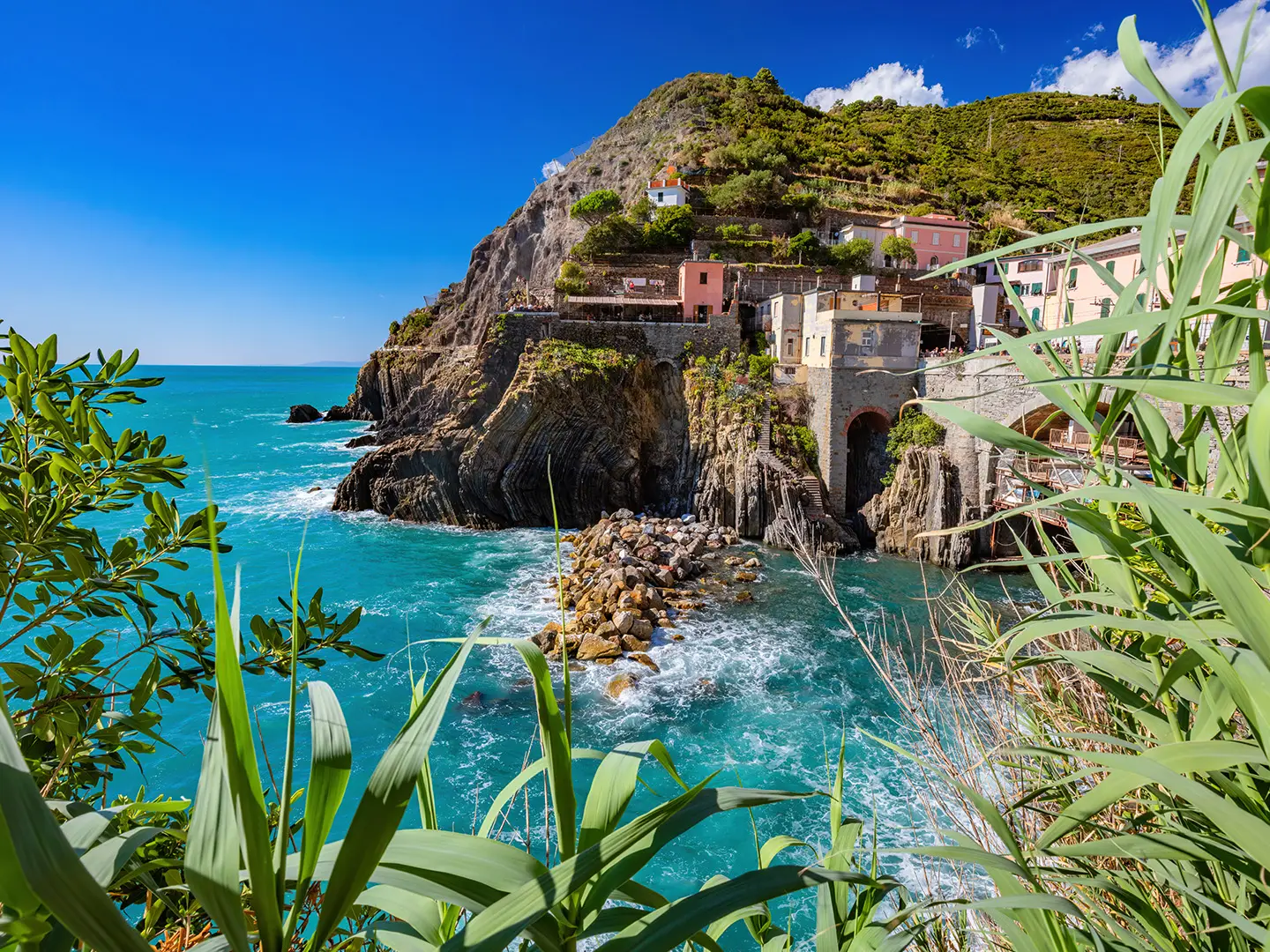
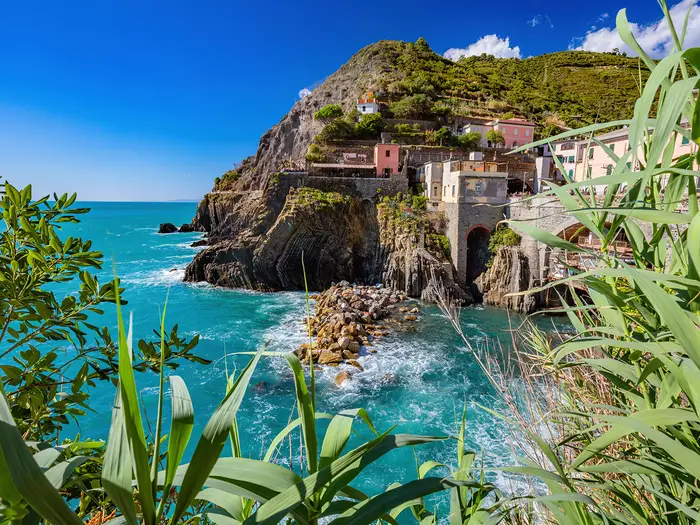
Image by photocreo The Cinque Terre Coastal Trail is a compact but memorable point-to-point walk along the Ligurian Riviera, linking Monterosso al Mare, Vernazza, Corniglia, Manarola and Riomaggiore. It is a village-based day hike rather than a remote trek, with the railway always close enough to make section-hiking straightforward.
The best-known sections climb through vineyard terraces above the Ligurian Sea, with stone steps, mule tracks and sudden views down to pastel harbours. Corniglia sits high on its headland, Prevo (Prevà) marks the trail’s highest point, and the Via dell’Amore gives the route its easiest, most accessible finish between Riomaggiore and Manarola when walked northbound.
This is not a long hike, but it is more demanding than its 12 km distance suggests. The northern sections between Corniglia, Vernazza and Monterosso al Mare involve sustained climbs and descents on stepped, rocky ground, while summer heat and crowds can make early starts worthwhile.
Planning matters here because the Sentiero Azzurro is a paid, managed trail and closures change after landslides or bad weather. The Manarola–Corniglia coastal section remains closed as of the 2026 season, and the reopened Via dell’Amore uses booked timed entry, so current park information should be checked before travelling.
This guide covers the village-to-village stages, timing, accommodation, food, transport, terrain and common mistakes.
Stage-by-Stage Guide
The Sentiero Azzurro is best planned as four village-to-village sections rather than a wilderness traverse. Each stage starts and ends in a serviced village with a Cinque Terre Express station, so closed sections, weather, crowds or tired legs can be managed by train.
Before setting out, check the current Parco Nazionale delle Cinque Terre trail status, buy the required Cinque Terre Trekking Card or Treno MS Card, and book the Via dell'Amore slot if needed. Section closures change often; as of the 2026 season, Manarola–Corniglia remains closed by landslide, while the Via dell'Amore operates on timed entry.
Stage 1: Monterosso al Mare to Vernazza — 3.7 km
This is one of the classic steep sections of the Blue Trail and a sharp introduction if starting in Monterosso al Mare. The route leaves the largest of the five villages, with its beach at Fegina, medieval old town and railway station, then climbs onto the terraced hillside above the coast.
The terrain is typical northern Sentiero Azzurro: stone steps, rocky and gravel mule-track, narrow hillside path and sustained ascent and descent rather than a gentle promenade. It is not technical or exposed, but the repeated steps make it harder than the short distance suggests, especially in hot weather or after rain.
The reward is the approach to Vernazza, where the harbour, tall pastel houses, Doria castle tower and the church of Santa Margherita d'Antiochia come into view below. This is one of the most photographed views on the route, so expect slow-moving walkers at viewpoints and on narrow sections in peak season.
There are services at both ends, but little reason to rely on food or water on the path itself. Buy drinks and snacks in Monterosso al Mare before climbing, then use cafés, restaurants and shops in Vernazza at the end.
Vernazza has village accommodation in the form of hotels, guesthouses, B&Bs, affittacamere and apartments, though beds book out early in high season. The railway station gives immediate onward access on the Cinque Terre Express towards Monterosso al Mare, Corniglia, Manarola, Riomaggiore, Levanto and La Spezia.
Navigation is straightforward in normal conditions: follow the waymarked Sentiero Azzurro / SVA / 592 between the two villages and do not assume informal side paths are alternatives. The key warnings are heat, crowding, slippery stone when wet and the physical effort of the stepped descent into Vernazza.
Stage 2: Vernazza to Corniglia — 4.1 km
The Vernazza–Corniglia section is another demanding but highly rewarding cliff-and-vineyard stage. It climbs out of Vernazza, traverses above the sea through terraced slopes and reaches the highest part of the coastal trail around Prevo (Prevà), at about 200 m.
This stage is graded EE for experienced hikers, reflecting the sustained climbs and descents rather than any scrambling. Expect long flights of steps, rougher stone and gravel path, and little shade on hot days.
Prevo (Prevà) is the main high-point landmark, with broad views over the terraced coast and the Ligurian Sea. From there the route continues towards Corniglia, the only Cinque Terre village not directly on the water, perched on a rocky headland above its station.
Corniglia is reached via the village approaches and is associated with the Lardarina staircase of 377 steps between the station area and the village. The Santa Maria belvedere gives fine views back over the sea and coast.
Food and drink are best planned village-to-village. Vernazza and Corniglia both have cafés, restaurants and shops, but the hillside section between them should be treated as a self-sufficient walk, especially in summer.
Corniglia has guesthouses, rooms, apartments and other village-based accommodation, but no trailside lodging or huts. Its railway station makes it easy to stop here, return to a base village, or skip onwards if the next coastal section is closed.
Waymarking follows the Sentiero Azzurro / SVA / 592, but this is a managed, ticketed section and current opening status should be checked before travelling. The main practical hazards are steep steps, heat exposure, slippery surfaces after rain and congestion where walkers pause for views.
Stage 3: Corniglia to Manarola — 2.5 km
This is the planning bottleneck on the standard coastal line. As of the 2026 season, the coastal Manarola–Corniglia section remains closed by landslide, so walkers should not plan on completing the full low-level Sentiero Azzurro here unless the official park status has changed.
When the coastal route is closed, the practical choices are to take the short Cinque Terre Express train between Corniglia and Manarola, or to use the higher inland detour via Volastra. The Volastra option is longer and steeper than the coastal trail, so it should be treated as a separate hill-walk detour rather than a simple substitute.
Corniglia’s position above the sea means any movement between the village and station involves height gain or loss, including the Lardarina staircase. Build this into the day if using the train, especially with luggage or in hot conditions.
Manarola is one of the most recognisable Cinque Terre villages, with colourful houses above a small rock harbour and vineyard terraces associated with Sciacchetrà. It is a good place to pause, eat and reassess the final stage, particularly because the Via dell'Amore has its own access rules.
Food, drink and accommodation are available in both Corniglia and Manarola, with the usual village mix of restaurants, cafés, hotels, guesthouses, affittacamere and apartments. There is no accommodation on the closed coastal path or on the hillside between the villages.
Both Corniglia and Manarola have railway stations on the Cinque Terre Express line, making this the easiest section to bypass. Do not attempt to enter a closed landslide section; closures are enforced for safety and can change after storms or repair works.
Stage 4: Manarola to Riomaggiore — 1.1 km
The direct coastal link between Manarola and Riomaggiore is the Via dell'Amore, the short paved cliff walk reopened on 14 February 2025 after a long closure following a 2012 landslide. It is the easiest section of the Sentiero Azzurro: short, comparatively flat and suitable for walkers who would find the northern stepped stages too hard.
The key planning issue is access control. The Via dell'Amore operates on a booked timed-entry system and, for day visitors, is one-way from Riomaggiore to Manarola, so a southbound end-to-end walker cannot assume they can simply continue from Manarola to Riomaggiore on foot.
If walking the route from Monterosso al Mare towards Riomaggiore, plan this final section carefully. Depending on the current rules, you may need to take the train from Manarola to Riomaggiore, then walk the Via dell'Amore in the permitted Riomaggiore→Manarola direction with a booked slot, or omit it and finish by train. This should be checked before travelling.
The path itself is a managed paved cliff route rather than a rugged hiking stage. It gives close coastal views between the two southern villages, but it is also the most regulated part of the trail and should be treated like a timed attraction as much as a footpath.
Manarola and Riomaggiore both have cafés, restaurants, shops and village accommodation, but the section is so short that food and water planning is mainly about timing rather than resupply. Riomaggiore, the southern trailhead, has a steep ravine setting, harbour, railway station and the 13th-century church of San Giovanni Battista.
Both ends are on the Cinque Terre Express, so transport is simple if the timed slot, direction of travel or weather does not fit the day’s plan. Check whether the Via dell'Amore is included with the current Cinque Terre Trekking or Treno MS Card and whether any separate reservation requirement applies before booking.
Recommended Itinerary
The Cinque Terre Coastal Trail is best planned as a single walking day split into short village-to-village stages. In the current practical northbound plan, Riomaggiore to Manarola works with the one-way timed-entry system on the Via dell'Amore, while the closed Manarola–Corniglia coastal section is bypassed by train or by the higher inland route via Volastra.
Before fixing the itinerary, check current section openings, Cinque Terre Card requirements and Via dell'Amore timed-entry availability on the official park site.
Standard itinerary: one day, Riomaggiore to Monterosso al Mare
This is the most sensible plan for walkers who want to cover the open coastal sections in one day while using the Cinque Terre Express to deal with the Manarola–Corniglia closure.
| Day | From | To | Approx. distance | Why this stage makes sense | Services/accommodation notes |
|---|---|---|---|---|---|
| 1 | Riomaggiore | Manarola | 1.1 km | Starts with the Via dell'Amore, the easiest and flattest part of the route. For day visitors this is managed by timed entry and runs one-way Riomaggiore→Manarola. | Both villages have railway stations. Book the Via dell'Amore slot before committing to a start time. |
| 1 | Manarola | Corniglia | Train transfer, or higher inland detour via Volastra | The coastal Manarola–Corniglia section remains closed as of the 2026 season. The train is the simplest link; the Volastra alternative is longer and steeper. | The train hop is short and avoids losing time on a closed section. If taking the inland detour, check official mapping before booking or setting out. |
| 1 | Corniglia | Vernazza via Prevo (Prevà) | 4.1 km | This is one of the key hiking stages, climbing through terraced slopes to the route high point around Prevo before descending to Vernazza. It is more demanding than the southern section. | Corniglia and Vernazza both have village services and rail access. Corniglia sits above the sea, so allow for the Lardarina staircase if arriving or leaving by station. |
| 1 | Vernazza | Monterosso al Mare | 3.7 km | A steep, stepped final section with sustained ascent and descent, best left for walkers with enough time and energy. It gives a strong finish into the largest of the five villages. | Monterosso al Mare has a railway station, beach area and the broadest choice of village services. On peak dates this section may be managed one-way; check before setting out. |
Slower variant: two short walking days
This suits families, walkers travelling in hot weather, or anyone wanting longer stops in the villages without rushing the steeper northern sections. It is still a village-based itinerary, not a hut-to-hut trek.
| Day | From | To | Approx. distance | Why this stage makes sense | Services/accommodation notes |
|---|---|---|---|---|---|
| 1 | Riomaggiore | Manarola, then Corniglia to Vernazza | 1.1 km + 4.1 km, with a train gap between Manarola and Corniglia unless using the Volastra detour | Combines the easiest section with the Corniglia–Vernazza cliff path, while avoiding a very long day if the closed Manarola–Corniglia coast path has to be bypassed. | Base in any of the five villages, Levanto or La Spezia and use the train. Accommodation in the villages books out well ahead in high season. |
| 2 | Vernazza | Monterosso al Mare | 3.7 km | Keeps the steep Vernazza–Monterosso stage fresh for the second day, with time to start early before heat and crowds build. | Finish at Monterosso al Mare for rail connections back to base. A Cinque Terre Trekking Card or Treno MS Card is still required where applicable. |
Faster variant: compact one-day traverse
This suits fit walkers who are happy to keep stops short and use the train intelligently around closures. It is not worth treating as an endurance route; the main challenge is timing, ticketing, heat and crowd management rather than distance.
| Day | From | To | Approx. distance | Why this stage makes sense | Services/accommodation notes |
|---|---|---|---|---|---|
| 1 | Riomaggiore | Monterosso al Mare | About 8.9 km of walking if using the train between Manarola and Corniglia; about 12 km when the full coastal line is walkable | Links the timed-entry Via dell'Amore, the Corniglia–Vernazza section and the Vernazza–Monterosso section in one continuous day. Start early enough to protect the booked Via dell'Amore slot and leave time for the northern climbs. | Use the Cinque Terre Express for the closed Manarola–Corniglia link and for returning to base. If the full coast path is open, check official mapping and current one-way controls before choosing direction. |
Planning the Route
Allow a day, not a trek itinerary
Plan the Sentiero Azzurro as a full day or a set of half-day sections, not as a multi-day hike. The village-to-village legs are short, but the northern sections are slow for their length because of stone steps, steep pitches, crowds, ticket checks and photo stops.
Most walkers should allow the whole day if attempting every open coastal section. A slower plan works better in hot weather, with children, or if combining the trail with time in the villages rather than treating it as a point-to-point march.
Accommodation does not dictate the route in the way it would on a hut-to-hut trek. Beds are in the villages, or nearby bases such as Levanto and La Spezia, and the Cinque Terre Express makes it easy to sleep in one place and travel to whichever section is open.
Check the route status before building the day
The key planning issue is not distance; it is whether each section is open and how access is being managed. Landslides and maintenance closures affect the coastal path regularly, so the official Parco Nazionale delle Cinque Terre trail status should be checked before travelling and again before setting out.
As of the 2026 season, the practical planning picture is:
| Section | Planning notes |
|---|---|
| Monterosso al Mare → Vernazza | Normally open. One of the steeper, stepped northern sections and better treated as a proper hike rather than a stroll. |
| Vernazza → Corniglia | Normally open. Climbs through the highest part of the route at Prevo (Prevà), around 200 m, and is also one of the more demanding sections. |
| Corniglia → Manarola | The coastal section remains closed by landslide. Walkers either use the higher inland detour via Volastra, which is longer and steeper, or take the short train between the villages. This should be checked before travelling. |
| Manarola → Riomaggiore | The Via dell'Amore reopened on 14 February 2025 and now runs on a booked timed-entry system. For day visitors it operates one-way from Riomaggiore to Manarola, so it may not fit neatly into a north-to-south walk without using the train. |
Do not assume the full coastal line can be walked continuously. The railway is part of the normal logistics for this trail, especially when the Manarola–Corniglia coastal section is closed or when a timed Via dell'Amore slot forces a different order.
Direction: Monterosso to Riomaggiore, or in reverse?
Monterosso al Mare to Riomaggiore is the cleanest north-to-south order for linking the five villages on foot: Monterosso, Vernazza, Corniglia, Manarola and Riomaggiore. It puts the steeper Monterosso–Vernazza and Vernazza–Corniglia sections early, before the day becomes too hot.
Riomaggiore to Monterosso can make more sense if the Via dell'Amore is a priority, because timed visitor access is one-way from Riomaggiore to Manarola. A common practical solution is to use the train to position yourself for the booked Via dell'Amore slot, then continue or return to another section by rail.
On peak dates, management arrangements can also affect direction on individual sections such as Vernazza–Monterosso. This should be checked before travelling.
Section hiking is very practical
This is one of the easiest long-famous walks in Europe to section-hike. All five villages have railway stations on the Cinque Terre Express, so you can stop after almost any leg, skip a closed section, return to your base, or reverse the order to fit weather and bookings.
A sensible two-part plan is to walk the tougher northern sections separately from the easier southern section. For example, many walkers treat Monterosso–Vernazza–Corniglia as the main hiking portion, then handle Riomaggiore–Manarola by timed Via dell'Amore entry, using the train around the closed Corniglia–Manarola coastal section if necessary.
There is little benefit in carrying overnight luggage on the trail. Base in one village, or in Levanto or La Spezia, and travel light with day-hiking kit.
Tickets, timed entry and transport
The Sentiero Azzurro is a paid trail. A Cinque Terre Trekking Card covers trail access and village buses, while the Treno MS Card adds unlimited Cinque Terre Express travel between Levanto and La Spezia. For 2026, prices start from €7.50 for a one-day Trekking Card and €19.50 for a one-day Treno MS Card; current prices should be checked before booking.
If using the Via dell'Amore, the timed-entry slot matters as much as the trail card. The 2026 arrangement is that access is included with the Cinque Terre Trekking or Treno card but still requires a booked slot; current booking rules should be checked before travelling.
A car is more hindrance than help for this route. Parking is very limited, while the railway gives fast village-to-village access and straightforward return logistics at the end of the walk.
Accommodation and village bases
Book accommodation well ahead for high season. The five villages have hotels, guesthouses, B&Bs, affittacamere and apartments, but no mountain huts or trailside lodging.
Staying in one base is usually simpler than changing accommodation. Monterosso al Mare and Riomaggiore sit at the two ends of the coastal route, while any of the five villages can work if the plan depends on trains and open sections. Levanto and La Spezia are practical alternatives because they sit on the same rail corridor.
Food, water and weather planning
Food and water planning is village-based. Carry enough water for the open trail sections, especially in summer, because the path is exposed and the steep stepped climbs feel harder in heat than the mileage suggests.
Wet weather changes the difficulty. Stone steps, cobbles, gravel and rocky mule tracks can become slippery, and rain can also increase the risk of temporary closures. If the forecast is poor, check the park status before committing to the trail and be ready to switch to trains or a shorter section.
Navigation is usually straightforward on the waymarked SVA / 592 route, but closures and detours are the exception. Follow current park notices rather than assuming an old map or saved route still reflects the walkable coastal line.
Towns, Villages and Overnight Stops
The Sentiero Azzurro is usually planned as a one-day or section walk, not as a hut-to-hut route. There are no mountain huts or trailside lodges; overnight planning means choosing a village base, or staying nearby in Levanto or La Spezia and using the Cinque Terre Express.
Accommodation in and above the five villages is mainly hotels, guesthouses, B&Bs, affittacamere and apartments. Beds can sell out well ahead in high season, so book early if walking in late spring, summer or September–October.
| Place | Position on the route | Best use for hikers |
|---|---|---|
| Monterosso al Mare | Northern trailhead | Easiest village base if starting north to south; largest of the five, with beach and railway station |
| Vernazza | Between Monterosso and Corniglia | Good midway stop or train pick-up point after the steep northern section |
| Prevo (Prevà) | High point between Vernazza and Corniglia | Not a normal overnight stop; useful landmark and rest point |
| Corniglia | Between Vernazza and Manarola | Practical central base, but access involves the Lardarina staircase of 377 steps |
| Manarola | Between Corniglia and Riomaggiore | Good base for the southern end and the Via dell'Amore, subject to timed-entry rules |
| Riomaggiore | Southern trailhead | Best village base if starting south to north, and the access point for the Via dell'Amore |
Monterosso al Mare
Monterosso al Mare is the northern trailhead and the largest of the five villages, with the route leaving from the village towards Vernazza. It is the most practical choice for walkers who want the widest village-base feel at the start or finish of the hike.
Accommodation options include hotels, guesthouses, B&Bs, affittacamere and apartments, but availability tightens sharply in the main season. It is one of the better places to base if you want to start early on the steep Monterosso–Vernazza section before the path becomes busy and hot.
The village has a railway station on the Cinque Terre Express, so it works well for a point-to-point walk: stay here, walk south, then return by train from whichever village you finish in. Parking is very limited across the Cinque Terre, so arriving by train is normally the simplest option.
Monterosso is also the only one of the five villages with a real sandy beach at Fegina, which can make it more attractive for an extra night before or after the walk. Food and basic village services should be planned around seasonal opening hours; this should be checked before travelling if arriving late or walking outside the main season.
Vernazza
Vernazza sits between Monterosso al Mare and Corniglia, making it a natural break point after one of the classic steep coastal sections. The approach from Monterosso involves sustained steps and hillside walking, so many walkers use Vernazza for a proper pause rather than treating it as a quick pass-through.
It has village accommodation in the usual Cinque Terre style: rooms, guesthouses, small hotels and apartments rather than trail lodges. Staying here can work well if you want a central base with immediate access to both the Monterosso and Corniglia sections, but book ahead in busy periods.
Vernazza has a railway station on the Cinque Terre Express, which makes it easy to stop the walk here, skip a closed section, or return to a base elsewhere. This flexibility is especially useful because Sentiero Azzurro closures change and should be checked on the official park site before setting out.
The harbour area is compact and popular, so expect crowds in the middle of the day. If using Vernazza as a food stop, do not rely on finding a quiet, quick turnaround at peak times; carry enough water and snacks to continue if queues or closures make a longer stop impractical.
Prevo (Prevà)
Prevo (Prevà) is not one of the five Cinque Terre villages and is not a normal overnight stop. It is a small panoramic hamlet on the Corniglia–Vernazza section and marks the high point of the Sentiero Azzurro at about 200 m.
For hikers, its main value is as a route landmark between Vernazza and Corniglia. The climb to this part of the trail is one reason the section is more demanding than the easy southern Via dell'Amore.
Do not plan food, accommodation or transport around Prevo unless specific services have been checked in advance. Treat it as a high-level rest point and viewpoint, not as a logistics stop.
Corniglia
Corniglia sits roughly in the middle of the route, between Vernazza and Manarola, and is the only one of the five villages not directly on the water. It is perched on a rocky headland and is reached by the Lardarina staircase of 377 steps, which matters if arriving with luggage or finishing the day tired.
As an overnight base, Corniglia suits walkers who want a quieter-feeling central position rather than the larger beach setting of Monterosso or the busier harbour villages. Accommodation is village-based — guesthouses, rooms, B&Bs and apartments — and should be booked early for high season.
Corniglia has a railway station on the Cinque Terre Express, but the height difference between the village and the coast makes transfers more effort than in the shoreline villages. The Cinque Terre Trekking Card includes village buses, but current bus operation should be checked before relying on it with bags or a tight connection.
Corniglia is a useful stop before or after the Corniglia–Vernazza cliff path, one of the steeper and more rewarding sections of the walk. As of the 2026 season, the coastal Manarola–Corniglia section remains closed by landslide, so walkers continuing south must either detour on the higher inland route via Volastra or take the short train; check the official park status before travelling.
Manarola
Manarola lies between Corniglia and Riomaggiore and is a practical base for the southern end of the Sentiero Azzurro. It is especially relevant for walkers using the Via dell'Amore, the short paved cliff path between Riomaggiore and Manarola.
Accommodation is in the standard Cinque Terre pattern of small hotels, guesthouses, rooms and apartments. It is a compact village, so book well ahead and avoid assuming that a same-day room will be available in peak months.
Manarola has a railway station on the Cinque Terre Express, giving simple access to Riomaggiore, Corniglia, Vernazza, Monterosso al Mare, Levanto and La Spezia. This is important because the Manarola–Corniglia coastal path is closed as of the 2026 season, leaving the higher inland detour via Volastra or the train as the practical alternatives.
The Via dell'Amore reopened on 14 February 2025 and operates on a timed-entry system. For day visitors it is one-way from Riomaggiore to Manarola, so anyone based in Manarola should plan the train hop to Riomaggiore before walking it back; current booking rules and any fees should be checked before travelling.
Riomaggiore
Riomaggiore is the southern trailhead and the natural starting point if walking the Sentiero Azzurro south to north. It is also the access point for the Via dell'Amore for day visitors, which currently runs one-way from Riomaggiore to Manarola on a booked timed-entry system.
The village has hotels, guesthouses, B&Bs, affittacamere and apartments, with the same high-season pressure as the rest of the Cinque Terre. It works well as a base if the priority is an early booked slot on the Via dell'Amore or a south-to-north itinerary towards Manarola, Corniglia, Vernazza and Monterosso al Mare.
Riomaggiore has a railway station on the Cinque Terre Express, with onward access towards La Spezia Centrale and the other villages. This makes it easy to finish in Monterosso al Mare and return by train, or to skip any closed section without needing a car.
Because the village is steep, luggage handling and accommodation location matter more than they might on a flatter town walk. Check access details with the accommodation before booking if stairs or steep lanes are an issue.
Nearby bases: Levanto and La Spezia
Many walkers stay outside the five villages in Levanto or La Spezia and use the Cinque Terre Express to reach the trailheads. This can be a practical way to manage cost, availability and luggage while still walking the route as a point-to-point day hike.
La Spezia Centrale gives onward mainline rail connections, while Levanto sits north of Monterosso on the same coastal rail corridor. If using either as a base, the Treno MS Card may be useful because it includes unlimited Cinque Terre Express train travel between Levanto and La Spezia as well as trail access; current prices and validity should be checked before booking.
Getting to the Start
The usual start is Monterosso al Mare, the northernmost of the five villages. If walking the Sentiero Azzurro in reverse, start from Riomaggiore instead; both villages have railway stations on the Cinque Terre Express line.
By train
Train is the simplest and most practical way to reach the start. Monterosso al Mare station is on the Cinque Terre Express regional line between Levanto and La Spezia, with onward mainline connections via La Spezia Centrale and Genova.
All five villages are linked by short rail hops, so it is easy to base yourself in Monterosso al Mare, Riomaggiore, another Cinque Terre village, Levanto or La Spezia and travel to the start on the morning of the walk. This is also the best fallback if a trail section is closed or if you decide to walk only part of the route.
For most walkers, the most useful ticket is either the Cinque Terre Trekking Card for trail access, or the Treno MS Card, which adds unlimited Cinque Terre Express travel between Levanto and La Spezia. Current prices, validity and train timetables should be checked before travelling.
By bus
Bus is not the main way to reach Monterosso al Mare or Riomaggiore for this walk. The railway is faster, more reliable for village-to-village movement, and puts you directly in the settlements at either end of the trail.
Local village buses can be useful if staying above one of the villages, and access to village buses is included with the Cinque Terre Trekking Card. Exact routes, stops and seasonal timetables should be checked before travelling.
By car
A car is more of a liability than an advantage for this hike. The five villages are best approached by train, parking is very limited, and the point-to-point nature of the walk means you would still need to return to the vehicle by rail.
If driving into the area, plan to leave the car outside the most constrained village centres and continue by train. Long-stay parking availability, access rules and current costs should be checked before travelling, especially in high season.
From the nearest airport
The practical airport approach is to fly into a regional airport with rail links into the Ligurian coast, then continue by train to either La Spezia Centrale or Genova and connect onto the Cinque Terre Express. The best airport depends on flight availability and onward train times.
Do not plan an airport-to-trail transfer by road unless it has been pre-arranged and priced. For this route, the final approach by train is normally the most straightforward option. Flight-to-rail connections should be checked before travelling.
Where to stay before starting
For a north-to-south walk, Monterosso al Mare is the most convenient place to stay before starting: it is the trail’s northern trailhead and has a railway station. For a reverse walk, stay in Riomaggiore.
Many walkers base themselves elsewhere in the five villages, or in nearby Levanto or La Spezia, and use the train to reach the start. This works well because the Cinque Terre Express links the villages frequently during the main season.
Accommodation is village-based: hotels, guesthouses, B&Bs, affittacamere and apartments. There are no mountain huts or trailside lodges on the Sentiero Azzurro, and beds in the villages book out well ahead in high season.
Getting Home from the Finish
For the standard north-to-south walk, the finish is Riomaggiore. If walking in reverse, the finish is Monterosso al Mare. Both villages have railway stations on the Cinque Terre Express line, so leaving the finish is usually straightforward and does not require a car.
By train
Riomaggiore railway station is the practical exit point at the southern end of the Sentiero Azzurro. From here, Cinque Terre Express regional trains link the five villages and continue towards La Spezia Centrale, where there are onward mainline connections.
If your accommodation or parked vehicle is at Monterosso al Mare, Vernazza, Corniglia or Manarola, the train is the simplest way back. Short hops between villages take only minutes, which is useful if you finish tired, after dark, or after skipping a closed trail section by rail.
For walkers finishing in Monterosso al Mare after walking in reverse, the same applies in the opposite direction. Monterosso al Mare station is on the same line, with trains towards Levanto and La Spezia, plus onward mainline connections via La Spezia Centrale and Genova.
If you have bought the Cinque Terre Treno MS Card, it includes unlimited Cinque Terre Express travel between Levanto and La Spezia for the validity period. The Cinque Terre Trekking Card covers the paid trail and village buses but does not provide the same train inclusion, so check which card you need before setting out. Current prices and validity should be checked before travelling.
Train frequency varies by season and time of day. If finishing late, check the last useful train in advance rather than assuming there will be an easy onward connection, especially outside the main ticketed trail season.
By bus
Bus is not the main way to leave Riomaggiore or Monterosso al Mare after this walk. The villages are rail-oriented, and the train is normally faster and simpler for returning to another Cinque Terre village, Levanto or La Spezia.
Local village buses are included with the Cinque Terre Trekking Card, but they are most useful for short local movements rather than for leaving the route altogether. Routes, operating times and seasonal changes should be checked before travelling.
By car/taxi
A car is usually a disadvantage on this route. Parking in and around the Cinque Terre villages is very limited, and the railway makes point-to-point logistics much easier.
If a vehicle has been left at Monterosso al Mare, take the train back from Riomaggiore rather than trying to arrange a road transfer through the villages. If walking in reverse and finishing at Monterosso al Mare, the same principle applies: use the train to return to Riomaggiore or your base.
Taxis should not be relied on as the default exit plan, particularly at busy times or late in the day. Availability, pick-up points and fares should be checked before travelling, and any essential transfer should be arranged in advance.
From the nearest airport
There is no airport at the trail finish. The practical onward route is by train from Riomaggiore or Monterosso al Mare to a mainline station, most commonly La Spezia Centrale, with further connections as required.
Genova is also connected by onward mainline rail from the Cinque Terre corridor. Airport rail or shuttle connections, journey times and late-day options depend on your final airport and should be checked before travelling.
Where to stay at the finish
Staying overnight at Riomaggiore is a good option if you want to avoid rushing for onward transport after the walk, especially when using a timed Via dell'Amore entry or when trail closures have made the day less predictable. Accommodation is village-based: hotels, guesthouses, B&Bs, affittacamere and apartments.
If walking in reverse, Monterosso al Mare offers the same practical advantage at the northern end, with the largest village facilities and a railway station. Beds in all five villages can book out well ahead in high season, so it is safer to reserve early or base in nearby Levanto or La Spezia and use the train.
Which Direction Should You Walk?
The Sentiero Azzurro is often described north-to-south, from Monterosso al Mare to Riomaggiore, following the village order Monterosso al Mare → Vernazza → Corniglia → Manarola → Riomaggiore. That direction makes sense on paper: it puts the steeper northern sections early and leaves the easier southern end for later in the day.
In practice, direction is currently shaped less by tradition and more by trail management. The Via dell'Amore between Riomaggiore and Manarola runs on a booked timed-entry system and, for day visitors, is one-way from Riomaggiore to Manarola. Section openings also change often, and the Manarola–Corniglia coastal section remains closed as of the 2026 season, so current park rules should be checked before travelling.
Monterosso al Mare to Riomaggiore
This is the neatest direction when the full coastal line is open and unrestricted. You tackle Vernazza–Monterosso and Corniglia–Vernazza — the steepest, most stepped sections — while fresher, then move towards the shorter, easier southern stages.
It also gives a satisfying end in Riomaggiore, with the route dropping into the southern trailhead and harbour. The drawback is that this direction does not match the current one-way visitor flow on the Via dell'Amore, so walkers wanting to include that section may need to adjust the day around a booked Riomaggiore→Manarola slot.
Riomaggiore to Monterosso al Mare
Reverse direction is often the more practical choice under current conditions. It lets you start with the Via dell'Amore in its managed direction from Riomaggiore to Manarola, then continue north using the train or the higher inland alternative where the Manarola–Corniglia coastal path is closed.
The walking then builds towards the harder cliff paths between Corniglia, Vernazza and Monterosso al Mare. This means more demanding climbs and descents later in the day, but it finishes at Monterosso al Mare, the largest village, with a beach and railway station.
Transport and accommodation logistics
Transport does not strongly favour either direction. All five villages are linked by the Cinque Terre Express, so it is easy to start from whichever village has the right trail opening, timed-entry slot or accommodation availability, and return to base by train.
Accommodation flow is also not a major factor because this is normally a single-day or section walk rather than a multi-day trek. Most walkers base themselves in one village, or nearby Levanto or La Spezia, then use the train to reach the day’s start and return after finishing.
Recommendation
For the classic route when all sections are open and no one-way restrictions affect the day, walk Monterosso al Mare to Riomaggiore: it front-loads the hardest terrain and gives a natural north-to-south progression through all five villages.
Under current operating conditions, Riomaggiore to Monterosso al Mare is often the more practical choice if the Via dell'Amore is part of the plan, because that section is managed one-way from Riomaggiore to Manarola for day visitors. Check the official park site for section openings, one-way rules and timed-entry requirements before committing to either direction.
Accommodation Along the Route
The Cinque Terre Coastal Trail is best treated as a village-based day walk, not a hut-to-hut route. There are no mountain huts, refuges or trailside lodgings on the Sentiero Azzurro itself; accommodation is in the five villages, in rooms above the villages, or in nearby rail-linked bases such as Levanto and La Spezia.
Most walkers choose one base and use the Cinque Terre Express to reach the start, skip closed sections, or return after finishing. This is usually more practical than moving luggage between villages for a route that is only about 12 km when fully open.
Where to Stay
Monterosso al Mare is the most straightforward base at the northern end of the route. It is the largest of the five villages, has the trailhead and railway station, and works well if you want to start early for the steep Monterosso–Vernazza section.
Riomaggiore is the equivalent southern-end base, particularly useful if you have a timed-entry booking for the Via dell'Amore, which operates one-way Riomaggiore→Manarola for day visitors. It also has a railway station, so reaching the other villages is simple.
Vernazza and Manarola are popular overnight choices for walkers who want to stay in the middle of the Cinque Terre villages rather than commute in each day. Expect high demand, especially in the main walking season and on weekends.
Corniglia is different: it sits above the sea rather than directly on the waterfront, and access from the station involves the Lardarina staircase of 377 steps. It can be a rewarding base, but anyone carrying luggage should factor in the climb or check local transport options before booking.
Accommodation Table
| Place | Accommodation level | Best for | Notes |
|---|---|---|---|
| Monterosso al Mare | Good | Starting the walk north-to-south; beach and station access; widest practical village base | Largest of the five villages, with the northern trailhead and Cinque Terre Express station. Useful for an early start on the steep Monterosso–Vernazza section. |
| Vernazza | Good | Staying mid-route in one of the classic harbour villages | Very popular, with limited space compared with demand. Book well ahead in high season and for weekends. |
| Prevo (Prevà) | None for practical trail planning | Passing point only | A small hamlet at the high point of the Corniglia–Vernazza section, not a realistic overnight stop for planning the Sentiero Azzurro. |
| Corniglia | Limited to good | A quieter-feeling village base above the sea; splitting the route near the middle | The village is perched above the coast and reached from the station by the Lardarina staircase. Avoid arriving with heavy luggage unless onward access has been planned. |
| Manarola | Good | Staying close to the Via dell'Amore and the southern sections | A popular village base with rail access. Demand is high in peak periods. |
| Riomaggiore | Good | South-end base; Via dell'Amore timed-entry logistics | Southern trailhead with railway station. Practical if walking the route in reverse or booking the Via dell'Amore from Riomaggiore to Manarola. |
| Levanto | Good | Rail-based base outside the five villages | Off the trail but linked by the Cinque Terre Express corridor. Useful if beds in the villages are full. |
| La Spezia | Good | Mainline rail connections and train-based day hiking | Off the trail but practical for reaching Riomaggiore, Manarola, Corniglia, Vernazza and Monterosso by train. La Spezia Centrale has onward mainline connections. |
Booking Ahead
Book accommodation well ahead for late spring, summer, September–October and weekends. The Cinque Terre villages are compact, the trail is heavily visited, and the available beds in hotels, guesthouses, B&Bs, affittacamere and apartments can disappear early.
High summer brings the strongest pressure, as well as heat and crowds on the trail. Winter has reduced services and a higher chance of weather-related disruption, so accommodation and transport details should be checked before travelling.
Luggage, Transfers and Inn-to-Inn Walking
Because the route is short and the railway links every village, luggage transfer is rarely necessary. The simplest approach is to leave bags at one base, walk with a day pack, and use the train to return.
Taxi or private luggage arrangements may be possible locally, but they are not essential for this route and access can be awkward in the steep villages. Availability, prices and vehicle access should be checked before travelling.
The walk can be split into village-to-village overnights, but it is not a natural inn-to-inn trek. Moving accommodation each night often creates more logistical work than the walking requires; for most independent hikers, one well-chosen base plus the train is the better plan.
Camping and Wild Camping
Is camping practical on the Sentiero Azzurro?
Camping is not a natural fit for the Cinque Terre Coastal Trail. The Sentiero Azzurro is a short, ticketed day walk between villages, normally completed in about 5–6 hours when the open sections allow, with excellent train links for getting back to a base.
There are no mountain huts, trailside camping areas or remote overnight stages on the route. Most walkers stay in hotels, guesthouses, B&Bs, affittacamere or apartments in Riomaggiore, Manarola, Corniglia, Vernazza, Monterosso al Mare, or use nearby Levanto or La Spezia as a rail-connected base.
Campsites on or near the route
There are no campsites on the Sentiero Azzurro itself. The path passes through a heavily managed national park landscape of villages, stone lanes, vineyard terraces and cliffside mule tracks, not open countryside suitable for pitching a tent.
If using a campsite elsewhere in Liguria, treat it as an off-route accommodation choice and check location, opening dates, access by train and current booking requirements before travelling. Do not assume a campsite will be within walking distance of the Blue Trail or convenient for an early start.
Wild camping
Wild camping should not be planned on this route. The trail lies within Parco Nazionale delle Cinque Terre, passes through a UNESCO-listed cultural landscape, and crosses managed terraces, village edges and private or semi-private land.
Do not pitch on vineyard terraces, viewpoints, beside the path, near village approaches or on coastal ledges. Apart from the likely legal issues, the terrain is exposed, busy, visible from villages and unsuitable for discreet or low-impact camping.
Rules can vary between protected areas, municipalities and landowners, so any question about bivouacking or camping must be checked locally with the park or municipality before travelling. In practical terms, walkers should book a legal bed or a recognised campsite off-route rather than relying on wild camping.
Water, cooking and waste
Carry the water needed for the day from the villages, especially in summer. The higher stepped sections between Monterosso al Mare, Vernazza and Corniglia are hot and exposed, and there is no reason to rely on natural water sources along the trail.
Do not light fires on or beside the route. If carrying a stove for wider travel, use it only where your accommodation or campsite permits it; the terraced coastal landscape is dry and fire-sensitive in hot weather.
Pack out all litter, food waste and tissues. Use village facilities rather than treating the trail as a backcountry route — this is a busy, narrow, managed path with very little space away from other walkers, houses and cultivated land.
Best approach for walkers with camping gear
If travelling through Italy with camping equipment, store unnecessary kit at your base and walk the Sentiero Azzurro with a light day pack. A full camping rucksack is awkward on the steep stone steps, crowded village lanes and narrow sections above the coast.
The most practical plan is to sleep in a booked room or legal off-route campsite, then use the Cinque Terre Express to reach the day’s start point. This also makes it easier to adapt if sections are closed, if the Via dell'Amore requires a timed-entry slot, or if summer heat makes an early start preferable.
Food, Water and Resupply
The Sentiero Azzurro is a village-to-village day walk, so food and drink planning is simple: stock up in Monterosso al Mare, Vernazza, Corniglia, Manarola or Riomaggiore, then treat each cliff-path section as having no guaranteed services until the next village.
Do not plan on finding food, shops or reliable water on the path itself. The steep northern sections, especially Vernazza–Monterosso and Corniglia–Vernazza, climb through exposed terraced slopes and stone steps where there is little shade and no dependable resupply point.
What to carry
For a full traverse, carry lunch or substantial snacks from the start, even though the villages are close together. Crowds, timed-entry arrangements, trail closures or a train transfer around a closed section can all make the day less predictable than the map distance suggests.
For water, start with enough for several hours of exposed walking. Around 1.5 litres is a sensible minimum for many walkers in mild conditions; in high summer, carry 2 litres or more, especially for the Corniglia–Vernazza and Vernazza–Monterosso sections. Refill in villages whenever possible rather than waiting until the next stage.
Natural water sources should not be relied on for this route. If any untreated source is used, it should be filtered or treated, but the better plan is to leave each village with bottles already filled.
Village food and drink logistics
Food is easiest in the five villages, where walkers can pause before or after each section. Opening hours are seasonal, and winter services are reduced compared with the main trail season. Sunday and public-holiday opening should be checked before travelling, particularly if setting off early or walking outside the busiest months.
There is no need to plan around petrol stations or roadside services; this is a rail-linked coastal village walk, not a road-based route. If staying in Levanto or La Spezia and travelling in by Cinque Terre Express, buy breakfast, snacks and water before boarding if starting early.
Section-by-section resupply
| Section | Food availability | Water availability | Notes |
|---|---|---|---|
| Monterosso al Mare → Vernazza | Buy food before leaving Monterosso al Mare; next reliable opportunity is Vernazza. | Fill bottles in Monterosso al Mare before starting; refill in Vernazza. | A short but steep, stepped section with no dependable services on the path. Carry snacks and enough water for exposed climbing. |
| Vernazza → Corniglia via Prevo (Prevà) | Stock up in Vernazza; next village stop is Corniglia. Do not rely on Prevo (Prevà) for resupply. | Refill in Vernazza; refill again in Corniglia. | This is one of the more demanding sections, reaching the trail high point near Prevo (Prevà). Start it well watered, especially in warm weather. |
| Corniglia → Manarola | Food is available at village ends when the direct coastal section is open; as of 2026 this section remains closed by landslide. | Refill in Corniglia before any detour or train transfer; refill in Manarola. | If detouring via the higher inland path via Volastra, carry extra water and food, as it is longer and steeper. If taking the short train, resupply in either village. This should be checked before travelling. |
| Manarola → Riomaggiore via Via dell'Amore | Food is village-based at Manarola and Riomaggiore. | Fill in Manarola or Riomaggiore before the timed-entry slot if needed. | The Via dell'Amore is short and easy, but access is managed by timed entry and normally walked one-way Riomaggiore→Manarola for day visitors. Check booking details before relying on it for your schedule. |
Terrain, Conditions and Difficulty in Practice
The Sentiero Azzurro is short on paper, but it is not a flat promenade from village to village. The easier southern end contrasts sharply with the steep, stepped northern sections, and the practical difficulty depends heavily on which sections are open, the weather, and the direction of travel.
When the full coastal line is walkable, expect about 600 m of ascent across roughly 12 km. Most of that effort is concentrated between Corniglia, Vernazza and Monterosso al Mare, where the path climbs and drops repeatedly through terraced hillsides above the sea.
Path surfaces
Surfaces change often. Through and around the villages there are paved and cobbled lanes, steps and short built-up approaches; outside them, the route becomes a narrow coastal mule track with stone steps, rocky sections and gravel underfoot.
The Via dell'Amore between Riomaggiore and Manarola is the easiest part: a short, level, paved cliff path rather than a mountain trail. By contrast, Corniglia–Vernazza and Vernazza–Monterosso are graded EE for experienced hikers, mainly because of their steepness, steps and sustained climbs and descents rather than technical scrambling.
There is no technical climbing and no need for specialist equipment in normal conditions. However, trainers with poor grip are a bad choice for the rougher sections; lightweight walking shoes or trail shoes with a reliable sole are much more suitable.
Climbs, descents and steps
The main physical challenge is the volume of steps. The stone staircases can be long, uneven and punishing in hot weather, especially when climbing away from the villages or descending on tired legs.
Corniglia adds an extra consideration because it sits above the water rather than directly on it. The village is reached by the Lardarina staircase of 377 steps, so even when using the train or section-hiking, there can still be a significant stepped approach.
The highest point of the trail is around 200 m at Prevo (Prevà), on the Corniglia–Vernazza section. That height is modest, but the ascent is concentrated and exposed enough to feel demanding in warm weather.
Section-by-section difficulty
| Section | Terrain and practical difficulty |
|---|---|
| Monterosso al Mare – Vernazza | One of the harder classic sections, with steep stepped climbing and descending on a coastal path above the sea. It is short but can feel slow, especially in heat or crowds. |
| Vernazza – Corniglia | Another demanding section, climbing through terraced slopes and reaching the high point around Prevo (Prevà). Expect sustained ascent and descent, stone steps, rocky/gravel surfaces and little sense of easy walking until nearer the villages. |
| Corniglia – Manarola | The coastal section is subject to landslide closure; as of the 2026 season it remains closed. Walkers use the higher inland route via Volastra, which is longer and steeper, or take the short train. This should be checked before travelling. |
| Manarola – Riomaggiore | The Via dell'Amore is the easiest section when open: short, paved and generally level. It operates with timed entry and, for day visitors, one-way Riomaggiore→Manarola, so it is not simply a turn-up-and-walk path. |
Exposure, drops and comfort with heights
The route is a coastal cliff path, but it is not a via ferrata or an exposed scrambling route. Most walkers with normal hillwalking confidence should find the open sections manageable in dry conditions.
That said, parts of the path run high above the sea and can feel airy, especially where the track is narrow or busy. If you dislike narrow paths with drops nearby, the northern sections between Monterosso al Mare, Vernazza and Corniglia are the parts most likely to feel uncomfortable.
Wet, hot and crowded conditions
Wet stone, cobbles and polished steps can become slippery. After rain, the rocky and gravel sections demand more care, particularly on descents into Vernazza, Corniglia and Monterosso al Mare.
Heat is often the bigger difficulty than distance. In high summer the trail is hot, exposed and busy, and the stepped climbs can feel much harder than the map suggests. Carry water, start early where possible, and avoid treating the walk as a casual beachside stroll.
Crowds also change the difficulty. Narrow sections can slow to a shuffle, overtaking is not always easy, and descents require patience when walkers are moving at different speeds.
Seasonal conditions and closures
The ticketed trail season runs roughly from mid-March to early November. Late spring and September–October usually give the best balance of manageable temperatures and usable trail conditions, while high summer brings the most heat and crowding.
Winter is less reliable, with reduced services and more weather-related closures. Landslides are a recurring issue on this coast, so the full 12 km coastal line is rarely something to assume without checking current conditions.
Section status should always be checked on the official Parco Nazionale delle Cinque Terre site before setting out. If a section is closed, the Cinque Terre Express makes it straightforward to skip ahead between villages rather than force an unsafe or prohibited continuation.
What is not a major issue on this route
There are no boggy moorland sections, river fords, livestock fields, stiles or remote mountain passes to plan around. Navigation is also relatively straightforward on the open, managed sections because this is a waymarked national park route linking closely spaced villages.
The real demands are more practical: steep stone steps, slippery hard surfaces when wet, heat exposure, crowding, ticketed access, timed entry on the Via dell'Amore, and regular landslide-related closures.
Weather and Best Time to Walk
The best walking conditions on the Sentiero Azzurro are in late spring and in September–October. These periods usually give the best balance of usable daylight, less oppressive heat and more manageable crowds, while still falling within the main ticketed trail season.
High summer is walkable, but it is the least comfortable time for the steep northern sections between Monterosso al Mare, Vernazza and Corniglia. The path is exposed, the stone steps hold heat, and the villages and trains are at their busiest. Start early, carry more water than for an ordinary 12 km walk, and avoid treating the route as a casual beach-path stroll.
Winter is not the best season for planning the full route. Services are reduced, weather closures are more common, and wet stone, cobbles and steps can make the trail unpleasant or unsafe. This should be treated as a flexible village-and-train trip in winter rather than a guaranteed end-to-end hike.
Seasonal planning
| Season | What it means for hikers |
|---|---|
| Spring | The ticketed trail season begins roughly in mid-March. Late spring is one of the best times to walk, with better conditions for the stepped climbs and fewer heat issues than summer. Rain can still affect trail surfaces and closure status. |
| Summer | Hot, exposed and crowded. The easier sections may still suit casual walkers, but Corniglia–Vernazza and Vernazza–Monterosso involve sustained climbing and descending on steps and rougher track. Book accommodation well ahead and start early. |
| Autumn | September–October is another strong window, especially for walkers wanting less heat than summer while keeping good village and train logistics. After rain, expect slippery stone and check trail status carefully. |
| Winter | Possible only with flexibility. The route is low, but winter brings reduced services and more frequent weather-related closures. It is a poor season for relying on every coastal section being open. |
Rain, wet stone and closures
Rain matters more than cold on this route. The Sentiero Azzurro uses paved and cobbled lanes, long flights of stone steps, rocky mule tracks and gravel paths cut into terraced slopes; these can become slippery when wet.
Landslides periodically close sections of the coastal path, and the full 12 km line is rarely guaranteed to be open end-to-end. Always check the Parco Nazionale delle Cinque Terre trail status before travelling and again before setting out, especially after unsettled weather.
As of the 2026 season, Manarola–Corniglia remains closed by landslide, with walkers either using the higher inland route via Volastra or taking the short train. The Via dell'Amore between Riomaggiore and Manarola is open on a booked timed-entry system, so weather planning and ticket planning need to be handled together.
Heat and exposure
There is little shade on parts of the cliff path, and the trail climbs to about 200 m at Prevo (Prevà) despite its short overall distance. In summer, the combination of stone steps, reflected heat and crowds can make the route feel harder than the mileage suggests.
For hot days, plan the steepest sections early, carry enough water, wear sun protection and be realistic about using the Cinque Terre Express to shorten the day. The railway makes it easy to skip a section if heat, crowds or closure status make continuing on foot unwise.
Accommodation and crowd pressure
Accommodation in and above Riomaggiore, Manarola, Corniglia, Vernazza and Monterosso al Mare books out well ahead in high season. Nearby bases such as Levanto or La Spezia are practical because the Cinque Terre Express links all five villages and the trailheads.
Crowding affects the walking day as well as accommodation. In peak periods, expect busy paths, busier trains and more pressure around ticket checks and timed-entry arrangements, particularly for the Via dell'Amore.
Safety Notes
Emergency help and communications
The emergency number in Italy is 112. The Sentiero Azzurro is a managed coastal path between villages, not a remote mountain trek, but the steeper sections still sit high above the sea and can be slow to exit if someone is injured.
Mobile coverage should not be treated as guaranteed at every point on the cliff path or in cuttings between villages. Download tickets, bookings, trail-status information and train details before setting out, and keep enough battery for navigation and calls.
Trail closures and landslide risk
Landslides are the main route-specific safety issue on the Cinque Terre Coastal Trail. Sections can close at short notice, and barriers or closure signs must be respected — do not attempt to bypass them, even if the path looks passable.
Check the official Parco Nazionale delle Cinque Terre trail status before starting the day. As of the 2026 season, the Manarola–Corniglia coastal section remains closed; use the higher inland detour via Volastra if suitable, or take the short Cinque Terre Express train hop instead. This should be checked before travelling.
Heat, sun and weather exposure
The trail is short, but it can feel much harder in high summer. The northern sections between Monterosso al Mare, Vernazza and Corniglia have sustained climbs, long flights of stone steps and exposed terraces where heat builds quickly.
Start early in hot weather, carry water, wear sun protection and avoid underestimating the ascent. The route is village-based, but there are no mountain huts or trailside facilities between settlements, so do not rely on finding shade or supplies mid-section.
Rain changes the character of the walk. Stone steps, cobbles, rocky mule tracks and gravel can become slippery when wet, and poor weather can also increase the chance of closures. In heavy rain or storms, use the train rather than forcing a cliff-path section.
Footing, steps and exposure
The Sentiero Azzurro has no technical climbing, but the Corniglia–Vernazza and Vernazza–Monterosso stages are graded EE for experienced hikers and include steep, sustained ascents and descents. Lightweight trainers with poor grip are a common mistake; wear shoes with a reliable sole.
Stay on the waymarked path and avoid stepping onto terrace edges, shortcutting between bends or climbing barriers for photos. The terrain is managed but narrow in places, and loose gravel over stone can cause slips, especially on descents.
Crowds and one-way controls
This is one of Italy’s most popular coastal walks, so crowding is itself a practical safety issue. Allow faster walkers to pass only where the path is wide enough, take care on steps, and avoid sudden stops in narrow sections for photos.
The Via dell’Amore operates on a booked timed-entry system and is one-way from Riomaggiore to Manarola for day visitors. Vernazza–Monterosso may also be one-way on peak dates. Check the current access rules before committing to a walking direction.
Sea, roads and livestock
There are no river fords or tide-dependent beach crossings on this route. The sea is a backdrop rather than a walking hazard, but harbours, rocks and beaches in the villages still require normal care, especially if conditions are rough.
Road walking is not a major feature of the Sentiero Azzurro, which mainly uses village lanes, steps and coastal paths. Livestock is not a typical hazard on this route.
Solo hiking
Solo hiking is generally practical because the route links five villages and the Cinque Terre Express provides frequent escape options between them. Even so, the steep northern sections should be treated as proper hikes: carry water, know the next exit point, and avoid starting late in the day.
If walking alone, share the intended section and finish point with someone, especially when taking the longer inland detour around a closed coastal section. Do not rely on being able to complete the full 12 km line end-to-end; closures and timed-entry controls often shape the day.
Check before setting off
Before leaving the village, check:
- Current official section openings and closures on the Parco Nazionale delle Cinque Terre site.
- Whether the Via dell’Amore needs a timed slot for the planned direction.
- Weather, especially heat, heavy rain and storms.
- Train options for skipping closed or unsafe sections.
- That the required Cinque Terre Trekking Card or Treno MS Card is valid for the day.
- Water, sun protection, footwear grip and phone battery.
Gear Recommendations
The Cinque Terre Coastal Trail is a short, village-based day walk, not a wilderness trek. Pack for steep stone steps, rocky mule tracks, heat, crowds and possible wet/slippery surfaces — not for camping or remote self-sufficiency.
Footwear
Wear proper walking shoes or light hiking boots with good grip. The easy paved sections can mislead walkers, but Corniglia–Vernazza and Vernazza–Monterosso include sustained climbs and descents on stone steps, rocky track and gravel.
Avoid smooth-soled trainers, sandals and beach footwear. Wet stone can become slippery, and the northern sections are much more demanding than the short Via dell'Amore between Riomaggiore and Manarola.
Clothing and weather protection
A lightweight waterproof jacket is worth carrying even on a short itinerary. Rain can make the stepped sections awkward, and exposed coastal weather can change quickly enough to make a dry shell useful.
In spring and autumn, add a light warm layer for cooler starts, shaded sections and waiting around at stations. In high summer, prioritise breathable clothing, a sun hat, sunglasses and strong sun protection; the trail can be hot and exposed above the Ligurian Sea.
Water and food
Carry enough water before starting each open section, especially in summer. Although the route passes through Monterosso al Mare, Vernazza, Corniglia, Manarola and Riomaggiore, the climbs between villages are exposed and not the place to run short.
Snacks are sufficient for most walkers doing the trail in a day. A light packed lunch is useful if walking across the busy middle of the day or if section closures and train connections alter the plan.
Navigation and trail information
The Sentiero Azzurro is waymarked as route SVA / 592, but navigation is not just about following signs here. Landslides and maintenance closures affect the coastal line, and the Via dell'Amore uses a booked timed-entry system.
Carry a phone with offline mapping, the current trail-status page saved, train times available and enough battery for ticket checks, booking confirmations and route changes. A small power bank is sensible if using the Cinque Terre Express during the day or relying on digital tickets.
Trekking poles
Trekking poles are helpful on the long stepped climbs and descents, particularly between Corniglia–Vernazza and Vernazza–Monterosso. They are less useful on crowded village lanes and the flatter paved Via dell'Amore.
If using poles, be considerate in narrow sections and busy viewpoints. Collapsible poles are best so they can be packed away on trains and in the villages.
Tickets and small essentials
Keep the Cinque Terre Trekking Card or Treno MS Card easily accessible, along with any Via dell'Amore timed-entry booking. Trail access is managed, and changing plans between walking and taking the train is common when sections are closed or crowded.
A compact first-aid kit should cover blisters, minor scrapes and sun exposure. The route is short, but the combination of stone steps, heat and crowds makes small foot problems common enough to prepare for.
For village-based walkers
Most walkers should use a small daypack only. Leave overnight luggage at accommodation, or use the train between villages rather than carrying heavy bags over the stepped sections.
There are no mountain huts or trailside lodging on the route, so heavy multi-day trekking kit is unnecessary. A comfortable daypack with water, waterproof, warm layer, snacks and sun protection is the right setup.
For campers
This is not a camping trek. The Sentiero Azzurro is a compact, ticketed coastal path through a national park and five villages, with accommodation based in hotels, guesthouses, B&Bs, affittacamere and apartments rather than huts or camps on the trail.
Do not carry camping gear for the walk itself unless it is needed for separate travel plans away from the route. Any camping arrangements in the wider area should be checked before travelling.
For fast or section hikers
Fast walkers and section hikers can travel very light, but should still carry water, sun protection, a waterproof shell and a charged phone. The short distance does not remove the need for proper footwear on the steep northern sections.
If only walking one or two legs, check the open sections first and plan the train return. The ability to skip closed or crowded sections by rail is one of the main practical advantages of this route.
Budget and Costs
The Cinque Terre Coastal Trail is a short, ticketed day walk, so costs are driven far more by accommodation, food and train use than by the hike itself. There are no hut fees, campsite stages or multi-day resupply costs to plan for.
Trail permits and park cards
The Sentiero Azzurro is a paid trail. For most walkers, the key decision is whether to buy a trail-only card or the train-inclusive card.
| Cost item | What it covers | 2026 starting price |
|---|---|---|
| Cinque Terre Trekking Card | Access to the paid hiking trails, plus village buses | From €7.50 for 1 day |
| Cinque Terre Treno MS Card | Trekking Card benefits, plus unlimited Cinque Terre Express train travel between Levanto and La Spezia | From €19.50 for 1 day |
If walking only the open paid trail sections and not using the train, the Trekking Card is the cheaper option. If using the train to reach the start, return to base, skip a closed section, or move between villages during the day, the Treno MS Card is often the simpler choice.
The Via dell'Amore requires a booked timed-entry slot. The 2026 official position is that entry is included with the Cinque Terre Trekking and Treno cards, but some operator information still refers to a separate ticket of around €10. This should be checked before booking a slot.
Accommodation costs
Accommodation is the largest variable cost. The five villages — Monterosso al Mare, Vernazza, Corniglia, Manarola and Riomaggiore — have hotels, guesthouses, B&Bs, affittacamere and apartments, but no mountain huts or trailside lodging.
Expect prices to rise sharply in late spring, summer and early autumn, especially in the most convenient village locations. Beds book out well ahead in high season, so last-minute stays can be poor value or unavailable.
A lower-cost approach is to base outside the five villages, commonly in nearby Levanto or La Spezia, and use the Cinque Terre Express. A mid-range approach is a guesthouse or affittacamere in one of the villages. A more comfortable approach is a hotel or apartment in a prime village location, accepting that the view and convenience usually cost more than the walking itself.
Current accommodation prices should be checked before booking, as they vary heavily by season, village, cancellation terms and distance from the station.
Food and drink
This is a village-based coastal walk, not a remote trek, so food planning is straightforward. You can buy meals, snacks and drinks in the villages rather than carrying a full day’s supply from the start.
Budget walkers can keep costs down by buying picnic food and water before setting out, then using cafés sparingly. Mid-range walkers should budget for café stops and a sit-down meal in one of the villages. A comfortable budget allows for restaurant meals, local wine and longer breaks in Monterosso al Mare, Vernazza, Manarola or Riomaggiore.
Carry water before starting the steeper sections, particularly Corniglia–Vernazza and Vernazza–Monterosso, where heat and steps can make the walk feel more demanding than the distance suggests.
Transport costs
Rail is the practical way to reach and leave the route. All five villages are on the Cinque Terre Express line between Levanto and La Spezia, with onward connections from La Spezia Centrale and Genova.
For a single-day walk, most transport budgets fall into one of three patterns:
| Approach | Typical transport choice | Budget effect |
|---|---|---|
| Lowest cost | Stay near the start or finish and buy only the required Trekking Card | Cheapest if no train hops are needed |
| Flexible day walk | Buy the Treno MS Card and use the train between villages as needed | Higher upfront cost, useful if sections are closed or crowds are heavy |
| Comfort-focused | Stay in a village and use trains casually rather than planning every transfer | Convenient, but accommodation is usually the main cost |
A car is rarely helpful for this hike. Road access is limited, parking is very restricted, and the train is normally easier for both start/end logistics and closed-section workarounds.
Taxis, luggage transfer and guided options
Local taxis are not normally needed for the Sentiero Azzurro because the train links all five villages. Taxi prices and availability should be checked locally before relying on one, especially in busy periods.
Luggage transfer is generally unnecessary. This is a one-day or section walk, and most walkers leave bags at their accommodation and return by train.
Guided walks and self-guided packages may be available through local operators, but they are not required to complete the route. If booking one, check exactly what is included: accommodation, park card, train card, Via dell'Amore timed entry and any closed-section alternatives should all be clear before payment.
Practical budget planning
For the walking day itself, the fixed cost is usually modest: at minimum, allow for the required Cinque Terre card, with the trail-only card starting at €7.50 or the train-inclusive card starting at €19.50 in 2026. Add food, drinks and any timed-entry requirements for the Via dell'Amore.
For the whole trip, accommodation is the cost that will decide whether this is a budget break or an expensive one. Booking early, staying in Levanto or La Spezia, and travelling outside peak summer are the main ways to control costs.
Luggage Transfer, Guided Tours and Support Services
The Sentiero Azzurro is a short, village-to-village coastal walk rather than a multi-day trek, so support services are usually about convenience rather than necessity. Most walkers do not need a luggage-transfer company: it is generally simpler to base in one village, Levanto or La Spezia, then use the Cinque Terre Express to reach the day’s start and return afterwards.
Support becomes more useful if you are changing accommodation, travelling with heavy bags, walking with children, or want help managing trail closures, ticketing and the Via dell’Amore timed-entry system.
Luggage transfer
Dedicated luggage transfer is not a core requirement on this route. The full coastal line is only about 12 km when open, and all five villages have rail access, so overnight bags can usually stay at your accommodation or be moved by train with you.
If changing base between Monterosso al Mare, Vernazza, Corniglia, Manarola or Riomaggiore, check first whether your accommodation can hold luggage before check-in or after check-out. This matters because village lanes are steep, stepped and often busy, and some rooms and apartments involve awkward access with wheeled bags.
Commercial baggage courier arrangements may be possible through accommodation hosts or walking-holiday companies, but coverage, prices and collection rules vary. This should be checked before travelling. If booking a transfer, make sure the provider can serve the exact property, not just the village, and confirm whether they will deliver to accommodation above the villages as well as in the centres.
Self-guided walking packages
Self-guided packages can be useful for visitors who want accommodation, route notes and logistics arranged in advance. On the Cinque Terre Coastal Trail, these packages are usually more about simplifying a busy tourist area than supporting a remote trek.
A good self-guided arrangement should clarify:
| Detail to check | Why it matters here |
|---|---|
| Accommodation location | Staying in or above the villages can mean steep lanes and steps; Levanto or La Spezia may involve train access each day. |
| Trail-ticket arrangements | The Sentiero Azzurro is a paid trail requiring a Cinque Terre Trekking Card or Treno MS Card. |
| Via dell’Amore booking | The Riomaggiore–Manarola section uses timed entry and is one-way Riomaggiore→Manarola for day visitors. |
| Closure plan | The Manarola–Corniglia coastal section remains closed as of the 2026 season, with the train or higher inland route via Volastra used instead. |
| Luggage handling | Not all packages will need or include baggage transfer on such a short route. |
| Train use | The Cinque Terre Express is the most practical way to skip closed sections or return to base. |
For experienced independent walkers, a package is often unnecessary: the route is compact, the railway is excellent, and the main logistics are tickets, accommodation and section-status checks. The main reason to book a package is convenience during high season, when beds and timed entries can be harder to organise at short notice.
Guided walks
A guided walk can make sense if you want a structured day, are unsure about the steeper EE-graded sections between Corniglia–Vernazza and Vernazza–Monterosso, or prefer someone else to manage train hops, crowds and closure workarounds. It is also useful for walkers who want local context on the terraced vineyards, village layout and national park rules without having to plan the day themselves.
A guide is not required for navigation in normal conditions: this is a waymarked, managed coastal trail linking villages. However, the northern sections have sustained climbs and descents on stone steps, and a guided group should still match your fitness and heat tolerance.
Before booking any guided option, ask specifically whether the price includes the Cinque Terre Trekking Card or Treno MS Card, whether the Via dell’Amore timed slot is included, and what happens if a section closes on the day. Confirm the meeting point carefully, as Monterosso al Mare, Riomaggiore and the intermediate villages all have railway stations and the direction of travel affects the Via dell’Amore booking.
Taxi transfers and rail-based support
The train is the default support system for this walk. The Cinque Terre Express links Monterosso al Mare, Vernazza, Corniglia, Manarola and Riomaggiore in short hops, with onward connections towards Levanto and La Spezia Centrale.
Taxi transfers are rarely the most practical way to manage the Sentiero Azzurro itself. Road access and parking are limited, and the trailheads sit naturally on the rail line rather than on a road-based shuttle route.
Taxis may still be useful for airport or late-arrival transfers, or for accommodation above the villages where rail access does not get you to the door. Availability, access and prices vary, so this should be checked before travelling.
What to arrange before arrival
Book or check the following before committing to a walking day:
- Accommodation, especially in high season, as beds in the five villages book well ahead.
- Trail access, using the Cinque Terre Trekking Card or Treno MS Card as appropriate.
- Via dell’Amore timed entry if walking Riomaggiore–Manarola.
- Current section status on the official Parco Nazionale delle Cinque Terre website, as landslides and maintenance closures change the route.
- Any guided walk, self-guided package or baggage transfer, with written confirmation of what is included.
- Train-based fallback plans, particularly for the Manarola–Corniglia closure and any peak-date restrictions on Vernazza–Monterosso.
Shorter Hikes and Best Sections
The Sentiero Azzurro is already a compact day walk, so “shorter hikes” here usually means choosing one or two village-to-village sections rather than planning a long section-hike. This is often the most sensible way to walk it, because closures change, the trail is ticketed, and the Cinque Terre Express makes it easy to start or finish at any of the five villages.
Check current trail openings, Cinque Terre Card requirements and Via dell'Amore timed-entry rules before setting out. As of the 2026 season, the coastal Manarola–Corniglia section remains closed, while the Via dell'Amore is open on a booked timed-entry system for day visitors, one-way from Riomaggiore to Manarola.
| Best for | Start → end | Approx distance | Why choose it | Transport notes |
|---|---|---|---|---|
| Best single day without doing the full trail | Monterosso al Mare → Corniglia, via Vernazza and Prevo (Prevà) | About 7.8 km | The two strongest hiking sections: steep stepped climbs, vineyard terraces, sea views and the high point near Prevo | Start by train at Monterosso al Mare; finish at Corniglia and return by Cinque Terre Express |
| Best scenery | Vernazza → Corniglia | About 4.1 km | Classic terraced coast, views back to Vernazza and the high point around Prevo (Prevà) | Railway stations at both villages; allow time for the climb to and from Corniglia |
| Best tougher short section | Monterosso al Mare → Vernazza | About 3.7 km | A short but physical cliff-path stage with sustained steps and a memorable arrival above Vernazza | Easy rail access at both ends; this section can be busy, so start early |
| Best beginner option | Riomaggiore → Manarola on the Via dell'Amore | About 1.1 km | The easiest and flattest part of the route, on a paved cliff path rather than a steep mule track | Requires a booked timed-entry slot; day visitors walk it one-way from Riomaggiore to Manarola |
| Best for public transport | Any open village-to-village section | 1.1–4.1 km | Every official section starts and ends at a village with rail access, making it simple to bail out, skip closures or build a half-day plan | Use the Cinque Terre Express between Levanto and La Spezia; the Treno MS Card includes train travel within the covered area |
| Best for villages and accommodation | Base in one village, Levanto or La Spezia, then walk open sections by train | Variable | Better than moving luggage for such a short trail; useful when beds in the five villages are limited or expensive | No need for a car; parking is very limited and the train is the practical link between sections |
Best day walk: Monterosso al Mare to Corniglia
For fit walkers who want the strongest hiking without committing to the full line, Monterosso al Mare to Corniglia is the best section-based day. It links the Vernazza–Monterosso and Corniglia–Vernazza cliff paths, the most rugged and photogenic parts of the Sentiero Azzurro.
Expect a moderate walk with plenty of stone steps, steep pitches and exposed sunny sections. The route passes Vernazza and climbs towards Prevo (Prevà), the trail’s high point at about 200 m, before descending towards Corniglia.
This is not the easiest option, but it gives the clearest sense of the Blue Trail as a real coastal hike rather than a village promenade. Both Monterosso al Mare and Corniglia are on the Cinque Terre Express, so returning to base is straightforward.
Best weekend version
A weekend works best as a village-based trip rather than a point-to-point trek with overnight luggage. Walk Monterosso al Mare to Vernazza on one day, then Vernazza to Corniglia on the other, using the train to position yourself each morning and return afterwards.
This keeps each walking day short enough to handle crowds, heat and steep steps without rushing. Staying in one place also avoids moving bags through busy stations and narrow village streets.
If the Via dell'Amore timed-entry slots are available, it can be added as a short separate walk from Riomaggiore to Manarola. The coastal Manarola–Corniglia section should not be built into a plan unless it is open; otherwise use the train or the higher inland detour via Volastra, which is longer and steeper.
Best 3–5 day option
A 3–5 day section hike is not really applicable to the Sentiero Azzurro itself. The full coastal route is only about 12 km when open and is normally walked in a day or split into short sections.
Anyone wanting several days in the area should treat it as a Cinque Terre village stay, not a multi-day trail. Book accommodation in one village, or nearby Levanto or La Spezia, then use the Cinque Terre Express to walk open sections at a comfortable pace.
Best section for beginners: Via dell'Amore
The Via dell'Amore between Riomaggiore and Manarola is the obvious beginner-friendly choice. It is short, paved and much flatter than the northern sections, making it the least demanding part of the Blue Trail.
It is also the most controlled section. Day visitors need a timed-entry booking and, under the current system, walk one-way from Riomaggiore to Manarola; current rules and prices should be checked before booking.
Best section for scenery: Vernazza to Corniglia
Vernazza to Corniglia is the best balance of scenery, effort and classic Cinque Terre terrain. It climbs through terraced slopes above the sea, reaches the high ground around Prevo (Prevà), and gives broad views along the coast.
It is still a proper hike, with rougher surfaces and many steps. Corniglia sits above the water rather than on it, so allow energy for the final approach and onward station connection.
Camping
Camping is not a practical planning model for this route. The Sentiero Azzurro is a short, ticketed village-to-village coastal walk with hotels, guesthouses, B&Bs, affittacamere and apartments in and above the villages, rather than huts or trailside overnight stops.
For budget or availability reasons, most walkers are better off looking at rooms in the five villages or basing in Levanto or La Spezia and travelling in by train. Any camping rules or campsite options outside the trail corridor should be checked before travelling.
Highlights and Points of Interest
The Cinque Terre Coastal Trail is at its best where village life, vineyard terraces and sea views meet in a compact walking day. The most rewarding stops are the five villages themselves, the high viewpoints on the Corniglia–Vernazza and Vernazza–Monterosso sections, and the short Via dell'Amore between Riomaggiore and Manarola when open and booked.
Monterosso al Mare
Monterosso al Mare is the largest of the five villages and the best place on the route for beach time. Fegina is the trail’s only real sandy beach, making Monterosso the most natural place to pause before or after the northern section.
The village also has a medieval old town and the Aurora tower, which separates the two halves of Monterosso. As the northern trailhead of the Sentiero Azzurro, it is a practical place to start early if walking south towards Vernazza.
Vernazza
Vernazza is one of the signature stops of the route: a natural harbour enclosed by tall pastel houses, with the church of Santa Margherita d'Antiochia directly beside the water. The Doria castle tower adds one of the clearest historic landmarks on the walk.
Allow time here if the aim is photography or a longer village break. The approaches from both Monterosso and Corniglia give classic views down to Vernazza, so it is worth saving time for the viewpoints above the village rather than only stopping at harbour level.
Vernazza–Monterosso cliff path
The Vernazza–Monterosso section is one of the most memorable walking stretches of the Sentiero Azzurro. It climbs and descends on stone steps and rocky mule tracks through terraced hillsides high above the Ligurian Sea.
This is not the easiest part of the route, but it is one of the most rewarding for views. In hot weather, plan to walk it early or late rather than in the middle of the day, as the coast can feel exposed.
Corniglia–Vernazza and Prevo (Prevà)
The Corniglia–Vernazza section is another classic part of the Blue Trail, with vineyard terraces, steep pitches and broad coastal views. It is graded EE for experienced hikers, so it deserves more time than its distance might suggest.
Prevo (Prevà), on this section, is the high point of the route at about 200 m. It is the key panoramic stop on the trail, with wide views over the terraced coast and the Ligurian Sea.
Corniglia
Corniglia is the only Cinque Terre village not directly on the water. It sits on a rocky headland above the sea and is reached by the Lardarina staircase of 377 steps.
The Santa Maria belvedere is the main viewpoint to seek out in the village. Corniglia is also a useful place to pause between the tougher northern walking sections and the lower, easier village-to-village links to the south, depending on current trail openings.
Manarola
Manarola is a compact harbour village with colourful houses stacked above a small rock landing. It is one of the most recognisable Cinque Terre views and is worth extra time if village photography is a priority.
The surrounding vineyard terraces are strongly associated with Sciacchetrà dessert wine. As the coastal Manarola–Corniglia section is subject to long-term landslide closure, check current access before planning to walk directly between Manarola and Corniglia; the train or higher inland route may be needed.
Via dell'Amore (Path of Love)
The Via dell'Amore between Riomaggiore and Manarola is the easiest and shortest section of the route: a paved cliff walk rather than a steep hiking path. It reopened on 14 February 2025 after more than twelve years closed following a 2012 landslide.
For day visitors it operates with booked timed entry and one-way walking from Riomaggiore to Manarola. If this section is a priority, reserve the slot before building the rest of the walking day around it, and check the official park information before travelling.
Riomaggiore
Riomaggiore is the southern trailhead and one of the strongest village finishes on the route. The harbour sits at the foot of a steep ravine, with stacked pastel houses rising above the water.
The 13th-century church of San Giovanni Battista is the main historic point of interest in the village. Riomaggiore is also the practical access point for the Via dell'Amore, as timed-entry walking for day visitors runs from Riomaggiore towards Manarola.
Best places to spend extra time
| If you want… | Prioritise |
|---|---|
| The biggest sea-and-village views | The approaches above Vernazza, the Corniglia–Vernazza section and Prevo (Prevà) |
| The most photogenic harbour stops | Vernazza, Manarola and Riomaggiore |
| A beach break | Fegina at Monterosso al Mare |
| The easiest scenic walking | Via dell'Amore, with a booked timed-entry slot |
| The most rewarding hiking sections | Vernazza–Monterosso and Corniglia–Vernazza |
| A quieter pause away from harbour level | Corniglia and the Santa Maria belvedere |
Common Mistakes and Planning Tips
Assuming the full Sentiero Azzurro is open
The biggest planning error on this route is treating the 12 km coastal line as a guaranteed end-to-end walk. Landslides periodically close sections, and the full Monterosso al Mare–Riomaggiore line is rarely something to assume without checking.
Fix: check the official Parco Nazionale delle Cinque Terre trail status before travelling and again before setting out. As of the 2026 season, Manarola–Corniglia remains closed; walkers either detour on the higher inland route via Volastra, which is longer and steeper, or use the short train hop between the villages.
Forgetting that the trail is ticketed
The Sentiero Azzurro is not a free, unmanaged footpath. The paid sections require a Cinque Terre Trekking Card, or a Treno MS Card if you also want unlimited Cinque Terre Express travel between Levanto and La Spezia.
Fix: buy the correct card before reaching the trail gates. The Cinque Terre Trekking Card starts from €7.50 for one day in 2026, while the Treno MS Card starts from €19.50 for one day; current prices should be checked before booking.
Missing the Via dell'Amore booking requirement
The Via dell'Amore between Riomaggiore and Manarola is short and easy, but it is not a turn-up-and-walk section for day visitors. Since reopening on 14 February 2025, it operates on a booked timed-entry system and is one-way Riomaggiore→Manarola for visitors.
Fix: reserve a timed slot through the official Via dell'Amore booking system if this section is part of the plan. Current park information treats it as included with the Cinque Terre cards, but the slot is still required and ticket arrangements should be checked at the time of booking.
Underestimating the northern sections
The route is often described as a coastal walk, which can make it sound easier than it is. Corniglia–Vernazza and Vernazza–Monterosso are graded EE and include sustained climbs, descents, rougher mule-track surfaces and many stone steps.
Fix: allow proper walking time for the steep sections and wear footwear with grip. The Via dell'Amore is the easy, flat section; it is not representative of the whole Sentiero Azzurro.
Planning as if it were a multi-day trek
This is a compact village-to-village day walk or section walk, not a hut-to-hut route. There are no mountain huts or trailside lodgings on the path itself.
Fix: base in one of the five villages, or nearby Levanto or La Spezia, and use the Cinque Terre Express to reach the start and return from the finish. Book hotels, guesthouses, B&Bs, affittacamere or apartments well ahead in high season.
Bringing a car into the plan
A car usually makes this route harder, not easier. Parking is very limited, while every Cinque Terre village has rail access on the Cinque Terre Express line.
Fix: plan the hike around the train. The railway links Monterosso al Mare, Vernazza, Corniglia, Manarola and Riomaggiore, making it straightforward to skip a closed section, return to a base village or change the day’s plan.
Starting in the wrong direction for a booked section
The route can be walked northbound or southbound overall, but the Via dell'Amore timed-entry system matters. Day visitors use it one-way from Riomaggiore to Manarola.
Fix: if the Via dell'Amore is essential to the day, build the itinerary around that direction and booking time. For a full-route attempt from Monterosso al Mare towards Riomaggiore, expect to use the train or adjust the order if the one-way rule affects the plan.
Ignoring heat, crowds and exposure
High summer can be very hot and crowded, and several sections are exposed above the sea. Wet stone, cobbles and gravel can also become slippery after rain.
Fix: start early in warm weather, carry enough water for the steep sections, and avoid treating the walk as a casual village stroll. Late spring and September–October are generally better planning windows than peak summer.
Relying on an old map, GPX file or blog itinerary
Closures and access rules change often on this trail. A route file that still shows Manarola–Corniglia as open, or misses the Via dell'Amore booking system, can lead to a wasted day.
Fix: use maps and GPX tracks only as navigation aids, not as proof that a section is open. The current park trail status and Via dell'Amore booking page should override any saved route.
Forgetting that Corniglia is above the sea
Corniglia is the only one of the five villages not directly on the water. Reaching it involves extra height gain, including the Lardarina staircase of 377 steps from station level.
Fix: allow time and energy for Corniglia rather than treating it like a flat train-platform transfer. This matters particularly if combining a train skip with the Corniglia–Vernazza section.
Leaving train decisions too late
The railway makes the route flexible, but it still needs planning. Winter has reduced services, and section closures can concentrate walkers onto trains between villages.
Fix: check the Cinque Terre Express timetable before the walk, especially outside the main ticketed season or if finishing late. A Treno MS Card can be worthwhile when the day involves multiple village hops as well as trail access.
Booking accommodation after fixing only the walking plan
The walking day is short, but beds in the five villages can book out well ahead in high season. Leaving accommodation until late can push the base away from the route or make the trip unnecessarily expensive.
Fix: book accommodation early, then shape the walking day around the available train links and open trail sections. Levanto and La Spezia are practical rail-connected alternatives if the villages are full.
Final Advice
The Cinque Terre Coastal Trail is best for walkers who want a compact, village-based coastal hike with excellent rail back-up rather than a remote trekking experience. It suits reasonably fit day hikers, confident families on the easier open sections, and anyone happy with steep stone steps, busy paths and managed access.
The main planning task is not distance; it is access. Check the Parco Nazionale delle Cinque Terre website before travelling for current section openings, buy the correct Cinque Terre Card, and book a timed slot for the Via dell'Amore if including the Riomaggiore–Manarola section. This should be checked before travelling, as landslides and maintenance closures change the practical route more than the map suggests.
The most rewarding walking is usually on the northern cliff paths between Monterosso al Mare, Vernazza and Corniglia, where the trail climbs through vineyard terraces and reaches the high point near Prevo (Prevà). These sections are also the hardest, with sustained ascents and descents, so start early in hot weather and wear proper walking shoes rather than treating them as a promenade.
Although the full Sentiero Azzurro is only about 12 km when fully open, many walkers will have a better day by treating it as a section hike. Use the Cinque Terre Express to link open parts, bypass closures, avoid the hottest hours or return easily to a base in one of the villages, Levanto or La Spezia.
Do not arrive assuming the whole coastal line can be walked end-to-end on the day. Plan around the open sections, carry water, allow for crowds and steps, and use the train without hesitation where the coast path is closed or conditions are poor. With those basics handled, this is one of the most efficient ways to experience all five Cinque Terre villages on foot.
Follow the Sentiero Azzurro from Monterosso al Mare to Riomaggiore, or walk the reverse direction, passing Vernazza, Corniglia and Manarola. Allow about 5–6 hours of walking and confirm current section openings before starting.
Useful Links
Hand-picked external resources for planning and researching the Cinque Terre Coastal Trail — official trail sites, maps and GPX downloads, baggage transfer and local information. Each link opens in a new tab.
Official & reference
- Parco Nazionale delle Cinque Terre — official park site parconazionale5terre.it
The national park authority that manages and tickets the Sentiero Azzurro. Its news feed carries the live trail-status updates — sections open and close at short notice, so this is the place to check before travelling.
- Cinque Terre Card — official park page parconazionale5terre.it
The official hub for the Cinque Terre Trekking Card (from €10 a day, €15 on high-season dates) and the Treno MS Card (2026 day bands €22–€35, adding unlimited Cinque Terre Express trains); both cover the ticketed Blue Trail sections and the Via dell'Amore.
- Via dell'Amore — official information and booking viadellamore.info
Official site for the reopened Riomaggiore–Manarola cliff walk: timed entry, one-way walking from Riomaggiore, seasonal opening hours and tickets from €10 (free for disabled visitors and under-4s). Book a slot before you go.
Maps & GPX
-
 Il Sentiero Azzurro — komoot route map komoot.com
Interactive map of the full Monterosso al Mare to Riomaggiore line with elevation profile and downloadable GPX — handy for judging the stepped climbs either side of Vernazza before you commit to the full traverse.
- The Blue Path from Monterosso to Riomaggiore — lecinqueterre.org lecinqueterre.org
Village-to-village description of Trail No. 2 with per-section distances and walking times, useful for planning a partial walk when one of the four legs is closed or you only have a half day.
Planning & logistics
- Cinque Terre Card online shop — card.parconazionale5terre.it card.parconazionale5terre.it
The park's official online ticket portal for buying Trekking and Treno MS cards in advance — useful in high season, when infopoint queues at the railway stations are long and some dates are capacity-managed.
- Hiking the Cinque Terre — Earth Trekkers planning guide earthtrekkers.com
Regularly updated independent guide summarising which Sentiero Azzurro sections are currently open, how the Volastra inland detour works while Manarola–Corniglia is closed, and how to combine trains with the walkable legs.
Local area & national parks
-
 Sentiero Azzurro — Wikipedia en.wikipedia.org
Encyclopaedic overview of the Blue Trail: the 12 km route linking the five villages, its place in the Cinque Terre National Park and UNESCO cultural landscape, and the landslide history that shapes today's closures.
External links are provided for convenience and are not affiliated with HikeList. Always check official sources for the latest trail conditions before you set out.
How long is the Cinque Terre Coastal Trail?
The Sentiero Azzurro is about 12 km point-to-point between Monterosso al Mare and Riomaggiore, passing Vernazza, Corniglia and Manarola, and takes roughly 5-6 hours of walking. The four legs are short — about 3.7 km Monterosso–Vernazza, 4.1 km Vernazza–Corniglia, 2.5 km Corniglia–Manarola and 1.1 km on the Via dell'Amore into Riomaggiore — so it fits comfortably into one day when the full line is open.
Do you need a ticket to walk the Cinque Terre Coastal Trail?
Yes. The Blue Trail is a paid, managed path: the ticketed sections between Monterosso al Mare, Vernazza and Corniglia and the Via dell'Amore require a Cinque Terre Card. The Trekking Card costs from €10 a day for adults (€15 on designated high-season dates), while the Treno MS Card (2026 day prices €22-€35 by season band) adds unlimited Cinque Terre Express trains between Levanto and La Spezia. Buy at station infopoints or online at card.parconazionale5terre.it.
Is the Via dell'Amore open again?
Yes — the Via dell'Amore between Riomaggiore and Manarola reopened on 14 February 2025 after more than twelve years of landslide closure. Access is now managed with timed-entry slots and visitors walk it one-way from Riomaggiore towards Manarola; entry is included with the Cinque Terre Cards or from €10 on its own. Book a slot ahead and confirm current opening hours before travelling.
Is the Manarola to Corniglia section of the Sentiero Azzurro open?
The coastal Manarola–Corniglia leg remains closed by landslide damage, with restoration expected to take years rather than months. Walkers either follow the waymarked inland alternative that climbs through the vineyard terraces to Volastra — a longer, much steeper option with fine views — or hop between the two villages by train in a few minutes. Always check current section status on the official park site before setting out.
How hard is the Cinque Terre Coastal Trail?
It is moderate overall, with nothing technical but plenty of stone steps and steep pitches. The Via dell'Amore is flat and easy, while the Corniglia–Vernazza and Vernazza–Monterosso legs are the demanding ones, with sustained stepped climbs to the trail's roughly 200 m high point at the hamlet of Prevo. Paths can be slippery when wet and hot and exposed in summer, so carry water and wear proper shoes rather than sandals.
When is the best time of year to hike the Cinque Terre Coastal Trail?
Late spring and September-October are ideal: warm but not punishing, with the terraces green and the sea still swimmable in early autumn. The ticketed trail season runs roughly mid-March to early November, and high summer brings heat, crowds and occasional one-way flow management on busy sections. Winter sees reduced services and more weather closures.
Where does the Cinque Terre Coastal Trail start and finish?
The trail runs between Monterosso al Mare, the largest village with the only real sandy beach, and Riomaggiore at the southern end, and can be walked in either direction. One planning wrinkle: day visitors walk the Via dell'Amore one-way from Riomaggiore towards Manarola, which suits a south-to-north start. Both trailheads, and every village between, have stations on the Cinque Terre Express line.
Can you take the train between the Cinque Terre villages instead of walking?
Yes — the Cinque Terre Express regional line between Levanto and La Spezia stops at all five villages, with journeys of just a few minutes between them. That makes it easy to skip a closed section, shorten the day or return to your base village after finishing the walk. The Treno MS version of the Cinque Terre Card includes unlimited rides as well as trail access.
Reviews
How would you rate Cinque Terre Coastal Trail?
Tap a star to start your review — you could be the first.