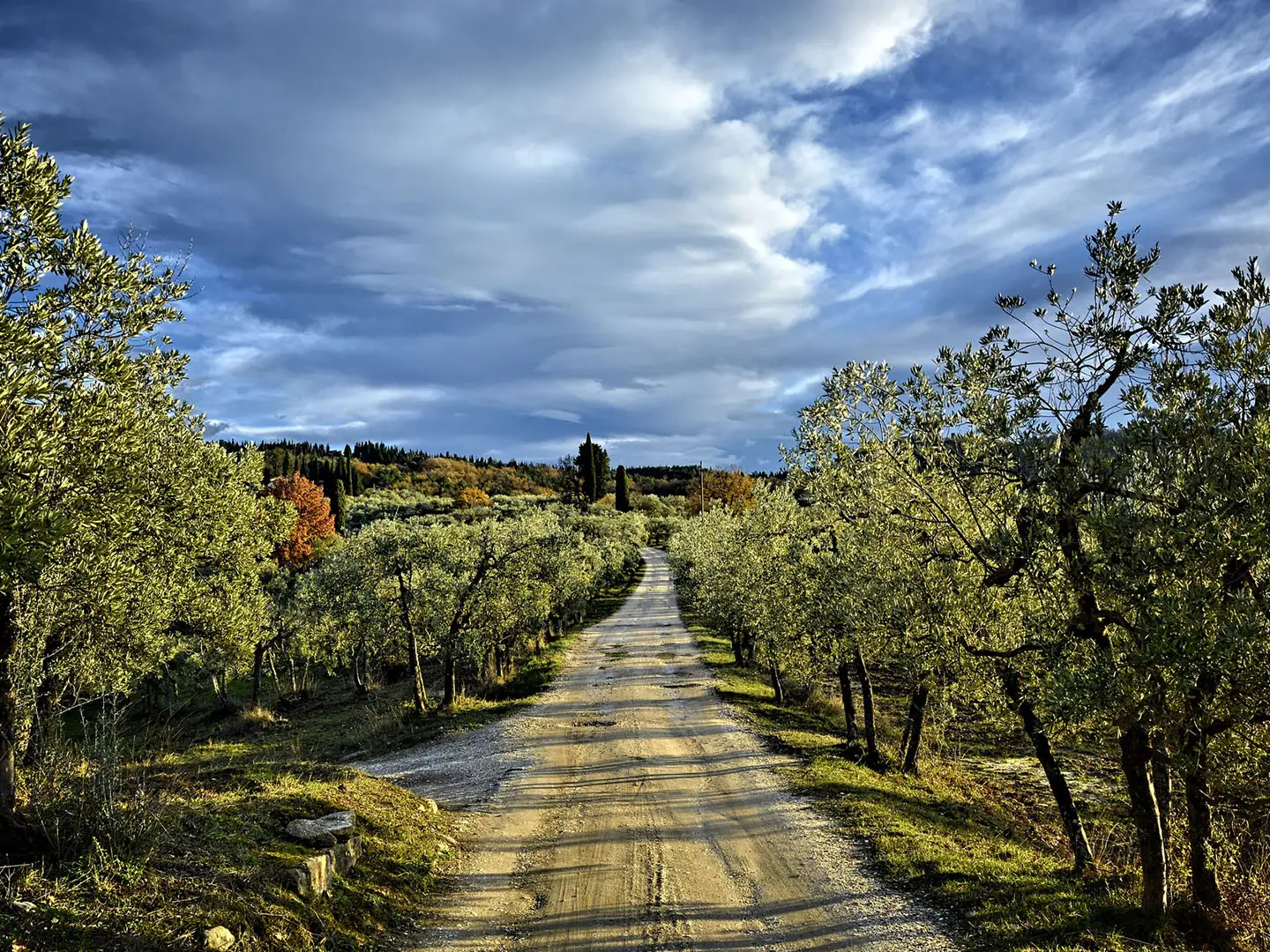
Wine Country Walking Routes
16 hand-picked long-distance trails
Wine country hikes are for walkers who want the rhythm of a real trail with vineyard landscapes built in. This collection ranges from short day walks through terraced vines and riverside slopes to multi-day routes across Chianti, Rioja, Alsace, the Mosel and the Wachau. Use it if you want wine-region scenery, walkable distances and villages at the end of the day.
Trails in this collection
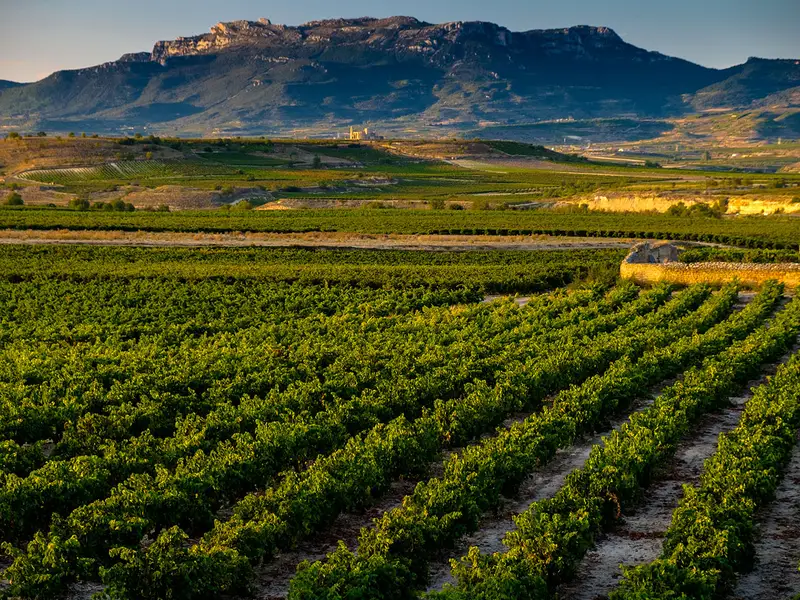
GR38 (Wine and Fish Route)
View trail → Spain · 166 km · 7 days · Moderate
 The GR38 broadens the theme beyond vineyards alone, running 166 km from Rioja Alavesa to Bermeo on the Bay of Biscay through mountainous, forest and coastal terrain over seven moderate days.
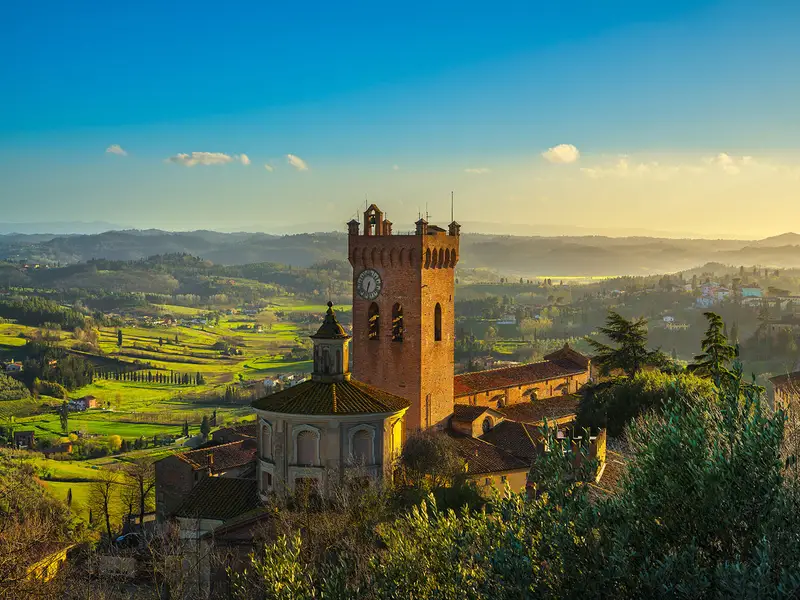
Via Francigena (Tuscan Segment)
View trail → Italy · 180 km · 7 days · Moderate
 The Tuscan Via Francigena segment adds pilgrimage structure to wine-country walking, covering 180 km from Lucca to Siena through rolling hills, vineyards, olive groves, woodland, clay fields and river crossings.
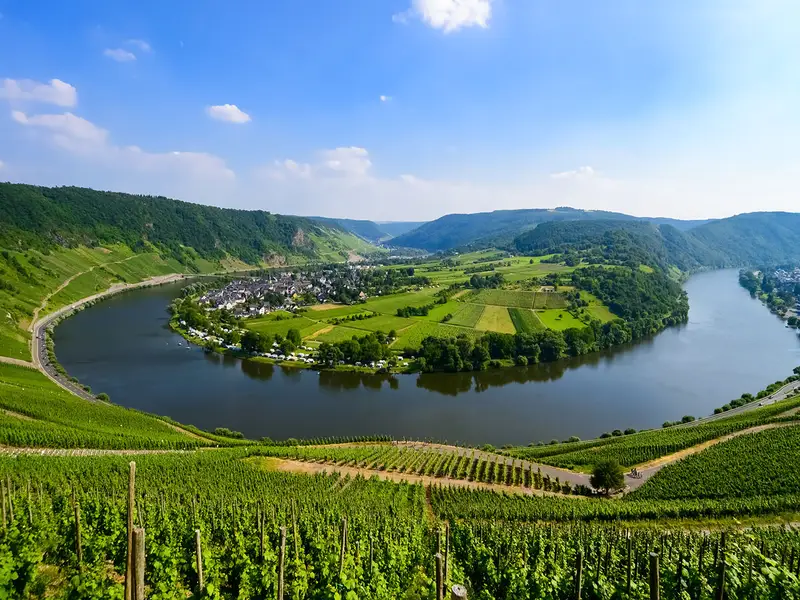
Moselsteig
View trail → Germany · 365 km · 24 days · Moderate
 The collection’s big commitment, the Moselsteig follows the German Moselle for 365 km from Perl to Koblenz, using 24 moderate stages through forest and hills in a classic wine river valley.
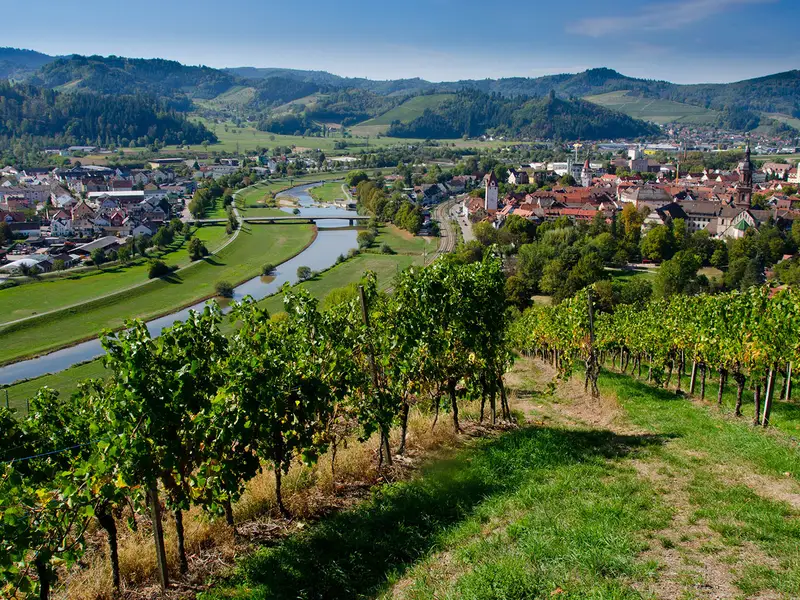
Ortenauer Weinpfad (Ortenau Wine Trail)
View trail → Germany · 101 km · 7 days · Moderate Waymarked and week-long, the 101 km Ortenauer Weinpfad follows the western edge of the northern Black Forest through vineyards, orchards, villages, forest and low mountain terrain.
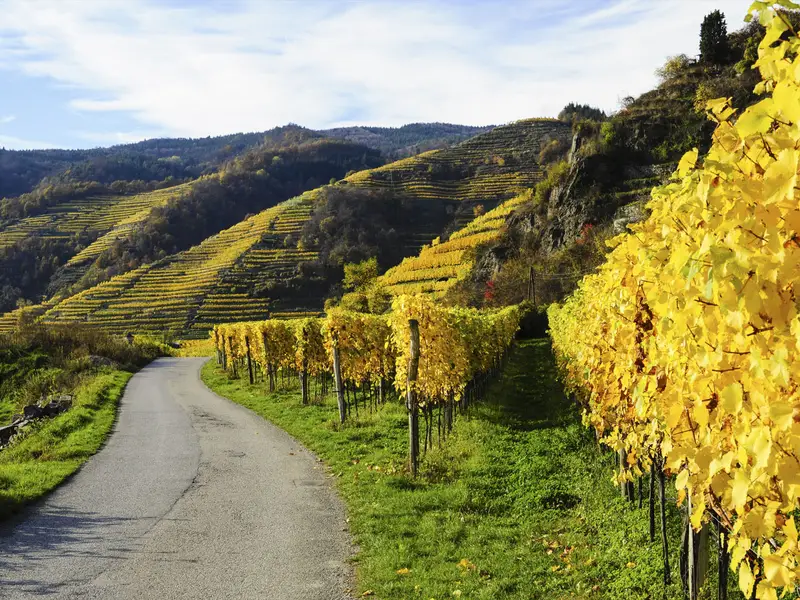
World Heritage Trail Wachau
View trail → Austria · 180 km · 12-14 days · Moderate
 The Wachau route suits walkers wanting a full wine-landscape circuit: a 180 km loop from Krems an der Donau through the UNESCO-listed Wachau, with vineyard, hilly and forest stages over 12–14 days.
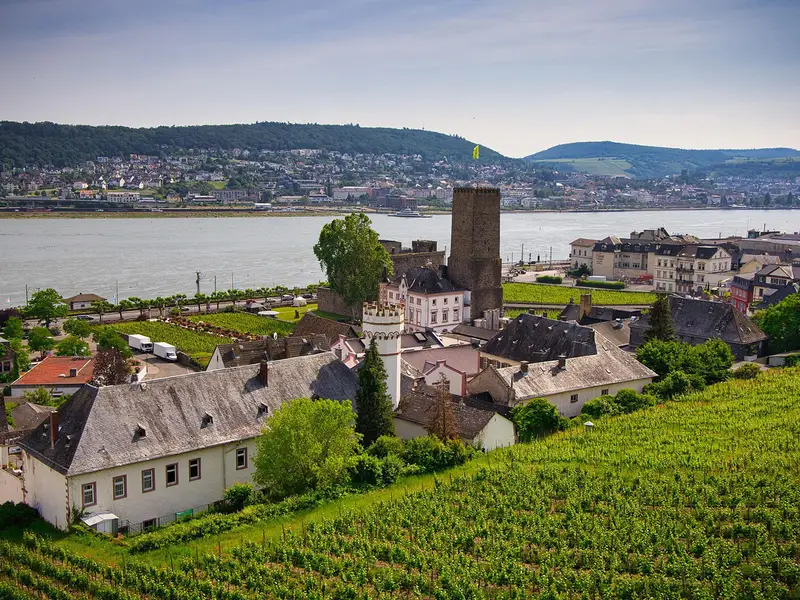
Rheingau Riesling Path
View trail → Germany · 90 km · 4 days · Moderate For a Riesling-focused journey, this 90 km German route crosses the Rheingau from Wicker to Kaub in four moderate days, pairing a famous wine region with substantial forest walking.
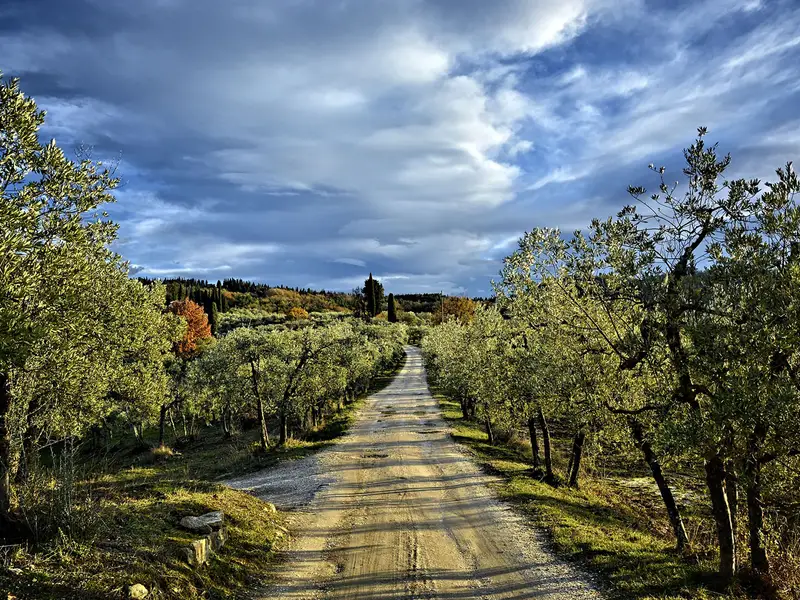
Chianti Trail
View trail → Italy · 48 km · 3 days · Moderate This 48 km, 3-day Tuscany walk threads Chianti Classico on established paths and strade bianche, mixing vineyards with olive groves, hilly ground and forest rather than staying on roads alone.
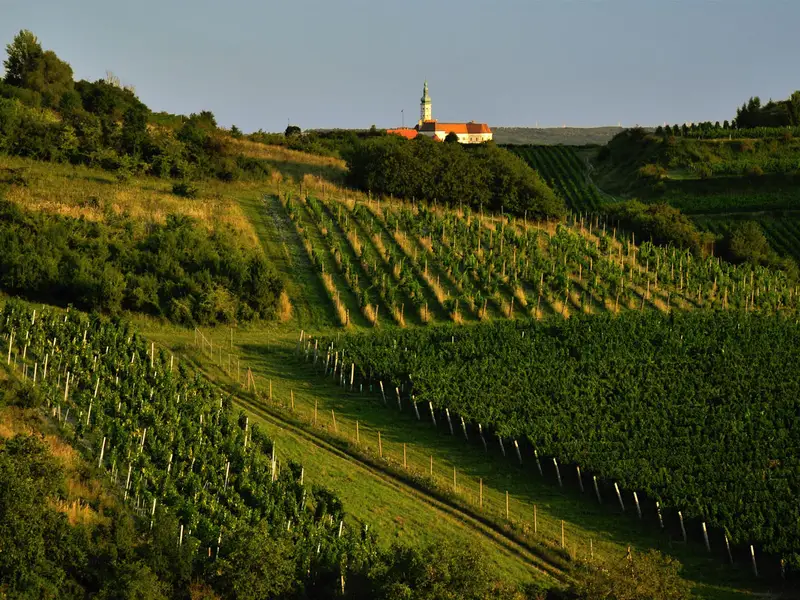
Mikulov Wine Trail
View trail → Czechia · 84 km · 2-3 days · Moderate
 The Mikulov Wine Trail is a flexible South Moravian choice: an 84 km waymarked loop best treated as a 2–3 day cycling route or walked in selected vineyard, hill, river-valley and farmland sections.
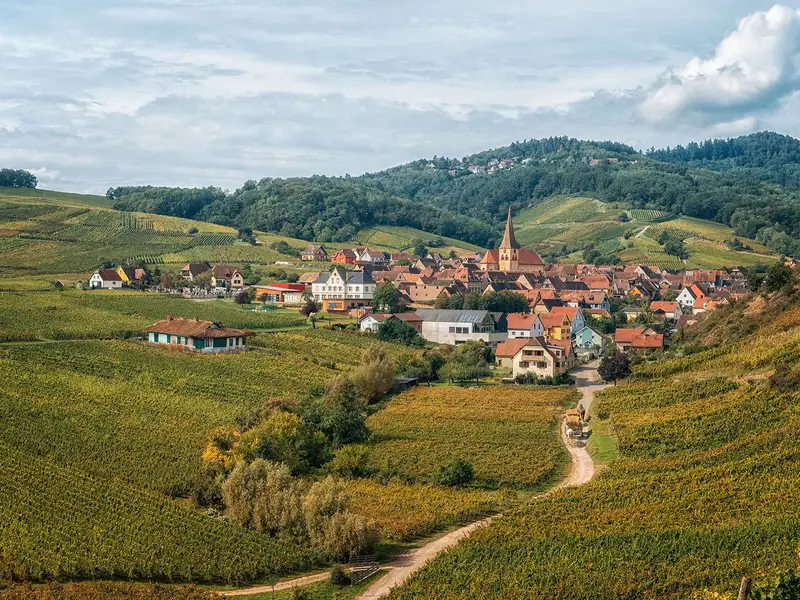
Alsace Vineyard Trail
View trail → France · 170 km · 1-8 days · Moderate
 The Alsace Vineyard Trail earns its place as a longer wine-region option, following the Route des Vins d’Alsace through vineyards, forest and hilly Vosges foothills between Strasbourg and Mulhouse.
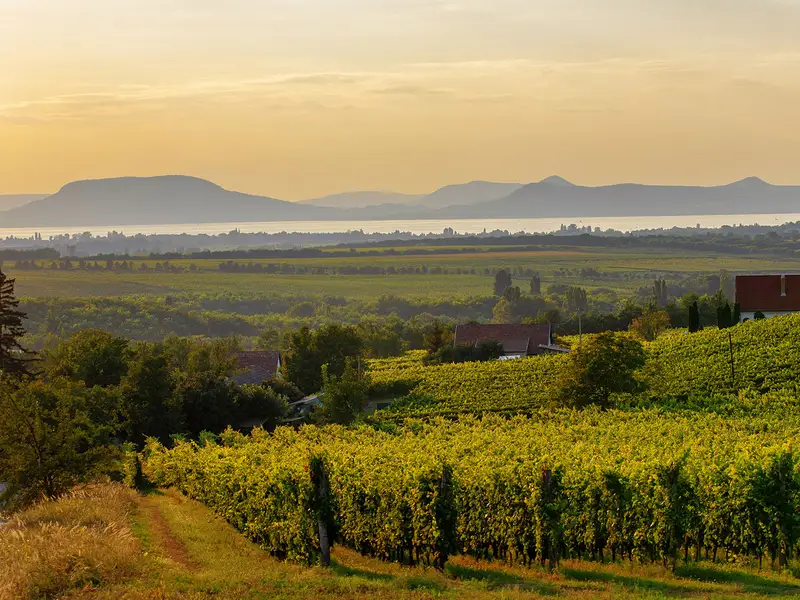
Badacsony Volcano Trail
View trail → Hungary · 10 km · 1 days · Moderate
 This 10 km Hungarian loop adds volcanic character to the wine-country mix, climbing over Badacsony, an extinct basalt witness hill above Lake Balaton, through vineyards and deciduous forest.
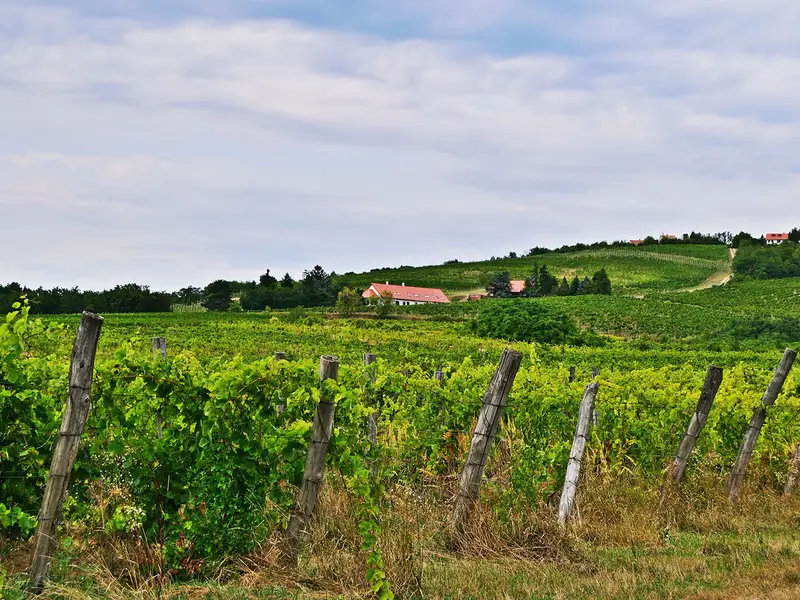
Káli Basin Loop
View trail → Hungary · 19.5 km · 1 days · Moderate The Káli Basin Loop is a moderate 19.5 km day circuit in the Balaton Uplands, combining vineyards with rolling farmland, meadows, woodland and low ridges in a protected landscape.
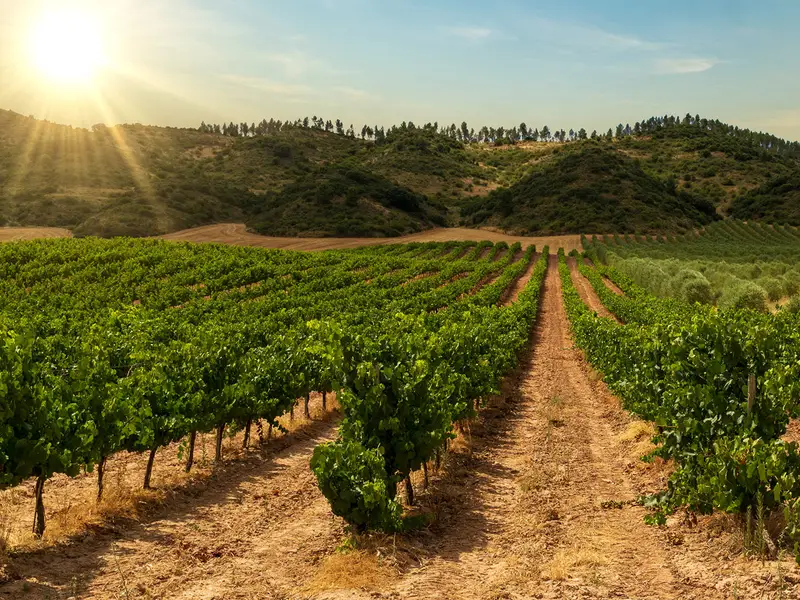
Camino Francés (Rioja Segment)
View trail → Spain · 62 km · 3 days · Moderate This 62 km section of the Camino Francés gives walkers three moderate days across La Rioja, moving from Logroño to Grañón through vineyards, farmland, rolling hills, cereal fields and urban edges.
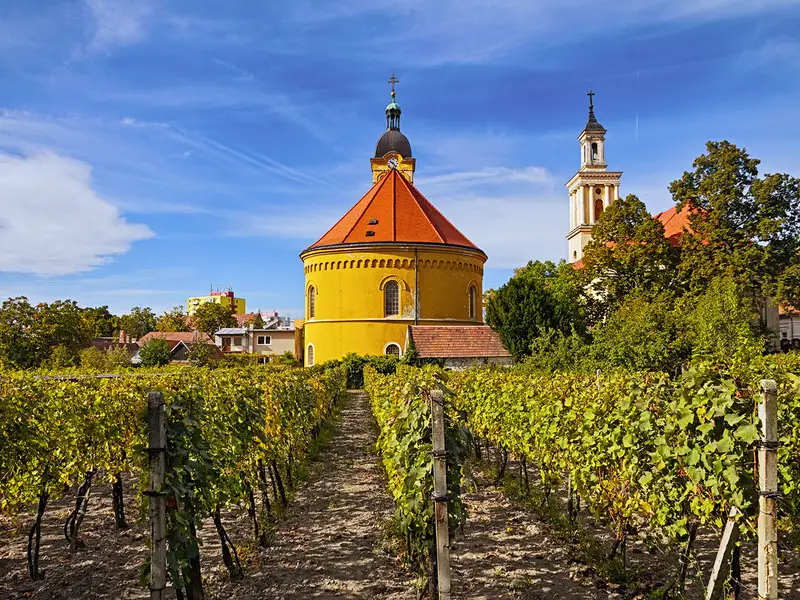
Small Carpathian Wine Trail
View trail → Slovakia · 50 km · 3 days · Easy
 Rather than a single measured hiking trail, this is an easy wine-tourism corridor along the Small Carpathians from Bratislava to Trnava, with vineyard slopes, forest, farmland and rolling hills for section walking.
Lavaux Vineyard Terraces Walk
View trail → Switzerland · 11 km · 1 days · Moderate
 This 11 km Swiss day hike is all about vineyard immersion: it crosses the UNESCO-listed Lavaux terraces on a steep lakeside hillside between Lutry and St-Saphorin, with wine villages built into the route.
South Styrian Wine Route
View trail → Austria · 25 km · 1 days · Moderate At roughly 25 km, this South Styrian point-to-point route is a concentrated Austrian wine-country day, linking Ehrenhausen, Gamlitz and Leutschach through hilly vineyards and forest near the Slovenian border.
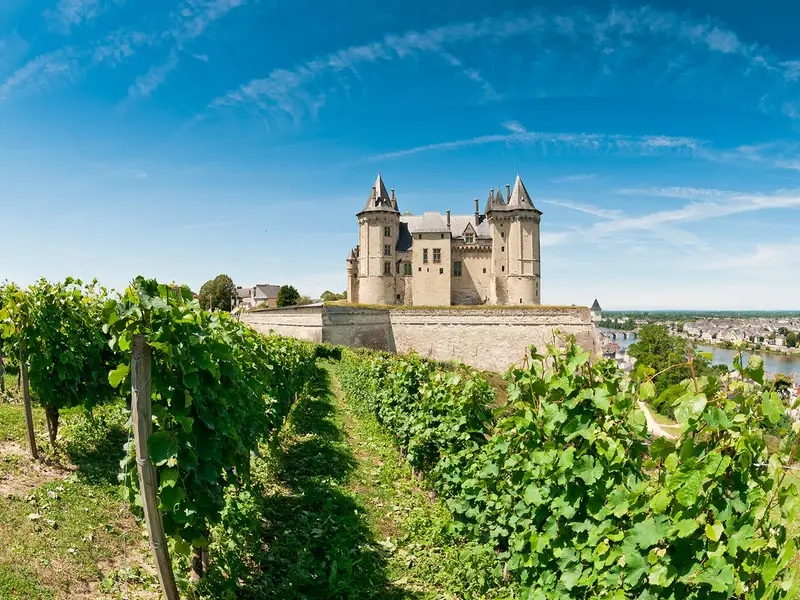
Loire Valley Vineyard Trail
View trail → France · 17.5 km · 1 days · Easy The Loire option is the easiest vineyard day walk here: about 17.5 km on the GR3 between Amboise and Montlouis-sur-Loire, with riverside terrain, low limestone slopes and forest fringe.
Wine Country Hikes: How to Choose a Vineyard Walk
Choosing the right vineyard route
Start with how much of your trip you want to spend walking. The shortest options here are compact day hikes of around 10–25 km, suited to travellers adding a vineyard walk to a wider itinerary. The longer routes demand a different mindset: several are week-long or multi-week journeys, with daily progress through changing wine country rather than a single tasting-focused outing.
Difficulty is mostly moderate, but that does not mean identical. Vineyard terrain can be surprisingly physical: terraces, repeated hillside climbs, low ridges, forest sections and river valleys all change the feel of a route. If you want the gentlest introduction, look for easy or short day walks. If you want immersion, choose a point-to-point route where each stage moves you deeper into the region.
Route shape also matters. Loops are useful when you want to return to the same base, while point-to-point wine country hikes usually need more planning around accommodation, baggage and onward transport. Some routes are formal waymarked trails; others are wine-tourism corridors or are best walked in selected sections, so check local mapping and signage before committing.
Practical planning for wine-region walks
These walks pass through working landscapes as well as scenic ones. Stay on marked paths, respect vineyard and farmland access, and do not assume every village stop will match your walking schedule. A route through famous wine country is still a hike: carry water, plan food stops, and allow for exposed slopes as well as shaded forest.
For a first trip, choose by terrain and time rather than by wine name alone. A short vineyard terrace walk gives a very different day from a 7-day pilgrimage segment or a 24-stage river route. The best wine country hikes balance the region you want to experience with the distance, difficulty and logistics you will genuinely enjoy.