Dubrovnik City Walls Trail
How would you rate Dubrovnik City Walls Trail?
Tap a star to share your experience and help other hikers.
Dubrovnik City Walls Trail: A Practical Walking Guide
HikeList Score
Dubrovnik City Walls Trail scored 76/100 on HikeList's trail-quality metrics.
See score breakdownHide breakdown
- Ideal length 55
- Balanced challenge 100
- Scenery & wildness 59
- Varied terrain 83
- Accommodation 91
- Food & support 74
- Path quality 74
- Season flexibility 100
Computed from length, challenge, scenery & wildness, terrain variety, accommodation, food & support, path quality and season flexibility.
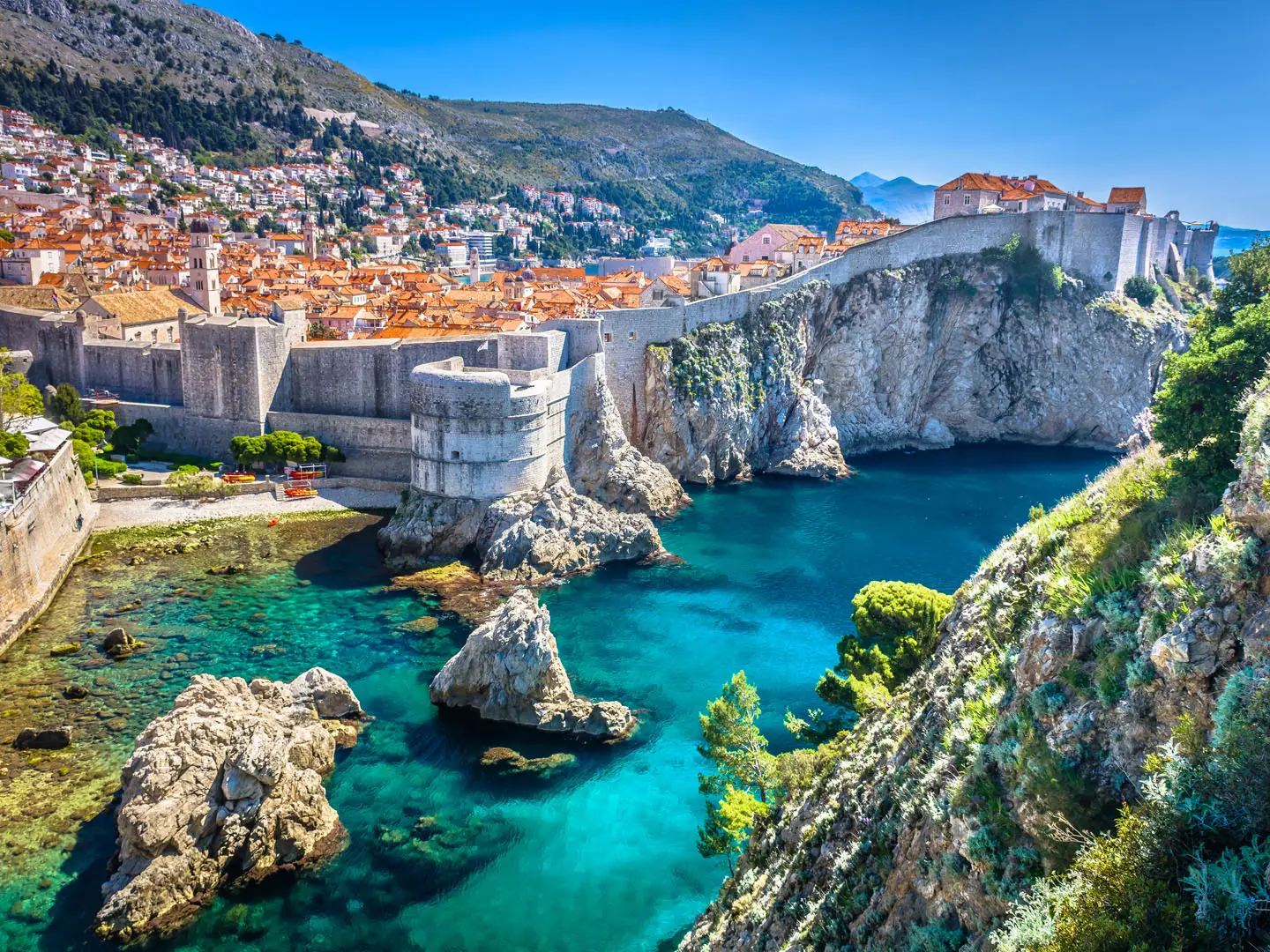
The Dubrovnik City Walls Trail is a short, paid heritage walk around the medieval ramparts of Dubrovnik Old Town on Croatia’s southern Adriatic coast. The loop is about 2 km, usually taking 1.5–2 hours, and is rated moderate because of roughly 1,190 stone steps, steep sections and exposed summer heat. It suits visitors who want the classic elevated views over the Old Town, Stradun, Adriatic Sea and Lokrum without committing to a wilderness hike.
Route Overview
This is a closed loop with no true start or finish. Most walkers begin at the main entrance by Pile Gate, just inside the Old Town near St Saviour Church and the Big Onofrio Fountain. Other official entrances are near Ploce Gate by the Dominican Monastery and near St John’s Fortress at the old harbour. The route is managed one-way, anticlockwise, along the rampart walkway, passing Minceta Tower, Fort Bokar, the Ploce Gate area, Revelin Fortress and St John’s Fortress. Fort Lovrijenac sits just outside the western walls and is included in the ticket. For a longer coastal walk from the city, see the Dubrovnik to Cavtat Coastal Trail, or compare wider Dalmatian options such as the Adriatic Long-Distance Trail.
Dubrovnik’s Walls and the Republic of Ragusa
Dubrovnik’s stone-and-lime walls were built and reinforced from roughly the 13th to 17th centuries, taking their present form during the wealthy maritime Republic of Ragusa in the 15th and 16th centuries. The defences were strengthened against Ottoman and seaborne threats, with major forts added by Renaissance engineers including Michelozzo and Antonio Ferramolino. The walls were never breached by a hostile army during the Republic’s history. The Old Town was inscribed as a UNESCO World Heritage Site in 1979 and restored after damage during the 1991–1992 siege.
Notable highlights
- Minceta Tower: The great round tower at the north-western corner is the highest point of the defensive system. It gives the strongest rooftop-and-sea panorama on the circuit.
- Fort Bokar: This western seafront fortress guards the Pile approach and projects out over the sea, giving clear views back to the walls and Fort Lovrijenac.
- St John’s Fortress: The massive rounded bastion protects the old harbour entrance. It now houses the Maritime Museum, making this corner one of the most interesting parts of the walk for maritime history.
- Revelin Fortress: The detached eastern fortress beside Ploce Gate was built as one of Dubrovnik’s strongest defences. It is now used for events and exhibitions.
- Fort Lovrijenac: This free-standing fortress outside the western walls is included in the City Walls ticket. It is nicknamed the “Gibraltar of Dubrovnik” and is also known as a Game of Thrones filming location.
- Rooftop and sea panoramas: The main reward is the continuous view over terracotta roofs, the marble Stradun, the Adriatic and Lokrum, with restored roof tiles visible from above.
Challenges to expect
Do not underestimate the walk because it is only 2 km. The ramparts involve around 1,190 steps, repeated steep up-and-down sections and worn historic stone that can be uneven or slippery when wet. Shade is very limited, so summer heat is tiring; go early or late. Crowds can build around narrow sections, especially in peak season and around cruise-ship times.
HikeList Score
Dubrovnik City Walls Trail scored 76/100 on HikeList's trail-quality metrics.
See score breakdownHide breakdown
- Ideal length 55
- Balanced challenge 100
- Scenery & wildness 59
- Varied terrain 83
- Accommodation 91
- Food & support 74
- Path quality 74
- Season flexibility 100
Computed from length, challenge, scenery & wildness, terrain variety, accommodation, food & support, path quality and season flexibility.
 Croatia
Show more data Show less
- Urban
- Coastal
- Historic Fortification
- Stone
- Steps
- Paved
- Hotels
- Guesthouses
- Apartments
- Family Friendly
- Restrooms
- Water Sources
Download Our Full Guide to Dubrovnik City Walls Trail FREE!
Get our comprehensive guide to this hike for free. Save it for later reading or print out at home.
Photos from hikers
Taken on the trail by people who've reviewed Dubrovnik City Walls Trail.
Dubrovnik City Walls Trail: The Complete Guide
 i
Image by dreamer4787
i
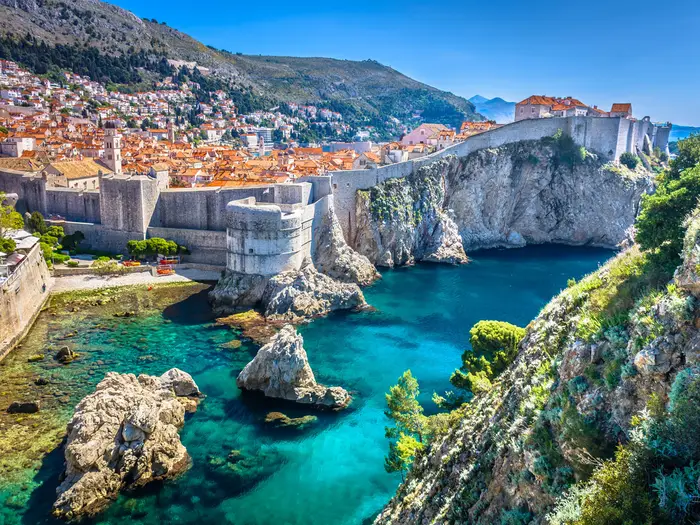
Image by dreamer4787 Dubrovnik City Walls Trail is a short but memorable rampart circuit around Stari Grad (Old Town), tracing the medieval defences high above the Stradun, terracotta rooftops and Jadransko more. It is a ticketed urban heritage walk rather than a countryside hike, best suited to walkers who want big views, history and a clear, self-guided route.
The 1,940 m loop is walked one-way anticlockwise, usually starting at Gradska vrata Pile (Pile Gate). From there the route heads first towards Tvrđava Bokar (Fort Bokar), follows the sea-facing wall towards Tvrđava sv. Ivana (St John’s Fortress), then returns along the landward side via the Ploče/Revelin corner and Tvrđava Minčeta (Minčeta Tower).
What makes the walk special is the constant change of angle: Lokrum and the Adriatic from the southern ramparts, the old harbour from the south-east corner, and the tight roofscape of Dubrovnik from the northern wall. Tvrđava Minčeta is the high point and the strongest single viewpoint on the circuit.
The challenge is not distance, but heat, stone and steps. Expect repeated steep stair flights, worn surfaces that can be slippery when wet, very little shade and no useful shortcut once committed to the one-way route.
This guide covers stages, timing, accommodation, food, transport, terrain and the common mistakes to avoid.
Stage-by-Stage Guide
Stage 1: Gradska vrata Pile (Pile Gate) to Tvrđava sv. Ivana (St John’s Fortress), via Tvrđava Bokar and the southern sea wall — about 1 km
This first half of the circuit takes you from the main western entrance at Gradska vrata Pile (Pile Gate) onto the seaward side of the walls. The route is walked anticlockwise only, so from Pile you head south towards the Adriatic rather than towards Tvrđava Minčeta (Minčeta Tower).
The opening section quickly makes clear why this short walk is graded as more than an easy city stroll. Expect repeated stone steps, worn historic paving and short level sections between towers. The stone can be slippery when wet, and the walkway is exposed to sun almost immediately.
The first major landmark is Tvrđava Bokar (Fort Bokar), the rounded western seafront fortress guarding the Pile approach. This is one of the best places for views back along the walls and across to Tvrđava Lovrijenac (Fort Lovrijenac), the separate fortress outside the western walls. Lovrijenac is included with the City Walls ticket, but it is a separate add-on after the rampart loop, not part of the wall circuit itself.
From Bokar the path follows the southern sea-facing ramparts above Jadransko more (the Adriatic Sea). This is the most open part of the walk, with long views towards Lokrum and out across the water. It is also one of the most exposed sections in hot weather and can feel windy on the seaward side.
The stage finishes at Tvrđava sv. Ivana (St John’s Fortress), the large rounded bastion at the old harbour. The fortress houses the Maritime Museum (Pomorski muzej) and an aquarium, making this south-eastern corner a natural place to pause for views over Stara luka (the old harbour), though entry to museums is separate from simply walking the walls unless covered by a pass or ticket arrangement. Current inclusions should be checked before travelling.
Food and water planning is simple: carry water from the start. There are public fountains and cafés in the Old Town, but the rampart circuit itself should not be treated as a route with reliable resupply. Any on-wall café stop should be considered optional, with opening dependent on season and operating hours.
There is no accommodation on or at the end of this stage. If staying close to this side of the circuit, look in Stari Grad (Old Town) or the Ploče area; wider Dubrovnik, including Lapad and Babin Kuk, generally gives more choice and better value.
For access, the practical trailhead remains Pile. Libertas city buses run to the Pile terminus outside the gate, while the pedestrian-only Old Town means there is no vehicle access directly to the walls. Dubrovnik has no railway; arrivals from the airport or Gruž harbour need onward bus, taxi or transfer to the Old Town area.
Navigation is straightforward because the circuit is enclosed, ticketed and one-way. The main mistake is expecting a shortcut: once committed to the ramparts, plan to continue with the flow of walkers rather than turning back against the route.
Key warnings on this stage are heat, steps, glare and crowds. In summer, avoid starting in the middle of the day if possible; use opening time or the last hour before closing instead. Wear grippy footwear rather than smooth-soled sandals, especially after rain.
Stage 2: Tvrđava sv. Ivana (St John’s Fortress) to Gradska vrata Pile (Pile Gate), via the Ploče/Revelin corner, northern wall and Tvrđava Minčeta — about 1 km
The second half leaves the old harbour corner and turns onto the eastern and northern landward walls. This section gives the classic elevated view over Dubrovnik’s terracotta rooftops, the Stradun/Placa and the tightly packed streets of Stari Grad.
Soon after St John’s Fortress, the route passes the Ploče side of the Old Town. Gradska vrata Ploče (Ploče Gate) is one of the official entrances to the wall circuit, and Tvrđava Revelin (Revelin Fortress) stands just outside the walls in this area. Revelin is viewed from the ramparts; entry inside it is not included with the City Walls ticket.
The northern landward wall is the more roofscape-focused half of the circuit. Many of the bright red roof tiles visible below date from restoration after the 1991–1992 siege of Dubrovnik, and the height of the ramparts makes the pattern of streets and courtyards much clearer than at ground level.
The main physical effort comes as the route climbs towards Tvrđava Minčeta (Minčeta Tower) near the north-western corner. Minčeta is the highest point of the defensive system, with the walls reaching about 25 m above the Old Town. It is also the finest single viewpoint on the circuit, so expect slower movement and photo congestion here.
Minčeta is a genuine on-route highlight, not a side trip. It is also a well-known Game of Thrones location, used as the exterior of the House of the Undying in Qarth. More generally, the walls, Pile/Bokar area and Lovrijenac are associated with King’s Landing filming locations, but route planning should still prioritise the one-way wall circuit over trying to detour mid-walk.
After Minčeta the walkway descends back towards Gradska vrata Pile (Pile Gate). The final stair flights can feel harder than expected because they come after many repeated climbs and descents rather than one continuous ascent.
Food and water remain limited to what you have carried or what is available once you leave the walls. Big Onofrio’s Fountain (Velika Onofrijeva fontana) and the cafés of the Old Town are close to the Pile entrance area, but water should be carried before setting out, particularly from late spring to early autumn.
Accommodation at the end is simply Dubrovnik accommodation. Staying inside Stari Grad is atmospheric and convenient but usually limited and expensive; Pile and Ploče keep you close to the gates, while Lapad and Babin Kuk offer more options outside the walled core.
Pile is the easiest place to leave the walk by public transport. Libertas buses serve the Pile terminus, and the 1-day Dubrovnik Pass includes a 24-hour Libertas bus ticket. Exact ticket prices, wall opening hours and any temporary section closures should be checked on the official City Walls website before travelling.
Navigation is still uncomplicated: remain on the signed anticlockwise circuit and follow the rampart walkway back to Pile. Do not confuse Tvrđava Lovrijenac with an on-wall objective; it stands outside the western walls and is best visited separately after exiting.
The main cautions are the same but often more noticeable on this half: steep flights of worn stone steps, narrow sections, full sun and crowd bottlenecks around viewpoints. There is no mud, livestock, remote navigation, wild camping, hut system or resupply planning on this route; the practical challenge is managing heat, footing and the one-way flow on a busy historic walkway.
Recommended Itinerary
This is a single-session walk, not a multi-day trek. The most practical plan is to enter at Gradska vrata Pile (Pile Gate), complete the one-way anticlockwise circuit, then return to the Old Town or add Tvrđava Lovrijenac (Fort Lovrijenac) separately if time, heat and steps allow.
Standard itinerary: full walls circuit from Pile Gate
| Day | From | To | Approx. distance | Why this stage makes sense | Services/accommodation notes |
|---|---|---|---|---|---|
| 1 | Gradska vrata Pile (Pile Gate) | Tvrđava sv. Ivana (St John’s Fortress), via Tvrđava Bokar (Fort Bokar) and the southern sea wall | About 1 km | Starting at Pile is the simplest option for most walkers arriving by Libertas bus, taxi or on foot. The anticlockwise route quickly reaches the seaward walls, with open views to Jadransko more (the Adriatic Sea), Lokrum and the harbour approach. | Buy or validate the City Walls ticket before entering. Carry water from the Old Town; the walls are exposed and there is little shade. No accommodation applies on the walls themselves — stay in Dubrovnik, commonly in Stari Grad, Pile, Ploče, Lapad or Babin Kuk. |
| 1 | Tvrđava sv. Ivana (St John’s Fortress) | Gradska vrata Pile (Pile Gate), via the Ploče/Revelin corner, northern landward wall and Tvrđava Minčeta (Minčeta Tower) | About 1 km | This half of the circuit climbs along the landward side above the Old Town rooftops and finishes with the highest point at Minčeta near the end. It keeps the wall’s enforced one-way flow and avoids any need to backtrack. | Once committed to the circuit, there is no useful shortcut across the walls. Expect repeated stair flights on worn stone. Check current opening hours, ticket prices and any temporary closures at citywallsdubrovnik.hr before travelling. |
Slower variant: walls plus Fort Lovrijenac
Allow the walls to take up to 2.5–3 hours if stopping often for viewpoints, photos or a longer pause on the ramparts. This suits visitors who want time at Tvrđava Bokar, the Stara luka (old harbour) views, the roofscape above the Stradun/Placa and Tvrđava Minčeta without feeling pressured by crowds behind them.
Tvrđava Lovrijenac (Fort Lovrijenac) is not on the rampart circuit, but it is included with the City Walls ticket. Treat it as a separate add-on outside the western walls, either before or after the loop, rather than as part of the 1,940 m wall walk. Check same-day access and closing times before committing, especially in winter when opening hours are shorter.
Faster variant: continuous circuit only
A faster visit means walking the full anticlockwise loop with only brief stops, still starting and finishing at the same gate. It suits walkers with limited time who mainly want the elevated circuit and the key views, rather than museum visits or extended photography.
Do not underestimate the effort just because the route is only about 2 km. The continuous stone stairways, heat, queues at narrow points and one-way system make it slower than a normal urban walk, particularly in summer. For the quickest and most comfortable circuit, use opening time or the last hour before closing rather than midday.
Planning the Route
How much time to allow
Plan the Dubrovnik City Walls Trail as a single outing, not a multi-day hike. Most walkers should allow 1.5 to 2 hours for the full anticlockwise circuit, including steady progress on the stair flights and time at the main viewpoints.
A faster walk is possible, but it misses the point of the route and can be frustrating in crowds. In summer, photography queues, narrow sections and heat can slow the pace considerably; with café, museum or viewpoint stops, the outing can stretch towards 2.5–3 hours.
The best plan is to give the walls a clear half-day slot rather than squeezing them between timed bookings. This is especially true if adding Tvrđava Lovrijenac (Fort Lovrijenac) afterwards, which is included with the City Walls ticket but sits outside the rampart loop on its own rock west of the Old Town.
Choosing where to start
There is no true trailhead, but Gradska vrata Pile (Pile Gate) is the natural and busiest starting point. It sits at the western end of Stari Grad (Old Town), close to Crkva sv. Spasa (St Saviour Church) and Velika Onofrijeva fontana (Big Onofrio’s Fountain), and is the easiest entrance to reach by city bus or taxi.
Two other official entrances join the same one-way circuit: near Gradska vrata Ploče (Ploče Gate) by the Dominican Monastery, and at Tvrđava sv. Ivana (St John’s Fortress) by the old harbour. Whichever entrance is used, the walls are walked anticlockwise only, with signage and the narrow walkway controlling the direction of travel.
From Pile, the practical order is straightforward: head first towards Tvrđava Bokar (Fort Bokar) and the sea-facing southern wall, continue to Tvrđava sv. Ivana (St John’s Fortress), pass the harbour and Ploče/Revelin corner, then follow the higher northern landward wall to Tvrđava Minčeta (Minčeta Tower) near the end before descending back towards Pile.
Shortening, extending and section-walking
This is not a route that lends itself to section hiking. The wall walk is a ticketed, one-way rampart circuit, and the sensible plan is to complete it in one continuous lap.
Do not plan on using the walls as a flexible hop-on, hop-off walking route. Once committed to the circuit, the practical expectation is to keep moving with the one-way flow and complete the loop rather than trying to shortcut it.
The best extension is Tvrđava Lovrijenac (Fort Lovrijenac), which is included in the City Walls ticket but is separate from the ramparts themselves. It adds another climb and gives a different view back to the western walls, Pile area and Tvrđava Bokar.
Other add-ons are better treated as separate Old Town sightseeing rather than part of the walk. Tvrđava Revelin (Revelin Fortress) is seen from the walls beside Ploče Gate, but entry inside Revelin is not included in the City Walls ticket.
Timing the walk
The main planning decision is not distance; it is timing. The walls are exposed stone with almost no shade, and the route involves repeated steep flights of steps, so heat and crowds matter far more than navigation.
In April–May and late September–October, temperatures are usually more comfortable and the route is easier to enjoy at a normal pace. In June–August, aim for opening time or the final hour before closing, and avoid the middle of the day wherever possible.
Winter can be quiet and cool, but opening hours are much shorter. The walls are open year-round except Christmas Day, but exact daily hours, seasonal prices and temporary closures should be checked on citywallsdubrovnik.hr before travelling.
Wet weather changes the character of the walk. The historic stone is worn and can become slippery, especially on steps and ramps; grippy footwear is still useful even though this is an urban heritage route rather than a countryside hike.
Tickets and access planning
The City Walls are a paid attraction managed by the Society of Friends of Dubrovnik Antiquities. As of the 2026 season, the standard adult ticket is about €40, with discounted tickets for children and students; current prices should be checked before booking.
The City Walls ticket includes Tvrđava Lovrijenac (Fort Lovrijenac) and the Western Outer Walls / Fort Bokar interior, but it does not include entry inside Tvrđava Revelin (Revelin Fortress). The 1-day Dubrovnik Pass, also about €40, includes the City Walls, several museums and a 24-hour Libertas bus ticket, so it can be better value if the same day includes other paid sights or city buses.
Online booking is available through the official City Walls webshop. In peak season, buying ahead and arriving early helps reduce time spent queueing at the entrance.
Accommodation and stage planning
There are no stages, huts, campsites or overnight stops to plan along the walls. Accommodation planning is simply about choosing a convenient base in Dubrovnik.
Staying inside Stari Grad (Old Town) puts the entrances within easy walking distance, but rooms are limited, atmospheric and usually expensive. Pile and Ploče are very convenient for the wall entrances without necessarily being inside the walled town.
For more choice and often better value, look to wider Dubrovnik, including Lapad and Babin Kuk. These areas work well if paired with Libertas buses to the Pile terminus before and after the walk.
Food, water and facilities
Carry water onto the walls, particularly in warm weather. The ramparts are exposed, the steps are continuous, and it is easy to underestimate how quickly the heat builds on the stone.
This is not a resupply walk. Food planning is simply a matter of eating before or after in Dubrovnik, or allowing extra time for a café stop if one fits the visit.
Public fountains in the Old Town are useful before or after the walk, but do not rely on finding water at the moment it is needed once on the ramparts. A sun hat, sunscreen and enough water matter more here than any specialist hiking equipment.
Navigation and transport priorities
Navigation on the walls is simple: follow the signed one-way anticlockwise route. A map is useful only for understanding the order of landmarks and choosing which entrance to use.
Transport planning is more important. Dubrovnik has no railway, and the Old Town is pedestrian-only, so plan to reach the gate area rather than drive to a trailhead.
From Dubrovnik Airport at Čilipi, about 20 km south of the city, use the airport shuttle bus or a taxi/transfer. Within Dubrovnik, Libertas buses, including lines such as 1A, 1B, 3, 4, 6, 8 and 9, run to the Pile terminus just outside Pile Gate. Cruise passengers arriving at Gruž harbour can reach Pile by bus or taxi.
What planning matters most
| Planning issue | How it applies on this route |
|---|---|
| Time of day | Critical in summer; aim for early morning or late afternoon rather than midday. |
| Tickets | Required; check current prices, opening hours and closures before travelling. |
| Water and sun protection | Essential because the ramparts are exposed and almost shadeless. |
| Footwear | Wear grippy shoes or sandals with secure soles; worn stone can be slippery. |
| Accommodation | Not route-dependent; choose a Dubrovnik base with easy access to Pile, Ploče or the Old Town. |
| Navigation | Minimal; the circuit is signed and one-way. |
| Food and resupply | Not relevant as a hiking logistics issue; eat before/after and carry water. |
| Wild camping, huts and remote safety | Do not apply to this short urban ticketed walk. |
Towns, Villages and Overnight Stops
This route does not work like a long-distance trail with stage villages. The Dubrovnik City Walls Trail is a short, ticketed urban loop on the ramparts of Stari Grad (Old Town), so there are no huts, campsites, wild-camping options or overnight stops on the walk itself.
Plan to stay in Dubrovnik and treat the walls as a half-day walk. Accommodation is in the city: hotels, guesthouses (pansioni) and apartments in and around Stari Grad, Pile, Ploče, Lapad and Babin Kuk.
| Area | Best for | Overnight practicality |
|---|---|---|
| Stari Grad (Old Town) | Immediate access to the walls, Stradun/Placa and the three wall entrances | Limited, atmospheric and usually expensive; pedestrian-only, so luggage must be carried in from the gates |
| Pile | Easiest access to the main entrance at Gradska vrata Pile (Pile Gate) | Very practical if the wall walk is the priority; Libertas buses run to the Pile terminus just outside the gate |
| Ploče | Access to the eastern side of the Old Town and Gradska vrata Ploče (Ploče Gate) | Useful if staying east of the walls; the Ploče entrance gives onto the same one-way circuit |
| Lapad and Babin Kuk | More choice and generally better value than inside the walls | Better for a longer Dubrovnik stay; use city buses or taxis/transfers to reach Pile |
| Gruž harbour | Cruise arrivals and onward local transport | Cruise ships dock here; reach Pile by bus or taxi before starting the wall circuit |
Gradska vrata Pile (Pile Gate) and the Pile area
Gradska vrata Pile is the main and most-used entrance to the wall circuit, just inside the western end of the Old Town near Crkva sv. Spasa (St Saviour Church) and Velika Onofrijeva fontana (Big Onofrio's Fountain). For most walkers, this is the simplest place to begin because it sits beside the main public transport approach to the pedestrian Old Town.
Pile is a practical overnight area if the priority is an early start on the walls. Staying here avoids crossing the city before opening time and makes it easier to return quickly after completing the anticlockwise loop.
Libertas public buses, including lines such as 1A, 1B, 3, 4, 6, 8 and 9, run to the Pile terminus outside the gate. The 1-day Dubrovnik Pass includes a 24-hour Libertas bus ticket, which can be useful if staying in Lapad, Babin Kuk or elsewhere outside the Old Town.
Food, cafés and shops are concentrated around the Old Town rather than on the rampart circuit itself. Carry water before entering the walls, especially in summer, as the route is exposed and there is no meaningful resupply once committed to the one-way circuit.
Tvrđava Bokar (Fort Bokar)
Tvrđava Bokar is the first major fortress reached after entering at Pile and heading south towards the sea. It is a landmark on the circuit, not a place to sleep or resupply.
There is no accommodation, transport access or normal hiker service at Bokar. Its practical value is as an early viewpoint and orientation point before the walk commits fully to the exposed southern sea-facing wall.
This part of the route is close to the Pile approach, so any food, toilets or luggage arrangements should be dealt with before entering the walls. The historic stone steps begin immediately to matter here: grippy footwear is more useful than heavy hiking boots.
Southern sea-facing wall above Jadransko more
The southern ramparts run above the Adriatic Sea (Jadransko more), with open views towards Lokrum. This is one of the most exposed parts of the circuit, with very little shade and wind possible on the seaward side.
There are no overnight options and no village-style services along this section. Treat it as a continuous elevated walkway rather than a promenade with regular exits.
In hot weather, this section is a strong reason to start at opening time or leave the walk until late afternoon. A sun hat, sunscreen and water matter more here than distance fitness: the circuit is short, but the stone, steps and heat make it tiring.
Tvrđava sv. Ivana (St John's Fortress) and Stara luka (Old Harbour)
Tvrđava sv. Ivana sits at the south-eastern corner of the walls, guarding Stara luka, the old harbour. It is also one of the three official access points to the same one-way wall circuit.
The fortress area is a useful mid-route reference point, particularly for walkers who entered at Pile and have completed roughly the first half of the circuit. It is not an overnight stop, but the surrounding Old Town has accommodation, cafés and restaurants close by once off the walls.
St John's Fortress is also home to the Maritime Museum (Pomorski muzej) and an aquarium, so this corner can be paired with indoor sightseeing before or after the wall walk. Opening hours and ticket arrangements for museums should be checked separately before travelling.
Gradska vrata Ploče (Ploče Gate) and Tvrđava Revelin (Revelin Fortress)
The Ploče side lies on the eastern approach to the Old Town. Gradska vrata Ploče is another official entrance to the walls, and Tvrđava Revelin stands just outside the wall as a detached fortress.
Ploče is a sensible overnight area for walkers who want to stay just outside the eastern side of the Old Town. It gives quick access to the Ploče entrance while avoiding the need to sleep inside the pedestrian-only Stari Grad.
Revelin is viewed from the walls, but entry inside the fortress is not included in the City Walls ticket. Do not plan it as part of the rampart loop unless arranging a separate visit.
Vehicle access remains outside the walls, and the Old Town itself is pedestrian-only. If arriving with luggage, choose accommodation with this in mind and check exact arrival instructions before booking.
Northern landward wall above Stari Grad
After the Ploče/Revelin corner, the route follows the eastern and northern landward walls above the Old Town rooftops. This is still part of the one-way circuit, with no village stop and no overnight facility.
The main practical issue here is fatigue rather than distance. By this point the repeated stone staircases have built up, and in summer the lack of shade can make the final part of the loop feel harder than expected.
Views over the terracotta roofs, the Stradun/Placa and the restored Old Town are the reason to slow down here, but avoid blocking the narrow walkway. Crowds can make this section slower, especially around midday and during cruise-ship peaks.
Tvrđava Minčeta (Minčeta Tower)
Tvrđava Minčeta is the high point of the defensive system at the north-western corner of the walls, near the end of the circuit for walkers who started at Pile. The walls reach about 25 m above the Old Town here.
There is no accommodation or service point at Minčeta. Its value is as the strongest viewpoint on the route and a clear sign that the loop is nearly complete.
The tower area can be busy because it is a major photo stop and a Game of Thrones filming location, used as the exterior of the House of the Undying in Qarth. Keep moving where the walkway narrows, and save longer breaks for after leaving the walls.
Back to Gradska vrata Pile
The anticlockwise circuit descends back towards Gradska vrata Pile, where most walkers finish. From here it is easy to return to Old Town accommodation, reach the Pile bus terminus, or continue separately to Tvrđava Lovrijenac (Fort Lovrijenac), which is included in the City Walls ticket but stands outside the western walls.
Pile is the most convenient place to plan post-walk food, transport or a return to accommodation elsewhere in Dubrovnik. Current wall ticket prices, opening hours and any temporary closures should be checked on citywallsdubrovnik.hr before travelling.
Getting to the Start
The City Walls are reached through Dubrovnik’s pedestrian Old Town (Stari Grad), not from a rural trailhead. The most convenient entrance for most walkers is by Gradska vrata Pile (Pile Gate), at the western end of the Old Town, just inside the walls near Crkva sv. Spasa (St Saviour Church) and Velika Onofrijeva fontana (Big Onofrio’s Fountain).
There are also official entrances near Gradska vrata Ploče (Ploče Gate), by the Dominican Monastery, and at Tvrđava sv. Ivana (St John’s Fortress) by the old harbour. All three feed onto the same one-way anticlockwise wall circuit, so choose the entrance that best fits where you are staying or arriving.
By train
Dubrovnik has no railway station. Do not plan this walk around a direct train arrival into the city.
If travelling through Croatia or the wider region by rail, the final leg to Dubrovnik will need to be by long-distance bus, private transfer, hire car or flight. Current onward connections should be checked before travelling.
By bus
For most visitors already in Dubrovnik, the simplest public-transport approach is by Libertas city bus to the Pile terminus, just outside Gradska vrata Pile (Pile Gate). Lines serving Pile include 1A, 1B, 3, 4, 6, 8 and 9.
From Pile, walk through the gate into the Old Town and follow signs for the City Walls entrance near St Saviour Church and Big Onofrio’s Fountain. The Old Town itself is pedestrian-only, so buses stop outside the walls rather than at the ticketed entrance.
Cruise ships dock at Gruž harbour. From there, Pile is a short bus or taxi ride, making the Pile entrance the natural starting point for cruise passengers as well.
The 1-day Dubrovnik Pass includes a 24-hour Libertas bus ticket, which can be useful if combining the walls with other sights. Bus routes, operating times and any pass conditions should be checked before travelling.
By car
Driving is not useful for the final approach to the walls. The walled Old Town is pedestrian-only, with no vehicle access inside, and the City Walls entrances are reached on foot.
Drivers should park outside the Old Town and continue to Pile, Ploče or the old harbour entrance on foot or by local bus/taxi. Parking availability, charges and access restrictions around the Old Town change seasonally and should be checked before travelling.
In summer, traffic and parking pressure around the Old Town can be significant. If staying in Dubrovnik, it is usually easier to use accommodation-based parking where available and take a Libertas bus or taxi to Pile.
From the nearest airport
Dubrovnik Airport (Zračna luka Dubrovnik / Čilipi) is about 20 km south of Dubrovnik. From the airport, use the airport shuttle bus or a taxi/private transfer towards the Old Town.
For the City Walls, ask for or travel to Pile unless accommodation is closer to Ploče or the old harbour. Pile is the most common and straightforward access point for first-time walkers.
Airport shuttle times, taxi arrangements and transfer prices vary by season and flight schedule. This should be checked before travelling.
Where to stay before starting
There is no accommodation on the walls; this is a short ticketed heritage walk rather than a multi-day hike. Stay in Dubrovnik and walk, bus or taxi to one of the official entrances.
The most convenient areas are Stari Grad (Old Town), Pile and Ploče. Staying inside the walled Old Town puts you closest to the entrances, but rooms are limited, atmospheric and usually expensive, and all luggage has to be handled within the pedestrian-only zone.
Lapad and Babin Kuk generally offer more choice and better value, with Libertas bus connections into Pile. They are practical bases if the walls are only one part of a wider Dubrovnik stay.
Getting Home from the Finish
The City Walls are a closed loop, so there is no separate trailhead to escape from at the end. If you start at Gradska vrata Pile (Pile Gate), the normal finish is back at Pile; if you enter at Gradska vrata Ploče (Ploče Gate) or Tvrđava sv. Ivana (St John’s Fortress), you return to that same access point after completing the one-way anticlockwise circuit.
The key practical point is that Stari Grad (the Old Town) is pedestrian-only. Buses, taxis and transfers all operate from outside the gates, not from within the walled streets.
By train
Dubrovnik has no railway station. There is no train option from the finish, and walkers should not plan rail connections directly from Dubrovnik Old Town.
For onward travel, use buses, taxis/transfers or the airport shuttle instead. Any onward public transport beyond Dubrovnik should be checked before travelling.
By bus
The easiest public-transport exit is usually from the Pile side. Libertas city buses run to the Pile terminus just outside Gradska vrata Pile, with lines such as 1A, 1B, 3, 4, 6, 8, 9 serving the Old Town area.
If you finish at Ploče or St John’s Fortress, you can either walk through or around the pedestrian Old Town to reach the most convenient gate, or continue to Pile for the main bus terminus. Allow time for crowded streets in summer, especially if a cruise ship is in port.
A 1-day Dubrovnik Pass includes a 24-hour Libertas bus ticket, which can be useful if the wall walk is part of a wider day in the city. Bus times, ticket validity and evening service levels are timetable-dependent and should be checked before travelling.
By car/taxi
There is no vehicle access inside Stari Grad, so taxis and private transfers pick up outside the walls. Pile is the most natural meeting point for most walkers, while Ploče may be more convenient if staying on the eastern side of the Old Town.
If returning to accommodation in Lapad, Babin Kuk, Pile, Ploče or elsewhere in Dubrovnik, a taxi or city bus is usually simpler than trying to bring a car close to the Old Town. Cruise passengers returning to Gruž harbour can take a short bus or taxi ride from Pile.
If finishing in the last hour before closing, arrange onward transport before going onto the walls, particularly in high season. The rampart circuit is one-way and cannot be shortened once committed, so avoid booking a tight pickup immediately after the estimated finish time.
From the nearest airport
Dubrovnik Airport (Zračna luka Dubrovnik / Čilipi) is about 20 km south of Dubrovnik. From the Old Town area, use the airport shuttle bus or a taxi/private transfer.
For an airport departure on the same day, leave a generous buffer after the wall walk. The route itself is short, but summer crowds, heat, queues at the exits and the walk from the pedestrian Old Town to the pickup point can all add time.
Airport shuttle times and pickup arrangements change by season and flight schedule. This should be checked before travelling.
Where to stay at the finish
Because the walk finishes back in Dubrovnik, there is no need to relocate accommodation at the end. Staying overnight is mainly a question of comfort and timing rather than trail logistics.
Accommodation inside Stari Grad is atmospheric and closest to the walls, but rooms are limited, often expensive and involve moving luggage through pedestrian streets. Pile and Ploče keep you close to the gates while making buses and taxis easier.
Lapad and Babin Kuk usually offer more accommodation choice and better value, with Libertas buses linking them to Pile. If walking the walls early or late to avoid summer heat, staying in or near the Old Town makes the timing much easier.
Which Direction Should You Walk?
There is no real direction choice on the Dubrovnik City Walls Trail. The rampart circuit is walked one-way anticlockwise only, with signage and the narrow walkway funnelling visitors around the walls in that direction.
Starting at Gradska vrata Pile (Pile Gate), the standard order is: Tvrđava Bokar (Fort Bokar), the southern sea-facing wall, Tvrđava sv. Ivana (St John’s Fortress), the Ploče/Revelin corner, the northern landward wall, Tvrđava Minčeta (Minčeta Tower), then back to Pile. Walking the reverse way is not a planning option.
Best starting entrance
Gradska vrata Pile (Pile Gate) is the easiest and most common place to start. Libertas city buses run to the Pile terminus just outside the gate, and it is the natural access point for most visitors arriving from elsewhere in Dubrovnik.
The other official entrances, near Gradska vrata Ploče (Ploče Gate) and Tvrđava sv. Ivana (St John’s Fortress), put you onto the same anticlockwise loop. They can be useful if staying on the eastern side of the Old Town or visiting the old harbour area first, but they do not change the direction or shorten the commitment once on the walls.
Scenery progression
The Pile start gives the cleanest progression. You reach Tvrđava Bokar early, then move quickly onto the open southern ramparts with views over Jadransko more (the Adriatic Sea) and Lokrum.
The second half then turns inland above the rooftops, Stradun/Placa and the northern wall, saving Tvrđava Minčeta — the highest point and strongest single viewpoint — until near the end. That makes the final section feel like a proper finish rather than an anticlimax.
Steps, heat and effort
There is no easier direction for the climbing because the direction is fixed and the walls repeatedly rise and fall over towers, stair flights and short level sections. The total distance is short, but the effort comes from the well-over-1,000 stone steps, worn historic paving and the lack of shade.
The more important choice is time of day, not direction. In summer, start at opening time or go late in the day rather than committing to the exposed ramparts around midday. Carry water, wear a hat and use footwear with good grip, especially if the stone is wet.
Accommodation and transport flow
Accommodation flow is not a factor for this route. It is a closed 1,940 m circuit, not a point-to-point hike, so walkers normally finish at the same entrance they used to enter.
For most people staying in Dubrovnik, the simplest plan is to reach Pile, walk the anticlockwise circuit once, then continue sightseeing in Stari Grad (Old Town) or use the same transport connections back from Pile.
Recommendation
Start at Gradska vrata Pile (Pile Gate) and follow the required anticlockwise circuit. It has the best transport access, the clearest landmark order, a strong scenic build-up from the sea walls to Tvrđava Minčeta, and the simplest finish back at the main gate.
Accommodation Along the Route
There is no accommodation on the Dubrovnik City Walls themselves. This is a short, ticketed urban circuit of about 1,940 m, so the practical question is where to stay in Dubrovnik for the easiest access to Gradska vrata Pile (Pile Gate), Gradska vrata Ploče (Ploče Gate) or Tvrđava sv. Ivana (St John’s Fortress).
Most walkers should think of this as a city base rather than a walking itinerary. It does not work as an inn-to-inn hike, and luggage transfer is irrelevant for the wall circuit.
| Place | Accommodation level | Best for | Notes |
|---|---|---|---|
| On the City Walls | None | Not applicable | There is no lodging on the ramparts, and the walls are a paid daytime attraction rather than an overnight route. |
| Stari Grad (Old Town) | Limited | Maximum atmosphere and the shortest walk to the entrances | Rooms inside the walled Old Town are limited, atmospheric and expensive. The Old Town is pedestrian-only, so check luggage access carefully before booking. |
| Pile area | Good | Easiest access to the main wall entrance | Gradska vrata Pile (Pile Gate) is the main and most-used entrance, with Libertas buses stopping just outside at the Pile terminus. This is the most convenient area if the walls are the priority. |
| Ploče area | Good | Access to the eastern entrance and harbour side of the Old Town | Useful for entering near Gradska vrata Ploče (Ploče Gate) and the Dominican Monastery area. It also gives straightforward access to the eastern side of the walls. |
| Wider Dubrovnik | Good | Better value than the Old Town | The wider city offers more choice than staying within the walls. Allow time to reach Pile or Ploče before your planned entry time. |
| Lapad | Good | More choice and generally better value | A practical base if accommodation inside or immediately beside the Old Town is too expensive or unavailable. Use local transport or a taxi to reach the Old Town entrances. |
| Babin Kuk | Good | Resort-style stays and more accommodation choice | Better suited to visitors combining the walls with a longer Dubrovnik stay. It is not walk-out-the-door convenient for the ramparts, so plan transport to Pile or Ploče. |
Where to stay for the easiest wall walk
For the simplest logistics, stay in or close to Stari Grad (Old Town), Pile or Ploče. This makes it easy to start early or return late in the day, which is particularly useful in summer when the shadeless stone ramparts become hot and crowded.
Staying inside the Old Town puts the entrances within easy walking distance, but it comes with trade-offs. Vehicle access is not permitted inside the walls, so luggage normally has to be carried from the nearest drop-off point; exact access arrangements should be checked with the accommodation before travelling.
Pile is the most practical choice for many visitors because it sits by the main entrance and the city bus terminus. Ploče is also convenient, especially if entering from the eastern side near the Dominican Monastery.
Booking ahead and seasonal pressure
Book well ahead for summer stays, especially for rooms inside Stari Grad and around the gates. Dubrovnik is busiest in June, July and August, and the accommodation pressure matches the crowds on the walls.
Spring and autumn are usually the most comfortable walking seasons and still popular for overnight stays. If a specific area matters — particularly Old Town, Pile or Ploče — do not leave booking until arrival.
Winter is quieter, but the walls have shorter opening hours and accommodation patterns may differ by property. Current opening times for the walls and any seasonal accommodation limitations should be checked before travelling.
Transfers and luggage
Taxi or airport transfers can get you to the Old Town area, but not into the pedestrian-only Stari Grad itself. From Dubrovnik Airport at Čilipi, use the airport shuttle bus or a taxi/transfer to the Old Town area; within the city, Libertas buses serve the Pile terminus.
There is no need for luggage transfer for the wall walk. Leave bags at your accommodation, or arrange storage separately if arriving before check-in; availability and conditions should be checked directly with the property.
Camping and Wild Camping
Camping on the route
Camping does not apply to the Dubrovnik City Walls Trail. The route is a short, ticketed heritage walkway on top of the medieval walls of Stari Grad (Old Town), taking about 1.5–2 hours, with no overnight stops, huts, refuges or camping areas on the circuit.
There is no place to pitch a tent on the walls, at the entrances by Gradska vrata Pile (Pile Gate), Gradska vrata Ploče (Ploče Gate) or Tvrđava sv. Ivana (St John’s Fortress), or within the pedestrian Old Town itself. Walkers should treat this as a city sightseeing walk and book normal Dubrovnik accommodation instead: hotels, guesthouses and apartments in or around the Old Town, Pile, Ploče, Lapad or Babin Kuk.
Wild camping
Wild camping is not a practical or appropriate option for this route. The circuit is enclosed, paid-entry, one-way and managed as a historic attraction, not open countryside.
Do not attempt to sleep on the ramparts, in towers, near the gates, on steps, in corners of the Old Town, or around the fortifications. Any wider Croatian wild-camping rules, campervan parking rules or campsite options outside the city should be checked locally before travelling.
Water, cooking and low-impact behaviour
There are no wilderness water sources on the walls. Bring water before entering, especially in summer, as the walkway is almost entirely shadeless and there is no shortcut once committed to the one-way circuit.
Do not plan to cook, use a stove or light any fire anywhere on or beside the walls. Keep food and drink simple, carry out litter, and avoid blocking the narrow walkway while stopping for photographs or rest.
When camping nearby might be relevant
Camping may only be relevant if Dubrovnik is one stop on a wider Croatian road trip or coastal itinerary. In that case, use an official campsite or legal overnight parking arrangement outside the wall circuit; this should be checked before travelling.
For the City Walls walk itself, the best plan is to leave camping kit at accommodation or in suitable storage and walk with only a small daypack, water, sun protection and grippy footwear.
Food, Water and Resupply
This is a short urban heritage walk, not a trail with staged resupply. There are no remote food gaps, no huts and no natural water sources to plan around, but the ramparts are exposed, hot and stair-heavy, so starting with water matters more than the 1,940 m distance suggests.
Eat before entering if you need more than a snack. Once committed to the one-way anticlockwise circuit, there is no useful shortcut off the walls, and walkers should not rely on being able to buy food or drink at a particular point on the ramparts.
Water
Refill before going up, especially in summer. The most useful named point is Velika Onofrijeva fontana (Big Onofrio’s Fountain), just inside Gradska vrata Pile (Pile Gate), close to the main walls entrance.
There are no streams, springs or natural water sources on the wall circuit, and filtering is irrelevant here. The issue is not water treatment; it is carrying enough for a hot, shadeless, stepped stone walkway.
In cool weather, most walkers only need a full bottle for the circuit. In June–August, carry more than feels necessary for a 2 km walk, wear a sun hat, and avoid the midday heat where possible.
Food
Food is easiest before or after the walk in and around Stari Grad (Old Town), Pile and Ploče. The route itself is too short to require a proper resupply stop, but a small snack is sensible for children, anyone affected by heat, or anyone combining the walls with Tvrđava Lovrijenac (Fort Lovrijenac) afterwards.
Opening hours for cafés, restaurants and shops can vary by season, especially outside the main visitor months. This should be checked before travelling if you are relying on a specific place or a late-day meal.
| Section | Food availability | Water availability | Notes |
|---|---|---|---|
| Before entering at Gradska vrata Pile (Pile Gate), Gradska vrata Ploče (Ploče Gate) or Tvrđava sv. Ivana (St John’s Fortress) | Best point to eat beforehand in the Old Town / gate areas | Refill before entry; Velika Onofrijeva fontana is the key named refill point near Pile | Do not start thirsty in warm weather; the walls are almost entirely unshaded |
| Pile to Tvrđava sv. Ivana, via Tvrđava Bokar and the southern sea wall | Do not rely on buying food on this section | Carry your own water | Exposed stone, repeated steps and sea-facing sun make this feel harder than the distance |
| Tvrđava sv. Ivana to Pile, via Ploče/Revelin corner, the northern wall and Tvrđava Minčeta | Do not rely on buying food on this section | Carry your own water | This half includes the high landward wall and Minčeta near the end; fatigue and heat can build here |
| After exiting | Easy to arrange food back in Stari Grad, Pile or Ploče | Refill after descent from Old Town fountains or buy drinks nearby | Useful if adding the separate climb to Tvrđava Lovrijenac, which is included with the City Walls ticket |
Terrain, Conditions and Difficulty in Practice
The Dubrovnik City Walls Trail is physically short but should not be judged like a flat 2 km city stroll. The circuit is 1,940 m of historic stone rampart walking, with repeated stair flights, ramps and brief level sections rather than a continuous pavement.
The page’s Moderate grade is fair in practice. The distance is easy; the effort comes from the well over 1,000 stone steps, the worn surface, the lack of shade and the fact that the route is a narrow, ticketed, one-way circuit rather than somewhere you can freely wander in either direction.
Surface and underfoot conditions
The whole walk is on paved or flagged stone along the top of the medieval walls. There is no mud, no bog, no grass, no open hillside, no livestock ground and no off-path navigation.
The stone is historic, polished by heavy footfall and uneven in places. It can be slippery when wet, especially on steps and steeper ramps, so trainers or walking shoes with a grippy sole are much better than smooth-soled sandals.
There is no road walking on the wall circuit itself. You are walking above Stari Grad (Old Town), not through traffic, and the Old Town below is pedestrian-only.
Steps, climbs and descents
The cumulative height gain is only about 50 m, with the highest point at Tvrđava Minčeta (Minčeta Tower), where the walls reach about 25 m above the Old Town. That makes the route sound gentle, but the ascent is broken into many short, steep flights rather than one steady climb.
From the Gradska vrata Pile (Pile Gate) entrance, the circuit runs anticlockwise towards Tvrđava Bokar (Fort Bokar), along the southern sea-facing wall, round Tvrđava sv. Ivana (St John’s Fortress), then up the eastern and northern landward walls before reaching Tvrđava Minčeta near the end. The repeated up-and-down rhythm is what tires legs, particularly in heat.
There is no technical scrambling and no exposed mountain terrain. The main movement hazard is simple: lots of people, narrow stone steps, photo stops and uneven footing.
Exposure: sun, height and wind
The ramparts are almost totally shadeless. In summer, the stone holds heat and the southern sea-facing wall can feel much hotter than the short distance suggests.
The walls are also elevated, with open views across the Jadransko more (Adriatic Sea), Lokrum and the Old Town rooftops. This is not a route for anyone uncomfortable with narrow high walkways, though the difficulty is urban exposure rather than wilderness danger.
On the seaward side the walkway can be exposed to wind. In wet or windy conditions, slow down on steps and avoid rushing past people at narrow points.
Crowds and the one-way system
The circuit is walked one-way anticlockwise only, enforced by signage and the narrow layout. This matters practically: you cannot simply turn it into an out-and-back if you get tired, and once committed you should expect to continue with the visitor flow.
Crowds make the walk harder than the map suggests. Around popular viewpoints such as Tvrđava Bokar, the harbour side, the Ploče/Revelin corner and Tvrđava Minčeta, people stop suddenly for photographs, so keep hands free where possible and take extra care on staircases.
Seasonal difficulty
Spring and autumn give the easiest conditions: comfortable temperatures, better light and fewer crowd bottlenecks than peak summer. These are the best seasons for anyone who wants to walk the circuit rather than simply endure it.
June to August is walkable but can be brutally hot on the exposed stone, especially around midday and during cruise-ship arrival peaks. In summer, aim for opening time or the last hour before closing, carry water, wear a hat and use sunscreen.
Winter is usually the quietest and coolest time to walk the walls, but opening hours are shorter and wet stone needs more care. Exact daily opening times and any temporary closures should be checked before travelling.
What does not apply here
This is a short urban heritage walk, not a backcountry hike. There are no river crossings, stiles, gates, fences, livestock fields, muddy sections, huts, wild-camping decisions, resupply logistics or remote navigation issues.
The practical difficulty is concentrated in three things: heat, steps and crowds. If you can manage repeated stone staircases for 1.5–2 hours, stay steady on worn paving and avoid the hottest part of a summer day, the route is straightforward.
Weather and Best Time to Walk
The best time to walk the Dubrovnik City Walls is in the shoulder seasons: April–May and late September–October. These months give the best balance of comfortable temperatures, usable light, and manageable crowds on the exposed ramparts.
Summer is possible, but it is the hardest season in practice. The walkway is almost totally shadeless, the stone reflects heat, and the repeated stair flights make the 1,940 m circuit feel much tougher than the distance suggests. In June, July and August, aim for opening time or the last hour before closing rather than the middle of the day.
Seasonal conditions
| Season | What to expect | Practical advice |
|---|---|---|
| Spring — April to May | Usually the most comfortable period for the walk, with better light and fewer crowds than high summer. | A good choice for photos and steady walking. Still carry water, as there is little shade once on the walls. |
| Summer — June to August | Hot, crowded and very exposed, especially around midday and cruise-ship arrival times. | Start early or go late. Wear a sun hat, use sunscreen, carry water and avoid rushing the stair sections. |
| Autumn — late September to October | One of the best periods: warm enough for clear views over the Adriatic and Lokrum, but generally less punishing than midsummer. | Excellent for most walkers. Check daily opening times, as hours reduce outside peak season. |
| Winter — November to March | Quiet and cool, with much shorter opening hours. The walls remain realistic as a winter walk. | Plan around the reduced hours and avoid wet, windy periods if possible. The walls are open year-round except Christmas Day. |
Heat, exposure and timing
Heat is the main weather issue on this route. The ramparts have very little shade, and once committed to the one-way anticlockwise circuit there is no useful shortcut off the walls until the loop is completed.
In hot weather, treat this as a short but exposed stair walk rather than a casual city stroll. The safest plan is to walk at opening time, before the stone has heated up, or near closing time when the sun is lower.
Rain, wind and slippery stone
The historic stone underfoot is worn and uneven, and it can become slippery when wet. Grippy footwear is worth wearing even though the route is urban and paved.
The seaward side of the walls is exposed to wind from the Adriatic. In rain, strong wind or stormy weather, the narrow sections and repeated steps become less pleasant and slower to walk; postponing the circuit is usually the sensible option if conditions are poor.
Opening hours and seasonal closures
Opening hours are strongly seasonal: roughly long days in midsummer and much shorter hours in winter. The walls are normally open year-round except 25 December, but exact times, ticket prices and any temporary section closures should be checked at citywallsdubrovnik.hr before travelling.
Because the circuit is ticketed and one-way only, do not arrive close to closing time unless there is enough time to complete the full loop at an unhurried pace. Most walkers need about 1.5–2 hours, and longer if stopping often for photos or cafés.
Safety Notes
This is a short urban heritage walk, not a wilderness hike, but the safety issues are real: heat, steps, crowds and slippery historic stone. The wall circuit is only 1,940 m, yet it involves well over 1,000 steps, repeated steep stair flights and a narrow one-way walkway with little opportunity to shorten the route once committed.
Emergency help
For emergency assistance in Croatia, call 112. The route is inside central Dubrovnik, close to the pedestrian-only Stari Grad (Old Town), so this is not a remote walk; however, the ramparts are elevated, stepped and narrow in places, so help may take time to reach an awkward point on the walls.
Heat and sun exposure
The City Walls are almost completely exposed, with very little shade. In June, July and August the stone ramparts can feel brutally hot, especially around midday and during cruise-ship crowd peaks.
In hot weather, start at opening time or go in the last hour before closing rather than walking in the middle of the day. Carry water before entering the walls, wear a sun hat and use sunscreen; there are no on-wall natural water sources, and services are those of the Old Town below.
Anyone with heart, mobility or heat-related health concerns should treat the walk as more demanding than its distance suggests. Very young children can also struggle with the combination of heat, stairs and slow-moving crowds.
Steps, stone and footwear
The underfoot surface is historic stone: worn, uneven and polished smooth in places. It can be slippery when wet, particularly on stair treads and narrow corners.
Wear grippy footwear rather than smooth-soled sandals or flip-flops. Take extra care on descents, around towers such as Tvrđava Minčeta (Minčeta Tower), and anywhere the walkway narrows or queues form.
Crowds and the one-way system
The walls are walked one-way anticlockwise only. From Gradska vrata Pile (Pile Gate), the route heads first towards Tvrđava Bokar (Fort Bokar), then follows the sea wall to Tvrđava sv. Ivana (St John’s Fortress), continues past the Ploče/Revelin corner and returns via the northern wall and Minčeta.
Do not plan to turn round against the flow. In busy periods, allow more time, keep to the walking direction and avoid stopping suddenly on narrow stairways or exposed corners.
Weather exposure
The southern sea-facing wall is exposed to sun and, at times, wind from Jadransko more (the Adriatic Sea). There are no mountain hazards, river crossings or tidal issues, but gusts can make narrow elevated sections feel more exposed than expected.
Rain mainly affects footing rather than navigation. If the stone is wet, slow down and use handrails where available.
What does not apply here
There are no remote sections, no livestock, no road walking on the rampart circuit, no wild camping, no huts or refuges, and no resupply planning in the hiking sense. Navigation is straightforward because the route is a closed, signed, ticketed loop.
Check before entering
Before setting off, check the current opening hours, ticket arrangements and any temporary section closures on the official City Walls Dubrovnik website. Hours change strongly by season, and winter days have much shorter opening times than midsummer.
Gear Recommendations
This is a short urban rampart walk, but the gear choices still matter. The main problems are not distance or navigation; they are heat, glare, crowds, repeated stone steps and worn historic paving that can be slippery when wet.
Footwear
Wear comfortable shoes with good grip. Trainers, walking shoes or lightweight approach-style shoes are far better than flip-flops, smooth-soled sandals or dress shoes on the steep stone stair flights.
Full hiking boots are not necessary for the 1,940 m circuit, but ankle support may help anyone who is less confident on uneven steps. The stone around the walls is polished and worn in places, so wet weather makes traction more important than cushioning.
Clothing and weather protection
In warm months, dress for exposed sun rather than for a shaded city stroll. The ramparts are almost entirely open, with little opportunity to escape the heat once committed to the one-way anticlockwise circuit.
Useful clothing includes:
- a sun hat or cap;
- sunglasses;
- light, breathable clothing;
- high-factor sunscreen;
- a light waterproof or windproof layer if rain or coastal wind is forecast.
In winter, the walk can be cool and quiet, but the same exposed position means a light warm layer is sensible. Opening hours are shorter outside the main season, so check current times before travelling.
Water and food
Carry water onto the walls, especially from late spring to early autumn. There are public fountains in the Old Town, including around the Pile Gate area, but there are no natural water sources on the walls and no wilderness-style resupply to plan.
For most walkers, one small bottle is enough in mild weather; in summer heat, carry more and start hydrated. Food is not essential for a 1.5–2 hour walk, though a small snack is useful if visiting with children or combining the wall circuit with Fort Lovrijenac afterwards.
Navigation
No specialist navigation equipment is needed. The City Walls Trail is a ticketed, enclosed loop walked one-way anticlockwise, with official entrances at Gradska vrata Pile (Pile Gate), Gradska vrata Ploče (Ploče Gate) and Tvrđava sv. Ivana (St John’s Fortress).
A phone is useful for tickets, opening times, photos and finding the entrance through the pedestrian-only Stari Grad (Old Town). Offline maps are helpful for reaching the gate, but route-finding on the ramparts is straightforward.
Trekking poles
Trekking poles are generally unnecessary and can be awkward on the narrow, crowded stone stairways. They may also get in the way of other visitors on the tighter sections of wall.
Anyone who normally relies on a pole for balance should consider using a single compact pole only if it is genuinely needed, and should be prepared to stow it in busy areas.
Pack size and valuables
Use a small daypack or cross-body bag rather than a large hiking rucksack. The walkway is narrow in places, and bulky bags are inconvenient when passing other visitors or climbing steep flights of steps.
Keep valuables secure in crowded areas around Pile Gate, the Stradun and the wall entrances. A lightweight pack should be enough for water, sun protection, a layer, phone, wallet and ticket.
Phone, camera and power
A phone or camera will be used heavily on this route: the views over the terracotta rooftops, the Stradun, Lokrum and the Jadransko more (Adriatic Sea) are the main reason many people walk the walls. Bring enough battery for photos, tickets and onward transport.
A power bank is only necessary if the wall walk is part of a full sightseeing day, especially when using phone navigation, digital tickets or the 1-day Dubrovnik Pass.
Seasonal extras
In summer, prioritise sun and heat management: hat, sunscreen, sunglasses and enough water. Starting at opening time or walking in the last hour before closing is often more important than carrying extra gear.
In spring and autumn, add a light layer for wind on the seaward southern wall above the Adriatic. In winter, bring a warmer layer and check the reduced seasonal opening hours before setting out.
If you are staying in Dubrovnik
Most walkers are based in hotels, guesthouses or apartments in Dubrovnik rather than carrying overnight hiking kit. Leave luggage at accommodation and bring only a compact day bag onto the walls.
This is especially sensible if staying inside Stari Grad, where streets and stairways are pedestrian-only and already involve plenty of walking before reaching the wall entrance.
If you are camping or touring with full luggage
Camping gear is not relevant to the City Walls Trail itself. There is no camping on the walls, no huts, no refuges and no overnight trail infrastructure.
Do not take a full touring backpack onto the ramparts unless unavoidable. Store luggage at accommodation or another suitable place before entering, as the continuous steps and narrow historic walkway make large packs impractical.
If you are doing a quick visit or section-style walk
Although the walls form a loop, it is still a committed one-way circuit once started. There is no normal hiking-style shortcut across the route, so even a fast visit should carry water and sun protection in hot weather.
Fast walkers can keep gear minimal: grippy shoes, phone, ticket, water and a hat are the essentials. The main mistake is treating the walk like a flat city pavement rather than a stepped stone rampart exposed to sun and wind.
Budget and Costs
The Dubrovnik City Walls Trail is a short urban, ticketed heritage walk, so the core walking cost is simple: the wall ticket. The wider budget depends far more on where you sleep in Dubrovnik, how you reach the Old Town, and whether you add museums, cafés or taxis.
Main walk costs
| Cost item | What to budget |
|---|---|
| City Walls ticket | About €40 for a standard adult ticket in the 2026 season. Children and students are discounted. Confirm current prices before booking or arriving. |
| Included with the wall ticket | The City Walls circuit, Tvrđava Lovrijenac (Fort Lovrijenac) and the Western Outer Walls / Tvrđava Bokar interior are included. |
| Not included | Entry inside Tvrđava Revelin (Revelin Fortress) is separate. |
| Dubrovnik Pass | The 1-day Dubrovnik Pass is about €40 and includes the City Walls, several museums and a 24-hour Libertas bus ticket. It can be better value than buying the wall ticket alone if you will also use the bus or visit included museums. Confirm current inclusions before buying. |
| Water and snacks | There are no trail-style resupply points on the ramparts. Buy water before entering, especially in summer. Café stops on or near the route add to the cost. |
For many walkers, the key choice is whether to buy the standalone City Walls ticket or the 1-day Dubrovnik Pass. If the plan is only to walk the walls and leave, the standalone ticket is straightforward. If the day also includes buses and museums, the pass is usually the option to compare first.
Accommodation costs
There is no accommodation on the walls and no overnight element to the route. Accommodation is simply Dubrovnik accommodation, and it is often the largest cost of visiting.
Rooms inside Stari Grad (the Old Town) are limited, atmospheric and generally expensive. Staying inside the walls is convenient for an early start at Gradska vrata Pile (Pile Gate), but it is rarely the best-value option.
Pile and Ploče keep you close to the entrances while often giving more choice than the Old Town itself. Lapad and Babin Kuk usually offer wider availability and better value, with Libertas buses running to the Pile terminus. Accommodation prices change sharply by season, especially in summer, so current rates should be checked before booking.
Food and drink
There is no need to plan trail meals for this walk. It takes about 1.5–2 hours for most walkers, so the practical budget is for water, a snack before entering, and any café or meal in Dubrovnik before or after the circuit.
The most important cost-saving point is to carry water before going up onto the ramparts. The walkway is almost completely exposed, and buying drinks once committed to the one-way route can be less flexible than preparing in advance.
Transport costs
Dubrovnik has no railway, so most visitors reach the Old Town by airport shuttle bus, taxi/transfer, cruise-ship transfer from Gruž harbour, or Libertas city bus. Exact fares vary and should be checked before travelling.
Libertas buses run to the Pile terminus just outside Gradska vrata Pile, which is the natural access point for the walls. The 1-day Dubrovnik Pass includes a 24-hour Libertas bus ticket, so it may reduce local transport costs if used on the same day.
Taxis and private transfers are the convenient but higher-cost option, particularly from Dubrovnik Airport (Zračna luka Dubrovnik / Čilipi), about 20 km south of the city. They are useful for early or late arrivals, but not necessary for the walk itself once staying on a bus route or within walking distance of the Old Town.
Budget, mid-range and comfortable approaches
| Style | Practical approach |
|---|---|
| Budget | Stay outside the walled Old Town, use Libertas buses to Pile, carry water, and buy either the City Walls ticket or the 1-day Dubrovnik Pass only if its bus and museum inclusions will be used. |
| Mid-range | Stay in Pile, Ploče, Lapad or Babin Kuk, walk the walls early or late, add Tvrđava Lovrijenac on the same ticket, and allow for a café or meal in Dubrovnik afterwards. |
| Comfortable | Stay inside Stari Grad or very close to Gradska vrata Pile, use taxis or transfers where convenient, buy the Dubrovnik Pass if museums and buses fit the day, and build the walls into a wider Dubrovnik sightseeing day. |
Costs that do not apply
Campsites, huts, wild camping, luggage transfer and resupply planning do not apply to this route. This is a 1.5–2 hour paid city walk on a closed one-way rampart circuit, not a multi-day hiking trail.
Luggage Transfer, Guided Tours and Support Services
Luggage transfer
Luggage transfer is not relevant for the Dubrovnik City Walls Trail. This is a short, ticketed urban rampart circuit of about 2 km, not a multi-day walking route with overnight stages.
Do not take large bags or suitcases onto the walls. The route is one-way, narrow in places, almost entirely made up of stone steps and exposed ramps, and the walled Stari Grad (Old Town) has no vehicle access. Leave luggage at accommodation before walking, or arrange storage independently before arriving at the entrance; this should be checked before travelling.
Guided and self-guided options
Most walkers can do the circuit independently. There is no route-finding problem: the walkway is a closed loop, walked one-way anticlockwise, with official entrances at Gradska vrata Pile (Pile Gate), Gradska vrata Ploče (Ploče Gate) and Tvrđava sv. Ivana (St John’s Fortress).
A guide can still be worthwhile if the aim is to understand the walls as a defensive system of the former Republic of Ragusa, identify key points such as Tvrđava Bokar, Tvrđava Minčeta and Tvrđava sv. Ivana, or connect the ramparts with Dubrovnik’s more recent history and filming locations. When booking any guided walk, check whether the City Walls ticket is included or must be bought separately.
Self-guided walking-holiday packages are unnecessary for this route alone. The practical planning is simply: buy the wall ticket or Dubrovnik Pass, get to the Old Town, choose a cooler time of day, and carry water, sun protection and grippy footwear.
Tickets, passes and booking support
The City Walls are managed by the Society of Friends of Dubrovnik Antiquities. The standard adult City Walls ticket is about €40 for the 2026 season and includes Tvrđava Lovrijenac (Fort Lovrijenac) and the Western Outer Walls; it does not include entry inside Tvrđava Revelin (Revelin Fortress).
The 1-day Dubrovnik Pass is also about €40 and bundles the City Walls with several museums and a 24-hour Libertas bus ticket. For many visitors arriving by bus to Pile and seeing other included sights on the same day, it can be better value than a standalone wall ticket.
Ticket prices, opening hours and any temporary closures change by season, so check current details on the official City Walls Dubrovnik website before booking. In summer, the most useful “support service” is simply avoiding the hottest and busiest part of the day: book or plan for opening time or the final hour before closing where possible.
Taxi, transfer and public-transport support
There is no trailhead transfer in the hiking sense. The task is to reach the pedestrian Old Town, usually the Pile area, then walk to the entrance on foot.
From Dubrovnik Airport (Zračna luka Dubrovnik / Čilipi), use the airport shuttle bus or a taxi/transfer to the Old Town area. From Gruž harbour, where cruise ships dock, take a local bus or taxi to Pile. Libertas public buses, including lines such as 1A, 1B, 3, 4, 6, 8 and 9, serve the Pile terminus just outside Gradska vrata Pile.
Taxis and transfers cannot drive inside the walled Stari Grad. If staying within the Old Town, expect to walk from the nearest drop-off point with bags, often over polished limestone streets and steps; this matters more for arrival and departure than for the wall circuit itself.
Shorter Hikes and Best Sections
The Dubrovnik City Walls Trail is already the shortest complete version of the route: a ticketed 1,940 m closed circuit, walked one-way anticlockwise. There is no practical half-day or multi-day variant on the ramparts, and the one-way system means you should plan to complete the full loop once you enter.
The three official entrances — Gradska vrata Pile (Pile Gate), Gradska vrata Ploče (Ploče Gate) and Tvrđava sv. Ivana (St John’s Fortress) — all feed onto the same circuit. They are useful for choosing where to begin, not for creating a shorter linear walk.
Best complete short walk: the full City Walls circuit
| Start | End | Distance | Why choose it | Transport notes |
|---|---|---|---|---|
| Gradska vrata Pile (Pile Gate) | Gradska vrata Pile (Pile Gate) | 1,940 m / about 2 km | The most straightforward way to experience the walls: Fort Bokar, the southern sea wall, St John’s Fortress, the Ploče/Revelin corner, the northern rooftops and Tvrđava Minčeta all in the correct one-way order. | Libertas city buses run to the Pile terminus outside the Old Town; taxis and transfers also drop nearby. The Old Town itself is pedestrian-only. |
For most walkers, Pile is the easiest and most natural start because it sits by the main western entrance to Stari Grad (Old Town). From there the circuit heads first towards Tvrđava Bokar and the seaward walls, then returns via the higher northern wall and Tvrđava Minčeta near the finish.
Allow 1.5–2 hours even though the distance is short. The limiting factors are the repeated stone staircases, crowds, heat and photo stops, not navigation or mileage.
Best section for scenery: Pile Gate to St John’s Fortress
| Start | End | Approx. distance | Why it stands out | Transport notes |
|---|---|---|---|---|
| Gradska vrata Pile (Pile Gate) | Tvrđava sv. Ivana (St John’s Fortress) | About 1 km within the full circuit | This is the strongest sea-facing section, passing Tvrđava Bokar and the southern ramparts with open views over Jadransko more (the Adriatic Sea), Lokrum and the outer face of the Old Town. | Start at Pile if arriving by Libertas bus, taxi or on foot from elsewhere in Dubrovnik. This section is part of the one-way circuit, not a separate unticketed walk. |
This is the section to prioritise for sea views and classic photos of Dubrovnik’s walls above the blue Adriatic. It also gives the best early sense of the city’s defensive position, with the wall dropping and rising around towers and bastions.
Do not treat St John’s Fortress as a guaranteed early exit point when planning a shortened walk. The walls operate as a controlled one-way circuit, and the full loop should be assumed once you enter.
Best section for rooftops and viewpoints: St John’s Fortress to Pile Gate via Minčeta
| Start | End | Approx. distance | Why it stands out | Transport notes |
|---|---|---|---|---|
| Tvrđava sv. Ivana (St John’s Fortress) | Gradska vrata Pile (Pile Gate), via Tvrđava Minčeta | About 1 km within the full circuit | The best stretch for looking down over the terracotta rooftops, Stradun/Placa and the landward fortifications, ending with the highest point at Tvrđava Minčeta. | This is the second half of the anticlockwise loop for walkers who started at Pile. Pile is the easiest onward transport point. |
This half is the best choice for walkers most interested in the elevated Old Town views rather than the sea-facing walls. Tvrđava Minčeta is the standout viewpoint and comes near the end of the normal Pile-start circuit.
It is also one of the more tiring parts in hot weather because the walkway is exposed and the accumulated steps begin to count. Save water and time for this section rather than using everything on the first half.
Best option for beginners
| Start | End | Distance | Why choose it | Transport notes |
|---|---|---|---|---|
| Gradska vrata Pile (Pile Gate) | Gradska vrata Pile (Pile Gate) | 1,940 m / about 2 km | Short, obvious and impossible to lose, but still a real stair workout on worn historic stone. Best tackled early or late in the day, especially in summer. | Pile is the simplest access point by Libertas bus, taxi or on foot. |
Beginners should not be misled by the 2 km distance. The route has well over 1,000 steps in total, little shade and no meaningful shortcut once committed.
Wear grippy shoes rather than smooth-soled sandals, carry water, and avoid the midday summer heat. In wet weather, the polished stone can be slippery.
Best section for public transport
| Start | End | Distance | Why choose it | Transport notes |
|---|---|---|---|---|
| Gradska vrata Pile (Pile Gate) | Gradska vrata Pile (Pile Gate) | 1,940 m / about 2 km | Pile is the most convenient entrance for bus access and for onward movement around Dubrovnik. | Libertas buses, including lines such as 1A, 1B, 3, 4, 6, 8 and 9, run to the Pile terminus. The 1-day Dubrovnik Pass includes a 24-hour Libertas bus ticket. |
Dubrovnik has no railway, so public transport planning is local rather than long-distance trail logistics. From Dubrovnik Airport, use the airport shuttle bus or a taxi/transfer to reach the Old Town area; cruise passengers arriving at Gruž harbour normally continue to Pile by bus or taxi.
Best add-on: Fort Lovrijenac
| Start | End | Distance | Why choose it | Transport notes |
|---|---|---|---|---|
| Outside the western walls near Pile | Tvrđava Lovrijenac (Fort Lovrijenac) and back | Short separate climb; exact walking distance should be checked before travelling | Included in the City Walls ticket and gives the classic outside view back towards the walls, Pile area and Tvrđava Bokar. | Combine with a Pile-start wall circuit. It is outside the rampart loop, not a point on the walls themselves. |
Tvrđava Lovrijenac is the best way to extend the experience without needing another major walk. It stands separately from the walls and is not part of the one-way rampart circuit, so treat it as an add-on before or after the City Walls rather than as a shortcut or alternative section.
Weekend, 3–5 day, villages, accommodation and camping options
These categories do not really apply to this route. The Dubrovnik City Walls Trail is a short urban heritage walk, not a long-distance trail with stages, villages, huts, campsites or resupply points.
For a weekend visit, stay in Dubrovnik and walk the full walls once, adding Tvrđava Lovrijenac if time and ticket conditions allow. Accommodation is arranged in the city — commonly in Stari Grad, Pile, Ploče, Lapad or Babin Kuk — rather than on the route.
Camping and wild camping are not relevant to the walk. There are no on-wall campsites, huts or overnight trail facilities.
Highlights and Points of Interest
The City Walls circuit is short, but it is dense with viewpoints and defensive architecture. Because the walkway is one-way anticlockwise, the easiest way to plan photo stops is to think of the loop in the order you will meet them from Gradska vrata Pile (Pile Gate): Tvrđava Bokar, the southern sea wall, Tvrđava sv. Ivana, the Ploče/Revelin corner, the northern wall and Tvrđava Minčeta near the finish.
Key highlights in walking order
| Highlight | Why it matters | Best use of extra time |
|---|---|---|
| Tvrđava Bokar (Fort Bokar) | The western seafront fortress guards the Pile approach and projects out over the water. It gives strong early views back along the walls and across to Tvrđava Lovrijenac. | Pause here for the classic western-wall photographs before the circuit becomes busier and more exposed. |
| Southern sea-facing wall | This is the most open section of the ramparts, with wide views over Jadransko more (the Adriatic Sea) and towards the wooded island of Lokrum. | Best for sea views, especially in clear light; also one of the most exposed sections in heat and wind. |
| Tvrđava sv. Ivana (St John’s Fortress) | The rounded bastion at the south-eastern corner guards the old harbour entrance. It is also the museum-rich corner of the walk, with the Maritime Museum (Pomorski muzej) and an aquarium in the fortress area. | Allow extra time if combining the wall walk with harbour-side sights or museums after leaving the ramparts. |
| Stara luka, Gradska vrata Ploče and Tvrđava Revelin | The old harbour and eastern gate area show how the walls protected the city from the landward and harbour approaches. Tvrđava Revelin stands detached beside the Ploče Gate. | Good for understanding the wider defensive system; note that the City Walls ticket does not include entry inside Revelin Fortress. |
| Northern landward wall | This section looks down over the dense terracotta rooftops of Stari Grad (Old Town), with the Stradun/Placa visible as the pale limestone spine through the city. | Spend time here for roofscape photographs and the clearest sense of the walled city’s layout. |
| Tvrđava Minčeta (Minčeta Tower) | The massive round tower at the north-western corner is the highest point of the defensive system, with the walls reaching about 25 m. It is the finest single viewpoint on the circuit. | Save time and energy for this near the end; it is the strongest panorama over the Old Town, sea and ramparts. |
Tvrđava Minčeta: the best viewpoint on the walls
Tvrđava Minčeta is the high point of the walk and the place most walkers should prioritise if time or energy is limited. From here, the circuit’s main elements come together: the red-tiled roofs below, the line of the Stradun/Placa, the enclosing walls and the Adriatic beyond.
It also has popular culture interest: the base of Minčeta was used as the exterior of the House of the Undying in Qarth in Game of Thrones. Even without that connection, it is the most important viewpoint on the route and is worth a longer stop.
Fort Bokar, Fort Lovrijenac and the western walls
Tvrđava Bokar is one of the most memorable early points after entering near Pile. Its position above the sea gives excellent views back along the western ramparts and across to Tvrđava Lovrijenac (Fort Lovrijenac), the free-standing fortress on a 37 m sea cliff outside the walls.
Tvrđava Lovrijenac is not on the rampart loop, so do not treat it as part of the 2 km wall circuit. It is, however, included in the City Walls ticket and makes the most logical add-on before or after the main walk from the Pile side. It was used as the Red Keep in Game of Thrones.
Old Town rooftops and the Stradun
The elevated view over Stari Grad is the defining reason to walk the walls. From the northern and western sections especially, the Old Town appears as a compact grid of terracotta roofs, stone lanes and courtyards, with the Stradun/Placa cutting through it as the main polished-limestone street.
Many of the bright red roof tiles visible today date from the restoration after the 1991–1992 siege of Dubrovnik. This makes the roofscape both visually striking and historically important, not just a postcard view.
The Adriatic, Lokrum and the southern ramparts
The southern wall is the most seaward-feeling part of the circuit. It gives long open views over Jadransko more and towards Lokrum, with the Old Town tightly enclosed on one side and the water dropping away on the other.
This section is also one of the most exposed parts of the walk. In summer, it is better enjoyed early or late rather than under midday sun, and it is worth keeping water and sun protection accessible rather than buried in a bag.
St John’s Fortress and the old harbour
Tvrđava sv. Ivana marks the south-eastern corner of the walls and the entrance to Stara luka, the old harbour. Its rounded mass is one of the clearest examples of how the walls were designed to protect the city’s maritime side as well as its landward approaches.
This is the best part of the route for anyone who wants to connect the rampart walk with Dubrovnik’s seafaring history. The Maritime Museum and aquarium make the St John’s area a sensible place to spend extra time off the walls.
Revelin Fortress and the Ploče side
Tvrđava Revelin is viewed from the walls near the Gradska vrata Ploče side of the circuit. It is a detached 16th-century fortress and one of Dubrovnik’s strongest defensive structures, now used for exhibitions and events.
Its interior is separate from the City Walls ticket, so plan it as an additional visit rather than an on-route stop. From the ramparts, the main value is seeing how the eastern approach to the city was fortified beyond the main wall line.
Game of Thrones locations
Dubrovnik’s walls and nearby forts are a major draw for Game of Thrones fans, but the filming locations are best treated as an extra layer rather than a separate route. Minčeta is associated with the House of the Undying, Tvrđava Lovrijenac with the Red Keep, and the Pile/Bokar area with Blackwater Bay and King’s Landing scenes.
The practical point is timing: these are also among the busiest photo stops. Visiting at opening time or late in the day gives the best chance of lingering without blocking the narrow walkway.
What not to expect
This is an urban heritage walk, not a countryside trail. There are no villages, rivers, valleys, wildlife areas, huts or natural resupply points on the route itself, and no navigation decisions once on the one-way rampart circuit.
The interest is concentrated in viewpoints, fortifications, the Old Town roofscape, the old harbour and the relationship between the walls and the Adriatic. Spend extra time at Bokar, the southern sea wall, St John’s and Minčeta rather than trying to rush the circuit as a simple 2 km walk.
Common Mistakes and Planning Tips
| Common mistake | Better plan |
|---|---|
| Treating the 1,940 m circuit as a quick, flat city stroll | Allow 1.5–2 hours for the full loop, longer if stopping often for photos or cafés. The distance is short, but the route has well over 1,000 stone steps, repeated steep flights and worn historic paving. |
| Starting in the middle of a hot summer day | In June–August, aim for opening time or the last hour before closing. The ramparts are almost totally shadeless, the stone reflects heat, and crowds build quickly around midday and cruise-ship arrivals. |
| Arriving without water, sun protection or suitable footwear | Carry water, wear a sun hat and use sunscreen. Choose grippy footwear rather than smooth-soled sandals, especially after rain when the polished stone can be slippery. |
| Assuming there will be easy shortcuts once on the walls | The circuit is one-way anticlockwise and narrow in places, with movement controlled by signage. Once committed to the walkway, plan to continue around the loop to an official exit rather than expecting to cut across the Old Town. |
| Entering at Gradska vrata Pile (Pile Gate) and expecting Tvrđava Minčeta (Minčeta Tower) immediately | From Pile, the anticlockwise order goes south first towards Tvrđava Bokar (Fort Bokar), then along the sea wall to Tvrđava sv. Ivana (St John’s Fortress), up past the Gradska vrata Ploče (Ploče Gate) / Tvrđava Revelin (Revelin Fortress) corner, and only later reaches Tvrđava Minčeta near the end. Plan photo stops around that order. |
| Not checking current opening hours and ticket prices | The walls are seasonal in practice: long summer hours, much shorter winter hours, and closure on Christmas Day. The standard adult City Walls ticket is about €40 and the 1-day Dubrovnik Pass is also about €40, but current prices, exact daily hours and temporary closures should be checked on citywallsdubrovnik.hr before travelling. |
| Confusing what the City Walls ticket includes | The wall ticket includes the City Walls circuit, Tvrđava Lovrijenac (Fort Lovrijenac) and the Western Outer Walls / Tvrđava Bokar interior. It does not include entry inside Tvrđava Revelin, which is viewed from the walls as a detached fortress beside the Ploče Gate. |
| Leaving Tvrđava Lovrijenac until too late | Fort Lovrijenac is outside the main rampart loop, on its own rock west of the Old Town. If it is part of the plan, allow separate time for it before or after the walls rather than treating it as a point on the circuit. |
| Planning as if this were a normal hiking route with navigation, resupply and wild logistics | This is a short, ticketed urban heritage walk, not a wilderness route. GPX files, huts, wild camping, remote navigation and resupply planning do not apply; the real constraints are tickets, opening hours, heat, steps and crowd flow. |
| Underestimating the Old Town access arrangements | The Stari Grad (Old Town) is pedestrian-only, and there is no railway to Dubrovnik. Most walkers approach via the Pile area, using Libertas city buses, taxi/transfer, airport shuttle onward from Dubrovnik Airport, or a bus/taxi from Gruž harbour if arriving by cruise ship. |
| Booking accommodation inside the walls without considering cost and access | Rooms inside the walled Old Town are atmospheric but limited and expensive. For more choice and better value, compare areas such as Pile, Ploče, Lapad and Babin Kuk, then factor in how easily the accommodation connects to the Pile Gate area. |
| Taking very young children or less mobile walkers at the wrong time of day | The route suits reasonably mobile adults and older children who can manage long stair sequences. For anyone affected by heat, heart issues, mobility limits or fatigue on steps, choose a cool time of day, allow extra time, and be realistic about completing the one-way circuit. |
| Rushing the northern wall because it comes near the end | The northern landward wall and Tvrđava Minčeta give some of the best views over the terracotta rooftops and Stradun/Placa. Keep enough time and energy for this final part rather than spending all pauses on the southern sea-facing wall. |
Final Advice
The Dubrovnik City Walls Trail is best treated as a short but demanding urban heritage walk, not as a conventional hike. It suits walkers who are comfortable with repeated stone staircases, exposed sun and slow-moving crowds, and it is less suitable for anyone who struggles with heat, uneven steps or narrow elevated walkways.
The main thing to plan carefully is timing. In summer, avoid the middle of the day if possible; go at opening time or in the final hour before closing, carry water, wear a sun hat and use grippy footwear on the worn historic stone. Current ticket prices, opening hours and any temporary closures should be checked at citywallsdubrovnik.hr before travelling.
The most rewarding section is the second half of the anticlockwise circuit: after the old harbour and Ploče side, the route climbs the northern landward wall above the rooftops towards Tvrđava Minčeta (Minčeta Tower), the highest point and the best overall viewpoint. The southern sea wall is the strongest section for open views across Jadransko more (the Adriatic Sea) towards Lokrum.
This is not a route to split into stages or section-hike. Once on the one-way rampart circuit, complete the full loop at a steady pace and allow enough time for the steps, viewpoints and bottlenecks. If time and energy allow, Tvrđava Lovrijenac (Fort Lovrijenac) makes the obvious separate add-on, as it is included in the City Walls ticket but is not part of the rampart loop itself.
Wild camping, resupply, huts and remote navigation do not apply here. The real risks are simple: heat, slippery stone, stairs and crowds. Plan around those, and the walls become one of the most compact and memorable city walks in Europe.
From the main entrance just inside Gradska vrata Pile (Pile Gate), the one-way anticlockwise circuit climbs south to Tvrđava Bokar (Fort Bokar), then follows the sea-facing southern wall high above the Adriatic, with views out to Lokrum, before rounding to Tvrđava sv. Ivana (St John's Fortress) at the old harbour. The walkway then passes the Ploče Gate corner beneath the detached Tvrđava Revelin (Revelin Fortress) and runs along the high landward wall above the terracotta rooftops to Tvrđava Minčeta (Minčeta Tower), the highest point of the circuit, near the end before descending back to Pile. The whole loop is continuous paved walkway and stone stairs — around 1,190 steps with almost no shade — so carry water and start early or late in summer; once on the ramparts there is no shortcut off, and the entrances at Ploče and St John's feed into the same one-way flow.
Useful Links
Hand-picked external resources for planning and researching the Dubrovnik City Walls Trail — official trail sites, maps and GPX downloads, baggage transfer and local information. Each link opens in a new tab.
Official & reference
- City Walls Dubrovnik – official heritage site citywallsdubrovnik.hr
The official site of the Society of Friends of Dubrovnik Antiquities, which manages the walls: current ticket prices, seasonal opening hours and visitor notices — check here before you go, as both change through the year.
Planning & logistics
- Dubrovnik City Walls – official online ticket shop shop.citywallsdubrovnik.hr
The official webshop for City Walls tickets (which include Fort Lovrijenac), letting you buy ahead and avoid the gate queues in peak season.
- Dubrovnik Pass – official city sightseeing pass dubrovnikpass.com
The city's official pass bundles City Walls entry with museums and a 24-hour Libertas bus ticket; the one-day pass costs about the same as a walls-only ticket, so it is worth comparing.
Local area & national parks
-
 Walls of Dubrovnik – Wikipedia en.wikipedia.org
Encyclopaedic reference for the fortifications: the 1,940 m circuit, walls up to about 25 m high, construction from the 13th to 17th centuries and UNESCO World Heritage listing in 1979.
- Walking the Dubrovnik City Walls – Earth Trekkers earthtrekkers.com
A photo-rich first-hand walkthrough of the anticlockwise circuit with practical advice on timing, crowds and what you will see from each stretch of rampart.
- Game of Thrones filming locations in Dubrovnik – Free Tours by Foot freetoursbyfoot.com
Guide to the King's Landing filming spots on and around the walls, including Minčeta Tower (the House of the Undying), Fort Lovrijenac (the Red Keep) and the Blackwater Bay scenes near Pile.
External links are provided for convenience and are not affiliated with HikeList. Always check official sources for the latest trail conditions before you set out.
How long does the Dubrovnik City Walls Trail take?
The full circuit is about 2 km — the uninterrupted wall walk measures 1,940 m — and most people take 1.5–2 hours at a normal pace with photo stops, or up to three hours with café and viewpoint breaks. The route is managed one-way anticlockwise, so you walk the whole loop once round; there is no shortcut back once you have started.
How much do Dubrovnik City Walls tickets cost?
For the 2026 season the standard adult ticket is about €40, with discounts for children and students, and it includes Fort Lovrijenac (Tvrđava Lovrijenac) outside the western walls. Prices and hours change from season to season, so check the official citywallsdubrovnik.hr site or its webshop for current rates before you visit. The one-day Dubrovnik Pass costs about the same and bundles the walls with several museums and a 24-hour bus ticket, so it is worth comparing.
How hard is the Dubrovnik City Walls walk?
It is short but more tiring than 2 km suggests: the ramparts are effectively one continuous run of stone stairways — around 1,190 steps — with repeated steep flights, worn historic stone that turns slippery when wet, and almost no shade. Anyone steady on stairs can manage it in sturdy, grippy footwear; it is the summer heat rather than the terrain that catches people out, so carry water and a sun hat.
Where do you enter the Dubrovnik City Walls, and which direction do you walk?
There are three official entrances: the main one just inside Gradska vrata Pile (Pile Gate), a second near Gradska vrata Ploče (Ploče Gate) by the Dominican Monastery, and a third at Tvrđava sv. Ivana (St John's Fortress) by the old harbour. Wherever you join, the walkway runs one-way anticlockwise: starting at Pile you reach Fort Bokar first, follow the sea-facing wall round to St John's Fortress, and save Minčeta Tower — the highest point — for near the end.
Is Fort Lovrijenac included in the Dubrovnik City Walls ticket?
Yes — Tvrđava Lovrijenac, the free-standing fortress nicknamed the 'Gibraltar of Dubrovnik' on its sea cliff just outside the western walls, is included in the City Walls ticket, though it is a separate short climb rather than part of the rampart loop. Revelin Fortress (Tvrđava Revelin) is the opposite case: you see this detached fort from the walls near Ploče Gate, but entry inside it is not covered by the walls ticket.
When is the best time to walk the Dubrovnik City Walls?
Go at opening time or in the last hour or two before closing, especially in summer, when the shadeless ramparts are fiercely hot at midday and busiest around cruise-ship arrivals. April–May and late September–October offer the most comfortable conditions, and the walls are open year-round except 25 December — but hours are strongly seasonal, from roughly 08:00–19:30 at midsummer down to about 09:00–15:00 in winter, so check current times on the official site.
Were the Dubrovnik City Walls in Game of Thrones?
Yes — Dubrovnik's Old Town stood in for King's Landing, and several spots on or beside the walls are instantly recognisable. The exterior of Minčeta Tower appeared as the House of the Undying in Qarth, Fort Lovrijenac served as the Red Keep, and the Pile Gate and Fort Bokar area featured in the Blackwater Bay scenes.
Is the Dubrovnik City Walls Trail suitable for children?
Yes, for older children who can handle a lot of stairs — the circuit involves around 1,190 steps and takes most families a good two hours. The heat, lack of shade and continuous climbing make it tiring for very young children, so bring water, sun protection and snacks, keep children close on the narrower elevated stretches, and choose a morning or late-afternoon slot rather than midday in summer.
Reviews
How would you rate Dubrovnik City Walls Trail?
Tap a star to start your review — you could be the first.