Clyde Walkway
How would you rate Clyde Walkway?
Tap a star to share your experience and help other hikers.
Clyde Walkway: Glasgow to New Lanark on the River Clyde
HikeList Score
Clyde Walkway scored 75/100 on HikeList's trail-quality metrics.
See score breakdownHide breakdown
- Ideal length 70
- Balanced challenge 60
- Scenery & wildness 72
- Varied terrain 83
- Accommodation 83
- Food & support 81
- Path quality 80
- Season flexibility 100
Computed from length, challenge, scenery & wildness, terrain variety, accommodation, food & support, path quality and season flexibility.
The Clyde Walkway is a 65 km point-to-point riverside trail in west-central Scotland, following the River Clyde from Glasgow upstream to New Lanark. It is usually walked in about 3 days and is rated easy: low-level, mostly well-defined, with surfaced paths, cycleways, woodland tracks and quiet lanes. It suits first-time long-distance walkers, day-stage hikers using the train, and anyone wanting a city-to-countryside route from Glasgow’s urban riverside to the wooded Falls of Clyde gorge.
Route Overview
The conventional direction is south-east from Partick in Glasgow’s West End, near where the River Kelvin meets the Clyde, to New Lanark and the Falls of Clyde around Bonnington Linn. The route threads through Glasgow city centre, Cambuslang, Uddingston, Bothwell, Blantyre, Strathclyde Country Park, Motherwell, Baron's Haugh, Dalserf, Rosebank, Crossford, Lanark and the Clyde Valley orchards. Rail access at Partick, Cambuslang, Uddingston, Motherwell and Lanark makes it practical as a full walk or as separate day stages. For Scottish alternatives, compare the Annandale Way, Ayrshire Coastal Path or Arran Coastal Way.
Industrial Clyde and a Modern Great Trail
The Clyde shaped Glasgow’s development as a trading and shipbuilding city, while the upper river powered the mills at New Lanark, where Robert Owen’s model-village reforms became internationally influential from 1800. The modern Clyde Walkway was completed in 2005, linking existing riverside paths into a continuous route and later becoming one of Scotland’s Great Trails. Along the way it passes older landmarks including Bothwell Castle, the royal burgh of Lanark and the David Livingstone Birthplace at Blantyre.
Notable highlights
- Falls of Clyde: A series of waterfalls in a wooded gorge near New Lanark, forming the scenic finish of the route. Corra Linn and Bonnington Linn are above the village, with the gorge also known for wildlife including peregrine falcons and badgers.
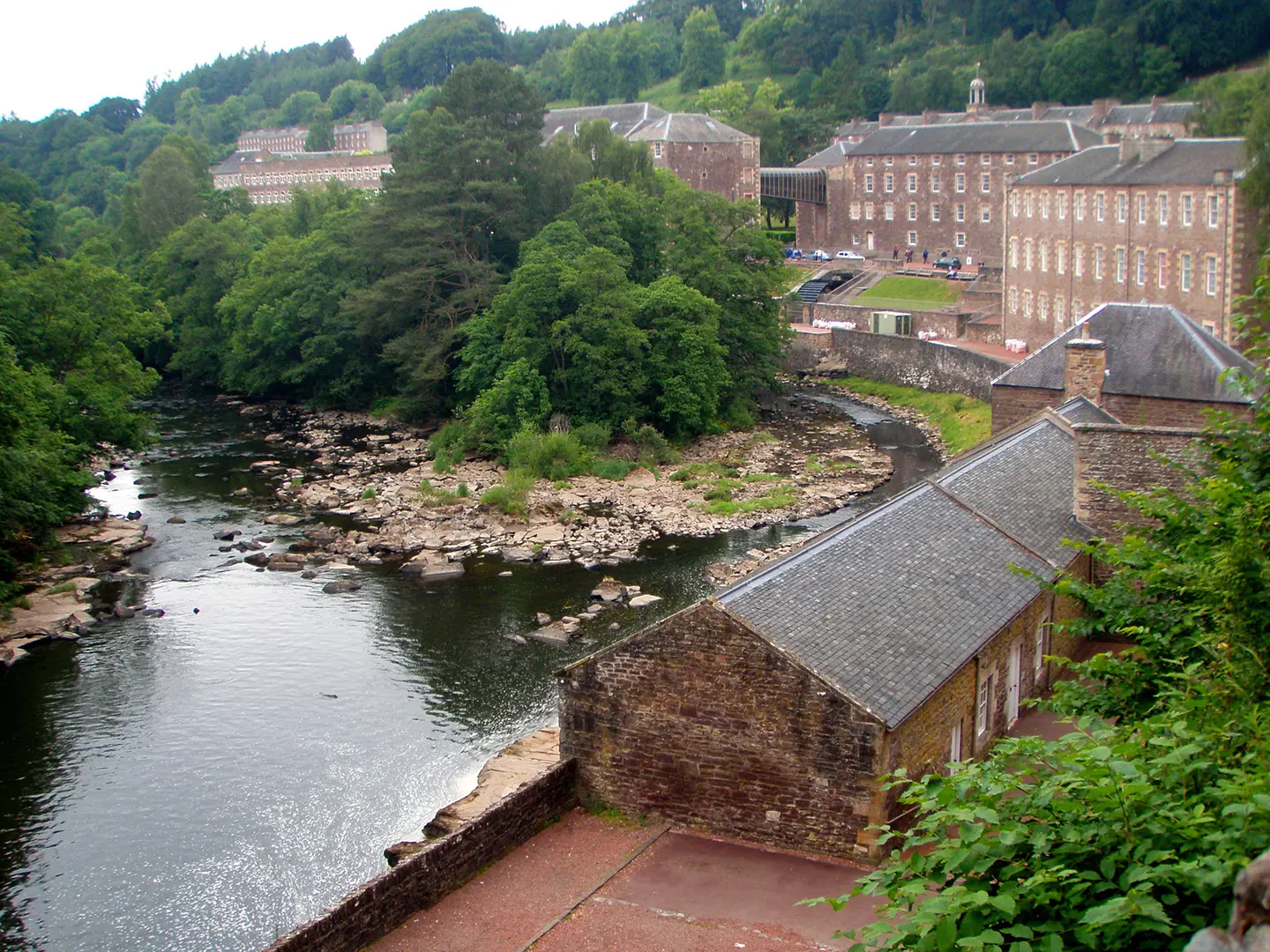
- New Lanark World Heritage Site: A preserved late-18th-century cotton-mill village developed by David Dale and Robert Owen. It is the upper terminus of the Clyde Walkway and a clear link between the river and Scotland’s industrial history.
- Bothwell Castle: A large red-sandstone medieval fortress above the Clyde near Uddingston and Bothwell. It adds one of the route’s strongest historic stops on the lower-middle section.
- David Livingstone Birthplace, Blantyre: The birthplace and museum of the Victorian explorer and missionary David Livingstone, set by the river in the former Blantyre mill village.
- Strathclyde Country Park: A country park around Strathclyde Loch between Hamilton and Motherwell, useful as a rest point and landmark on the route.
- Glasgow’s riverside: The opening section passes the Riverside Museum, Broomielaw quays and Glasgow Green, giving the walk a distinctive urban start before the Clyde Valley sections.
Challenges to expect
This is an easy, low-level trail, but it is not completely effortless. Waymarking is only partial, so carry a map or route notes, especially outside Glasgow. Surfaces vary from paved paths to gravel, dirt and woodland tracks, and some sections can be muddy, icy or slippery after rain. Riverbank erosion has affected parts of the upper route near Baron's Haugh, so check current diversions before setting out.
HikeList Score
Clyde Walkway scored 75/100 on HikeList's trail-quality metrics.
See score breakdownHide breakdown
- Ideal length 70
- Balanced challenge 60
- Scenery & wildness 72
- Varied terrain 83
- Accommodation 83
- Food & support 81
- Path quality 80
- Season flexibility 100
Computed from length, challenge, scenery & wildness, terrain variety, accommodation, food & support, path quality and season flexibility.
 United Kingdom
 Scotland
Show more data Show less
- River Valley
- Forest
- Urban
- Paved
- Gravel
- Dirt
- Hotels
- Hostels
- Campsites
- Family Friendly
- Dog Friendly On Leash
- Restrooms
- Picnic Areas
- Public Transport Access Points
Photos from hikers
Taken on the trail by people who've reviewed Clyde Walkway.
Reviews
How would you rate Clyde Walkway?
Tap a star to start your review — you could be the first.