Slieve Bloom Way
How would you rate Slieve Bloom Way?
Tap a star to share your experience and help other hikers.
Slieve Bloom Way: Quiet 3-Day Loop in Ireland’s Midlands
HikeList Score
Slieve Bloom Way scored 75/100 on HikeList's trail-quality metrics.
See score breakdownHide breakdown
- Ideal length 70
- Balanced challenge 56
- Scenery & wildness 74
- Varied terrain 100
- Accommodation 74
- Food & support 75
- Path quality 92
- Season flexibility 89
Computed from length, challenge, scenery & wildness, terrain variety, accommodation, food & support, path quality and season flexibility.
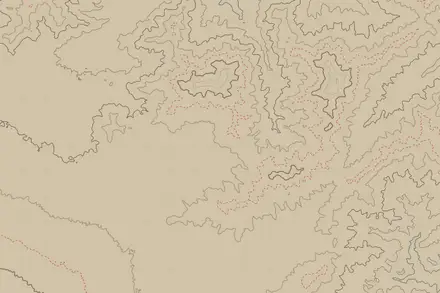
The Slieve Bloom Way is a 70.5 km National Waymarked Trail circling the Slieve Bloom Mountains on the Laois/Offaly border in central Ireland. Typically walked in 3 days, it is a strenuous loop for fit hikers used to wet, rough ground rather than a casual forest stroll. Expect forestry tracks, minor roads, riverside paths, blanket bog and exposed heathery ridges, with around 1,275 m of total ascent. It suits walkers wanting a quieter inland alternative to busier coastal routes such as the Dingle Way or Beara Way.
Route Overview
The official start and finish is Glenbarrow, near Rosenallis in County Laois, but the circular route can also be joined at waymarked trailheads including Clonaslee, Cadamstown, Kinnitty, Monicknew and the Ridge of Capard. The Way links high heathery ridges with wooded glens, passing the Clamphole/Glenbarrow waterfalls, Capard Wood, Monicknew, Kinnitty and Cadamstown. Because it is a loop, end-to-end transport is simpler than on point-to-point trails, though accommodation is sparse directly on the route and many walkers use village bases with pick-up/drop-off. For a different inland Irish long-distance option, compare the Blackwater Way.
One of Ireland’s Early National Waymarked Trails
The Slieve Bloom Way opened in 1987, devised by local man Tom Joyce. It was developed when the Slieve Bloom area was designated a European Environment Park during the 1987 European Year of the Environment, placing it among the earliest of Ireland’s National Waymarked Trails. Today it is managed by Laois and Offaly County Councils, Laois Integrated Development Company, Coillte and the Slieve Bloom Outdoors Group.
Notable highlights
- Glenbarrow and the Clamphole waterfalls: The official start/finish and the trail’s most popular section, where the River Barrow drops through a wooded gorge over cascades and pools.
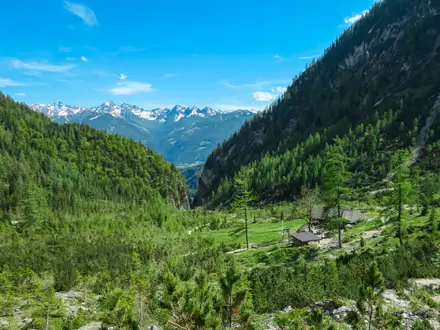
- Ridge of Capard: A heathery upland ridge reached by boardwalk, with wide views across the midland plains; an out-and-back spur was added to bring the Way along it.
- Arderin summit (527 m): The highest point of the Slieve Bloom range and the county top of both Laois and Offaly; the Way passes over or near it.
- Glens and blanket bog: The route repeatedly leaves open moorland for wooded glens cut by mountain streams, giving the walk much more variety than its modest height suggests.
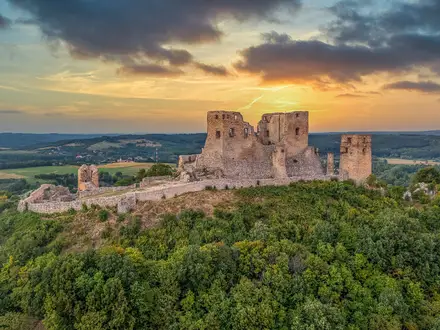
- Kinnitty and Cadamstown: Quiet estate villages on the circuit; Kinnitty, with its 19th-century castle now operating as a hotel, is the only settlement with accommodation directly on the trail.
- Looking for a bigger summit day? The Galtymore Ascent is a separate Irish mountain objective to compare with Arderin’s gentler Slieve Bloom profile.
Challenges to expect
The difficulty comes from cumulative distance, 1,275 m of ascent, wet ground and exposure rather than one major climb. Expect boggy, muddy sections, forestry tracks, minor road walking and high ridges that can feel bleak in poor weather. Waymarking is frequent, with yellow walking-figure markers and arrows, but mist and repairs or closures around boardwalk/path sections still require attention. Accommodation is limited on-route, so plan pick-ups, drop-offs or village bases in advance.
HikeList Score
Slieve Bloom Way scored 75/100 on HikeList's trail-quality metrics.
See score breakdownHide breakdown
- Ideal length 70
- Balanced challenge 56
- Scenery & wildness 74
- Varied terrain 100
- Accommodation 74
- Food & support 75
- Path quality 92
- Season flexibility 89
Computed from length, challenge, scenery & wildness, terrain variety, accommodation, food & support, path quality and season flexibility.
 Ireland
Show more data Show less
- Upland
- Forest
- Moorland
- Blanket Bog
- Wooded Glens
- Forestry Tracks
- Minor Roads
- Riverside Paths
- Open Moorland
- Blanket Bog
- Boardwalk
- Hotels
- Guesthouses
- Family Friendly
- Pet Friendly
- Campsites
- Shelters
- Picnic Areas
Photos from hikers
Taken on the trail by people who've reviewed Slieve Bloom Way.
Starting from Glenbarrow, this section leads hikers through picturesque woodland and alongside the scenic Glenbarrow Waterfall. The trail ascends gradually onto open upland terrain, passing boglands and offering wide views before descending toward the ancient woods of Monicknew. Continuing through forest and moorland, the day finishes in the village of Kinnitty, home to the notable Kinnitty Castle and various accommodation options.
Departing from Kinnitty, the route begins with a climb through dense forests, traversing the Ridge of Capard, one of the trail’s most scenic highpoints with panoramic views over the Slieve Bloom Mountains. The path crosses open heaths and bogs, then descends toward the edge of Cadamstown. The Silver River Nature Trail and the charming rural scenery mark the final approach into Cadamstown village.
Leaving Cadamstown, the final section involves ascents through conifer plantation and upland terrain, reaching the highest point at Arderin Summit (527 meters). The trail then follows a series of rolling ridges with open moorland, descending gradually back toward lower valleys. Passing remote farmlands and sections of mixed woodland, the route completes its circuit at Glenbarrow, where the hike concludes.
Reviews
How would you rate Slieve Bloom Way?
Tap a star to start your review — you could be the first.