
Contents
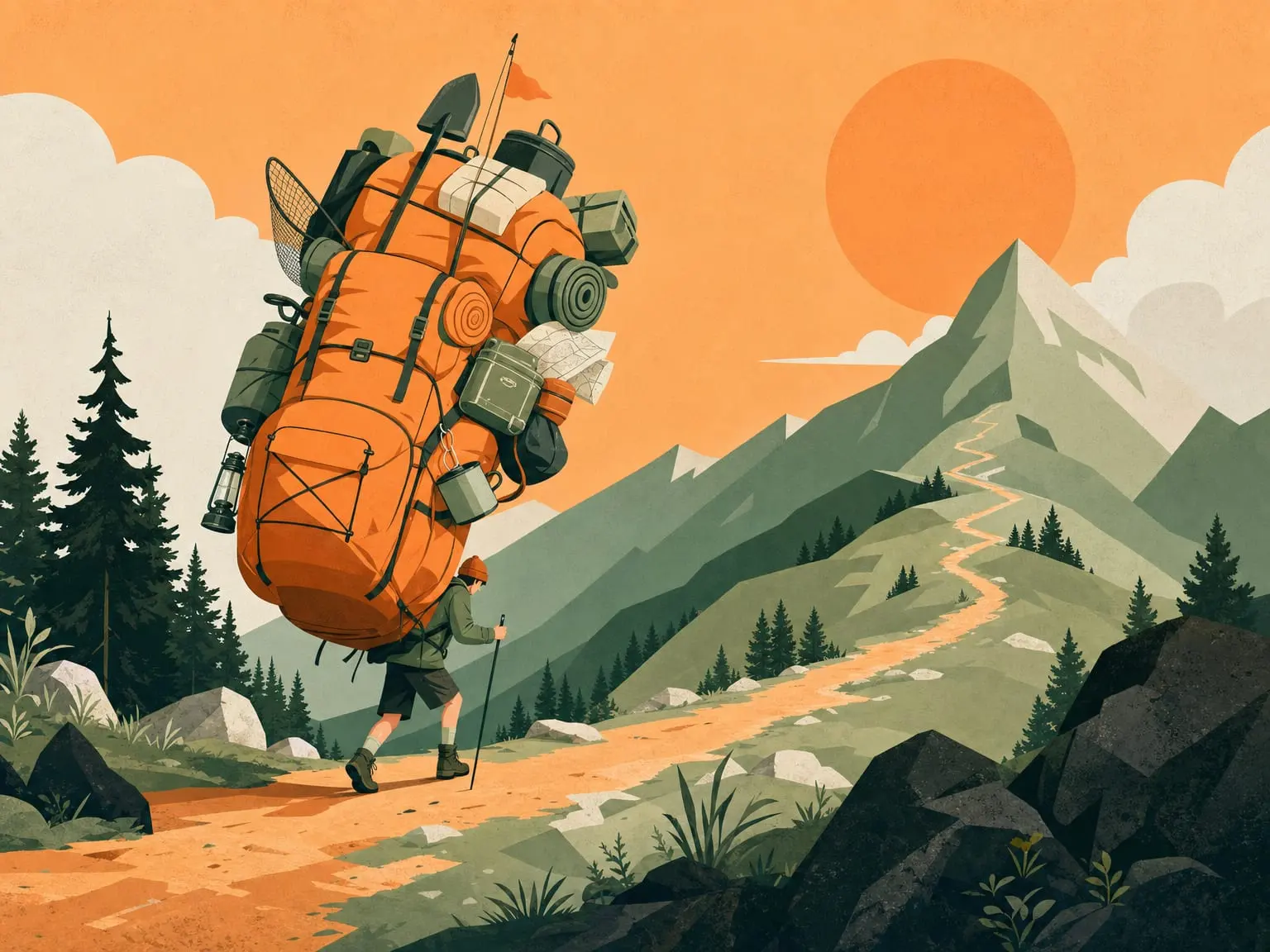
The biggest of the long-distance hiking mistakes beginners make is trying too much, too soon: too many kilometres, too much ascent, too few rest days and too little training, all at once. That is how a trip you were excited about turns into something you simply endure. The good news is that almost all of these mistakes are fixable before you even start.
The single biggest mistake: trying too much, too soon
I have made most of the mistakes below, and watched plenty of strong, enthusiastic walkers make them too. The pattern is nearly always the same: a beginner plans a route as if every day will feel like day one — copying a fitter friend’s distance, ignoring cumulative ascent, packing for every possible fear, skipping training because life is busy, treating rest days as optional. Then day three or four arrives. Feet are sore, knees are grumbling, the pack feels heavier than it did at the trailhead, and the view might be wonderful but you are too tired to care.
The fix is simple, though not always easy for the ego: scale back the plan to fit the body you have now, build in slack for weather and tired legs, train a little, and choose a route that suits your current fitness rather than the version of you who exists after three months of perfect training. A forgiving first route is not a compromise — it is often the reason you come home wanting to do another one. If you are still choosing, start with our guide to how to choose your first long-distance hike or browse our long-distance hikes for beginners. Every specific mistake below sits underneath that one idea.
1. Walking too many kilometres a day, too soon
If you can walk a decent distance on a Saturday, it is tempting to assume you can repeat it every day with a pack. That is where beginners get caught, because distance compounds: you can feel brilliant on day one, a bit stiff on day two, and properly worn down by day four as fatigue, foot soreness and small niggles accumulate. The classic error is copying someone else’s daily numbers — they may be fitter, recover faster, or carry lighter kit, so their comfortable day becomes your overreach.
The fix
Choose a sensible daily distance and build up gradually, keeping the first days shorter while your feet, shoulders and knees adjust to a pack. Let your body set the pace, not your spreadsheet — a plan is useful, but pain is better data, and early restraint buys you a better second half of the trip. For a fuller breakdown, read how many kilometres you should walk per day rather than guessing. In my experience, finishing a short day with energy left beats finishing a heroic day with three new problems.
2. Overpacking — carrying far too much
Overpacking is one of the most common backpacking mistakes because it feels responsible — until you lift the pack. Every extra kilogram costs energy on every step, and over several days that weight beats up your feet, knees and morale.
The number to track is base weight: the weight of your loaded pack without consumables such as food, water and fuel. It is the part you can control. (If terms like this are new, the long-distance hiking glossary is a handy reference.) As rough rules of thumb:
| Pack style | Base weight |
|---|---|
| Conventional or traditional | about 20–30 lb, roughly 9–14 kg |
| Lightweight | under about 20 lb, roughly 9 kg |
| Typical lightweight hiker | around 15 lb, roughly 7 kg |
| Ultralight | under 10 lb, roughly 4.5 kg |
Beginners often sit in the 20–30 lb range, which is not a moral failing — just a place with plenty to trim.
The fix
You do not need to chase ultralight as a beginner; you do need to stop packing your fears. Start with the big three — backpack, shelter and sleep system — which dominate base weight, so savings there matter most. Then lay everything out before you pack and ask what each item is for, and whether something else already does the same job. A good exercise is to remove a third of the nice-to-have items before you leave. You will rarely miss them, and your knees may thank you.
3. The wrong footwear — and ignoring blisters
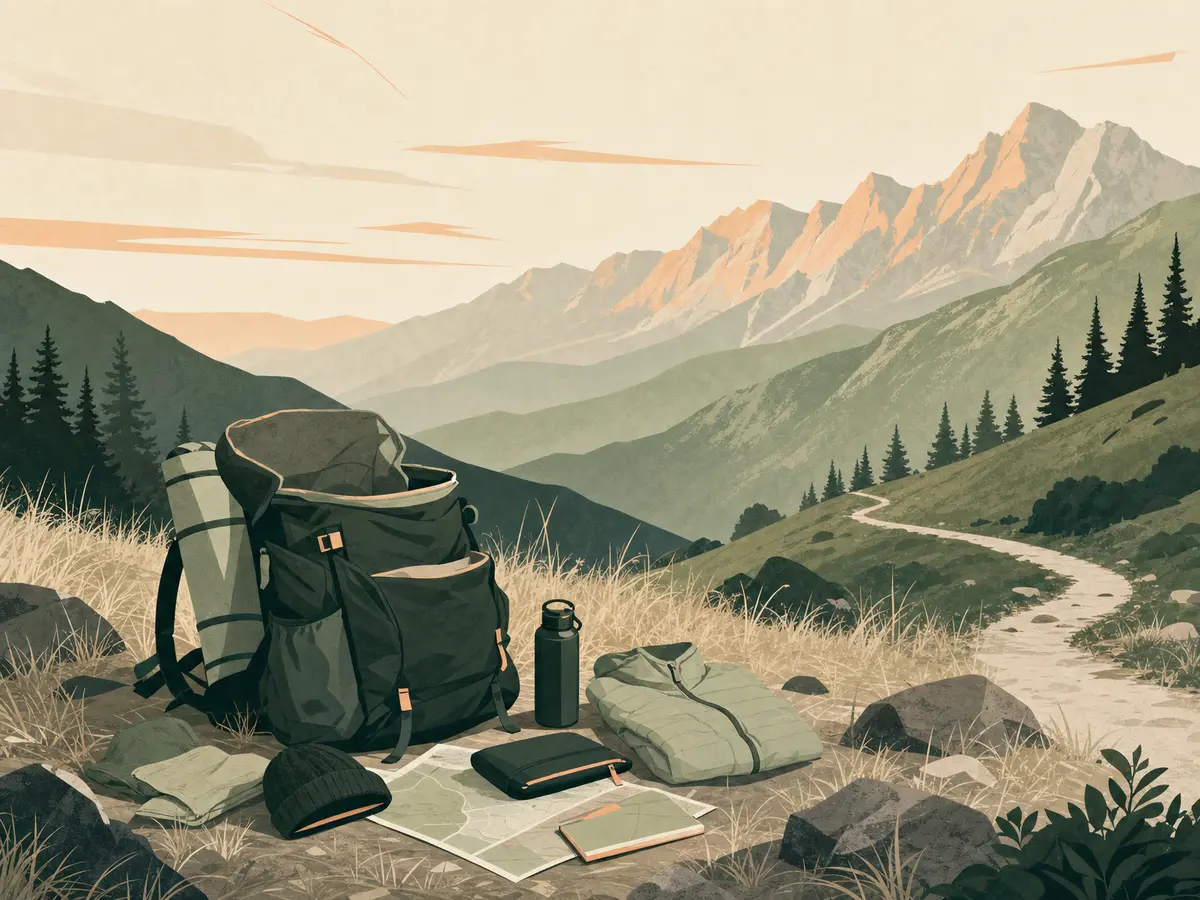
Blisters are not mysterious. Friction is the direct cause of most blisters, and moisture, heat and pressure make them more likely — moisture softens the skin, so it is more easily damaged by rubbing. The classic triggers are familiar:
- Poorly fitted footwear that creates pressure points or slippage.
- Brand-new footwear that has not been tested over distance.
- Cotton socks that soak up sweat, soften skin and increase friction.
The real beginner mistake is not just getting a blister — it is feeling a hot spot and deciding to push through. Please do not. That warm, sharp rub is your early warning system.
The fix
Get footwear fitted with the socks you will actually hike in, and swap cotton for wool or synthetic socks (some hikers add a thin liner sock if they are blister-prone). Change into dry socks when you can — keeping your feet dry and low-friction is not fussing, it is maintenance. And the moment you feel a hot spot:
- Stop immediately. Not in an hour, not at the next viewpoint.
- Dry the area. Moisture makes the problem worse.
- Cover it early. Use tape, a padded blister bandage or moleskin before it becomes a blister.
A two-minute stop can save two miserable days.
4. Not breaking in your boots
Turning up to day one of a long route in new boots is asking for trouble. Leather boots especially need time to mould to your feet, and a common rule is not to make a roughly 10-mile (16 km) trip in unbroken footwear. A long-distance hike is the wrong place to discover that a seam rubs your heel or your toes hit the front on descents.
The fix
Wear new boots on shorter walks for a few weeks beforehand — in the same socks you plan to use, and on varied ground rather than only smooth pavements. Modern trail-running shoes need far less breaking in, but still test them under load, with your pack on and long enough to learn what happens when your feet swell, sweat and tire.
5. Underestimating ascent — and especially descent
Distance is not the whole story: a short day with serious ascent can be harder than a longer, flatter one. Ascent is where much of the physical work goes, and descent is where a lot of the muscle damage and injury risk goes.
When you walk downhill, your quadriceps work eccentrically: they lengthen under load as they brake each step. Eccentric contractions cause more microscopic muscle damage than the shortening work of going up, and this is a main driver of delayed-onset muscle soreness, or DOMS, which typically peaks around 24–72 hours later. Descent also sends large, repeated braking forces through the knees — which is why beginners are so often blindsided by sore quads and knees a couple of days in.
The fix
Read the elevation profile, not just the distance, and take long descents seriously. A few downhill habits help:
- Use trekking poles. They meaningfully reduce knee load on descents.
- Take smaller, controlled steps. Big downhill strides increase braking forces.
- Keep your knees soft. Locked, jolting steps are punishing.
- Train the downhills. Your body adapts with repeated exposure.
For a deeper explanation, see our guide to how much elevation gain is hard.
6. Starting too fast — poor pacing
The first morning of a hike is dangerous in a very specific way: you feel too good. Fresh legs, caffeine, nerves and excitement push you to move faster than you should, so you blast along for a few hours, feel pleased with yourself, then pay for it later that day and later in the week. Good pacing on a long hike is boring at first. That is the point.
The fix
Deliberately start slower than feels natural, and settle into a rhythm you could hold for hours, not minutes.
- Walk your pace, not the group’s fastest pace. The strongest walker should not silently set the day for everyone.
- Use small, regular breaks rather than a few long collapses.
- Ease into climbs. If you are breathing hard early, back off before the climb decides for you.
If you finish the first day thinking you could have done a little more, you have probably paced it right.
7. Getting food and water wrong — too little or too much
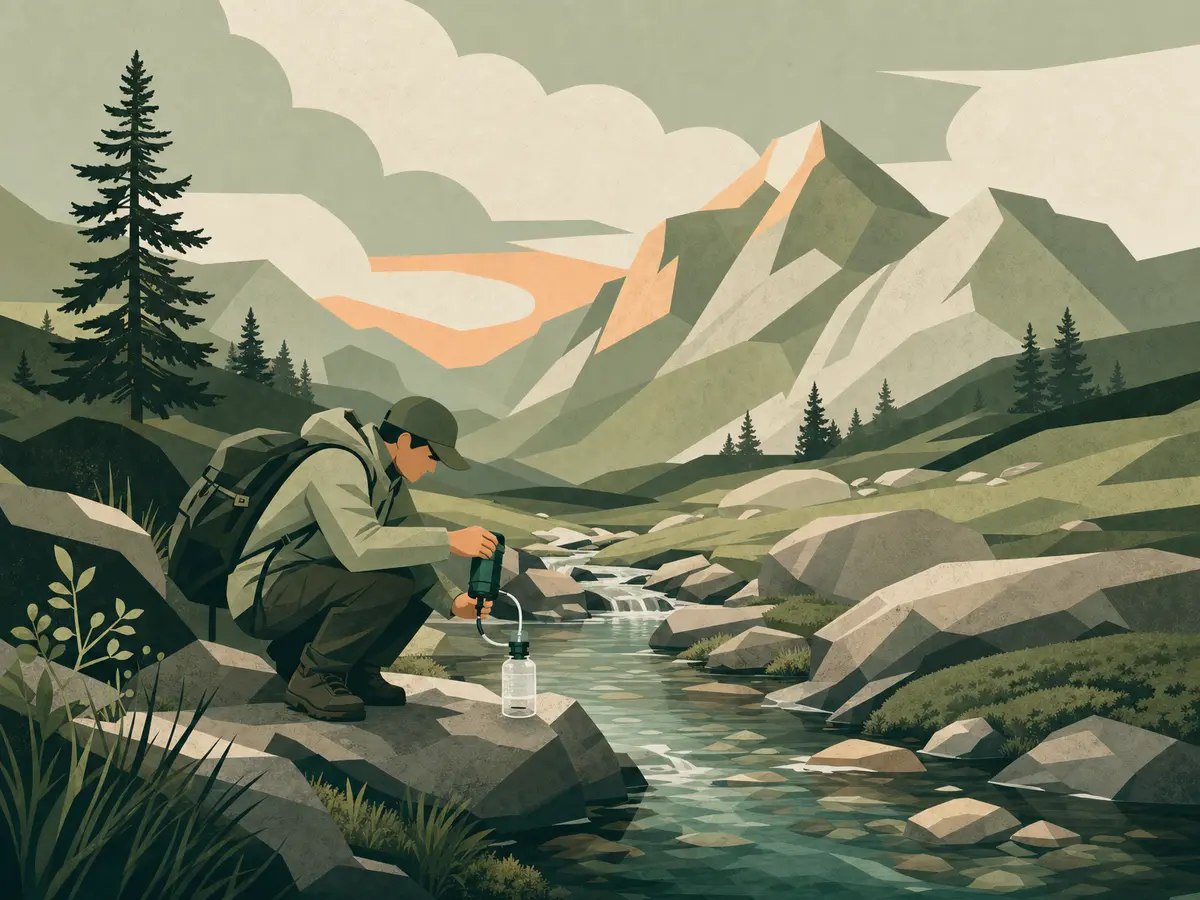
Food and water mistakes come in both directions. Too little and you bonk, feel awful and make poor decisions; too much and you carry dead weight all day. Water is especially heavy at about 1 kg per litre, so carrying far more than you need is not harmless — but running short is worse, especially in heat. As a rule of thumb, in moderate conditions and effort, roughly half a litre (about a pint) per hour is a reasonable hydration baseline; in hot weather or hard effort your body can lose a litre or more per hour, so you will need more. Thirst is already an early sign you are falling behind, so drink regularly, and treat pale-yellow urine as a sign you are keeping up.
The fix
Plan food and water around the route, not around panic.
- Eat little and often. Do not wait until you are empty.
- Plan resupply points rather than carrying every possible meal from the start.
- Carry water to the next reliable source, not enough for the whole day, if you can safely refill.
- Consider electrolytes on long or hot days when you are sweating heavily.
For detailed planning, see our guide to how much food to carry on a long-distance hike.
8. Skipping rest days
Rest days can feel like weakness before the trip; on the trail, they often feel like wisdom. Fatigue accumulates across a multi-day route, and with no recovery, small niggles become injuries and morale can collapse surprisingly quickly. A tired body also makes worse decisions about pacing, footing and weather.
The fix
On longer trips, build in rest or easy days from the start, rather than making rest something you are only allowed after things go wrong. A zero day — a day of no walking — is not failure; for many hikers, it is how they actually finish. Listen early, too: a small knee niggle, a blister hot spot or unusual fatigue all deserve a gentler day. The trail will still be there after breakfast and a proper sit down.
9. Weak navigation and over-relying on your phone
Phones are brilliant hiking tools until they are not. They lose signal, drain quickly in the cold, break, or simply run flat at the worst moment, and a dead phone with no backup is one of the easiest ways to get lost or caught out after dark. The mistake is not using a phone — it is outsourcing all your situational awareness to a moving blue dot.
The fix
Use your phone as one tool, not the only tool.
- Download offline maps before you need them.
- Carry a power bank to keep your navigation device alive.
- Carry a paper map and compass, and know the basics of using them.
- Look around often, matching the ground to what you expect from the map.
Good navigation is not dramatic. It is the steady habit of noticing where you are before you are lost.
10. Ignoring the weather and layering badly
Mountain and upland weather can change fast: a warm, still morning does not guarantee a warm, still afternoon. The clothing mistake I see most often is cotton next to the skin, because wet cotton chills you. Too many layers soak you with sweat; too few leave you cold and exposed. Both wreck comfort, and in poor conditions they affect safety.
The fix
Check the forecast before and during the trip, then dress in a simple layering system:
- Wicking base layer to move moisture away from the skin.
- Insulating mid layer for warmth.
- Waterproof, windproof shell for rain and wind.
Carry that waterproof even when the forecast looks fine, and keep the most important option open: be willing to turn back or shorten the day if conditions deteriorate. There is no shame in changing the plan, and plenty of misery in pretending the weather has not.
11. Skipping training
A long-distance hike is an endurance event. You do not need elite fitness, but turning up untrained is the root of the too much, too soon problem. Training does several things at once: it builds your legs, tests your kit, breaks in your footwear, and shows you how your body responds to repeated walking before the stakes are higher.
The fix
In the weeks beforehand, do progressively longer training walks. Ideally, include:
- A loaded pack similar to what you will carry.
- Some hills, if your route has ascent and descent.
- The boots and socks you will wear on the trail.
- Back-to-back walking days where possible, so you learn how day two feels.
This is the highest-value preparation there is. It is not glamorous, but it works.
A better first hike is the one you finish smiling
Every experienced hiker has a private list of mistakes they learned the hard way. Mine includes blisters I should have taped earlier, food I carried too much of, and hills I underestimated because the distance looked harmless. Mistakes are part of learning, and the aim is not a perfect hike — it is dodging the obvious traps: too far, too heavy, too fast, too little recovery and too much faith in optimism.
If you take one thing from this, take this: choose a route that fits you now, and give yourself the gift of a trip you can enjoy rather than endure. The best first long-distance hike is not the hardest one you can survive. It is the one that sends you home already thinking about the next trail.
Frequently asked questions
What is the biggest long-distance hiking mistake beginners make?
The biggest mistake is trying too much, too soon: too many kilometres per day, too much ascent, too few rest days and too little training. Scale back, build in slack and choose a route that matches your current fitness.
How do beginners prevent blisters on a long hike?
Blisters are mainly caused by friction, with moisture, heat and pressure making them worse. Wear well-fitted footwear with wool or synthetic socks, manage moisture, and stop to tape or cover hot spots the moment you feel them.
Do I need an ultralight pack for my first long-distance hike?
No. Beginners do not need to chase ultralight, but they should understand base weight and avoid packing fears. The biggest savings usually come from the backpack, shelter and sleep system.
Are rest days really necessary on a long-distance hike?
On longer routes, rest or easy days are often what help you finish. Fatigue accumulates over several days, and a planned zero day can stop small niggles becoming injuries.