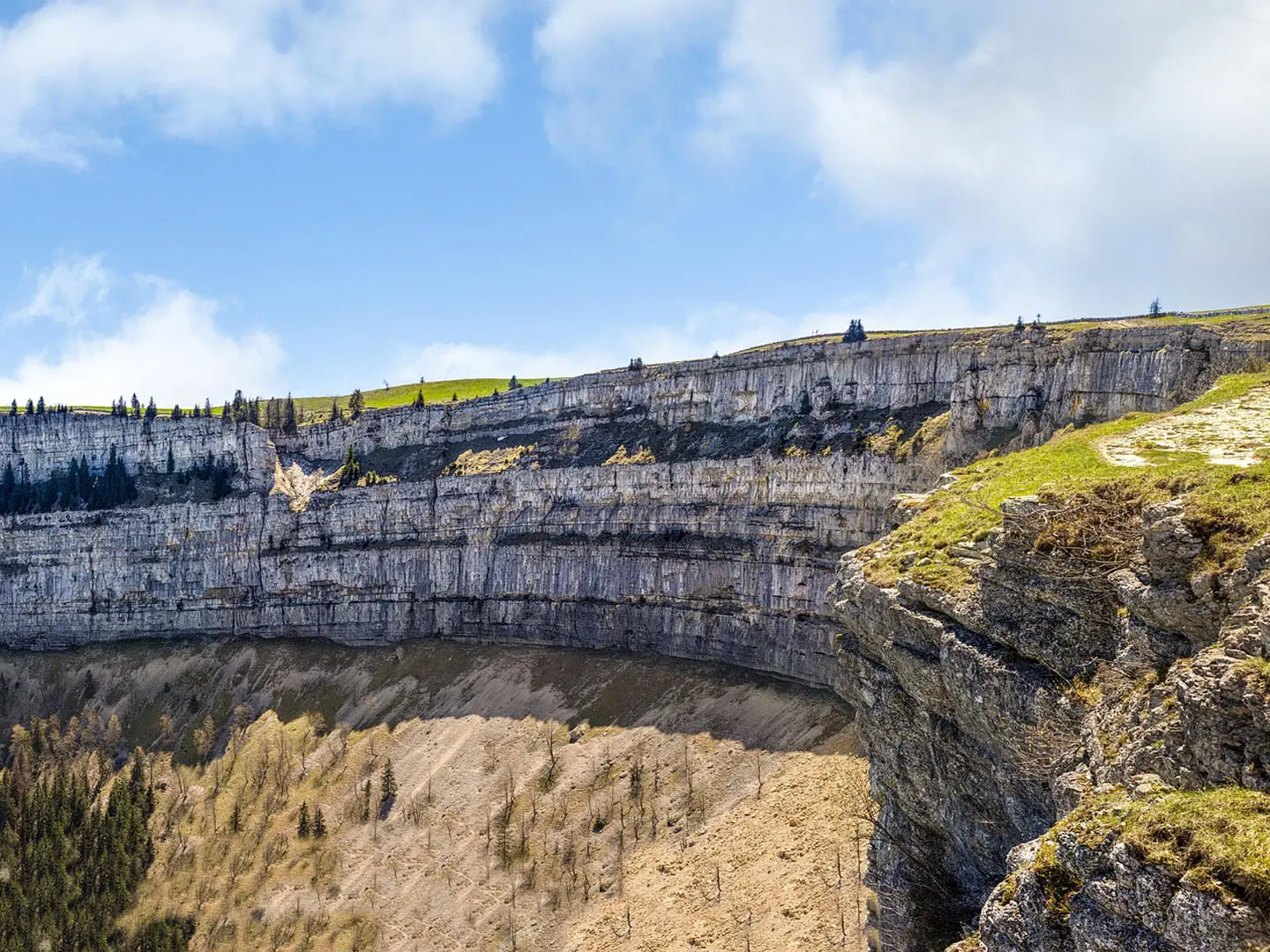
Hiking the Jura
5 hand-picked long-distance trails
Jura hiking suits walkers who want mountain days without the scale or gradients of the high Alps. This collection focuses on the Jura’s ridge-and-forest character on the France–Switzerland border: open limestone crests, beech and spruce woodland, high pastureland, gorges and rock amphitheatres. Choose from moderate one-day loops and ridge traverses to point-to-point routes lasting 14 or 30 days.
Trails in this collection
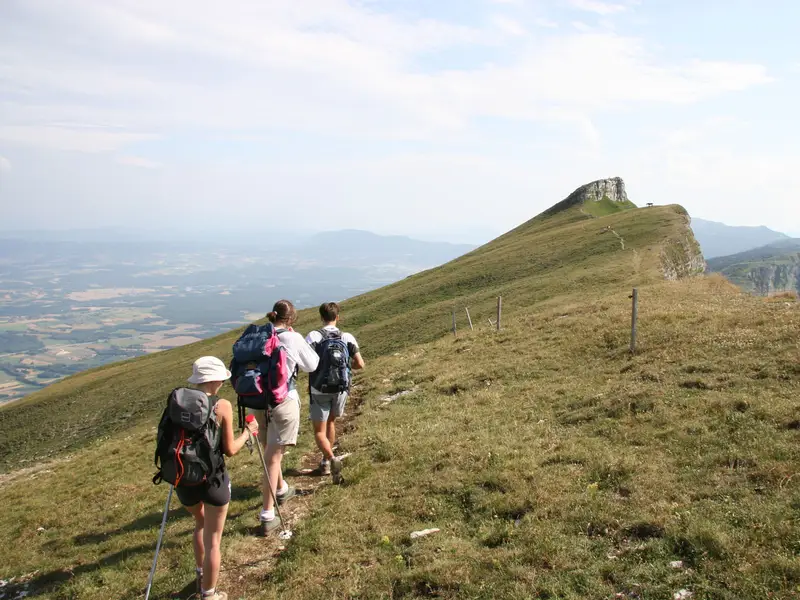
Jura Crest Trail
View trail → Switzerland · 310 km · 14 days · Moderate
 At 310 km over 14 days, this moderate point-to-point route is the collection’s full Jura commitment, following Swiss Route 5 across ridges, limestone plateaux, pasture, forest and gorges.
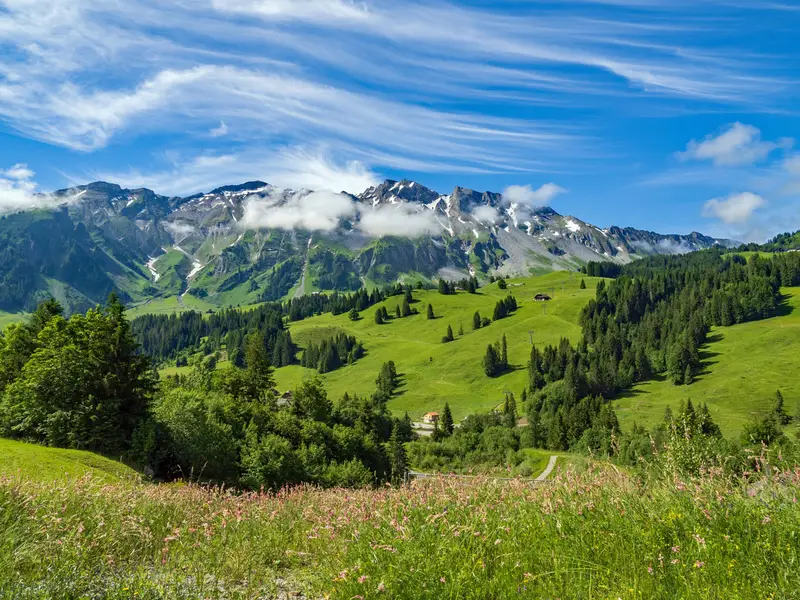
Trans Swiss Trail (Route 2)
View trail → Switzerland · 488 km · 30 days · Moderate Starting at Porrentruy in the Jura, this 488 km, 30-day point-to-point thru-hike offers a much longer Swiss journey, mixing forest, farmland, lakeside and mountainous terrain before Mendrisio.
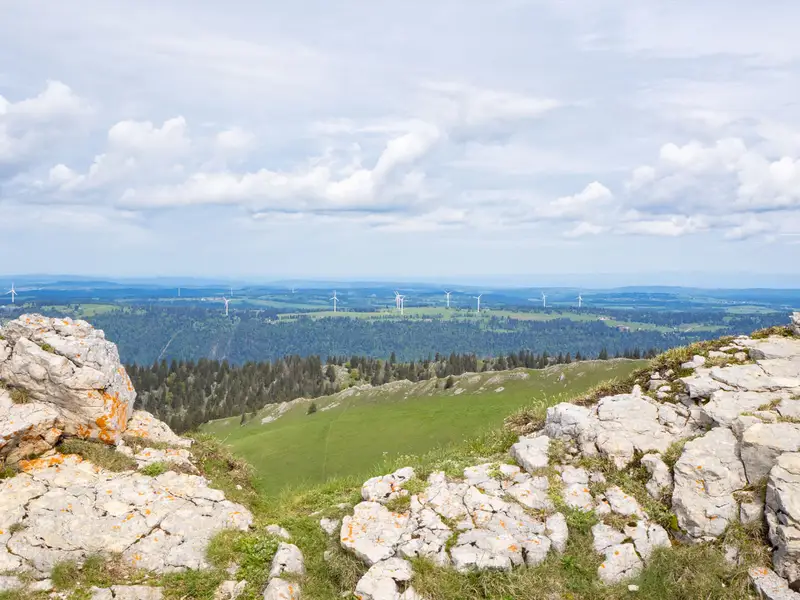
Chasseral Ridge Walk
View trail → Switzerland · 16 km · 1 days · Moderate This 16 km point-to-point day hike focuses on classic open Jura crest walking over Chasseral, the Bernese Jura’s highest summit at 1,606 m, with pasture, forest and limestone underfoot.
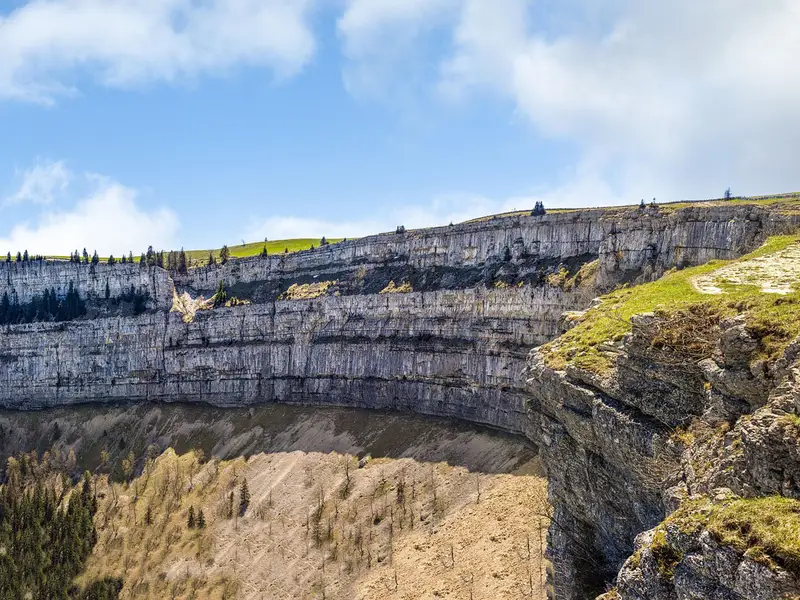
Creux du Van to Noiraigue
View trail → Switzerland · 14 km · 1 days · Moderate A 14 km moderate loop from Noiraigue railway station, this day walk earns its place by combining forest and pasture with the cliff-top rim of the Creux du Van rock amphitheatre.
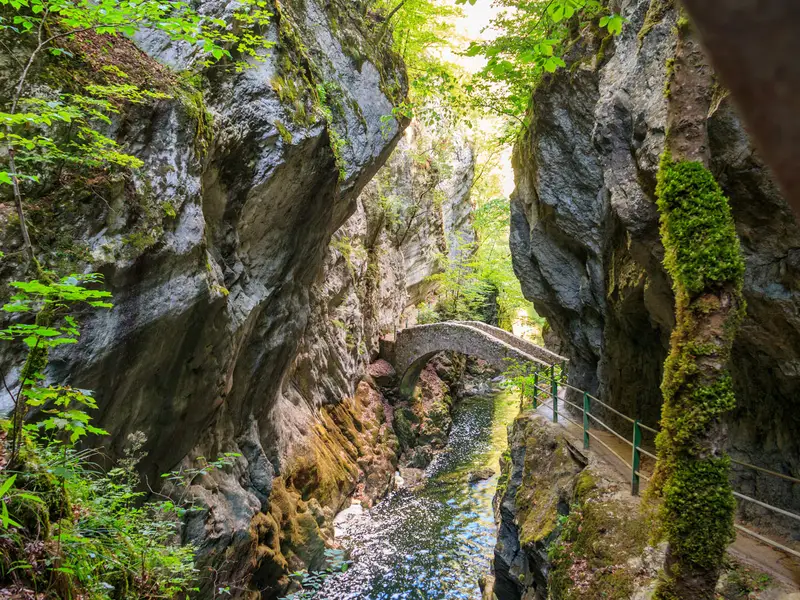
Creux du Van Circular Trail
View trail → Switzerland · 14 km · 1 days · Moderate Also a 14 km moderate loop from Noiraigue, this route suits walkers who want to circle the Creux du Van landscape itself, linking mountain, forest, cliffs and meadow around the limestone amphitheatre.
Jura Hiking: How to Choose a Ridge or Forest Trail
Choosing your Jura route
Start by deciding whether you want a compact day walk or a true long-distance crossing. For a single day, the Creux du Van routes give the most dramatic rock-amphitheatre setting, with forest approaches and cliff-top or cliff-and-meadow terrain packed into 14 km loops from Noiraigue. The Chasseral Ridge Walk is the better fit if your priority is a point-to-point crest day over open pasture and limestone rather than a circular walk.
For continuous ridge-and-forest walking, the Jura Crest Trail is the dedicated Swiss Jura choice: 310 km, 14 days, and a point-to-point line across mountain ridges, limestone plateaux, pasture, forest and gorges. The Trans Swiss Trail is different in scope. It starts at Porrentruy in the Jura, but its 488 km journey continues across Switzerland to Mendrisio in Ticino, so choose it if you want the Jura as the opening chapter of a longer national route.
Fitness, terrain and logistics
Every hike in this collection is rated Moderate, but the commitment varies sharply. A 14 or 16 km day hike asks for steady fitness and comfort on forest, pasture, limestone, ridge or cliff-top terrain; a 14-day or 30-day thru-hike adds the demands of repeated days, point-to-point planning and carrying or arranging what you need between stages.
The appeal of Jura hiking is its gentler mountain feel, but the terrain is still varied. Forest can make navigation feel different from open crests, while cliff and amphitheatre sections call for sensible conditions and attention underfoot. If logistics matter most, note the routes that start and finish in the same place, especially the Noiraigue loops; if your aim is progression across the range, the point-to-point trails are the natural match.